
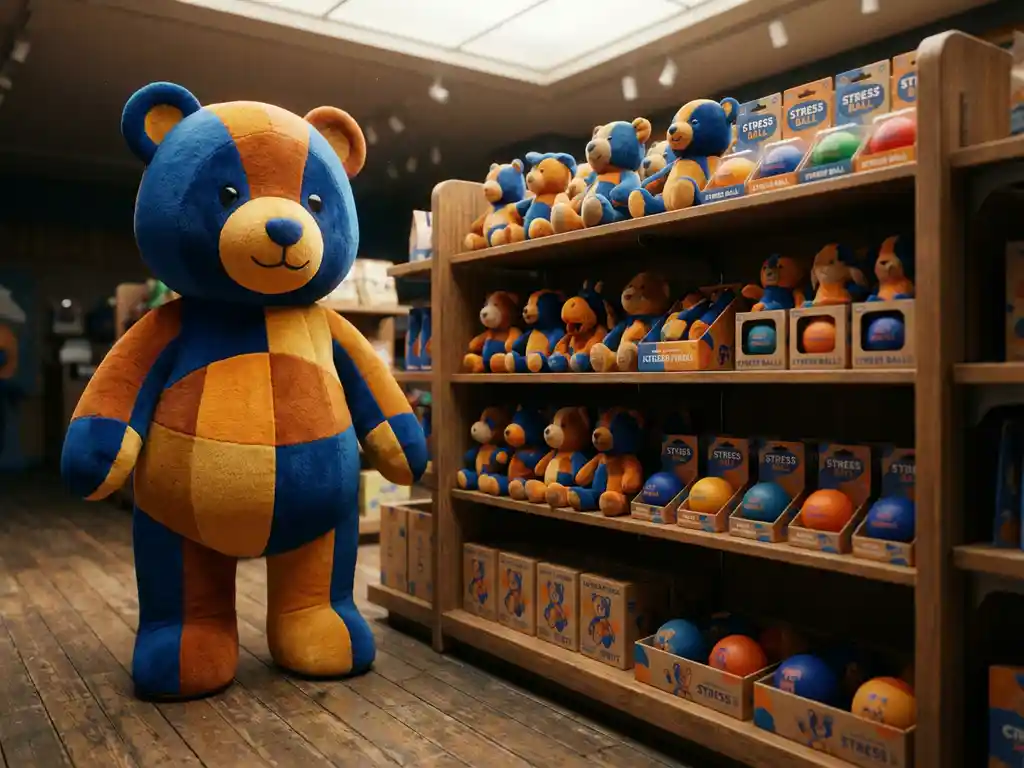
Marketing budgets work harder when every tool has a clear purpose. Two of the most commonly used tools in brand promotion are promotional products and point-of-sale displays—and while both aim to capture attention and drive engagement, they do so in very different ways. Understanding the distinction helps you invest more wisely and build a brand presence that lasts well beyond the moment of purchase.
Whether you are a marketing manager planning a trade show campaign or a brand director looking to boost visibility at retail, knowing how these two approaches complement each other is genuinely useful. Let’s break it down, question by question.
What are promotional products and how do they work?
Promotional products are branded physical items given to customers, prospects, or employees to increase brand awareness and build loyalty. They work by placing your brand directly in the hands of your audience—creating a tangible, lasting connection that digital ads simply cannot replicate. Common examples include custom stress balls, tote bags, keychains, plush toys, and branded apparel.
The core mechanism is straightforward: when someone receives a useful or memorable branded item, they keep it, use it, and see your logo repeatedly over time. This repeated exposure reinforces brand recognition without requiring additional spend. Unlike a social media ad that disappears after a scroll, a well-made promotional product stays on a desk, in a bag, or on a shelf for months or even years.
Promotional products also carry an element of goodwill. Receiving a gift—even a small one—creates a positive emotional association with the brand behind it. That emotional connection is one of the most powerful drivers of long-term customer loyalty.
What are point-of-sale displays and what do they do?
Point-of-sale (POS) displays are marketing materials placed at or near the checkout area, or at a specific location within a retail environment. Their primary job is to capture attention at the moment a purchasing decision is being made—driving impulse buys, promoting specific products, and reinforcing brand messaging exactly where it matters most.
POS displays come in many forms: floor-standing units, shelf wobblers, counter displays, digital screens, and hanging banners. What they all share is a fixed location and a short window of opportunity. They speak to customers who are already in a buying mindset, which makes them highly effective at influencing in-store decisions.
However, their impact is largely confined to that physical space and that specific moment. Once a customer walks out of the store, the display’s influence fades. This is a key distinction that shapes how marketers should think about using them.
What’s the difference between promotional products and point-of-sale displays?
The key difference between promotional products and POS displays is longevity and mobility. Promotional products travel with your audience and deliver ongoing brand exposure over time, while POS displays are stationary tools designed to influence behavior in a specific location at a specific moment.
Here is a clear side-by-side comparison of how they differ:
- Location: Promotional products go wherever the recipient goes; POS displays stay fixed in a retail or event environment.
- Lifespan: A quality promotional product can deliver brand impressions for months or years; a POS display typically runs for the duration of a campaign.
- Audience: Promotional products reach individuals who keep and use them; POS displays reach anyone who passes by the display location.
- Purpose: Promotional products build long-term brand loyalty and awareness; POS displays drive immediate purchasing decisions.
- Ownership: Promotional products become the recipient’s property; POS displays remain the brand’s property and are removed after the campaign.
Neither approach is superior on its own—they serve different stages of the customer journey and work best when used with clear strategic intent.
Which is better for brand awareness—promotional products or POS displays?
For long-term brand awareness, promotional products consistently outperform POS displays. A branded item that travels with a customer into their daily life generates repeated impressions across a wide variety of contexts—workplaces, gyms, homes, and public spaces—far beyond the reach of any fixed display.
POS displays are excellent at creating awareness within a controlled environment, but that awareness is situational. A customer might notice a striking floor display while shopping, but if they walk out without making a purchase, the impression rarely sticks in the same way a physical item does.
Promotional products also benefit from a social dimension. When someone uses a branded item in public—a custom plush toy on a desk, a stress ball at a conference—others see it too. That organic, word-of-mouth visibility is difficult to engineer with a static display and adds genuine reach to your brand investment.
Can promotional products and POS displays work together?
Yes—promotional products and POS displays work very effectively together, especially in retail and event environments. Using both in combination creates a two-stage engagement: the display captures attention and drives immediate action, while the promotional product extends the relationship beyond that moment.
A practical example: a brand running an in-store promotion might use a bold POS display to highlight a new product, then offer a free branded gift with purchase. The display creates urgency and drives the sale; the promotional product ensures the brand stays visible in the customer’s life long after they leave the store.
This combined approach is particularly effective at trade shows and experiential marketing events, where the environment is designed for engagement. A striking display draws visitors in, and a memorable takeaway item ensures they remember the brand when they return to their office or home.
What types of promotional products have the biggest marketing impact?
The promotional products with the biggest marketing impact are those that are useful, well-made, and genuinely connected to the recipient’s daily life. Relevance drives retention—and retention drives repeated brand exposure.
The most impactful categories tend to share a few key qualities:
- High utility: Items people actually use regularly, such as tote bags, drinkware, and desk accessories, generate the most impressions over time.
- Strong visual branding: Products with bold, clear logos or distinctive shapes ensure the brand is visible every time the item is used.
- Emotional resonance: Items that feel fun, creative, or unexpected—like custom-shaped stress balls or plush mascots—create a stronger emotional connection than generic giveaways.
- Durability: A well-made product signals quality and professionalism, reinforcing positive brand associations every time it is handled.
- Portability: Smaller, portable items travel farther and reach more people, multiplying the brand impressions per unit.
The best promotional products feel like a genuine gift rather than an afterthought—and that perception of quality reflects directly on the brand behind them.
How Promo Bears helps you make promotional products work harder
At Promo Bears, we specialize in creating fully custom promotional products that go far beyond the standard off-the-shelf giveaway. One of our most popular and impactful products is our custom stress balls—precision-molded from durable PU foam in any shape your brand requires, from your logo to your mascot to a product replica.
Here is what makes our approach different:
- Every stress ball is built 100% to your design—no standard shapes, no one-color prints
- Specific PMS color matching is available for precise brand consistency
- Full-color printing on round stress balls for maximum visual impact
- Free concept artwork and unlimited revisions before production begins
- Physical prototype approval available before bulk production
- A dedicated project manager guides your order from design to delivery
- Production runs 10–12 weeks after design approval, with rush options available
- Worldwide shipping to clients across the USA, Canada, Europe, Australia, and beyond
Whether you are planning a trade show campaign, a seasonal giveaway, or a long-term brand awareness initiative, our custom promotional products are built to make your brand impossible to forget. Contact us today and let’s create something your audience will actually want to keep.