
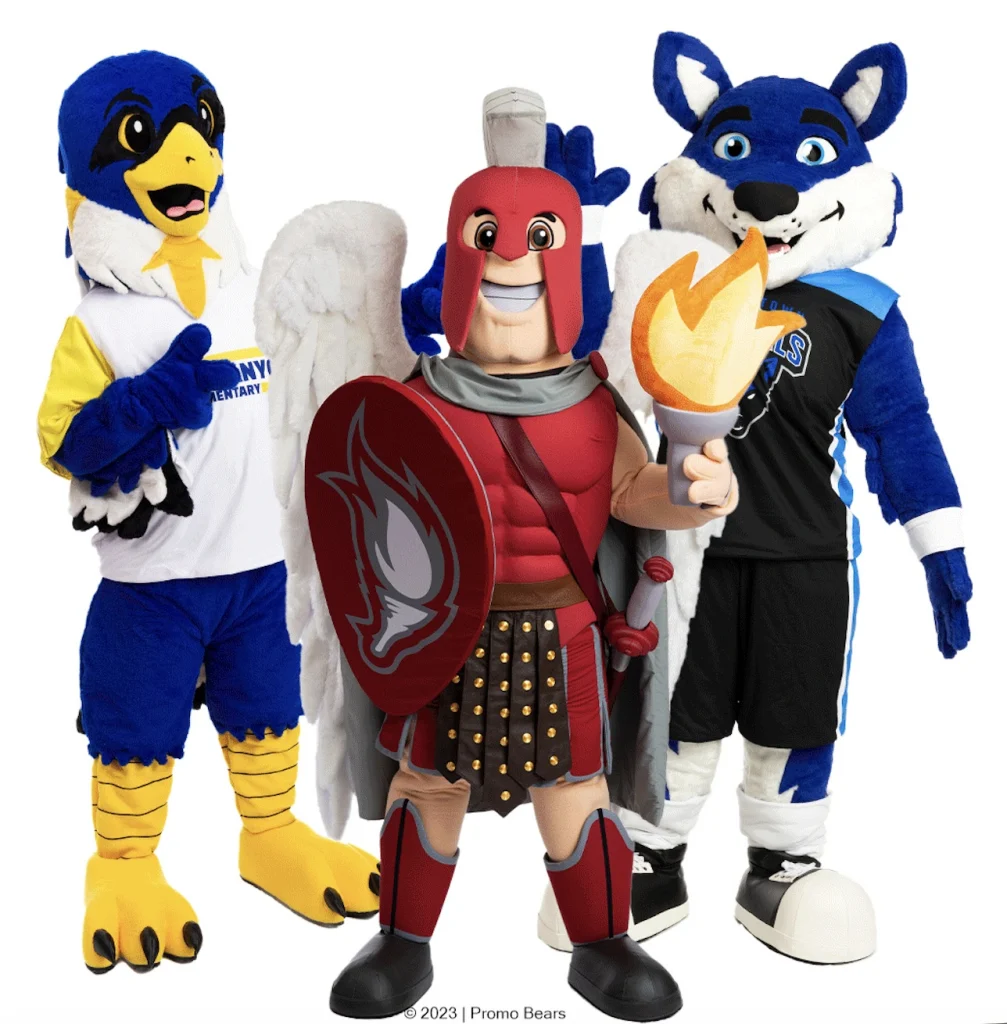
A mascot-style logo is a logo that features a character, creature, or illustrated figure as the central visual element of a brand’s identity. Unlike abstract symbols or wordmarks, mascot logos use a personality-driven character to represent the brand, making them instantly recognizable and emotionally engaging. Below, we answer the most common questions about mascot logos and how they connect to your broader brand strategy.
What makes a logo a mascot-style logo?
A mascot-style logo is defined by its use of a character as the primary brand symbol. That character can be an animal, a human figure, a creature, or even an anthropomorphized object, and it carries the brand’s personality visually. The key distinction is that the character does not just decorate the logo; it is the logo’s emotional core.
What separates a mascot logo from other illustrated styles is intentionality. The character is designed to communicate specific traits, whether that is playfulness, strength, trustworthiness, or energy, and those traits align directly with what the brand wants its audience to feel. Strong mascot logos work at multiple sizes, read clearly in black and white, and remain consistent across every application, from a business card to a stadium banner.
The character’s pose, expression, and styling all carry meaning. A forward-leaning stance suggests momentum. A wide grin builds approachability. Every visual decision in a mascot logo is a brand decision.
What are the most common types of mascot logos?
The most common types of mascot logos fall into four broad categories: animal characters, human figures, mythological or fantasy creatures, and anthropomorphized objects or food. Each type serves different brand personalities and audience expectations.
- Animal characters: The most widely used type. Animals carry built-in personality associations, such as bears for strength and warmth, eagles for freedom and ambition, or foxes for cleverness and agility.
- Human figures: Often used by sports teams, universities, and heritage brands. These characters can represent a profession, a historical figure, or an idealized version of the brand’s customer.
- Fantasy or mythological creatures: Dragons, phoenixes, and similar characters communicate power, uniqueness, and imagination, making them popular in gaming, entertainment, and sports.
- Anthropomorphized objects or food: Common in FMCG and retail, these characters give a product a face and voice, turning something functional into something lovable.
Across all types, the most effective mascot logos share one quality: the character feels like it could only belong to that brand. Generic clip-art characters do not build brand equity. Custom-designed characters do.
How does a mascot logo differ from an emblem or illustrated logo?
A mascot logo places a character at the center of the identity, while an emblem logo encloses text and imagery within a unified shape, and an illustrated logo uses detailed artwork that may or may not include a character. The core difference is that a mascot logo’s character can stand alone as a brand symbol, independent of any text or frame.
Emblem logos, common in sports and automotive branding, are typically symmetrical, badge-like, and formal. They prioritize heritage and authority over personality. Illustrated logos can be highly detailed and artistic, but they do not necessarily feature a recurring character that audiences build a relationship with over time.
Mascot logos are uniquely powerful because the character becomes a living extension of the brand. That character can animate, wear different outfits for seasonal campaigns, appear on merchandise, and eventually become a physical mascot costume. An emblem or illustrated logo cannot do that. The mascot logo is the starting point for an entire brand character ecosystem, not just a visual mark.
What types of brands benefit most from a mascot-style logo?
Brands that benefit most from mascot logos are those that want to build an emotional connection with their audience over time. Sports teams, schools, universities, food and beverage companies, entertainment brands, and retail organizations consistently see the strongest returns from mascot-driven identities.
Sports teams use mascot logos to fuel fan loyalty and merchandise revenue. Schools and universities use them to build community spirit and alumni identity. Food and beverage brands use them to create shelf presence and emotional recall. Retail and entertainment brands use them to turn passive customers into active fans.
That said, the mascot logo approach is not limited to consumer-facing organizations. Corporate brands launching a new product line, event-driven companies, and non-profits all use mascot logos to humanize their message and make abstract ideas tangible. The common thread is an audience that responds to personality and story, not just information.
If your brand needs to stand out in a crowded market, drive repeat engagement, and create something people genuinely want to wear or display, a mascot-style logo is one of the most strategically sound choices available in 2026.
How does a mascot logo connect to a physical mascot costume or merchandise?
A mascot logo is the blueprint from which all physical mascot expressions are built. When a brand creates a mascot logo, that character can be translated into a full-scale custom mascot costume, plush toys, stress balls, keychains, stickers, and a wide range of promotional products. The logo ensures every physical version of the mascot stays on-brand and consistent.
This connection matters enormously for brand experience. A mascot that exists only as a logo lives on screens and print materials. A mascot that also exists as a physical costume can appear at events, greet customers, generate social media content, and create memories that digital assets simply cannot replicate.
The design decisions made at the logo stage directly affect how well the character translates into three dimensions. A mascot logo with clear, simple features, strong color contrast, and a distinctive silhouette is far easier to produce as a high-quality costume or plush toy than one with excessive detail or subtle color gradients. Thinking ahead about physical applications during the logo design phase saves significant time and budget later.
Merchandise such as enamel pins, stickers, and custom stress balls extends the mascot even further, turning the character into a touchpoint that travels with your audience into their daily lives.
What should a mascot logo include to work across all brand touchpoints?
A mascot logo that works across all brand touchpoints needs a strong silhouette, a limited and consistent color palette, scalable features, and a clearly defined character expression. These four qualities ensure the mascot reads correctly whether it appears on a mobile screen, an embroidered cap, a giant inflatable, or a full-scale costume.
- A strong silhouette: The character’s outline alone should be recognizable. If the mascot only works when you can see every detail, it will fail at small sizes and on embroidered or molded applications.
- A limited color palette: Two to four core colors make the mascot reproducible across print, digital, embroidery, and physical manufacturing without color drift or inconsistency.
- Scalable features: Eyes, expressions, and defining details should remain readable at thumbnail size and at billboard scale. Avoid fine linework that disappears when reduced.
- A defined, ownable expression: The character’s face and pose should communicate a consistent emotional tone. That expression becomes the brand’s emotional signature across every application.
Beyond these core elements, a mascot logo benefits from having multiple approved versions: a full-color version, a single-color version, and a version with and without accompanying text. This flexibility ensures the character works in every context without improvised adaptations that dilute consistency.
How Promo Bears helps bring your mascot logo to life
Designing a mascot logo is only the beginning. We specialize in turning your mascot character into a complete brand experience, from the initial concept all the way through to physical production and delivery.
- Free concept illustration: Every project starts with a no-commitment concept illustration based on your logo or design idea, with unlimited revisions until it is exactly right.
- Custom mascot costumes: We produce high-quality, comfortable, and easy-to-clean mascot costumes with lifelike 3D eyes and a built-in ventilation system, ready in 12 to 16 weeks.
- Promotional merchandise: From custom stress balls (ready in 10 to 12 weeks) to plush toys, enamel pins, stickers, and giant mascot inflatables (ready in 3 to 4 weeks), we produce the full range of mascot merchandise that extends your character across every brand touchpoint.
- Dedicated project management: A dedicated project manager oversees your project from design approval through quality control and delivery, so nothing falls through the cracks.
- Proven track record: We have created over 4,000 mascots for organizations ranging from schools and sports teams to globally recognized brands like NASA, Amazon, and Walmart.
If you are ready to take your mascot logo from screen to reality, we would love to help. Get a free quote and let our team show you what is possible.
Frequently Asked Questions
How much does it typically cost to have a custom mascot logo professionally designed?
The cost of a custom mascot logo varies widely depending on the designer’s experience, the complexity of the character, and the number of revisions included. Freelance designers may charge anywhere from $300 to $1,500, while specialized branding studios can charge $3,000 or more for a fully developed mascot identity with multiple versions and usage guidelines. Keep in mind that a well-designed mascot logo is a long-term brand asset, so prioritizing quality over the lowest price will save you significantly on redesigns and inconsistency costs down the road.
What files and deliverables should I ask for when commissioning a mascot logo?
At minimum, you should receive your mascot logo in vector format (AI or EPS) so it can be scaled to any size without quality loss, along with PNG exports on transparent backgrounds in both full-color and single-color versions. Ask specifically for a version with text, a version without text, and a reversed or white version for use on dark backgrounds. Having these files ready from the start means you will never need to go back to your designer just to get a version that works on a new application.
Can an existing logo be redesigned into a mascot-style logo, or does it need to be built from scratch?
An existing logo can absolutely serve as the foundation for a mascot-style identity, especially if it already includes a character element or strong brand colors. A skilled designer can evolve the existing visual equity into a fully realized mascot character without abandoning brand recognition you have already built. However, if your current logo is purely a wordmark or abstract symbol with no character element, building the mascot from scratch is usually the cleaner and more effective approach.
How do I make sure my mascot logo does not look generic or similar to a competitor's character?
The most effective way to avoid a generic mascot is to root the character design in specific, documented brand attributes rather than starting with a generic animal or figure type. Before any design work begins, define three to five personality traits your brand owns, identify what makes your audience unique, and research competitor mascots in your category so your designer knows exactly what visual territory to avoid. Custom-built characters with a distinctive pose, a unique color palette, and an expression tied to your specific brand story are virtually impossible to confuse with off-the-shelf clip art or a rival’s character.
What is the biggest mistake brands make when introducing a mascot logo for the first time?
The most common mistake is designing the mascot in isolation without planning for how it will be used across different touchpoints from day one. Brands often approve a mascot that looks great as a flat digital illustration but then discover it cannot be embroidered, molded into merchandise, or translated into a costume without losing its defining features. Avoid this by briefing your designer on every intended application upfront, including physical products, and by testing the mascot at small sizes and in single-color before final approval.
How long does it take to go from a finalized mascot logo to a finished custom mascot costume?
Once a mascot logo is finalized and approved, the production timeline for a custom mascot costume is typically 12 to 16 weeks, depending on the manufacturer and the complexity of the design. This timeline covers concept-to-pattern development, material sourcing, fabrication, and quality control before shipping. Planning your costume order well in advance of any event, season launch, or campaign date is strongly recommended, as rush production is rarely possible without significant additional cost.
Do I need to trademark my mascot logo, and how does that process work?
Trademarking your mascot logo is strongly advisable, especially if you plan to use it on merchandise, license it, or build significant brand equity around the character over time. In the United States, you can file a trademark application with the USPTO for the logo as a design mark, which protects the specific visual appearance of the character in connection with your goods or services. It is recommended to work with an intellectual property attorney to conduct a clearance search before filing, ensuring your mascot does not conflict with an existing registered mark in your industry.