
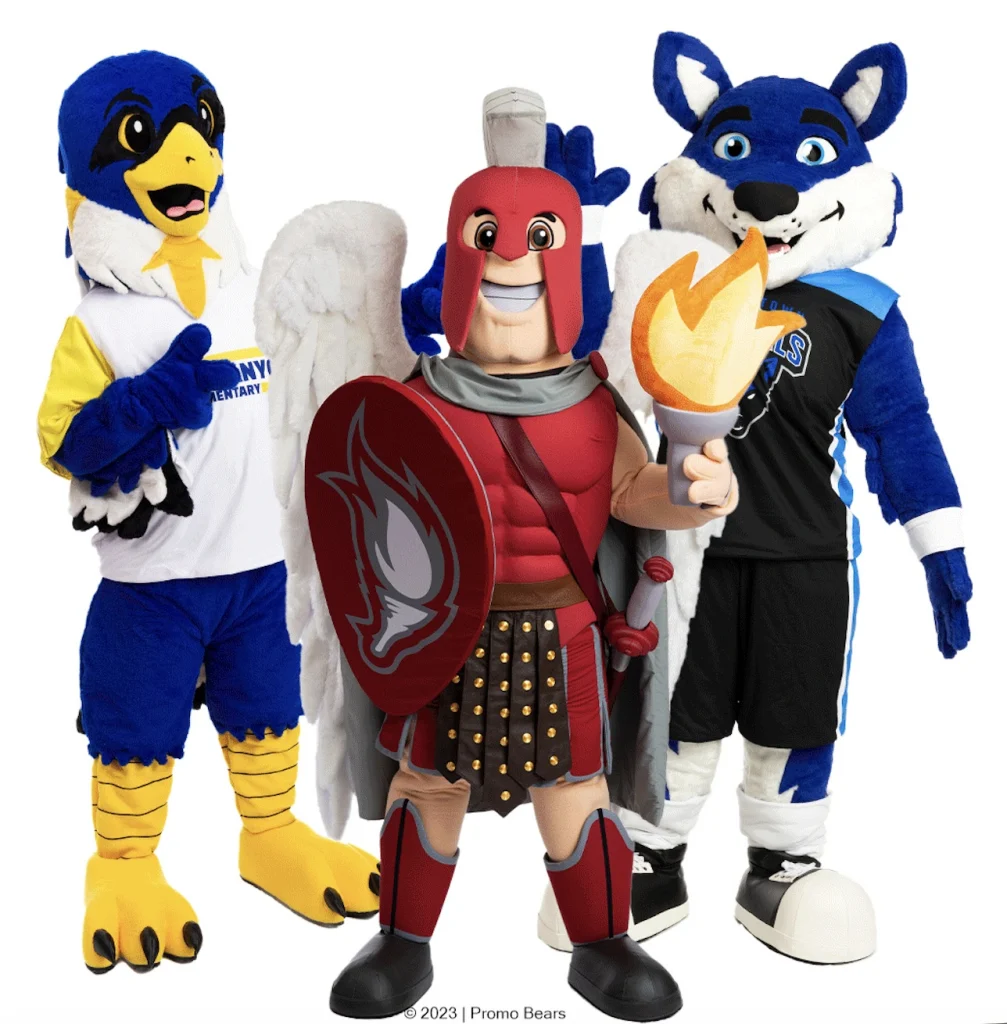
You use a mascot to create consistent content across platforms by treating it as a living visual anchor for your brand. Every post, video, event, or campaign featuring your mascot reinforces the same personality, color palette, and tone of voice, no matter where your audience encounters it. The sections below break down exactly how to make that work in practice.
What types of content can a mascot appear in across platforms?
A mascot can appear in virtually every content format your brand produces, from social media posts and email newsletters to event activations, merchandise, and video campaigns. Because a mascot is a visual character rather than a product or a logo, it adapts naturally to almost any format without losing its identity.
Here are the most common content types where mascots deliver real impact:
- Social media graphics, reels, and short-form video
- Email headers and seasonal campaign visuals
- Blog and website illustrations
- Event appearances with a physical custom mascot costume
- Branded merchandise such as plush toys, stickers, keychains, and stress balls
- Paid advertising and display banners
- Packaging and point-of-sale materials
- Internal communications and employee engagement content
The key is that your mascot does not need to be the hero of every piece of content. Sometimes it plays a supporting role, appearing in the corner of an email or as a sticker on a product box. That consistency, even in small doses, builds recognition over time.
How does a mascot create visual consistency across different channels?
A mascot creates visual consistency by serving as a fixed, recognizable character that carries your brand identity across every touchpoint. Unlike a color palette or a font, a mascot has personality and expression, which makes it instantly recognizable even when stripped of other brand elements.
When your mascot appears in a TikTok video, on a trade show banner, and on a branded tote bag all within the same month, your audience starts to associate that character with your brand automatically. This is the same principle behind the most iconic brand characters in advertising history. Recognition builds trust, and trust builds loyalty.
To maintain that consistency, your mascot needs a defined visual style. That means agreed-upon poses, expressions, and contexts in which the character appears, as well as clear rules about how it interacts with your logo, brand colors, and typography. Without those guardrails, different teams or agencies will interpret the character differently, and the consistency breaks down.
What is a mascot content style guide and do you need one?
A mascot content style guide is a document that defines exactly how your mascot looks, behaves, and communicates across every platform and format. It covers approved poses, expressions, color values, size rules, personality traits, tone of voice, and examples of correct and incorrect usage. Yes, you need one if you plan to use your mascot across multiple channels or involve more than one person in content creation.
Without a style guide, well-intentioned team members will make small decisions that add up to a fragmented brand experience. One person uses the mascot in a formal corporate context while another makes it silly and irreverent. Neither is wrong in isolation, but together they dilute the character’s power.
A solid mascot style guide does not need to be a lengthy document. It needs to answer these core questions clearly:
- What does the mascot look like in its approved forms, including color codes and proportions?
- What personality traits does it express, and which should it never express?
- How does it interact with the logo, taglines, and other brand assets?
- What contexts or content types is it appropriate for?
- Who has final approval of new mascot content before it goes live?
Once those questions are answered and documented, anyone on your team can create on-brand mascot content with confidence.
How often should a mascot appear in brand content?
Your mascot should appear frequently enough to build recognition but not so often that it becomes background noise. For most brands, featuring the mascot in roughly 40 to 60 percent of content output strikes the right balance. The exact frequency depends on your content volume, your audience’s relationship with the character, and the platforms you use most.
Consistency matters more than frequency. A mascot that appears reliably every week in a predictable format, such as a weekly social post or a monthly email header, trains your audience to expect and look for it. That anticipation is itself a form of engagement.
Where brands go wrong is treating the mascot as a campaign element rather than a permanent brand asset. When the mascot only shows up during a product launch or a seasonal promotion, it never builds the kind of deep familiarity that makes it genuinely valuable. Treat it like a cast member who shows up regularly, not a guest star who only appears occasionally.
Which platforms benefit most from mascot-led content?
Instagram, TikTok, YouTube, and live events benefit most from mascot-led content because they are inherently visual, personality-driven, and reward consistent characters that audiences can connect with over time. These platforms prioritize content that feels human and engaging, and a well-designed mascot delivers exactly that.
Instagram and TikTok reward visual storytelling and short-form personality content. A mascot gives your social team a character to build recurring content around, whether that is behind-the-scenes moments, product reveals, or seasonal posts. The character becomes a recognizable face that audiences follow, not just a brand they scroll past.
YouTube benefits from mascots in longer-form video where the character can develop a voice and a story over multiple episodes or series. Live events, whether trade shows, sports games, or brand activations, are where a physical mascot costume creates the most immediate emotional impact. An in-person mascot moment is highly shareable, which extends its reach far beyond the event itself.
Email and display advertising also benefit, though in a supporting role. A mascot in an email header adds warmth and personality to what might otherwise feel like a transactional message.
How do you repurpose mascot content without it feeling repetitive?
You repurpose mascot content without it feeling repetitive by varying the format, context, and narrative angle while keeping the character itself consistent. The mascot stays the same. Everything around it changes.
A single photo shoot with your mascot in costume can generate dozens of pieces of content when approached strategically. A full-length event photo becomes a cropped social graphic. A video clip becomes a GIF. A posed image becomes a sticker or a merchandise design. The character is consistent across all of them, but each piece of content feels fresh because the format and context are different.
You can also give your mascot a content calendar role. Seasonal moments, product launches, awareness days, and community milestones all provide natural hooks for new mascot content that feels timely rather than recycled. When the character reacts to something current, it feels alive rather than templated.
Another effective approach is expanding the mascot’s world over time. Introduce new settings, new scenarios, or new merchandise formats. A mascot that appeared only in social posts can now appear on a branded stress ball sitting on a customer’s desk, a plush toy at a trade show booth, or a giant inflatable at a sporting event. Each new format reintroduces the character to your audience in a way that feels new, even though the brand identity remains completely consistent.
How Promo Bears helps you build a consistent mascot content strategy
Building a mascot content strategy starts with having a mascot that is designed to work across formats from day one. That means a character with a clear visual identity, a strong personality, and the kind of quality that translates well whether it appears on a screen or in person.
We help brands do exactly that. Here is what we bring to the process:
- A free concept illustration based on your logo or design idea, with unlimited revisions until it is exactly right
- Custom mascot costumes ready in 12 to 16 weeks, built for comfort, ventilation, and consistent appearance across events
- Branded merchandise including plush toys, stickers, stress balls (ready in 10 to 12 weeks), and keychains that extend your mascot into everyday touchpoints
- Giant mascot inflatables ready in 3 to 4 weeks for high-impact event activations
- A dedicated project manager who guides every order from concept to delivery
- Over 4,000 mascots created for brands including NASA, Amazon, Red Bull, and Walmart
Whether you are building a mascot from scratch or expanding an existing character into new merchandise formats, we are the 360-degree partner that handles every piece of the puzzle. Ready to get started? Request your free quote and we will have a concept illustration in your hands before you know it.
Frequently Asked Questions
How do I get started with a mascot if my brand has never had one before?
Start by defining your brand’s core personality traits, target audience, and the emotions you want the mascot to evoke before touching any design. From there, work with a specialist mascot creator who can translate those attributes into a visual character with a strong, scalable identity. The key is to build the character with multi-format use in mind from day one, so it works equally well as a digital illustration, a physical costume, and a piece of branded merchandise without losing its impact.
What are the most common mistakes brands make when using a mascot across platforms?
The biggest mistake is treating the mascot as a campaign asset rather than a permanent brand character, meaning it only shows up during launches or seasonal promotions and never builds lasting recognition. A close second is allowing inconsistent visual interpretations to accumulate over time because there is no style guide in place, which gradually fragments the character’s identity. A third common pitfall is overusing the mascot to the point where it becomes visual clutter rather than a meaningful brand signal.
How do I maintain mascot consistency when multiple agencies or freelancers are creating content?
A detailed mascot style guide is your single most important tool here. Share it with every external partner before they begin any work, and make sure it includes approved source files, color codes, pose libraries, and clear examples of what is and is not acceptable usage. Designating one internal person as the final approval authority for all mascot content, regardless of who created it, adds an essential quality control layer that prevents inconsistencies from going live.
Can a mascot work for B2B brands, or is it only effective for consumer-facing companies?
Mascots are highly effective for B2B brands, particularly in industries that struggle to differentiate on product features alone, such as technology, logistics, finance, and professional services. A well-designed mascot gives a B2B brand a human face and a memorable personality that stands out in crowded trade show floors, email inboxes, and LinkedIn feeds. The tone and visual style of the mascot simply needs to align with the professional expectations of the target audience rather than defaulting to a consumer-friendly playfulness.
How long does it typically take before a mascot starts building meaningful brand recognition?
Most brands begin to see measurable recognition signals, such as audience comments referencing the character by name or unprompted social shares, after six to twelve months of consistent, multi-platform use. The timeline shortens significantly when the mascot appears across multiple formats simultaneously, for example in social content, at live events, and on branded merchandise, because each touchpoint reinforces the others. Consistency of appearance and frequency matters far more than any single high-budget campaign.
What should I do if my mascot's design needs to be updated or modernized over time?
Approach mascot evolution gradually rather than with a sudden redesign, since abrupt changes can confuse or alienate audiences who have built familiarity with the existing character. Update one element at a time, such as refining proportions, modernizing colors, or simplifying details for digital use, while keeping the core personality and recognizable features intact. Document every approved change in your style guide immediately and retire old asset versions to prevent outdated designs from continuing to circulate across teams or platforms.
Is it worth investing in physical mascot merchandise if most of my brand's presence is digital?
Yes, because physical mascot merchandise creates real-world touchpoints that digital content alone cannot replicate. A plush toy on a customer’s desk, a sticker on a laptop, or a stress ball in a conference swag bag keeps your brand visible in environments where digital ads cannot reach, and it turns your audience into passive brand ambassadors. Physical merchandise also photographs and videos well, meaning customers naturally generate organic social content featuring your mascot, which extends your digital reach without additional ad spend.