
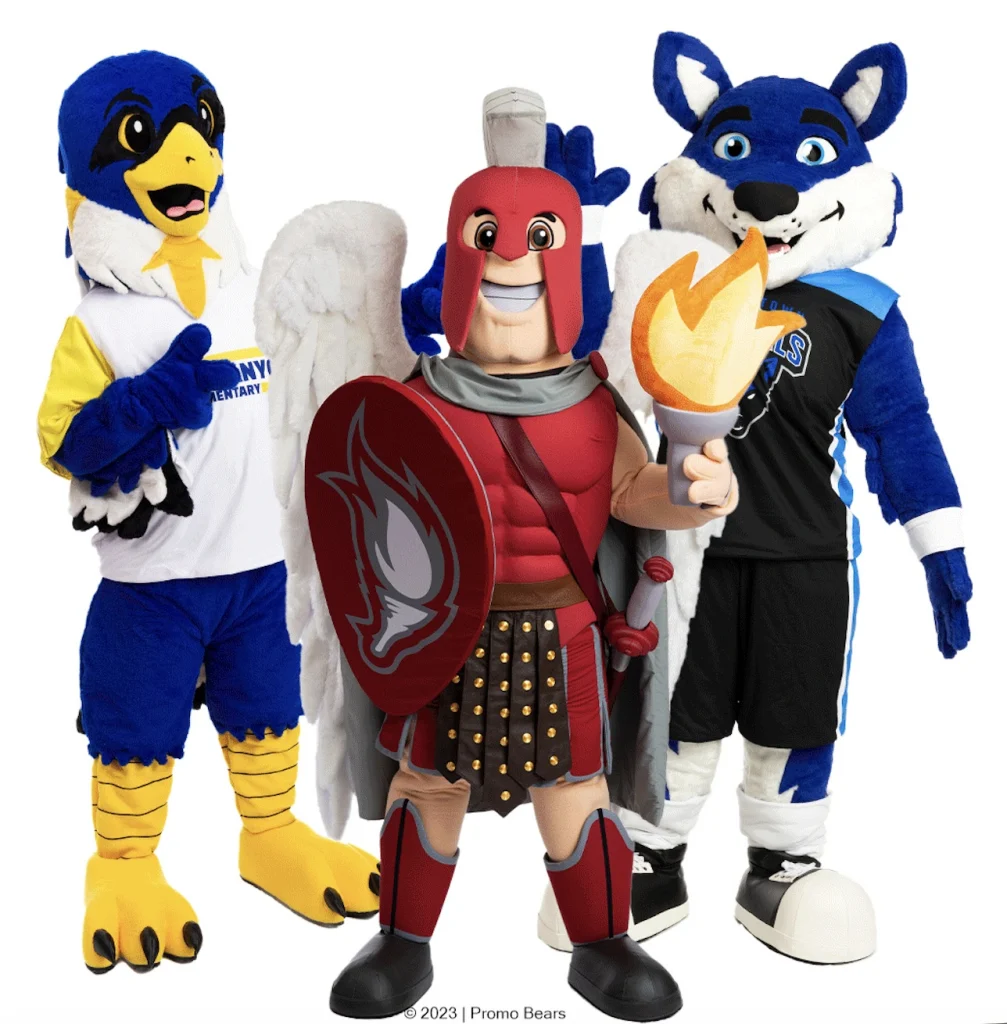
A mascot costume is effective for brand recognition when it translates your brand identity into a physical, memorable character that people instantly associate with your organization. The most impactful costumes combine distinctive visual design, professional construction, and consistent use across events and marketing channels. Below, we answer the most common questions marketers ask before investing in a custom mascot.
What design features make a mascot costume instantly recognizable?
A mascot costume becomes instantly recognizable through a combination of bold color choices that match your brand palette, a strong silhouette that reads clearly from a distance, and expressive facial features that communicate personality at a glance. These elements work together to create a visual shorthand for your brand that audiences remember long after an event ends.
The most effective mascot designs share a few key characteristics:
- Brand color accuracy: The costume should match your official brand colors precisely, so every appearance reinforces your visual identity rather than creating confusion.
- Distinctive silhouette: A shape that is immediately readable from 30 feet away ensures your mascot stands out in crowded event environments.
- Expressive 3D eyes: Lifelike eyes give the character emotional depth and make it feel approachable rather than flat or cartoonish.
- Consistent character traits: Whether the mascot is energetic, friendly, or bold, those personality cues should come through in every design element, from posture to facial expression.
- Scalability: A strong mascot design works across formats, from the full costume to plush toys, stickers, and digital graphics, without losing its identity.
Starting with a professional concept illustration before production begins is the most reliable way to confirm that all of these elements come together correctly before any materials are cut or stitched.
How does a mascot costume improve customer engagement at events?
A mascot costume improves customer engagement at events by giving attendees a tangible, interactive focal point they want to approach, photograph, and share. Unlike a banner or a booth display, a mascot moves, reacts, and creates genuine moments with people, which translates directly into longer dwell time, more social media content, and a stronger emotional connection to your brand.
At trade shows, sporting events, and brand activations, mascots consistently draw crowds in a way that static displays simply cannot. People who might walk past a booth will stop for a photo with a character. Families with children will seek the mascot out specifically. Those photos then travel across personal social feeds, extending your brand’s reach far beyond the event itself.
The engagement benefit also compounds over time. When a mascot appears consistently at your events year after year, audiences begin to anticipate it. That anticipation builds loyalty, and loyalty builds the kind of word of mouth that no paid media budget can fully replicate. To improve brand recognition at live events, few tools are as cost-effective as a well-designed mascot costume used consistently.
What’s the difference between a professional and a low-quality mascot costume?
The difference between a professional and a low-quality mascot costume comes down to construction, comfort, and longevity. A professional costume is built to be worn for extended periods, withstand repeated use, and maintain its appearance over time. A low-quality costume degrades quickly, becomes uncomfortable within minutes, and often looks noticeably cheap in photos and video.
Construction and materials
Professional mascot costumes use durable materials that hold their shape and color through repeated use and cleaning. The internal structure supports the costume’s form, so it looks consistent whether it has been worn for five minutes or five hours. Low-quality alternatives often rely on thin foam or cheap fabric that compresses, fades, or tears after a handful of appearances.
Wearability and ventilation
A professional costume includes an integrated ventilation system that keeps the performer comfortable enough to stay active and engaged throughout an event. Without proper airflow, performers overheat quickly, which shortens appearance time and affects the energy they bring to interactions. Comfort directly impacts performance quality, and performance quality directly impacts how your brand is perceived by everyone watching.
How long does a custom mascot costume last?
A professionally made custom mascot costume typically lasts several years with proper care. The exact lifespan depends on how frequently it is used, how well it is maintained between appearances, and the quality of materials used in production. Costumes used at high-frequency events will naturally show more wear than those used a few times per year.
Most organizations that invest in a professional costume also receive a care manual at delivery, which outlines how to clean and store the costume correctly. Following those guidelines consistently is the single most effective way to extend the costume’s usable life. Easy-to-clean construction is a feature worth prioritizing when evaluating suppliers, because a costume that is difficult to maintain will deteriorate faster regardless of its initial quality.
Production timelines for custom mascot costumes typically run 12 to 16 weeks from design approval to delivery, which reflects the level of craftsmanship involved. That timeline is worth planning around, particularly if you have a specific event or campaign launch date in mind.
What types of organizations benefit most from a mascot costume?
Organizations that benefit most from a mascot costume are those with regular, direct contact with their audience and a need to build an emotional connection over time. Schools, universities, sports teams, retail brands, and event-driven companies consistently see the strongest return from mascot investments because their audiences are already primed for that kind of engagement.
That said, the range of organizations finding value in mascots is broader than most people expect:
- Schools and universities use mascots to build school spirit and create a visual identity that alumni carry with them long after graduation.
- Sports teams rely on mascots to energize crowds, entertain during breaks, and give fans a character to rally around.
- Retail and FMCG brands deploy mascots at in-store events, trade shows, and brand activations to create memorable moments that drive purchase intent.
- Non-profits and government organizations use mascots to make their messaging more approachable and accessible, particularly when communicating with families and children.
- Hospitality and entertainment companies use mascots to create signature experiences that guests associate specifically with their venue or brand.
The common thread across all of these is audience interaction. If your organization regularly puts people in front of your brand, a mascot gives those people something to connect with emotionally.
How do you brief a mascot costume supplier for the best results?
To brief a mascot costume supplier for the best results, come prepared with your brand guidelines, a clear description of the character’s personality, the contexts in which the costume will be used, and any reference images that capture the look and feel you are aiming for. The more specific your brief, the more accurately the supplier can translate your vision into a design.
A strong brief typically covers the following areas:
- Brand identity materials: Share your logo, official color codes, and any existing brand character artwork so the design stays visually consistent with everything else your organization produces.
- Character personality: Describe how the mascot should feel. Is it energetic and bold? Friendly and approachable? Authoritative and confident? Personality drives design decisions from facial expression to body proportions.
- Use cases: Explain where and how the costume will be used. An outdoor stadium appearance has different requirements than an indoor trade show booth, particularly around ventilation and visibility.
- Performer details: Provide the height and build of the person who will wear the costume most frequently so it can be sized correctly from the start.
- Timeline and budget: Be upfront about your event dates and budget range so the supplier can give you an accurate production plan without surprises later.
Working with a supplier who offers a free concept illustration before any financial commitment is the most practical way to test alignment between your brief and their interpretation. Unlimited revision rounds at the concept stage mean you can refine the design until it is exactly right before production begins.
How Promo Bears helps you improve brand recognition
We work with marketing managers, brand directors, and event teams who need a single, reliable partner for the full range of mascot and promotional products. From the initial concept illustration through to quality-controlled delivery, we manage every step so you can focus on the campaign rather than the production logistics.
Here is what working with us looks like in practice:
- A free concept illustration based on your logo or design idea, with unlimited revisions until you are fully satisfied
- Custom mascot costumes built with 3D eyes, integrated ventilation, and easy-clean materials, ready in 12 to 16 weeks
- A dedicated project manager who oversees your project from first sketch to final delivery
- A full range of mascot merchandise including plush toys, stress balls (10 to 12 weeks), giant inflatables (3 to 4 weeks), keychains, and stickers to extend your mascot’s presence beyond live events
- Rush options available when your timeline is tight
With over 4,000 mascots created for organizations ranging from local schools to globally recognized brands, we know what it takes to turn a character concept into a brand asset that genuinely performs. Ready to see what your mascot could look like? Get a free quote and receive your concept illustration with no upfront commitment.
Frequently Asked Questions
How much does a custom mascot costume typically cost?
Custom mascot costume pricing varies depending on complexity, size, and the materials used, but professional-grade costumes generally represent a significant upfront investment compared to off-the-shelf alternatives. That said, when you factor in the lifespan of a professionally built costume — several years of consistent use — the cost per appearance is often far lower than other marketing tactics. The best approach is to request a free quote with your specific requirements so you receive an accurate figure based on your character design and use case.
Can the same mascot costume be worn by performers of different sizes?
Most custom mascot costumes are built around a specific performer’s height and build, so fit can be a challenge when multiple people need to wear it. Some designs can accommodate a modest range of body types through adjustable internal components, but significant size differences between performers will affect both comfort and appearance. If you anticipate multiple wearers, flag this during the briefing stage so the supplier can design the costume with that flexibility in mind from the start.
What should I look for in a mascot costume supplier to avoid common pitfalls?
The most important things to look for are a clear revision process at the concept stage, transparent production timelines, and evidence of previous work across a range of industries. Suppliers who offer a free concept illustration before any financial commitment give you a low-risk way to assess whether their interpretation matches your vision. Red flags include vague timelines, no portfolio of completed costumes, and no mention of ventilation or performer comfort in their product descriptions.
How do I keep the mascot costume looking its best over time?
Consistent care between appearances is the single biggest factor in extending a costume’s lifespan. This means following the supplier’s care manual closely, storing the costume in a cool, dry place away from direct sunlight, and never compressing the head or structured components during storage. Spot-cleaning after each use and scheduling a deeper clean periodically will prevent buildup that can degrade materials and cause odors — both of which affect the performer’s experience and the costume’s on-event presentation.
Is it worth investing in mascot merchandise alongside the costume?
Yes — mascot merchandise like plush toys, keychains, and stickers significantly extends the reach and longevity of your mascot investment beyond live events. When attendees take a plush toy or sticker home, your mascot continues building brand recognition in their everyday environment long after the event ends. Merchandise also creates additional touchpoints for children, who are often the most enthusiastic mascot fans and a key influence on family purchasing decisions.
What if I don't have an existing mascot character — can a supplier create one from scratch?
Absolutely. Many organizations come to mascot suppliers without a defined character, only a logo, brand colors, and a general sense of personality. A good supplier will use those brand assets as a starting point and develop a full character concept through the illustration phase. Unlimited revision rounds at that stage mean you can shape the character’s look, expression, and proportions iteratively until the design genuinely reflects your brand before any physical production begins.
How far in advance should I order a mascot costume before a major event?
Given that professional custom mascot costumes typically require 12 to 16 weeks from design approval to delivery, you should ideally begin the process at least five to six months before your target event date. This buffer accounts for the concept illustration and revision phase before the production clock even starts, and leaves room to address any unexpected delays without putting your event at risk. If your timeline is tighter, ask your supplier about rush production options early in the conversation rather than after the standard order is already underway.