
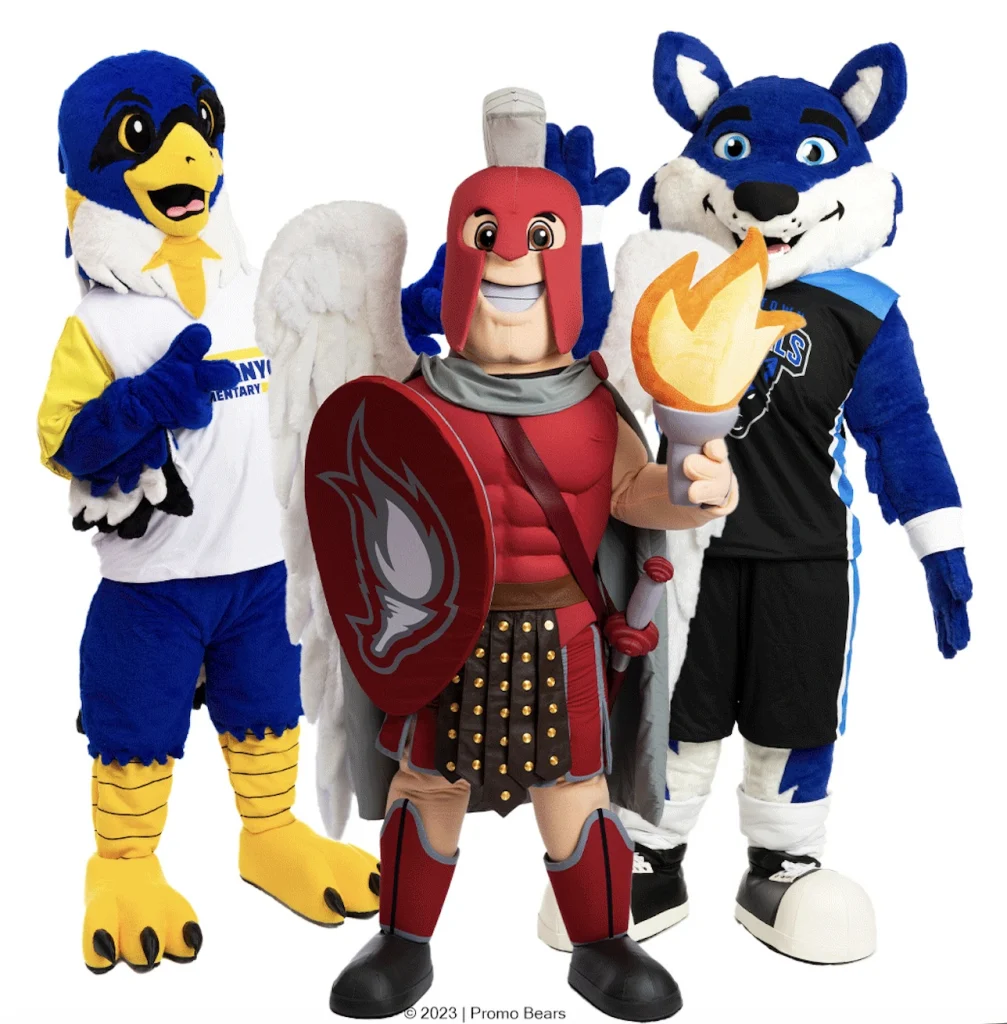
Ordering a custom mascot is a bigger decision than most buyers realize going in. Whether you’re representing a sports team, a university, or a major consumer brand, the choices you make before production begins will shape everything from how the costume performs at events to how long it lasts. This guide breaks down the 11 things every buyer should know so you can move forward with confidence and get a result your brand is proud of.
What separates a great mascot from a costly mistake
The difference between a mascot that energizes a crowd and one that ends up collecting dust in a storage room often comes down to preparation. Buyers who invest time upfront in defining their goals, understanding the process, and asking the right questions consistently get better outcomes. Those who rush to the lowest quote or skip the design phase often end up paying twice.
A great mascot costume is equal parts creative vision and functional engineering. It needs to look compelling in photos, hold up under real event conditions, and be comfortable enough for the person wearing it to actually perform. Getting all three right requires a supplier who understands mascot design at a deep level and a buyer who knows what to ask for.
1: Know your mascot’s primary purpose upfront
Before any design work begins, get clear on what your mascot will actually do. A promotional mascot that walks a trade show floor has different requirements than one performing at a high-energy sporting event or appearing in a school setting with young children. Purpose drives every downstream decision.
Think about the environments your mascot will appear in, how long performers will wear it at a stretch, and what emotional tone it needs to convey. A mascot designed for a children’s hospital should feel warm and approachable. One representing a professional sports franchise needs to project energy and confidence. Defining this early prevents costly redesigns later.
2: Free concept illustrations change everything
One of the most important early steps in ordering a mascot is seeing your idea translated into a visual concept before any production commitment is made. A free concept illustration based on your logo or design idea gives you something concrete to react to, share with stakeholders, and refine before a single stitch is sewn.
This step protects your investment and aligns your team. Without a visual reference, misunderstandings between buyer and supplier are almost inevitable. A supplier that offers this as a standard part of the process is signaling that they take your brand seriously and are confident enough in their design capability to show you what you’re getting before you commit.
3: Budget for quality, not just the lowest quote
It is tempting to compare mascot costume suppliers on price alone, but the lowest quote rarely reflects the full cost of ownership. A costume that wears poorly, photographs badly, or requires frequent repairs will cost more over time than a well-made one that holds up across hundreds of appearances.
Quality mascot production involves skilled craftsmanship, durable materials, and careful quality control at every stage. When evaluating quotes, ask what is included: design revisions, project management, quality checks, and shipping. A transparent, fixed quote based on your exclusive design is a far more reliable foundation than a vague estimate that shifts as the project progresses.
4: Wearability affects every performance
A mascot costume is only as effective as the person wearing it, and that person needs to be comfortable enough to move freely, stay in character, and perform at their best. Wearability is not a luxury feature; it is a functional requirement that directly affects the quality of every public appearance your mascot makes.
Look for costumes with built-in ventilation systems to manage heat, clear sightlines for the performer, and ergonomic construction that distributes weight evenly. Standard sizing that fits performers between 5 feet 7 inches and 6 feet 1 inch covers most situations, but custom sizing options are worth asking about if your team has specific needs. A mascot that a performer dreads wearing will never deliver the brand impact you paid for.
5: Unlimited revisions protect your brand investment
Your mascot represents your brand in the physical world. Getting the design exactly right is not optional, and you should not have to choose between accepting something close enough and paying extra for another round of changes. A supplier that offers unlimited revisions until the design perfectly matches your needs is one that stands behind their work.
This matters especially for organizations with strict brand guidelines, multiple stakeholders, or complex characters that need to be translated into three-dimensional form. The revision process is where a good supplier proves their creative capability and their commitment to your satisfaction. Do not settle for a supplier who treats revisions as a negotiation.
6: Production timelines are longer than most expect
One of the most common surprises for first-time mascot buyers is how long the production process actually takes. Custom mascot costumes typically require 12 to 16 weeks from design approval to delivery. Planning around this timeline is essential, especially if your mascot needs to be ready for a specific event, season opener, or product launch.
Other promotional mascot products have their own timelines worth knowing:
- Plush toys: 12 to 18 weeks total, including prototype and production
- Giant mascot inflatables: 3 to 4 weeks
- Stress balls: 10 to 12 weeks
- Mascot stickers: approximately 4 weeks
- 2D keychains, enamel pins, and magnets: 3 to 6 weeks
- Temporary tattoos: 3 to 4 weeks
Rush options may be available, but building in adequate lead time from the start is always the smarter approach. Work backward from your target date and start conversations with your supplier well in advance.
7: A dedicated project manager is a must-have
A custom mascot project involves multiple stages: concept illustration, design approval, material selection, production, quality control, and shipping. Without a single point of contact who owns the entire process, things fall through the cracks and timelines slip.
A dedicated project manager keeps your order on track, communicates proactively at each milestone, and ensures that what gets produced matches what was approved. For marketing managers and brand directors juggling multiple campaigns, this kind of end-to-end accountability is not just convenient; it is essential. Ask any supplier you are considering whether a named project manager will be assigned to your order.
8: Materials determine durability and cleanability
The materials used in a mascot costume directly affect how long it lasts and how practical it is to maintain. A costume that cannot be cleaned easily will degrade quickly in appearance, and one built from low-grade materials will start showing wear after a relatively small number of uses.
When evaluating a mascot costume supplier, ask specifically about the materials used for the outer shell, the internal structure, and the eyes. Lifelike 3D eyes, for example, make a significant visual difference in how a mascot reads on camera and in person. Easy-to-clean construction is equally important for organizations that use their mascot frequently across different settings. Durability and hygiene are practical concerns that should factor into every buying decision.
9: Mascots extend beyond the costume itself
A mascot character can anchor an entire ecosystem of branded merchandise. Once your mascot design is established, it becomes the foundation for plush toys, custom stress balls, keychains, stickers, inflatables, and more. This is where a mascot transforms from a single costume into a scalable brand asset.
Organizations that think about this ecosystem from the start get significantly more value from their mascot investment. Branded merchandise creates additional revenue streams, extends brand visibility beyond live events, and gives fans and customers something tangible to connect with. If your supplier can produce both the costume and the supporting merchandise, you gain consistency in character representation and simplify your vendor relationships considerably.
10: Supplier experience directly impacts output quality
Mascot design and production is a specialized craft. A supplier with deep experience in this field will anticipate problems before they arise, offer creative solutions to design challenges, and deliver a finished product that holds up in the real world. A supplier without that track record is learning on your project.
When evaluating potential partners, look at the breadth and quality of their portfolio. Have they produced mascots for organizations similar to yours in size and industry? Do they have experience with complex characters, not just simple animal shapes? A supplier with thousands of completed mascots across a wide range of clients brings a level of pattern recognition and problem-solving capability that simply cannot be replicated by a newer or less specialized operation.
11: What does a mascot actually do for your brand?
A well-executed mascot does more than look good at events. It gives your brand a personality that people can connect with emotionally, which is something a logo on a banner simply cannot do. A mascot creates moments: it draws crowds, generates social media content, and gives media something to photograph. Over time, it becomes a recognizable symbol that audiences associate with your organization.
For brands competing for attention in busy retail, sports, or entertainment environments, a mascot is a strategic asset. It turns passive observers into active participants, encourages word of mouth, and builds the kind of brand familiarity that advertising alone struggles to achieve. The return on a quality mascot investment compounds over time as the character becomes more recognizable and more deeply associated with your brand.
How Promo Bears helps you order smarter and get a mascot your brand deserves
We have spent over 19 years helping marketing managers, brand directors, and organizations of all sizes navigate the mascot ordering process with confidence. Here is what we bring to every project:
- Free concept illustration based on your logo or design idea, with unlimited revisions until it is exactly right
- A dedicated project manager who oversees every stage from design through delivery
- Premium construction featuring 3D realistic eyes, an integrated ventilation system, and easy-to-clean materials built for repeated use
- A full merchandise ecosystem including plush toys, inflatables, stress balls, keychains, and more to extend your mascot’s reach beyond the costume
- Transparent, fixed quotes based on your exclusive design so there are no surprises along the way
With more than 4,000 mascots created for clients ranging from schools and sports teams to globally recognized brands, we know what it takes to get this right. Ready to see what your mascot could look like? Get your free quote and receive a concept illustration at no cost or commitment.
Frequently Asked Questions
How do I know if my mascot design is too complex to produce as a wearable costume?
Most experienced mascot suppliers can translate complex characters into wearable form, but highly intricate details like fine textures, very small features, or extreme proportions may need to be simplified for structural and wearability reasons. The best way to assess this is through the concept illustration stage — a skilled designer will flag any elements that won’t translate well and suggest practical alternatives that preserve the character’s identity. If a supplier doesn’t raise these concerns during the design phase, that’s a red flag worth paying attention to.
What should I prepare before reaching out to a mascot supplier for the first time?
Come prepared with your logo or character reference, a clear sense of your mascot’s primary purpose and performance environment, your target delivery date, and a realistic budget range. The more context you can provide upfront — including your brand guidelines, any existing character artwork, and the events or settings where the mascot will appear — the more accurate and useful your initial concept illustration and quote will be. You don’t need to have everything finalized, but having these basics ready will make the process significantly faster and smoother.
Can a mascot costume be shared between multiple performers, and does that affect how it should be built?
Yes, many organizations rotate mascot duties among several performers, and this is a common and practical approach. If multiple people will be wearing the costume, it’s worth discussing adjustable or modular sizing options with your supplier, and prioritizing easy-to-clean materials becomes even more important for hygiene and longevity. Make sure all potential performers are measured and that the costume’s construction accommodates the range of body types on your team.
What are the most common mistakes first-time mascot buyers make?
The most frequent mistakes are starting the process too late and underestimating lead times, choosing a supplier based on price alone without evaluating portfolio quality or process, and skipping or rushing the design approval stage. Another common pitfall is failing to think beyond the costume itself — organizations that don’t plan for supporting merchandise miss significant opportunities to extend their mascot’s brand impact. Taking the time to vet suppliers thoroughly and plan your timeline backward from your event date will help you avoid most of these issues.
How long should a professionally made mascot costume realistically last?
A high-quality mascot costume built from durable materials and properly maintained can last anywhere from five to ten years or more, even with frequent use. Longevity depends heavily on how often the costume is used, how well it’s stored and cleaned between appearances, and the quality of materials and construction used in production. Investing in a well-made costume upfront and following the supplier’s care instructions will dramatically extend its usable life compared to a lower-cost alternative that degrades quickly.
Is it possible to update or refresh a mascot costume without starting the entire process over?
In many cases, yes — minor updates like color refreshes, replacing worn components, or adding new accessories can be made without commissioning an entirely new costume. However, significant character redesigns or structural changes typically do require starting fresh, which is why getting the original design right is so important. If you anticipate wanting to evolve your mascot over time, discuss this with your supplier early so they can build with future adaptability in mind.
How do I build a business case internally for investing in a custom mascot?
Frame the mascot as a long-term brand asset rather than a one-time expense — calculate its cost per appearance over a five-year lifespan and compare that to what you’d spend on equivalent advertising or promotional activations. Highlight the mascot’s ability to generate earned media, social content, and fan engagement that paid advertising can’t easily replicate. Supporting your case with examples of how similar organizations in your industry have used mascots to drive brand recognition and audience connection will help stakeholders understand the strategic value behind the investment.