
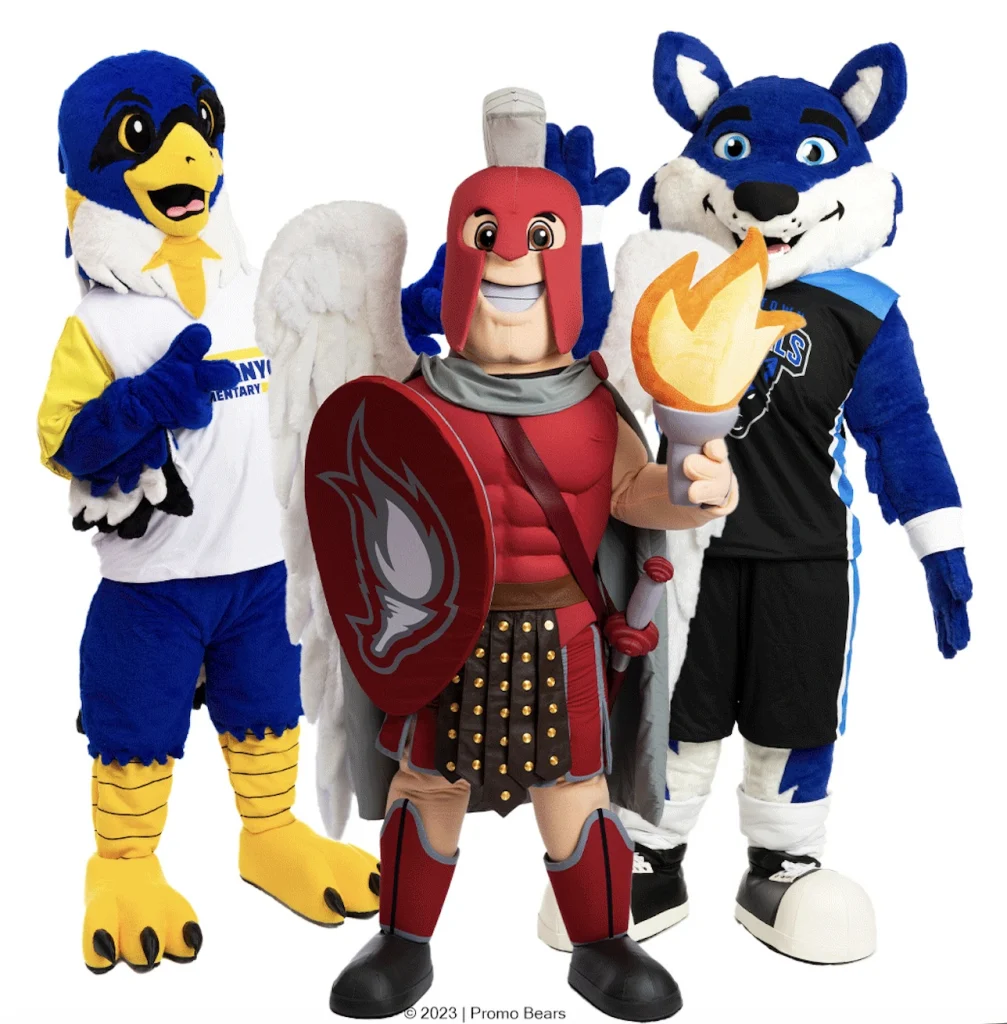
A custom mascot costume is one of those investments that keeps delivering long after the initial campaign wraps up. Whether you represent a sports team, a university, a retail brand, or a corporate organization, a well-designed mascot becomes a living, breathing extension of your identity. In 2026, brands that connect emotionally with their audiences consistently outperform those that rely on digital ads alone. Here are seven compelling reasons why a custom mascot costume deserves a place in your brand strategy.
What makes a custom mascot a smart brand investment
A branded mascot is far more than a costume. It is a strategic asset that works across events, social media, merchandise, and community engagement. Unlike a logo on a banner or a tagline in an email, a mascot creates a physical, interactive presence that audiences remember. The return on a custom mascot extends across multiple touchpoints, making it one of the most versatile tools available to marketing managers and brand directors today.
Before diving into the specific reasons, it helps to understand what separates a truly effective mascot from a generic one. The best mascots are built around a brand’s unique character, designed for comfort and visibility, and supported by a production process that ensures consistent quality. That combination is what turns a costume into a long-term brand ambassador.
Reason 1: Instant brand recognition at every event
A custom mascot costume creates immediate visual impact in crowded spaces. At trade shows, sporting events, store openings, or campus activities, a distinctive mascot cuts through the noise in a way that standard signage simply cannot match.
When your mascot is built directly from your logo or brand identity, every appearance reinforces recognition. Audiences connect the character to your organization instinctively, even from a distance. That visual shortcut is especially powerful in high-traffic environments where attention spans are short.
For marketing teams managing multiple events throughout the year, a mascot provides consistent, repeatable brand presence without the need to rebuild creative assets from scratch each time. One strong design, deployed strategically, compounds its value with every appearance.
Reason 2: Turn audiences into active brand ambassadors
People love interacting with mascots. They pose for photos, share videos, and tag brands on social media without any prompting. That organic behavior transforms your audience into a distribution network for your brand content.
A well-designed promotional mascot generates the kind of user-created content that paid advertising struggles to replicate. When a fan posts a photo with your mascot at a game or event, that moment reaches their entire network with built-in authenticity. It is word-of-mouth marketing with a visual hook.
This is particularly valuable for brands in retail, sports, and entertainment, where community engagement directly influences purchasing decisions. A mascot gives people a reason to stop, interact, and share, which is exactly the behavior that builds brand loyalty over time.
Reason 3: Build emotional connections that outlast campaigns
Campaigns end. Emotional connections do not. A custom mascot creates a character that audiences grow attached to, and that attachment carries forward long after a specific promotion has run its course.
Children remember mascots from their school years. Sports fans develop genuine affection for team characters. Shoppers associate positive experiences with the mascot they met at a brand activation. These emotional anchors are difficult to build through traditional advertising and nearly impossible to replicate with digital-only strategies.
For organizations focused on long-term brand equity, a mascot for brand recognition is one of the few tools that builds emotional depth alongside visibility. The character becomes part of the brand story, not just a promotional device.
Reason 4: Stand out in any competitive landscape
In competitive markets, differentiation is everything. A custom mascot gives your organization a distinctive personality that competitors cannot easily copy. A logo can be redesigned. A tagline can be borrowed. A mascot with a unique character, appearance, and story is genuinely yours.
This is especially relevant for organizations operating in crowded sectors such as FMCG, hospitality, and corporate services. When multiple brands are competing for the same audience’s attention, a mascot costume for organizations provides a memorable differentiator that goes beyond product features or pricing.
A mascot also translates well across formats, appearing consistently on merchandise, social channels, event materials, and physical activations. That cross-platform consistency strengthens brand positioning in a way that individual campaign assets rarely achieve.
Reason 5: Boost revenue through merchandise opportunities
A popular mascot opens up an entirely new revenue stream through branded merchandise. Once audiences connect with a character, they actively want to own a piece of it.
Consider the range of products a mascot character can anchor:
- Plush toys and collectibles for fans and younger audiences
- Custom stress balls and keychains for corporate giveaways and trade show promotions
- Stickers, pins, and magnets for grassroots community engagement
- Apparel and accessories that extend the mascot’s reach into everyday life
Each of these products reinforces the mascot’s presence beyond live events and creates additional touchpoints with your audience. For brands with an established mascot, merchandise becomes a self-sustaining part of the marketing ecosystem rather than an added expense.
Reason 6: Justify ROI with measurable engagement results
One of the most common concerns among marketing decision-makers is proving the return on brand investments. A custom mascot provides multiple measurable outputs that support that conversation internally.
Engagement metrics at events, social media mentions and shares, merchandise sales figures, and audience interaction rates all provide concrete data points tied directly to mascot appearances. Unlike some brand awareness activities, a mascot generates trackable moments at every deployment.
Beyond the numbers, a mascot also contributes to softer but equally important outcomes such as staff morale, community goodwill, and media coverage. When a mascot appears at a charity event or community activation, the coverage and goodwill generated often exceed what a comparable advertising spend would achieve.
Reason 7: Get a dedicated partner from concept to delivery
The quality of the production process behind a custom mascot costume matters as much as the design itself. A mascot that is uncomfortable to wear, difficult to maintain, or inconsistent in appearance will undermine the investment rather than support it.
The best outcomes come from working with a production partner that manages every stage of the process, from initial concept through design approval, manufacturing, quality control, and final delivery. A dedicated project manager ensures that timelines are respected and that the finished product matches the approved design exactly.
Details such as 3D realistic eyes, integrated ventilation systems, and easy-to-clean materials are not cosmetic extras. They determine whether a mascot performer can work comfortably for extended periods and whether the costume maintains its appearance across repeated use. These are the practical factors that separate a long-lasting brand asset from a short-lived prop.
How Promo Bears helps bring your mascot to life
We specialize in end-to-end custom mascot costume production for organizations that take brand experience seriously. Here is what working with us looks like in practice:
- Free concept illustration based on your logo or design idea, with unlimited revisions until the design is exactly right
- Dedicated project manager who oversees every stage from design approval through production and delivery
- Production in 12 to 16 weeks as standard, with rush options available for time-sensitive campaigns
- Quality control and final photos shared for your approval before the costume is packed and shipped
- Mascots built for comfort and durability, featuring 3D realistic eyes, built-in ventilation, and easy-to-clean materials
We have created over 4,000 mascots for organizations ranging from global brands to local schools and sports teams. Our goal is to make the entire process straightforward, transparent, and genuinely exciting for every client we work with.
Ready to see what your mascot could look like? Get your free concept illustration and start the conversation today. There is no commitment required to take that first step.
Frequently Asked Questions
How much does a custom mascot costume typically cost, and what factors affect the price?
The cost of a custom mascot costume varies depending on complexity, materials, size, and the level of detail involved in the design. A fully custom character built from scratch will generally cost more than an adaptation of an existing design, but the long-term ROI across events, merchandise, and social media typically justifies the investment. To get an accurate estimate for your specific project, requesting a free concept illustration and quote is the best starting point, since pricing is tailored to each brief.
How do I know if my brand idea can actually be turned into a wearable mascot costume?
Almost any brand character, logo element, or concept can be translated into a wearable mascot with the right design process. The key is working with a production team that offers concept illustrations upfront, so you can see a realistic interpretation of your idea before committing to manufacturing. Abstract shapes, animals, food characters, and even human-like figures are all achievable; the design phase is where practical considerations like performer visibility, weight, and ventilation are built in from the start.
What should we look for when hiring or training a mascot performer?
A great mascot performer brings energy, body language awareness, and crowd-reading skills to every appearance, since the costume itself cannot convey emotion through facial expressions. Look for individuals who are physically comfortable in confined spaces, can maintain character for extended periods, and understand how to interact safely with children and large crowds. Many organizations find success training an enthusiastic internal team member rather than outsourcing, especially when the mascot is tied closely to company culture or a sports team identity.
How do we maintain and store a custom mascot costume to maximize its lifespan?
Proper care significantly extends the life of a mascot costume and protects your investment. After each use, the interior should be aired out thoroughly, and any removable fabric components should be spot-cleaned or machine-washed according to the manufacturer’s guidelines. For storage, keep the costume in a cool, dry environment away from direct sunlight, ideally in a dedicated carry bag or case to prevent crushing or deformation of foam and structural elements. Scheduling a professional deep clean and inspection at least once a year is also recommended for costumes used frequently.
Can the same mascot design be adapted for digital use, such as animated content or social media graphics?
Yes, and this is one of the most underutilized opportunities for brands that already have a physical mascot. Once your mascot design is finalized, the same character can be illustrated or animated for use in digital ads, email campaigns, website content, and social media. Having a consistent character across both physical and digital formats dramatically strengthens brand recognition, and the design work is far easier when a detailed physical mascot already exists as the reference point.
What is a realistic timeline for planning a mascot appearance at a major event?
If you are ordering a new custom mascot costume, you should plan for a production window of 12 to 16 weeks from design approval, plus additional time for shipping and performer preparation. For a major event such as a product launch, season opener, or trade show, beginning the process at least five to six months in advance gives you a comfortable buffer for revisions, approvals, and contingencies. If your timeline is tighter, ask about rush production options, but factor in that compressed schedules may limit the number of design revision rounds available.
How do we measure whether our mascot is actually driving brand results?
Start by establishing baseline metrics before the mascot’s first deployment, including social media follower counts, event engagement rates, and any relevant sales figures. After each mascot appearance, track social media mentions, photo tags, and user-generated content directly tied to the character. For events, collect data on dwell time at your booth or activation area, since a mascot typically increases the average time visitors spend engaging with your brand. Over time, comparing these figures against non-mascot activations gives you a clear picture of the incremental value the character is generating.