
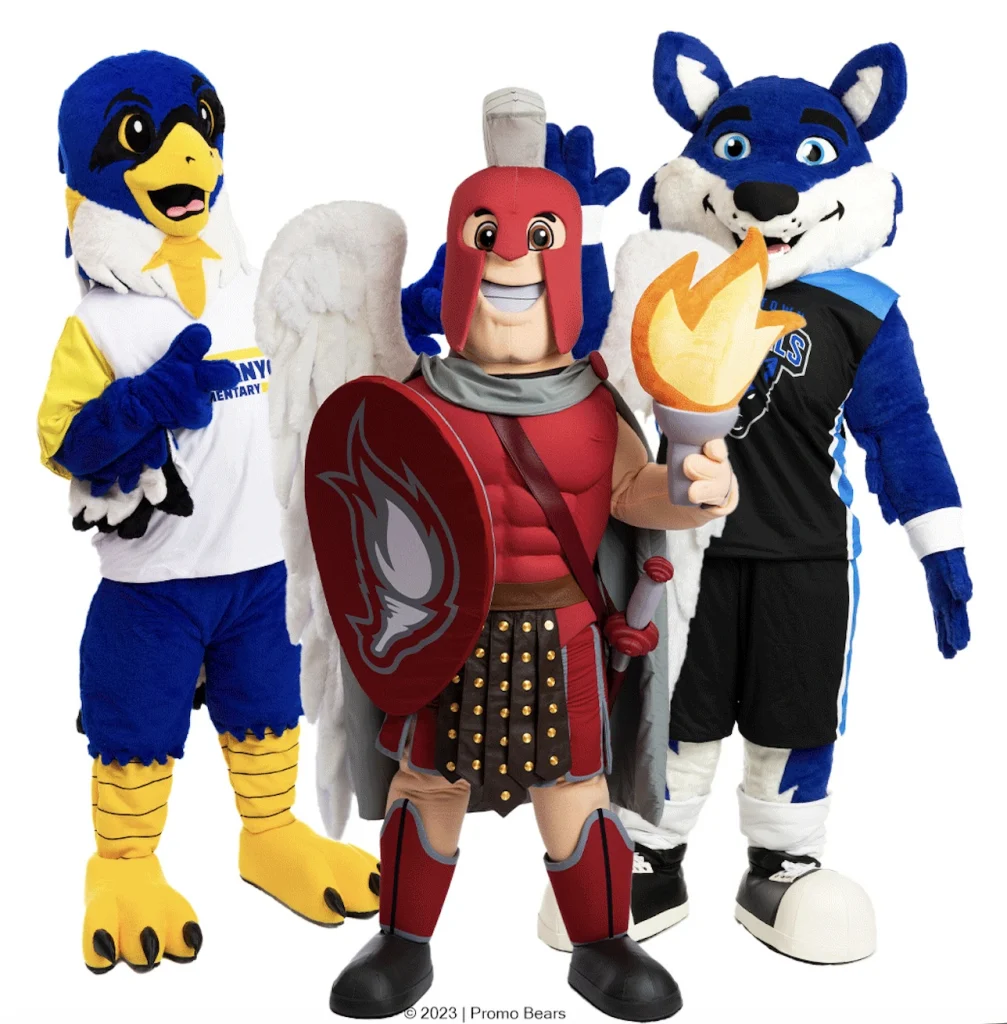
Buying a mascot costume is a serious investment, and the difference between a costume that wows crowds for years and one that falls apart after a few events often comes down to a handful of quality indicators. Whether you’re sourcing a custom mascot costume for a sports team, a retail brand, or a corporate campaign, knowing what to look for before you commit protects your budget and your brand. This mascot costume checklist walks you through the seven most important factors to evaluate so you can buy with confidence.
What separates a great mascot costume from a costly mistake
Not all mascot costumes are built the same, and the gap between a well-made costume and a poorly constructed one becomes obvious fast, usually at the worst possible moment. A costume that overheats performers, fades after a few wears, or looks unconvincing in photos can do real damage to the brand it’s meant to represent.
Evaluating mascot costume quality before buying means looking beyond surface-level aesthetics. The materials, the construction, the ventilation, the design process, and the supplier’s track record all play a role. The seven criteria below give you a structured way to assess any costume before you sign off on an order.
1: Inspect the outer shell materials and stitching
The outer shell is the first thing anyone sees, and it’s also the part of the costume that takes the most punishment. High-quality mascot costumes use dense, UV-resistant faux fur or durable foam-backed fabric that holds its shape and color through repeated use, outdoor events, and regular cleaning cycles.
Run your hand across the fabric and look closely at the seams. Double-stitched or reinforced seams at stress points (joints, openings, and attachment areas) are a strong indicator of mascot costume durability. Loose threads, uneven stitching, or thin fabric that stretches under light pressure are red flags that the costume will not hold up under real performance conditions.
Ask the supplier what materials they use and whether those materials are rated for outdoor use. A supplier who can answer that question in detail is one who takes construction seriously.
2: Check the ventilation and cooling system
Performer safety is non-negotiable, and ventilation is the single biggest factor in how long a mascot can stay active before needing a break. A costume without proper airflow creates a genuine health risk, particularly during outdoor events or high-energy performances.
Look for costumes that feature an integrated ventilation system, ideally with internal fans or strategically placed airflow channels that circulate air around the performer’s head and body. Ask specifically where the vents are located and how air moves through the costume during active use.
Poor ventilation is one of the most common complaints about budget mascot costumes, and it is also one of the hardest problems to fix after the fact. Prioritize this feature early in your evaluation process.
3: Evaluate the realism and finish of the eyes
The eyes are the emotional center of any mascot costume. They determine whether the character feels alive and engaging or flat and unconvincing. This is one area where the difference between a quality build and a cheap one is immediately visible in photos and video.
High-quality mascot costumes use 3D molded eyes with depth, gloss, and dimensional detail that catch light naturally. These eyes read well from a distance and hold up under close inspection. Flat printed or painted eyes lack that sense of life and tend to look dated quickly.
When reviewing a supplier’s portfolio, pay close attention to how the eyes photograph. If the eyes look flat or unconvincing in professional product photos, they will look worse in real-world conditions.
4: Assess comfort and wearability for performers
A mascot that performs poorly because the costume is uncomfortable is a missed opportunity. Comfort and wearability directly affect how long a performer can stay active, how naturally they move, and ultimately how engaging the mascot experience is for the audience.
Key comfort factors to evaluate include:
- Interior padding and lining that prevents chafing during extended wear
- Weight distribution across the head, body, and limbs
- Visibility from inside the costume head
- Range of motion in the arms, legs, and torso
- Ease of putting on and removing the costume independently
Ask whether the costume is designed to fit a standard height range and whether custom sizing is available. A costume sized correctly for your performer makes a significant difference in how it looks and how long it can be worn comfortably.
5: Review ease of cleaning and maintenance
Mascot costumes get dirty. They are worn at outdoor events, handled by crowds, and used repeatedly across an entire season or campaign. A costume that cannot be cleaned efficiently becomes unhygienic quickly and degrades faster than one built with maintenance in mind.
Ask the supplier specifically how the costume should be cleaned and what materials are used in the lining and outer shell. Spot-cleaning capability is a baseline expectation. Removable, washable interior components are a meaningful upgrade. Some high-quality costumes are designed so that the outer shell can be surface-cleaned without damaging the structure or color.
Suppliers who include a care manual with their costumes demonstrate that they have thought carefully about the product’s long-term performance, not just its initial appearance.
6: Verify the customization depth and design process
A custom mascot costume should be genuinely custom, not a standard shape with a logo slapped on it. When evaluating suppliers, dig into how deep their customization actually goes and what the design process looks like from first contact to final approval.
The strongest suppliers offer a structured design process that includes:
- A free concept illustration based on your logo or design idea before any financial commitment
- Unlimited revision rounds until the design matches your vision exactly
- A dedicated point of contact who manages the project from design through delivery
- Final approval based on result photos before the costume ships
If a supplier cannot show you a clear design process, or if revisions come with additional fees, that is a sign that the customization experience may be frustrating and the final product may not match your expectations. Transparency at the design stage reflects how the rest of the process will go.
7: Examine the supplier’s portfolio and client track record
A supplier’s portfolio tells you more than any product description can. Look for variety, consistency, and quality across a wide range of character types, industries, and use cases. A strong portfolio shows that the supplier can execute complex designs with precision, not just simple, round characters.
Client track record matters equally. Suppliers who have produced mascot costumes for well-known brands, universities, sports organizations, or government agencies have been tested against high standards and have delivered. Ask for references or look for named clients in their portfolio.
Also pay attention to how long the supplier has been operating. Experience in mascot design and costume production compounds over time: a team with many years in the industry has encountered and solved problems that newer suppliers have not yet faced.
How Promo Bears helps you evaluate and invest in mascot costume quality
We built our entire process around the quality criteria that matter most to marketing managers and brand directors who need a mascot costume that performs as well as it looks. Here is what working with us looks like in practice:
- Every project starts with a free concept illustration based on your logo or design idea, with unlimited revisions until you are fully satisfied
- Our costumes feature 3D realistic eyes, an integrated ventilation system, and comfortable interiors designed for extended wear
- We use high-quality, easy-to-clean materials and include a care manual with every order
- A dedicated project manager oversees your project from design through delivery, including a final quality check and result photos before shipping
- With over 4,000 mascots produced for clients including NASA, Walmart, Red Bull, and Harrods, our portfolio speaks for itself
- Standard production takes 12 to 16 weeks, with rush options available
If you are ready to move forward with a custom mascot costume or want to explore the full range of mascot merchandise we offer, the best first step is a free quote. No commitment, no vague estimates: just a clear concept and a fixed price based on your design. Get your free quote and let us show you what a quality mascot investment looks like.
Frequently Asked Questions
How much should I expect to budget for a high-quality custom mascot costume?
A professionally made custom mascot costume typically ranges from $1,500 to $5,000 or more depending on complexity, size, and the level of customization involved. Simpler characters with fewer details sit at the lower end of that range, while intricate designs with advanced ventilation systems, animatronic elements, or multiple components will cost more. It’s worth viewing this as a long-term brand asset rather than a one-time expense — a well-built costume can last five or more years with proper care, making the cost-per-use very reasonable.
What are the most common mistakes buyers make when ordering a custom mascot costume for the first time?
The most frequent mistake is prioritizing price over quality indicators — choosing the cheapest quote without verifying materials, ventilation, or the supplier’s track record. Another common error is skipping the design review process and approving a concept before fully pressure-testing it across different viewing distances and lighting conditions. Finally, many first-time buyers underestimate lead time and rush their order, which can compromise quality; plan for at least 12–16 weeks for a well-made costume.
How do I know if a mascot costume will hold up for outdoor events specifically?
Ask the supplier directly whether their outer shell materials are UV-resistant and rated for outdoor use, and request information on how the fabrics perform in heat and humidity. Look for faux fur or foam-backed fabrics that are colorfast and won’t mat or fade after sun exposure. You should also confirm that the ventilation system is robust enough for warm outdoor environments, since heat buildup is significantly more intense outside than in a climate-controlled venue.
Can one mascot costume fit multiple performers, or do I need a separate costume for each person?
Most custom mascot costumes are designed to fit a standard height range — typically between 5’4″ and 6’2″ — which means a single costume can usually be worn by multiple performers of similar builds. If your team includes performers who fall significantly outside that range, custom sizing is often available and worth the additional investment. Interior padding and adjustable components can also help accommodate slight size differences between wearers without compromising the costume’s appearance or comfort.
What's the best way to maintain and extend the lifespan of a mascot costume?
Follow the care manual provided by your supplier, as cleaning methods vary depending on the materials used in both the outer shell and interior lining. At minimum, spot-clean the exterior after each use and allow the costume to air out fully before storing it to prevent moisture buildup and odor. Store the costume in a cool, dry place away from direct sunlight, ideally on a mannequin or padded form to help it retain its shape. Regularly inspect seams, eyes, and attachment points for wear so small issues can be repaired before they become costly problems.
How do I evaluate a mascot costume supplier if I can't see the product in person before ordering?
Start by requesting a detailed portfolio that includes a variety of character types, not just the supplier’s best work, to get a realistic sense of their consistent quality. Ask for named client references or look for recognizable brands and organizations among their past projects, as high-profile clients signal that the supplier has been held to a professional standard. Request result photos of completed costumes before they shipped to previous clients — any reputable supplier should be able to provide these. Finally, pay attention to how thoroughly they answer your technical questions about materials and construction; vague or evasive answers are a red flag.
Is it possible to order additional mascot-related merchandise to complement the costume?
Yes, and it’s a smart brand strategy to do so. Many suppliers who specialize in mascot costumes also produce complementary branded merchandise such as mascot plush toys, stress balls, keychains, and apparel featuring your character. Offering these items alongside your live mascot appearances creates additional brand touchpoints and gives audiences a tangible takeaway. When sourcing merchandise, working with the same supplier who built your costume ensures design consistency across every format your mascot appears in.
Related Articles
- 5 things to consider before ordering custom stress balls in bulk
- Why are stress balls one of the best promotional items for events?
- How do marketing managers compare promotional tools for large events?
- What makes a sports club mascot effective at building identity?
- What are the lead times for ordering promotional products?