
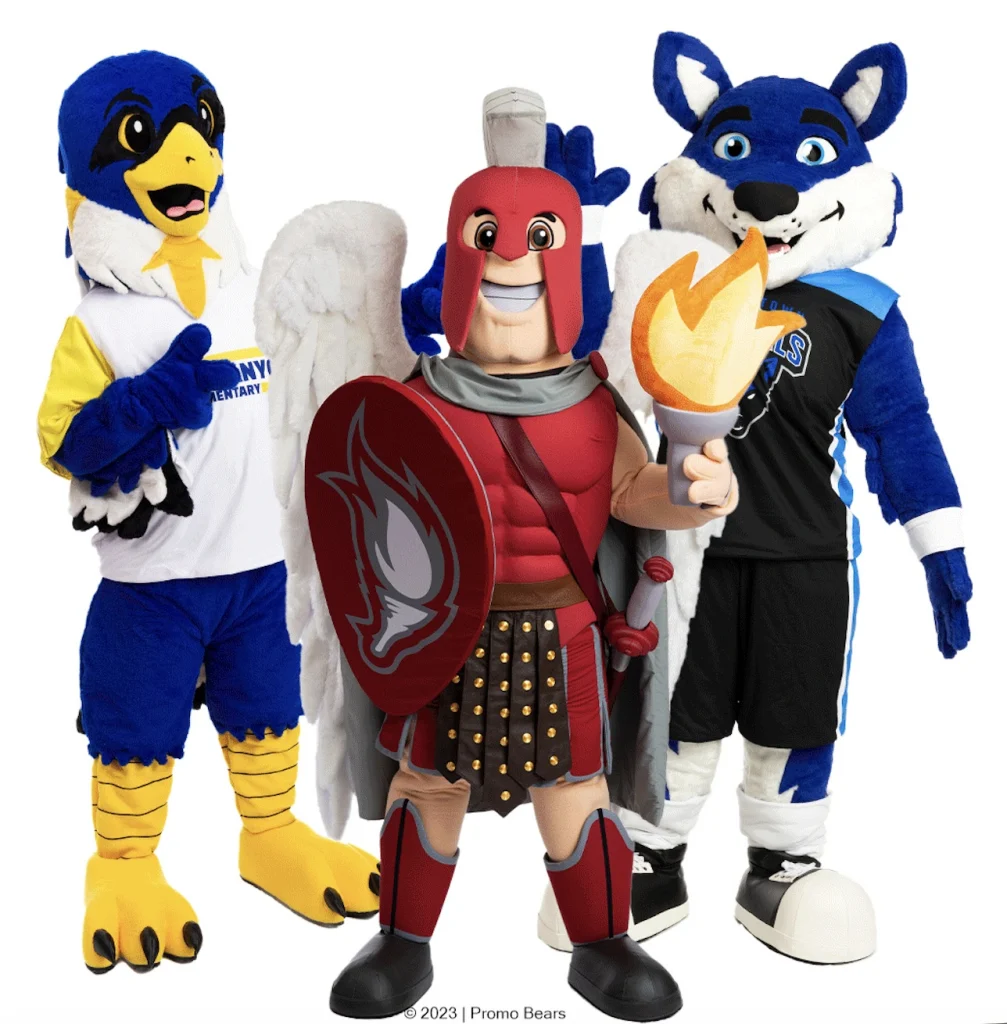
Yes, custom promotional products genuinely improve brand recognition. When people use or display a branded item in their daily lives, your logo and message get repeated exposure without any additional cost on your end. This effect is especially powerful when the product is high quality, useful, and tied to a clear visual identity. Below, we break down the most common questions marketers ask before investing in promotional merchandise.
How do promotional products actually build brand recognition?
Promotional products build brand recognition through repeated, passive exposure. Every time someone uses a branded item, whether it is a stress ball on their desk or a plush toy on a shelf, they see your logo. Over time, that repetition creates familiarity, and familiarity builds trust. Unlike a digital ad that disappears after a few seconds, a physical product stays in the environment and keeps working.
The mechanism is straightforward. A well-designed product becomes part of someone’s daily routine. A branded item that lives on a desk, in a bag, or on a keychain gets seen not just by the person who received it, but by everyone around them. That organic visibility is something paid media simply cannot replicate at the same cost per impression.
What makes this especially valuable for B2B brands is the emotional layer. A physical product creates a tangible connection to your brand. It signals investment, creativity, and attention to detail in a way that a digital touchpoint rarely does.
What types of promotional products are most effective for brand awareness?
The most effective promotional products for brand awareness are items that people use regularly, display publicly, or share with others. Usefulness drives frequency of exposure, and frequency of exposure drives recognition. Products that sit in a drawer do nothing for your brand, while products that live on desks, bags, and shelves work every single day.
Some of the strongest performers for brand awareness include:
- Custom mascot costumes: Perfect for events, activations, and sports environments where your brand needs to be seen and remembered at scale
- Plush toys and mascot merchandise: Highly shareable, especially in family-friendly or fan-driven contexts, with a long product lifespan
- Custom stress balls: Desk-friendly, tactile, and kept for months, giving your logo consistent visibility in office environments
- Keychains and enamel pins: Compact items that travel everywhere with the recipient, generating impressions in a wide range of settings
- Giant inflatables and inflatable arches: Instant visual impact at events, trade shows, and outdoor activations
- Stickers and temporary tattoos: Low cost, high shareability, and popular across younger demographics
The right product depends on your audience and the context in which you want your brand to appear. A mascot costume creates moments at live events. A stress ball creates daily touchpoints in an office. Both serve brand recognition, just through different pathways.
How long do promotional products keep generating brand impressions?
Promotional products generate brand impressions for as long as the item remains in use, which can range from weeks to several years depending on the product type. A high-quality plush toy or custom mascot can stay in someone’s home or office for years. A keychain or enamel pin often lasts even longer. This makes the cost per impression exceptionally low compared to most advertising formats.
Product lifespan varies significantly by category. Here is a general guide based on how we produce these items:
- Mascot costumes: Built for long-term use across dozens or hundreds of events
- Plush toys: Typically kept for years, especially when tied to a beloved brand character
- Stress balls: Average desk lifespan of several months to over a year
- Keychains and pins: Often kept indefinitely as collectibles or everyday carry items
- Stickers: Applied and displayed for months on laptops, water bottles, and notebooks
The key insight is that promotional products do not stop working after the campaign ends. They continue generating impressions long after distribution, which is something traditional advertising cannot do.
What’s the difference between promotional products and traditional advertising?
The core difference is that promotional products are physical, owned by the recipient, and generate impressions passively over time, while traditional advertising is rented space that disappears the moment you stop paying for it. A billboard runs for a month. A branded plush toy sits on someone’s desk for three years.
Traditional advertising, whether digital, print, or broadcast, gives you control over reach and timing but requires ongoing spend to maintain visibility. The moment the budget stops, so does the exposure. Promotional products work differently. You invest once in production and distribution, and the item continues to represent your brand without any additional cost.
There is also a difference in how people receive these two formats. Advertising is often perceived as an interruption. A promotional product is a gift. That shift in framing changes how people feel about the brand behind it. Recipients tend to associate the brand with generosity and quality, especially when the product itself is well made.
For B2B marketers, this distinction matters when justifying ROI. A promotional product has a measurable lifespan and a calculable cost per impression. That makes it easier to defend in budget conversations compared to campaign spend that produces no lasting physical asset.
Should small businesses invest in custom promotional products?
Yes, small businesses benefit from custom promotional products, but the investment works best when the product is genuinely useful, well designed, and distributed with intention rather than scattered broadly. For smaller budgets, focus on products with a long lifespan and high daily visibility, such as keychains, stickers, or desk items, rather than high-volume giveaways.
The advantage for small businesses is that promotional products level the playing field in local and community contexts. A well-designed branded item at a local event or in a retail environment can create the same impression as a much larger brand’s campaign, because the product itself does the talking.
The most important factor is quality. A cheap, poorly made product reflects on your brand just as much as a well-crafted one. If the budget is limited, it is better to produce fewer items at a higher quality than to distribute large quantities of something that will be thrown away immediately.
How do you choose the right promotional products for your brand?
Choosing the right promotional products starts with understanding your audience, your distribution context, and the impression you want to leave. A product that works brilliantly for a sports team activation will not necessarily work for a corporate conference, and vice versa. Match the product to the moment and the person receiving it.
Work through these questions before committing to a product:
- Who is receiving this product? Age, lifestyle, and environment all shape what will actually get used and kept.
- Where will it be distributed? Events, retail, direct mail, and trade shows each call for different product types and sizes.
- How long do you want it to last? If you need ongoing daily impressions, invest in a durable item. If it is a one-time activation, a lower-cost option may be appropriate.
- What does the product say about your brand? The quality and creativity of the item communicate something about your organization before a single word is read.
- What is your production timeline? Different products have very different lead times. Stickers can be ready in 7 to 10 days. Custom stress balls take 10 to 12 weeks. Mascot costumes require 12 to 16 weeks. Plan accordingly so you are not scrambling before an event.
Once you have answered those questions, narrowing down the product category becomes much more straightforward. The goal is always the same: put something in someone’s hands that they will keep, use, and associate positively with your brand.
How Promo Bears helps you improve brand recognition
We specialize in the kind of custom promotional products that actually stay with people. From custom mascot costumes to stress balls, plush toys, and giant inflatables, everything we produce is built around your brand’s specific design and identity. No standard shapes, no generic prints. Every product is custom made to represent you accurately and memorably.
Here is what makes working with us different:
- Every project starts with a free concept illustration based on your logo or idea, with unlimited revisions until it is exactly right
- Custom stress balls are produced with specific PMS color matching and full color print options, with a production time of 10 to 12 weeks after design approval
- Mascot costumes feature 3D realistic eyes, a built-in ventilation system, and are ready in 12 to 16 weeks
- A dedicated project manager oversees your order from concept to delivery
- We serve clients across the US and Canada, with over 4,000 mascots produced for brands ranging from startups to globally recognized organizations
If you are ready to put your brand in people’s hands in a way they will actually remember, get a free quote and we will show you exactly what we can create for you.
Frequently Asked Questions
How do I measure the ROI of promotional products?
Start by calculating your cost per impression: divide the total production and distribution cost by the estimated number of impressions the item will generate over its lifespan. For example, a custom stress ball that costs $5 and is seen twice a day for a year generates over 700 impressions at less than a cent each. You can also track ROI more directly by using unique URLs, QR codes, or promo codes printed on the product, which let you attribute website visits or conversions back to a specific promotional campaign.
What is the minimum order quantity for custom promotional products, and is it worth ordering in small batches?
Minimum order quantities vary by product type — stickers and pins often have low minimums, while custom mascot costumes and plush toys are typically produced per project with no volume requirement in the traditional sense. Small batches can absolutely be worth it, especially for high-value items like mascot costumes or premium plush toys where a single unit generates significant long-term impressions. For lower-cost items like stress balls or keychains, ordering in larger quantities generally reduces the per-unit cost and makes the investment more efficient.
What are the most common mistakes brands make when ordering promotional products?
The three most common mistakes are prioritizing low cost over quality, distributing products without a clear strategy, and underestimating production lead times. A cheap product that gets thrown away immediately has a cost per impression of infinity — it generates none. Similarly, handing out branded items at a random event with no connection to your audience or message wastes both the product and the opportunity. Always plan your distribution context first, build in enough production time (especially for custom items like mascot costumes that require 12–16 weeks), and treat quality as a non-negotiable baseline.
Can promotional products work for digital-first or e-commerce brands that don't attend physical events?
Absolutely — promotional products are highly effective for digital-first brands when distributed through packaging inserts, unboxing experiences, loyalty rewards, or direct mail campaigns. Including a branded sticker, pin, or small plush toy in an order creates a physical touchpoint that extends the brand experience beyond the screen and encourages social sharing. Many e-commerce brands have built strong community loyalty by turning their packaging into a branded merchandise moment, which generates organic social content and repeat purchase associations.
How important is it to match the promotional product to my existing brand identity?
It is critical. A promotional product that uses inconsistent colors, off-brand fonts, or a generic shape that doesn’t reflect your visual identity can actually dilute brand recognition rather than build it. Every product should feel like an intentional extension of your brand — the colors, the character design, and the overall aesthetic should all align with what people already associate with you. This is why working with a supplier that offers PMS color matching and custom design from scratch (rather than adapting a stock template) makes a meaningful difference in the final result.
How far in advance should I start planning a promotional product order for an upcoming event?
As a general rule, start at least three to four months before your event if you are ordering custom products like mascot costumes or plush toys, which typically require 12–16 weeks of production time after design approval. For faster-turnaround items like stickers or simple keychains, six to eight weeks is usually sufficient. Factor in time for concept revisions, design approval, production, and shipping — especially if you are ordering around peak seasons like Q4 when production schedules tend to fill up quickly.
Can I use the same promotional product across multiple campaigns, or should I create something new each time?
It depends on the product type and your branding goals. A mascot costume, for example, is built for repeated use across dozens of events and represents a long-term brand asset rather than a single-campaign item. On the other hand, stickers, temporary tattoos, and limited-edition pins can be refreshed seasonally or by campaign to create novelty and collectibility. The smartest approach is to invest in one high-quality evergreen item (like a mascot or signature plush) for consistent brand representation, and complement it with lower-cost, campaign-specific items that keep the experience feeling fresh.