
Marketers target kids by combining emotional storytelling, character-driven branding, and multi-channel reach to build early brand loyalty. From Saturday morning cartoons to YouTube pre-roll ads, children are reached through the environments where they naturally spend their time. The strategies have grown more sophisticated in recent years, and understanding them helps brands, educators, and parents make more informed decisions. Below, we unpack the most common methods marketers use to connect with younger audiences.
What channels do marketers use to reach children?
Marketers reach children through a combination of television, digital video platforms, social media, in-school programs, retail environments, and gaming apps. Each channel is chosen because it matches where children focus their attention. In 2026, digital platforms have largely overtaken traditional TV as the primary channel for reaching kids under 12, though broadcast media remains relevant for younger age groups.
Television advertising during children’s programming has been a cornerstone of youth marketing for decades. Saturday morning cartoons, after-school shows, and family streaming content all serve as prime real estate for brands selling toys, food, and entertainment products.
Digital channels now carry even more weight. YouTube, Roblox, and kid-friendly gaming apps give brands direct access to children’s screen time. In-app advertising, branded mini-games, and sponsored content within these platforms blend entertainment with promotion in ways that are not always obvious to young viewers.
Retail environments also play a major role. Product placement at eye level, colorful end-cap displays, and checkout aisle positioning are all deliberate choices designed to put products in a child’s line of sight and within arm’s reach.
How do brands use characters and mascots to appeal to kids?
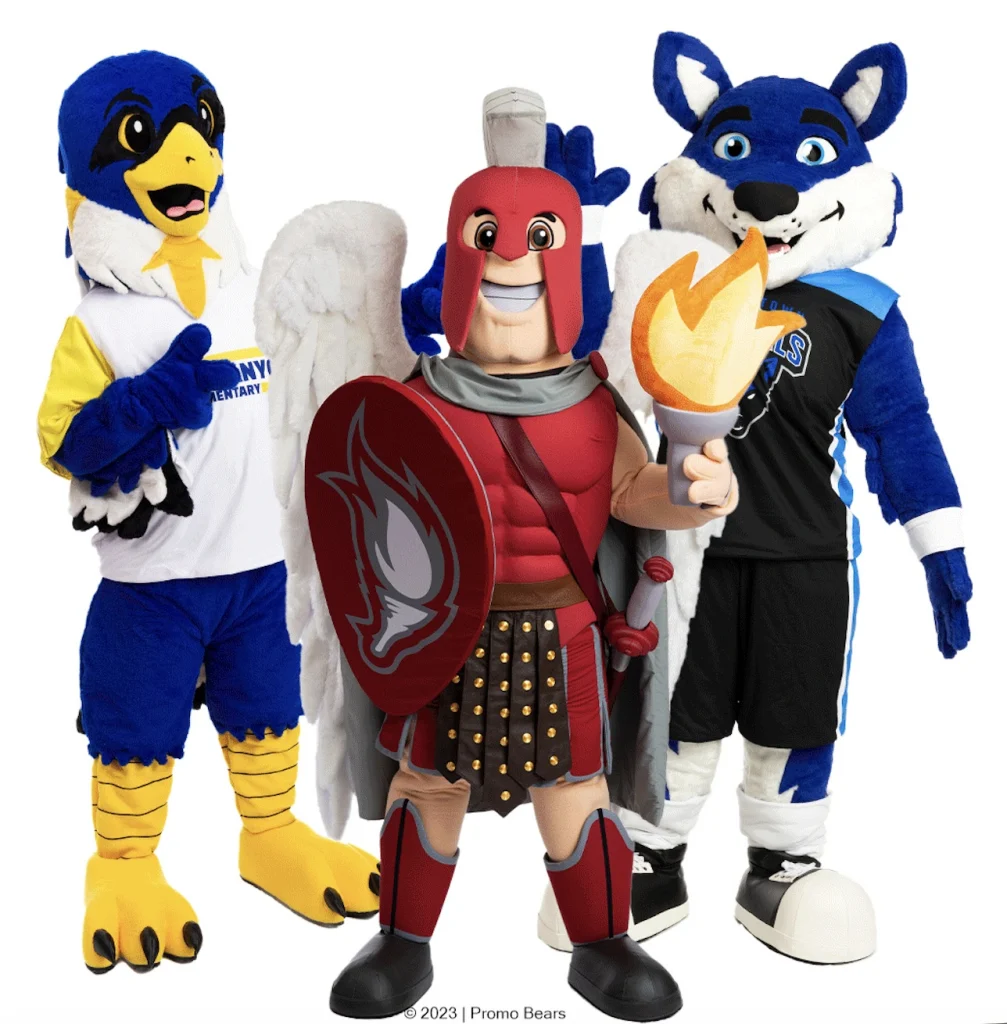
Brands use characters and mascots to create emotional connections with children by giving abstract products a friendly, relatable face. A well-designed mascot turns a brand into a personality that kids can identify with, root for, and feel affection toward. This emotional bond drives both purchase requests and long-term brand loyalty that can extend well into adulthood.
Mascots work because children respond to faces, expressions, and storytelling in ways that adult audiences do not. A cheerful animal character or a playful cartoon figure signals safety, fun, and familiarity. When a child sees that character consistently across packaging, advertising, and merchandise, the brand becomes part of their world rather than a commercial interruption.
Branded characters are also highly effective as custom mascot merchandise, appearing on plush toys, stickers, keychains, and backpacks. When a child carries or wears a mascot product, they become a walking brand ambassador. This kind of organic visibility among peer groups is something no paid ad campaign can fully replicate.
The most successful children’s marketing characters share a few common traits: they have a simple, distinctive design that is easy to recognize at small sizes, they express clear emotions that children can read instantly, and they appear consistently across every touchpoint a child might encounter.
What psychological techniques do marketers use on children?
Marketers use psychological techniques including repetition, social proof, scarcity, and aspirational storytelling to influence children’s preferences and purchase requests. These techniques are effective because children are still developing the critical thinking skills needed to recognize and resist persuasion. Young children in particular often cannot distinguish between a commercial and organic content.
Repetition is one of the most foundational tools. Seeing the same character, jingle, or color scheme across multiple touchpoints builds familiarity, and familiarity breeds preference. Children who recognize a brand feel comfortable with it, which translates directly into product requests at the store.
Social proof is equally powerful. When a child sees peers, older kids, or beloved characters using or endorsing a product, it creates a desire to belong. Collectible toy lines, limited edition packaging, and “everyone has one” messaging all tap into this instinct.
Aspirational framing is another key technique. Products are presented as pathways to adventure, popularity, or special abilities. Rather than selling a toy, a brand sells the experience of becoming a hero, explorer, or champion. This narrative approach resonates deeply with children who are actively developing their sense of identity.
How does influencer marketing target kids online?
Influencer marketing targets kids online by placing branded products and messages inside content that children already watch and trust. Kid-friendly YouTube creators, family vloggers, and gaming streamers integrate sponsored products into their videos in ways that feel like personal recommendations rather than advertisements. Because children often view these creators as friends or role models, the persuasive impact can be significant.
Toy unboxing videos are among the most viewed content categories on YouTube, and many feature paid partnerships with toy brands. A child watching a favorite creator open and react to a new product experiences something close to a peer recommendation, even though the content is commercially driven.
Gaming platforms like Roblox have also become major influencer marketing channels. Branded in-game items, sponsored experiences, and creator collaborations bring products directly into the digital spaces where children play and socialize. The line between entertainment and advertising becomes especially blurry in these environments.
Transparency is an ongoing challenge in this space. While the Federal Trade Commission requires disclosure of sponsored content, children often lack the media literacy to understand what a sponsorship disclosure means or how it changes the nature of the content they are watching.
What role does packaging and product design play in marketing to children?
Packaging and product design play a central role in children’s marketing by using bright colors, bold characters, interactive elements, and tactile features to attract attention and trigger desire at the point of sale. Children are highly visual and sensory-driven consumers, which makes the physical appearance of a product one of the most powerful marketing tools available.
Color psychology is applied deliberately. Saturated yellows, reds, and oranges signal excitement and energy, while bright blues and greens suggest adventure and discovery. These color choices are not accidental. They are engineered to stand out on crowded shelves and to appeal to the visual preferences of young shoppers.
Character placement on packaging reinforces mascot marketing. When the same beloved character appears on the box, the bag, and the product itself, every interaction with the item becomes a brand touchpoint. This consistency deepens emotional attachment and makes the product feel like an extension of a story the child already loves.
Interactive packaging adds another dimension. Boxes that double as playsets, wrappers with puzzles or games printed on the inside, and collectible packaging that forms part of a series all give children a reason to engage with the brand beyond the product itself.
Are there regulations that limit how marketers can target kids?
Yes, there are regulations in the United States and Canada that limit how marketers can target children, particularly around data collection, advertising transparency, and content standards. The most significant federal regulation in the U.S. is the Children’s Online Privacy Protection Act, commonly known as COPPA, which restricts how companies collect and use personal data from children under 13.
The Federal Trade Commission enforces COPPA and also oversees truth-in-advertising standards that apply to children’s marketing. Brands are required to disclose sponsored content clearly, avoid deceptive claims, and ensure that advertising directed at young children is not misleading given their limited ability to evaluate persuasive intent.
In Canada, the Broadcast Code for Advertising to Children sets specific rules for broadcast advertising directed at audiences under 12, including restrictions on the use of celebrities, the promotion of unhealthy foods, and the use of pressure tactics. Quebec has some of the strictest rules in North America, with a near-total ban on commercial advertising directed at children under 13.
Industry self-regulation also plays a role. Organizations like the Children’s Advertising Review Unit in the U.S. review advertising directed at children and issue guidelines around fairness, honesty, and social responsibility. While these are not legally binding in the same way as federal law, many major brands voluntarily follow them to maintain consumer trust.
How Promo Bears helps with children’s marketing ideas
If you are developing a children’s marketing campaign, branded characters and physical merchandise are among the most effective tools in your toolkit. At Promo Bears, we specialize in bringing those characters to life across a full range of promotional products that resonate with young audiences and drive real brand engagement.
Here is what we can help you create:
- Custom mascot costumes ready in 12 to 16 weeks, featuring 3D realistic eyes, a built-in ventilation system, and a design that starts with a free concept illustration
- Plush toys in the exact shape and color of your brand character, ideal for giveaways, retail, and events
- Stickers and mascot stickers ready in approximately 4 weeks, perfect for school campaigns and product packaging
- Custom stress balls in fully custom shapes with PMS color matching, ready in 10 to 12 weeks
- Giant mascot inflatables that create a show-stopping presence at events, ready in just 3 to 4 weeks
- Keychains, enamel pins, and temporary tattoos for high-volume giveaways that keep your brand in kids’ hands long after the event
Every project begins with a free concept illustration and unlimited revisions, so you never commit to production until the design is exactly right. A dedicated project manager guides the entire process from first sketch to doorstep delivery.
Ready to bring your brand character to life? Get your free quote today and let our team show you what is possible.
Frequently Asked Questions
At what age do children start to recognize and respond to brand marketing?
Research suggests that children begin recognizing brand logos and mascots as early as 18 months to 2 years old, and by age 3 to 4, many can express brand preferences. By age 8, most children can identify advertising as a persuasive format, though they still struggle to fully resist its influence. This is why early brand exposure through characters, colors, and consistent touchpoints is such a priority for youth-focused marketers.
How can a small brand compete with large companies when marketing to kids?
Small brands can compete effectively by leaning into authenticity, creativity, and community-level engagement rather than trying to match large marketing budgets. A memorable, well-designed mascot character levels the playing field significantly — a distinctive character that children connect with emotionally can outperform generic high-spend campaigns. Local events, school partnerships, and targeted social media content featuring your brand character are all cost-effective entry points that larger brands often overlook.
What is the biggest mistake brands make when marketing to children?
The most common mistake is underestimating children as an audience — either by using overly complex messaging or, conversely, by being condescending with oversimplified content. Another frequent error is inconsistency: introducing a mascot or character and then failing to carry it through every touchpoint, which breaks the emotional continuity children respond to. Brands that treat children’s marketing as a one-off campaign rather than a long-term relationship rarely build the loyalty they are aiming for.
How important is it to involve parents in a children's marketing strategy?
Extremely important — in most purchasing scenarios, a parent or guardian is the actual decision-maker, even when the child is the one expressing desire for a product. Effective children’s marketing operates on two levels simultaneously: it builds emotional appeal with the child while also communicating trust, safety, and value to the parent. Brands that ignore the parent audience often win the child’s attention but lose the sale at checkout.
What makes a branded mascot character effective for a long-term children's marketing campaign?
The most durable mascot characters share three core traits: a simple and instantly recognizable design that scales well across different sizes and formats, a clear and consistent personality that children can emotionally connect with, and genuine versatility across physical and digital touchpoints. A mascot that only lives on a logo is far less powerful than one that appears on merchandise, in events, in digital content, and on packaging. The more contexts in which a child encounters the character, the deeper the brand relationship becomes.
Are there ethical guidelines brands should follow when marketing to children, beyond what the law requires?
Yes — responsible children’s marketing goes beyond legal compliance and includes commitments like avoiding the promotion of unhealthy behaviors, never exploiting children’s developmental vulnerabilities through manipulative pressure tactics, and being transparent about the commercial nature of content. Many brands voluntarily follow the guidelines set by the Children’s Advertising Review Unit (CARU) in the U.S., which covers fairness, honesty, and social responsibility. Brands that market ethically to children tend to build stronger long-term trust with both kids and their parents.
How can branded merchandise extend the reach of a children's marketing campaign beyond the initial ad spend?
Branded merchandise creates what marketers call ‘earned media’ — ongoing visibility that continues long after a campaign ends and costs nothing per impression after the initial production. When a child carries a plush mascot, wears a branded backpack, or trades stickers with friends, the brand travels into schools, playgrounds, and social circles that no paid ad can access. Physical merchandise also deepens emotional attachment to a character in a way that screen-based advertising alone cannot replicate, making it one of the highest-ROI tools in a children’s marketing strategy.