
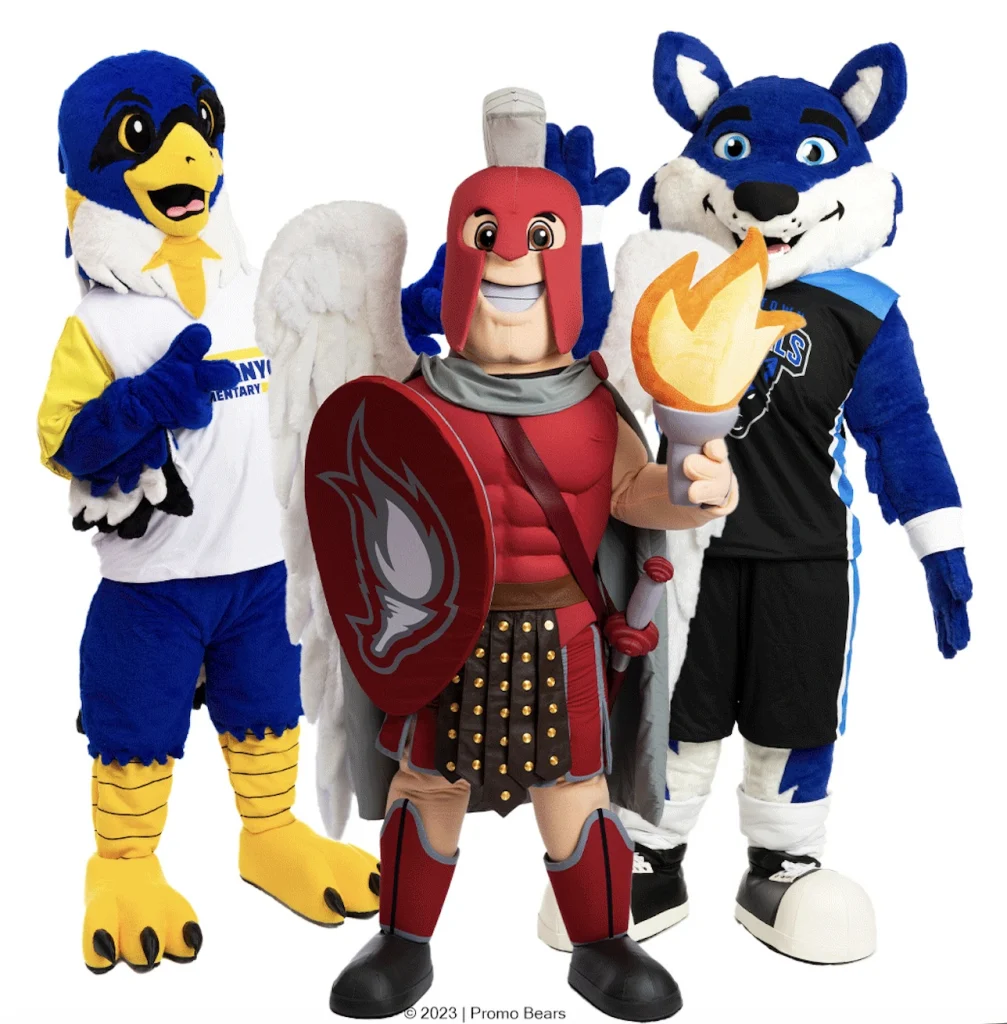
Marketing managers compare promotional tools for large events by evaluating three core factors: visibility impact, audience engagement, and post-event longevity. The best tools are not necessarily the most expensive ones. They are the ones that align with your brand goals, fit your event format, and give you the best return on your investment across all three dimensions.
Whether you are planning a trade show, a sporting event, or a brand activation, the tools you choose will shape how your audience remembers you long after the event ends. This article walks through the most important questions marketing managers ask when building their promotional toolkit.
What promotional tools deliver the highest brand visibility at large events?
The promotional tools that deliver the highest brand visibility at large events are oversized, distinctive, and impossible to ignore. Giant inflatables, custom mascot costumes, branded banners, and large-format merchandise consistently outperform standard giveaways because they create visual anchors that draw foot traffic and generate organic social sharing.
At a large event, you are competing with dozens of other brands for the same audience attention. Size, color, and movement all work in your favor. A giant mascot inflatable placed at your booth entrance, for example, does not just attract attention. It signals confidence, creativity, and brand investment in a way that a banner or a stack of flyers simply cannot.
Beyond physical presence, the most visible tools tend to be the ones that people photograph and share. Custom mascot costumes, interactive inflatables, and branded merchandise with strong visual design all drive social media exposure without any additional media spend. That earned visibility extends your event reach well beyond the venue itself.
How do mascot costumes compare to inflatables for event engagement?
Mascot costumes and inflatables serve different engagement purposes at events. Mascot costumes create direct, personal interaction between your brand and your audience. Inflatables create passive but high-impact visual presence. The most effective event strategies often use both together to cover different engagement zones.
Mascot costumes: active engagement
A performer inside a custom mascot costume can move through a crowd, pose for photos, hand out merchandise, and create memorable one-on-one moments with attendees. That human interaction builds an emotional connection with your brand in a way that static displays cannot replicate. For events where audience participation matters, such as sports games, family festivals, or brand activations, a mascot costume is one of the most powerful tools available.
From a production standpoint, mascot costumes take 12 to 16 weeks to produce, so planning ahead is important. The lead time reflects the level of customization involved, including 3D realistic eyes, built-in ventilation, and a precise fit for the performer.
Inflatables: passive but powerful presence
Giant mascot inflatables, on the other hand, are always “on.” They do not require a performer, they work in outdoor and indoor settings, and they are visible from a distance that no costume could match. Production time for giant mascot inflatables is typically 3 to 4 weeks, making them a faster option when your event timeline is tight.
If your priority is drawing foot traffic to a specific location, an inflatable works around the clock. If your priority is creating personal brand moments, a mascot costume wins. For maximum impact, use both.
What criteria do marketing managers use to evaluate promotional tools?
Marketing managers evaluate promotional tools using a combination of strategic, logistical, and financial criteria. The goal is to identify which tools deliver measurable impact relative to their cost, production time, and operational complexity for the specific event type being planned.
The most common evaluation criteria include:
- Brand alignment: Does the tool reflect the brand’s visual identity and tone accurately?
- Audience fit: Will this tool resonate with the specific demographic attending the event?
- Visibility range: How far does the tool’s visual impact reach within the event space?
- Engagement potential: Does it invite interaction, photography, or sharing?
- Portability and reusability: Can it be transported easily and used at multiple events?
- Lead time: Can it be produced and delivered before the event date?
- Total cost of ownership: What is the full cost, including production, shipping, and any operational requirements?
Senior decision-makers also weigh vendor reliability heavily. A tool that looks great on paper but arrives late or off-brand creates far more damage than no tool at all. That is why transparent timelines and fixed quotes matter as much as the product itself.
How does custom merchandise support long-term brand recognition after an event?
Custom merchandise supports long-term brand recognition by turning event attendees into ongoing brand ambassadors. When someone leaves an event with a well-designed, useful branded item, they carry your brand into their daily life. Every time they use that item, they are reminded of the experience, and your brand is exposed to everyone around them.
The key word here is quality. A cheap giveaway gets thrown away. A well-made custom item, whether it is a plush toy, a stress ball, a keychain, or a tote bag, gets kept and used. That extended lifespan multiplies the return on your original investment many times over.
Different merchandise categories also have different shelf lives. Stress balls, for example, tend to sit on desks for months. Plush toys become keepsakes. Stickers end up on laptops and water bottles. Each of these creates repeated brand impressions long after the event is over, which is something a banner or a booth display simply cannot do.
When should a brand invest in a custom mascot versus off-the-shelf promotional items?
A brand should invest in a custom mascot when it wants to own a distinctive identity that no competitor can replicate. Off-the-shelf promotional items are useful for high-volume, low-cost distribution, but they do not build brand equity. A custom mascot, whether a costume, an inflatable, or a plush toy, becomes a long-term brand asset that grows in recognition over time.
The decision often comes down to strategic intent. If you need to hand out 5,000 items at a trade show, generic branded merchandise makes sense. But if you are trying to establish a brand character, create a signature presence at events, or give fans and customers something they genuinely want to keep, custom is the right investment.
Custom mascots also scale in ways that off-the-shelf items cannot. A mascot character can appear across a costume, an inflatable, a plush toy, stickers, and keychains, all with a consistent look that reinforces brand recognition at every touchpoint. That consistency is something you simply cannot achieve with generic promotional products.
What questions should marketing managers ask a promotional products vendor before committing?
Before committing to a promotional products vendor, marketing managers should ask specific questions about design ownership, production timelines, quality control, and pricing transparency. The answers to these questions reveal whether a vendor can be a reliable long-term partner or just a one-time supplier.
Here are the most important questions to ask:
- Do you provide a free concept illustration before I commit? A reputable vendor should offer this without any upfront payment.
- How many revision rounds are included in the design process? Unlimited revisions signal genuine commitment to getting your design right.
- What are the exact production timelines for each product? Get specific numbers, not ranges. For reference, mascot costumes take 12 to 16 weeks, stress balls take 10 to 12 weeks, and giant inflatables take 3 to 4 weeks.
- Do you provide a fixed quote based on my specific design? Vague estimates lead to budget surprises. Insist on a fixed price tied to your approved design.
- Who is my point of contact throughout the project? A dedicated project manager makes an enormous difference in execution quality.
- What does your quality control process look like before shipping? Ask whether you receive result photos for final approval before the product ships.
- Can you handle multiple product types under one roof? Working with a single vendor for costumes, inflatables, and merchandise simplifies logistics and ensures visual consistency.
A vendor who answers these questions clearly and confidently is one worth working with. A vendor who deflects or gives vague answers is one to avoid.
How Promo Bears helps you compare and choose the right promotional tools
We make it straightforward to evaluate and invest in the promotional tools that actually move the needle for your brand. Whether you need a custom mascot costume, a giant inflatable, or a full range of branded merchandise, we handle everything from concept to delivery under one roof.
Here is what working with us looks like:
- A free concept illustration based on your logo or design idea, with unlimited revisions
- A fixed quote tied to your approved design, so there are no budget surprises
- A dedicated project manager who oversees your project from start to finish
- Stress balls produced in fully custom shapes with PMS color matching, ready in 10 to 12 weeks
- Custom mascot costumes with 3D realistic eyes and built-in ventilation, ready in 12 to 16 weeks
- Giant mascot inflatables that command attention at any event, ready in 3 to 4 weeks
With over 4,000 mascots created for brands like NASA, Red Bull, Amazon, and Walmart, we know what it takes to make a promotional investment that pays off. Ready to see what your brand could look like? Get a free quote and let’s build something worth remembering.
Frequently Asked Questions
How far in advance should I start planning promotional tools for a large event?
Your planning timeline should work backward from your event date, accounting for the longest production lead time in your toolkit. Since custom mascot costumes take 12 to 16 weeks to produce, you should ideally begin the vendor selection and design process at least 4 to 5 months before your event. Even if you are only ordering inflatables (3 to 4 weeks) or stress balls (10 to 12 weeks), building in buffer time for revisions, shipping, and unexpected delays protects your investment and eliminates last-minute compromises.
Can I use the same mascot costume and inflatable at multiple events, or do I need to reorder each time?
Both custom mascot costumes and giant inflatables are designed for repeated use across multiple events, which is a key part of what makes them strong long-term brand assets. Costumes are built with durable materials and performer comfort in mind, while inflatables are engineered for easy setup, breakdown, and transport. To maximize longevity, store your costume properly between uses and follow the vendor’s care instructions, and your investment can deliver returns across dozens of events over several years.
What is the best way to measure the ROI of promotional tools after an event?
Measuring promotional ROI starts with defining your goals before the event, whether that is booth traffic, social media impressions, lead generation, or merchandise distribution volume. After the event, track metrics like the number of social posts featuring your inflatable or mascot (using a branded hashtag makes this easier), leads captured at your booth, and any uptick in brand search volume or social followers. For merchandise, factor in the cost-per-impression over the item’s usable lifespan rather than just the upfront unit cost, since a kept item generates far more impressions than a discarded one.
What if my brand does not have an existing mascot character — can I still create one from scratch?
Absolutely, and many of the most recognizable event mascots were created specifically for promotional purposes rather than inherited from an existing brand identity. A good vendor will work with your logo, brand colors, and tone to develop an original character concept through a free illustration before you commit to any production. The key is choosing a character that feels authentic to your brand and resonates with your target audience, whether that is a friendly animal, an abstract shape, or a stylized version of your product.
How do I decide how many promotional items to order for a large event?
Start with your expected foot traffic estimate from the event organizer, then apply a realistic engagement rate based on your booth size and activity level — typically 20 to 40 percent of total attendees will interact with a well-positioned booth. Order enough merchandise to cover that engaged audience without over-ordering low-retention items like flyers or cheap giveaways. For high-quality custom items with strong keep rates, it is better to order a focused quantity of something people genuinely want than a large volume of items that end up in the trash.
What are the most common mistakes brands make when investing in event promotional tools for the first time?
The most common mistakes are starting too late, underestimating total costs, and prioritizing quantity over quality. Brands that wait until 6 to 8 weeks before an event often find themselves locked out of custom options and forced into generic alternatives that do not differentiate them. Similarly, focusing only on unit price without accounting for shipping, storage, and operational costs leads to budget surprises. The most effective first-time investments are usually a single high-impact visual anchor, like an inflatable or mascot costume, paired with a smaller quantity of well-designed, high-retention merchandise.
Is it possible to maintain visual consistency across a mascot costume, an inflatable, and branded merchandise from the same character?
Yes, and maintaining that consistency is one of the strongest arguments for working with a single vendor who handles all three product types. When the same design team produces your costume, inflatable, and merchandise, they control color matching, proportions, and character details across every format, ensuring your mascot looks the same whether it is 12 feet tall at your booth entrance or 3 inches on a keychain. Splitting production across multiple vendors often results in subtle but noticeable inconsistencies that dilute brand recognition over time.