
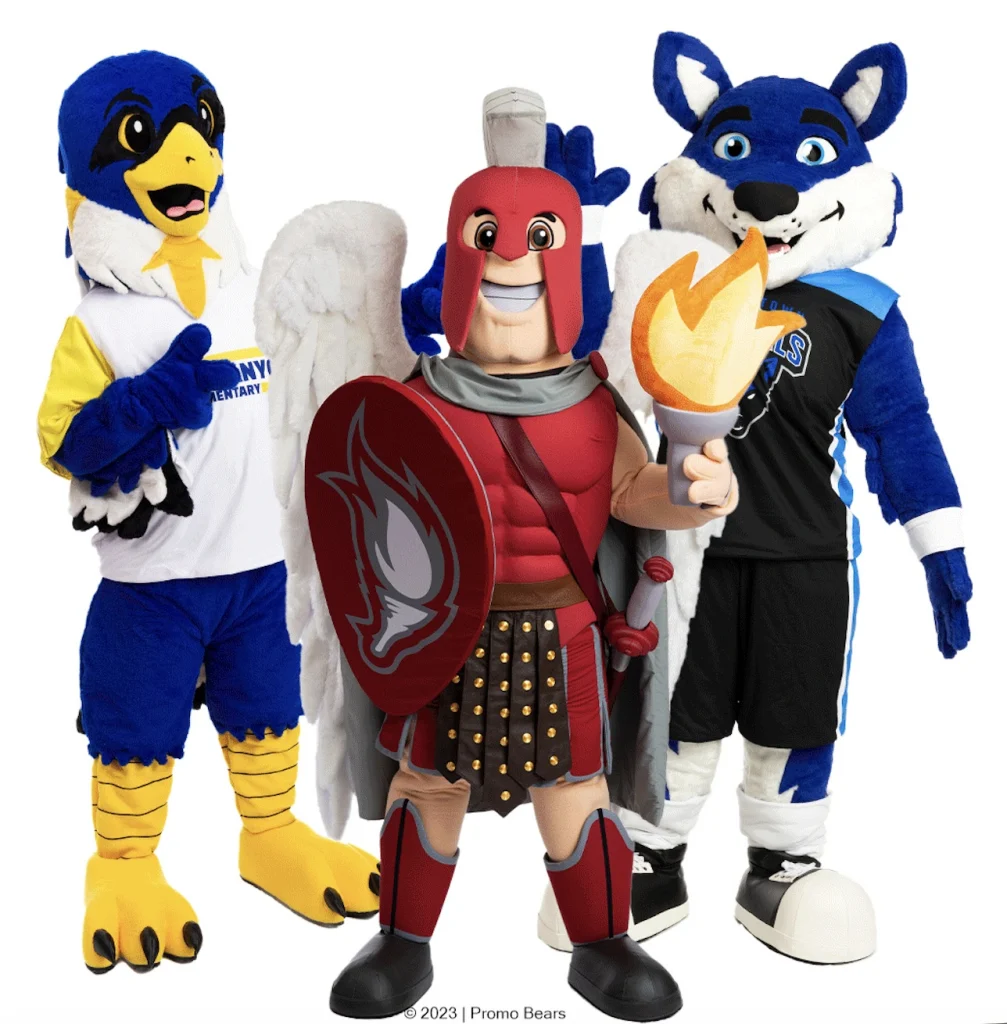
To choose the right mascot design for a children’s brand, start with your audience’s age range, then build a character that feels approachable, expressive, and fun. The design should reflect your brand’s core values while giving kids a character they genuinely connect with. The sections below walk through every major decision you’ll need to make along the way.
What makes a mascot design work for a children’s audience?
A mascot design works for a children’s audience when it combines bold, simple visuals with a warm and expressive personality. Children respond to characters that feel safe, playful, and easy to recognize at a glance. The design needs to communicate emotion instantly, because kids form opinions about characters much faster than adults do.
The most effective children’s mascots share a few visual traits: large eyes that show feeling, rounded shapes that feel friendly rather than threatening, and a limited color palette that stays memorable. Overly detailed or angular designs tend to feel cold or confusing to younger audiences.
Expression matters more than complexity. A mascot that can clearly show happiness, excitement, or curiosity will build a stronger connection with kids than one that looks technically impressive but emotionally flat. Think about how the character will look on a plush toy, a sticker, or a costume. It needs to translate well across all of those formats.
How do you align a mascot character with your brand identity?
You align a mascot with your brand identity by rooting the character’s visual design and personality in the same values your brand already stands for. The mascot should feel like a natural extension of your brand, not a separate creative project. If your brand is energetic and bold, the mascot should reflect that. If it’s nurturing and educational, the character should feel warm and patient.
Start by writing down three to five words that describe your brand’s personality. Then ask whether your mascot concept matches those words when someone looks at it for the first time. If there’s a mismatch, the character needs to be adjusted before production begins.
Color is one of the most powerful alignment tools available. Your mascot’s color palette should connect directly to your existing brand colors so that children immediately associate the character with your products or services. A custom mascot design built from your logo or brand guidelines will always feel more cohesive than a generic character adapted after the fact.
What personality traits should a children’s brand mascot have?
A children’s brand mascot should be curious, enthusiastic, and kind. These three traits create a character that kids want to follow, imitate, and spend time with. Beyond that, the specific personality should reflect what your brand does and who it serves.
Here are the personality traits that consistently resonate with children across different age groups:
- Curiosity: Characters who love to explore and discover make learning and engagement feel exciting rather than forced.
- Enthusiasm: High energy and genuine excitement are contagious for kids. A mascot that seems genuinely happy to be there draws children in.
- Kindness: Children trust characters who are visibly caring and supportive. This trait is especially important for educational and health-focused brands.
- Humor: Light, age-appropriate humor makes a mascot memorable and gives kids a reason to keep coming back.
- Reliability: Consistency in how the mascot behaves across every touchpoint builds familiarity, which children find deeply reassuring.
Avoid designing a mascot that tries to be everything at once. A character with one or two dominant traits is far more memorable than one with a long list of personality attributes that never quite add up to a clear identity.
Should a children’s brand mascot be an animal, human, or fantasy creature?
For most children’s brands, an animal or fantasy creature outperforms a human mascot in terms of engagement and emotional connection. Animals and fantasy characters give designers more creative freedom, sidestep the uncanny valley problem that human characters often trigger, and tend to feel more universally appealing across different cultural backgrounds.
Animals are the most popular choice in children’s marketing because they carry built-in personality associations. Bears feel warm and protective. Dogs feel loyal and playful. Owls feel wise and curious. These associations give your mascot an emotional shortcut that a human character has to earn from scratch.
Fantasy creatures offer even more flexibility. A made-up character can combine the best traits of multiple animals or archetypes, and it carries no cultural baggage. That said, fantasy mascots require stronger design work to feel approachable rather than strange.
Human mascots work best when the brand specifically needs to represent a person, a role, or a profession. A human character can be effective for brands focused on community or mentorship, but it requires careful design to avoid feeling generic or disconnected from the children it’s meant to reach.
How do you make sure a mascot design stays relevant as children grow?
You keep a mascot relevant as children grow by designing a character with enough depth and adaptability to evolve alongside your audience. The core visual identity should remain consistent, but the mascot’s tone, behavior, and the contexts it appears in can shift to match the maturity level of older kids.
A few practical strategies help with long-term relevance:
- Design for simplicity first. A clean, iconic design ages far better than one loaded with trendy details that will feel dated within a few years.
- Give the character a story. Mascots with a backstory, goals, and a world they inhabit can grow and develop over time, which keeps older children engaged.
- Avoid age-specific references. Slang, pop culture nods, or visual trends tied to a specific moment will make the mascot feel stale faster than you’d expect.
- Build in tonal flexibility. The same character can be playful and silly for a six-year-old audience and confident and adventurous for a twelve-year-old audience without changing the core design.
- Test with real kids regularly. What resonates with children changes over time. Gathering feedback at different stages helps you stay ahead of the curve.
Building a recognizable brand for kids means thinking beyond the launch. The mascot you introduce today should still feel fresh and relevant five years from now.
What should you ask a mascot design company before commissioning a custom character?
Before commissioning a custom mascot, ask about the design process, revision policy, production timeline, and what happens after delivery. These four areas reveal whether a company is truly set up to deliver a character that works for your brand or whether you’re taking on more risk than you realize.
Specific questions worth asking include:
- Do you provide a free concept illustration before we commit to production?
- How many revision rounds are included, and is there a limit?
- What is the realistic production timeline from design approval to delivery?
- Will we have a dedicated project manager throughout the process?
- What quality control steps happen before the mascot ships?
- Can the costume be produced in custom sizes beyond a standard fit?
- Do you have experience designing mascots specifically for children’s brands?
A company that hesitates on any of these questions is worth approaching with caution. A strong mascot partner will answer all of them confidently and transparently.
How Promo Bears helps you create the perfect children’s brand mascot
We work with brands every day that need a mascot character built from the ground up, and children’s brands are among our favorites to design for. Here is what we bring to every project:
- A free concept illustration based on your logo or design idea, with unlimited revisions until you love the result
- Lifelike 3D eyes, an integrated ventilation system, and a comfortable fit designed for real-world use
- A dedicated project manager who guides your project from the first sketch to final delivery
- Custom mascot costumes ready in 12 to 16 weeks, with rush options available
- A full range of matching merchandise including plush toys, stickers, stress balls, and more to extend your mascot across every touchpoint
Whether you are launching a new children’s brand or refreshing an existing character, we are here to make the process straightforward and the result something kids will genuinely love. Get your free quote and let us bring your mascot to life.
Frequently Asked Questions
How much does it typically cost to commission a custom children's brand mascot?
The cost of a custom children’s mascot varies widely depending on the complexity of the design, the materials used, and whether you need a wearable costume, a 2D illustration, or a full merchandise line. Entry-level mascot costumes can start in the low thousands, while fully custom, high-quality builds with accessories and matching merchandise can run significantly higher. The best approach is to request a free quote from your mascot design partner with a clear brief so you can compare options at different price points before committing.
What common mistakes should I avoid when designing a mascot for young children specifically?
The most frequent mistakes include using sharp or angular shapes that can feel threatening to young children, overcrowding the design with too many details that don’t scale well to small formats like stickers or plush toys, and choosing a color palette that clashes with or ignores your existing brand colors. Another common pitfall is designing a mascot in isolation without testing it with actual children in your target age group — what looks great to adults in a boardroom doesn’t always land the same way with a five-year-old. Always validate your concept with real kids before moving to production.
How do I know if my mascot concept will work across both digital and physical formats?
A strong mascot concept should be tested in multiple sizes and contexts before production begins — from a tiny app icon to a life-size costume. Ask your design team to show mockups of the character on merchandise items like stickers, plush toys, and banners alongside the full-size version. If the character loses its personality or becomes unrecognizable when scaled down, the design likely needs to be simplified. A clean, iconic silhouette is the single best indicator that a mascot will translate well across every format.
Can I introduce a sidekick or supporting character alongside my main mascot, and is that a good idea for children's brands?
Yes, and for children’s brands in particular, a sidekick can be a powerful tool for expanding storytelling, representing different personality types, and appealing to a broader audience. However, it’s best to establish your primary mascot’s identity firmly first before introducing additional characters — launching two new characters simultaneously can dilute both. Once your main mascot is recognizable and well-loved, a complementary sidekick with a contrasting personality (for example, a calm character paired with an energetic one) can deepen engagement and give kids more characters to connect with.
How do I protect my mascot character legally once the design is finalized?
Once your mascot design is complete, you should work with an intellectual property attorney to register it as a trademark, which protects the character’s visual identity in connection with your brand and products. Copyright protection typically applies automatically to original creative work, but formal trademark registration gives you stronger legal standing if another brand attempts to use a similar character. Keep all original design files, contracts, and revision records from your mascot design company, as these documents establish proof of ownership and creation date if a dispute ever arises.
How should I introduce a new mascot to my existing audience of kids and parents?
A mascot launch works best when it feels like an event rather than a quiet rollout. Consider building anticipation with a teaser campaign across your social media channels before the full reveal, and give the character a name, a backstory, and a clear personality from day one so kids have something to immediately connect with. Involving children directly — through a naming contest, a drawing challenge, or a live appearance — creates early emotional investment that turns a new character into a beloved one much faster than a standard product announcement would.
What's the best way to maintain mascot consistency across a team of people using the character in different contexts?
Create a mascot brand guide as soon as your character design is finalized. This document should cover the approved color palette, acceptable poses and expressions, off-limits uses (such as placing the mascot in negative or scary contexts), tone of voice guidelines, and rules for how the character appears alongside your logo and other brand elements. Distributing this guide to everyone on your team — from social media managers to event staff — ensures the mascot feels like the same character no matter where or how children encounter it, which is essential for building the trust and familiarity that make mascots so effective with young audiences.