
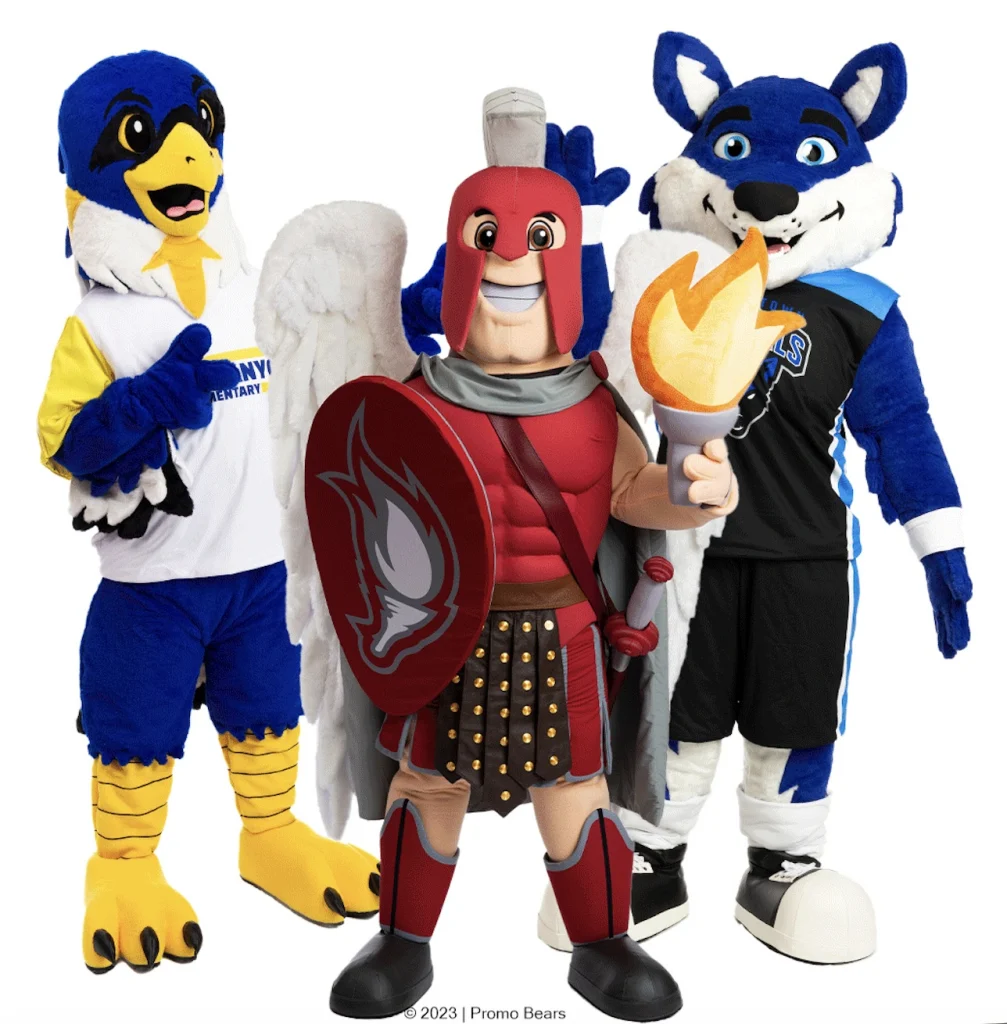
To compare promotional tools for brand recognition, evaluate each option across three dimensions: how memorable it is, how long it stays in front of your audience, and whether it reinforces your brand identity rather than just displaying your logo. The right mix depends on your goals, your audience, and how much visibility you need over time. This article walks through the key questions every marketing manager should be asking before committing budget to any promotional strategy.
Which promotional tools actually build lasting brand recognition?
Promotional tools that build lasting brand recognition are the ones people keep, use, and share. Physical branded merchandise consistently outperforms digital ads when it comes to long-term recall, because a product someone holds, wears, or displays creates a repeated impression over weeks or months rather than a single fleeting moment.
The most effective tools share a few common traits. They are useful or enjoyable enough that the recipient chooses to keep them. They carry your brand identity clearly without feeling like clutter. And they show up in contexts where your target audience is already engaged.
Some of the strongest performers for sustained visibility include:
- Custom plush toys and mascot merchandise that live on desks, shelves, and in photos shared on social media
- Branded stress balls that stay on desks and get handled daily
- Wearable items like branded bags or apparel that turn recipients into walking brand ambassadors
- Custom inflatables and mascot costumes that dominate events and generate organic photo and video content
- Enamel pins, keychains, and stickers that attach to everyday items and travel far beyond the original event
The key distinction is longevity. A flyer gets discarded. A well-made branded product becomes part of someone’s daily environment, which means your brand stays visible without any additional spend.
What’s the difference between branded merchandise and promotional giveaways?
Branded merchandise and promotional giveaways are often used interchangeably, but they serve different strategic purposes. Branded merchandise is a curated product that reflects your brand’s quality and identity, designed to be kept and used over time. A promotional giveaway is typically a low-cost item distributed in high volume, optimized for reach rather than retention.
Think of it this way: a branded merchandise item earns its place in someone’s life because it is genuinely useful or desirable. A giveaway earns attention at the moment of distribution, but its long-term impact depends heavily on whether the recipient finds ongoing value in it.
This does not mean giveaways are ineffective. At a trade show or community event, a well-chosen giveaway creates a touchpoint and gets your brand in front of a large number of people quickly. But if your goal is sustained brand recognition rather than a one-time impression, investing in higher-quality branded merchandise pays off more reliably.
For B2B brands and organizations building long-term equity, the smartest approach is often to use both strategically: giveaways to maximize reach at events, and premium branded merchandise to reward loyal customers, partners, or key audiences who will carry your brand forward.
How do you measure the ROI of promotional products?
Measuring the ROI of promotional products means tracking the outcomes you care about most: brand recall, engagement, lead generation, or direct sales lift. Because promotional products work over time rather than in a single click, you need to look beyond immediate conversion metrics and build a fuller picture of their impact.
A practical framework for measuring ROI includes:
- Set a clear objective before you order. Are you trying to increase event attendance, improve customer retention, generate social media content, or drive foot traffic? Your measurement approach follows your goal.
- Track distribution and reach. How many people received the product? In what context? This gives you a baseline for calculating cost per impression.
- Measure downstream behavior. Did recipients visit your website, follow your social accounts, or make a purchase after receiving the product? Use unique discount codes or landing page URLs tied to specific campaigns.
- Survey your audience. A short follow-up survey asking whether recipients still have the product and whether it influenced their perception of your brand gives you qualitative data that complements the numbers.
- Compare against alternatives. What would the same budget have delivered in digital advertising? Cost per impression for a physical product that stays in use for months often compares favorably to paid media.
The honest reality is that promotional products rarely produce a clean, immediate ROI figure. Their value accumulates through repeated exposure and positive brand associations. Organizations that treat them as a long-term brand investment rather than a short-term sales tactic tend to see the strongest results.
What criteria should you use to compare promotional product vendors?
When comparing promotional product vendors, evaluate them on quality consistency, creative capability, transparency in pricing, and their ability to manage your project from concept to delivery. Price alone is a poor indicator of value, especially when your brand reputation is attached to the final product.
Here are the criteria that matter most for B2B buyers:
- Customization depth: Can the vendor produce truly custom shapes and designs, or are they limited to standard templates with a logo printed on top? For items like stress balls, the difference between a generic shape and a fully custom mold built to your specifications is significant.
- Production transparency: Do they provide realistic timelines upfront? A reliable vendor will tell you exactly how long each product takes. Mascot costumes, for example, require 12 to 16 weeks. Stress balls take 10 to 12 weeks. Stickers can be ready in as little as 7 to 10 days. Knowing this in advance helps you plan campaigns without surprises.
- Design support: Does the vendor offer concept illustrations before you commit? A free concept illustration with unlimited revisions protects your investment and ensures the final product matches your vision.
- Dedicated project management: For complex or high-value orders, having a single point of contact who oversees your project reduces errors and keeps production on schedule.
- Track record: Look for vendors with a verifiable portfolio across diverse industries and client types. A vendor who has delivered for globally recognized brands and smaller organizations alike demonstrates consistent quality at different scales.
- Fixed quotes: Vague estimates lead to budget overruns. Insist on a fixed quote based on your specific design before production begins.
When should a brand invest in a custom mascot over other promotional tools?
A brand should invest in a custom mascot when it needs a single, versatile asset that can anchor its identity across multiple channels and contexts. A mascot is not just a costume or a product. It becomes a living representation of your brand that works at events, on merchandise, in marketing materials, and across social media simultaneously.
Custom mascots make the most sense when:
- Your brand competes in a crowded space and needs a distinctive, memorable visual identity
- You host regular events, games, or activations where a physical presence creates energy and engagement
- You want to generate organic social media content without paying for every impression
- Your audience includes families, fans, or community members who respond strongly to character-driven branding
- You plan to extend the mascot across merchandise, inflatables, plush toys, and other branded products to create a cohesive product line
Compared to other promotional tools, a custom mascot has a higher upfront investment and a longer production timeline of 12 to 16 weeks. But its longevity and versatility mean the cost per impression drops significantly over time. A well-designed mascot can serve your brand for years, appearing across dozens of events and generating content that no single giveaway or ad campaign could replicate.
For brands that are ready to make that investment, it is worth thinking beyond the costume itself. A mascot ecosystem that includes custom mascot merchandise, inflatables, and branded giveaways multiplies the impact of the original character and creates a consistent brand experience wherever your audience encounters it.
How Promo Bears helps you compare and choose the right promotional tools
We work with marketing managers and brand directors who need more than a product catalog. At Promo Bears, we help you build a promotional strategy that fits your goals, your timeline, and your budget, with a full range of products and the expertise to match the right tool to the right moment.
Here is what we bring to the table:
- Custom mascot costumes ready in 12 to 16 weeks, with a free concept illustration and unlimited revisions before production begins
- Custom stress balls built to your exact shape and PMS color specification, not standard shapes with a logo slapped on top, with a production time of 10 to 12 weeks
- Giant mascot inflatables that are ready in 3 to 4 weeks and create instant visual impact at any event
- Plush toys, keychains, enamel pins, stickers, and more to extend your mascot or brand identity across a full merchandise range
- A dedicated project manager on every order, from first sketch to final delivery
Whether you are comparing promotional tools for the first time or looking for a partner who can handle everything from a single mascot costume to a full branded merchandise program, we are ready to help. Get your free concept illustration and quote and see exactly what your brand could look like.
Frequently Asked Questions
How far in advance should I order promotional products for an upcoming event?
Lead times vary significantly by product type, so planning ahead is critical. Mascot costumes require 12–16 weeks, custom stress balls take 10–12 weeks, and giant inflatables are ready in 3–4 weeks, while stickers and simpler items can turn around in as little as 7–10 days. As a general rule, build in an extra 1–2 weeks beyond the stated production time to account for shipping, revisions, and any unexpected delays — especially for high-stakes events where arriving without your materials isn’t an option.
What's the minimum order quantity I should expect for custom promotional products?
Minimum order quantities (MOQs) vary by product and vendor, but most custom-molded items like stress balls or plush toys typically start at 100–250 units due to the cost of tooling and production setup. Simpler items like stickers or enamel pins often have lower MOQs. Before committing to a vendor, always ask about MOQs upfront alongside your fixed quote — ordering more than you need to hit a minimum can quietly inflate your real cost per unit and throw off your budget calculations.
Can I use the same mascot design across multiple product types without starting from scratch each time?
Yes, and this is actually one of the strongest arguments for investing in a well-designed mascot in the first place. A professionally developed mascot character can be adapted into a costume, a plush toy, an inflatable, enamel pins, stickers, and printed merchandise — all from the same core design assets. Work with a vendor who retains and manages your design files so that extending your mascot across new products is a straightforward process rather than a full redesign each time.
What are the most common mistakes brands make when choosing promotional products?
The most frequent mistake is prioritizing low unit cost over perceived value, which results in items recipients discard immediately — defeating the entire purpose of the investment. Other common pitfalls include ordering too late and rushing production, choosing generic shapes or designs that don’t reinforce brand identity, and failing to set a measurable objective before ordering. Brands that treat promotional products as an afterthought rather than a strategic tool consistently get weaker results than those who integrate them into a broader campaign from the start.
How do I choose the right promotional product if I'm targeting multiple audience segments at the same event?
The most practical approach is to tier your product selection: use a high-volume, lower-cost giveaway (like stickers or keychains) for general foot traffic, and reserve premium branded merchandise for high-value prospects, VIPs, or partners you want to make a stronger impression on. This lets you maximize reach without overspending, while ensuring your most important audience segments receive something memorable enough to keep. Brief your team on who gets what before the event so distribution stays intentional and on-brand.
Is branded merchandise a good fit for digital-first or B2B brands that don't do many in-person events?
Absolutely — physical branded merchandise can be highly effective for digital-first and B2B brands when delivered strategically rather than at events. Sending a premium branded item as part of a client onboarding package, a renewal gift, or a direct mail campaign creates a tangible brand moment that digital touchpoints simply can’t replicate. For B2B brands especially, a well-chosen piece of merchandise sent to a key decision-maker can reinforce the relationship and keep your brand top of mind long after the initial interaction.
What should I do if a vendor's sample doesn't match what I approved in the concept stage?
Request a clear revision in writing immediately, referencing the specific approved design elements — colors (by PMS code), dimensions, and any structural details — that differ from the sample. A reputable vendor will correct the issue before moving to full production at no additional cost, which is why working with vendors who provide free concept illustrations and unlimited pre-production revisions matters so much. If a vendor pushes back on corrections that are clearly misaligned with the approved design, treat it as a red flag and escalate to a project manager or reassess the partnership before production runs.
Related Articles
- Can a mascot costume be produced in custom sizes for different wearers?
- What is meant by a 360-degree promotional tool for brand experience?
- What is the best strategy to improve brand recognition in retail?
- What kind of advertising appeals best to kids?
- What is the difference between promotional products and branded merchandise?