
You make company culture visible at events and trade shows by translating your values, personality, and energy into physical, human, and visual experiences that attendees can actually see, touch, and feel. Culture becomes visible when your booth, your team, your giveaways, and your branded characters all tell the same story. The sections below unpack exactly how to do that across every event touchpoint.
What elements of company culture can actually be shown at events?
Company culture becomes visible at events through the combination of your visual identity, your people, your products, and the energy you bring to the space. Culture is not abstract at a trade show — it shows up in the colors you choose, the way your team greets people, the quality of your giveaways, and whether your booth feels welcoming or transactional. Every detail communicates something.
The most effective cultural signals tend to fall into a few clear categories:
- Visual identity: Colors, typography, and graphic style that reflect your brand personality consistently across banners, signage, and merchandise
- People and behavior: How your team shows up, speaks, and engages with visitors — this communicates values faster than any banner
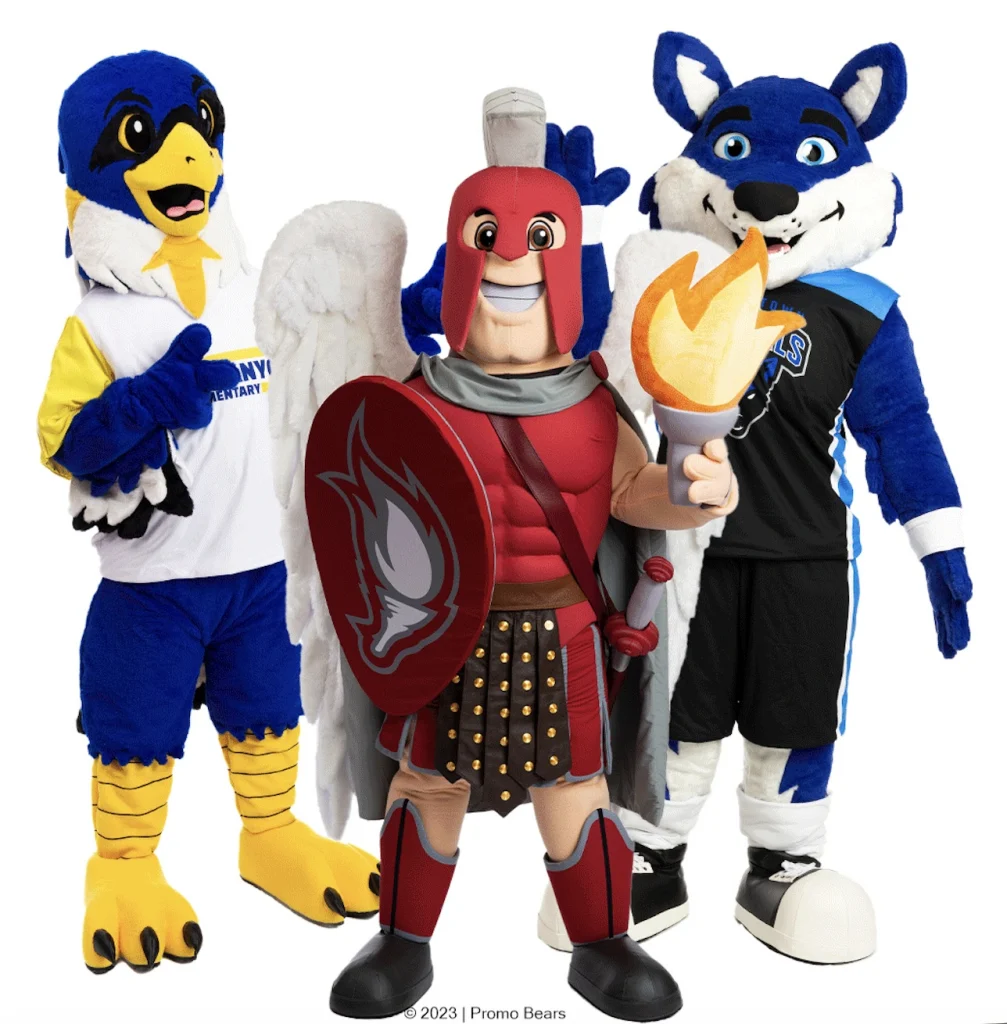
- Branded characters and mascots: A custom mascot brings personality to life in a way that flat graphics simply cannot
- Giveaways and merchandise: The quality and creativity of what you hand out signals how much you value your audience
- Spatial design: The layout and feel of your booth — open and inviting versus closed and corporate — tells attendees who you are before anyone says a word
The key is that none of these elements should work in isolation. When they all point in the same direction, culture becomes genuinely visible rather than just implied.
How do branded mascots communicate culture to event attendees?
A branded mascot communicates company culture by giving your brand a physical personality that people can interact with directly. Unlike a logo on a banner, a mascot moves, engages, and creates moments — and those moments are what people remember and share. For brands that want to project energy, warmth, or fun, a mascot does more communicating in five minutes on a trade show floor than most booth displays do all day.
Mascots work because they remove the transactional feeling from brand interactions. When someone poses for a photo with your mascot or watches it engage with a child passing by, the emotional connection happens naturally. That connection becomes associated with your brand, not just your product.
Beyond the live interaction, a mascot also creates consistency. The same character that appears in your digital campaigns, on your packaging, or on your website shows up in person at the event. That continuity reinforces recognition and makes your brand feel coherent and intentional. For companies that have invested in custom mascot design, events are where that investment pays off most visibly.
It is also worth noting the social media effect. Mascots generate organic content from attendees who photograph and film them without being prompted. That earned visibility extends your event presence well beyond the booth.
What promotional products best reinforce brand culture at trade shows?
The promotional products that best reinforce brand culture at trade shows are ones that reflect your brand’s personality, serve a genuine purpose, and are of good enough quality that people actually keep them. Generic giveaways communicate that your brand is generic. Thoughtful, well-made merchandise communicates the opposite.
Products that consistently perform well at trade shows include:
- Custom stress balls: Tactile, memorable, and highly customizable in shape and color — production runs 10 to 12 weeks, so plan ahead
- Plush toys and mascot merchandise: Especially effective for brands with a character or mascot, as they extend the brand experience beyond the event
- Enamel pins and keychains: Small but collectible — people wear and display them, which keeps your brand in circulation long after the show
- Stickers: Low cost, fast turnaround, and highly shareable — a strong design gets placed on laptops, water bottles, and notebooks for years
- Giant inflatables and inflatable arches: Not a giveaway, but a powerful draw — they create visual impact from a distance and pull foot traffic toward your booth
The common thread across all of these is intentionality. A stress ball shaped like your product, a plush version of your mascot, or a sticker that captures your brand’s humor — these all reinforce culture in a way that a branded pen simply does not.
How do you ensure visual consistency across all event touchpoints?
Visual consistency across event touchpoints comes from establishing a clear set of brand standards before production begins and then applying them without exception to every item — from the largest banner to the smallest keychain. Inconsistency is one of the most common and most damaging mistakes brands make at trade shows, because it signals a lack of internal alignment.
Start with a defined visual system that covers your primary colors (ideally with specific PMS references for print accuracy), your typefaces, your logo usage rules, and your approved photography or illustration style. Every vendor producing something for your event — whether it is a booth builder, a promotional products supplier, or a print shop — needs access to these standards before they start work.
Practically, this means requesting physical samples or proofs before committing to full production runs. Color can shift significantly between digital screens and printed or molded materials, so a proof stage is not optional if consistency matters to you. It also means coordinating timelines carefully — if your mascot costume takes 12 to 16 weeks to produce and your stress balls take 10 to 12 weeks, you need to start both well in advance of your event date so there is time for revisions without rushing.
Finally, brief your team. Visual consistency extends to how people dress, what language they use, and how the booth is set up on the day. Your brand standards document should be something every person representing you at the event has actually read.
When should a company invest in custom event assets versus off-the-shelf products?
A company should invest in custom event assets when the event represents a genuine brand moment — a major industry trade show, a product launch, or a recurring annual event where you need to stand out and be remembered. Off-the-shelf products make sense for low-stakes situations where speed and budget are the primary constraints and brand differentiation is not the goal.
The honest answer is that off-the-shelf products rarely build brand equity. They are efficient, but they are also forgettable. A branded pen from a trade show ends up in a drawer. A well-designed custom stress ball shaped like your product, or a plush version of your mascot, ends up on someone’s desk where colleagues ask about it. That is a meaningful difference in return on investment.
Custom assets also signal something to your audience about how seriously you take your brand. Decision-makers at trade shows — the people you most want to reach — notice the difference between a company that has invested in its presence and one that has not. When your booth features a fully custom mascot costume, a coordinated set of branded merchandise, and a consistent visual identity, it communicates that your organization is organized, well-resourced, and worth talking to.
The practical consideration is lead time. Custom products require planning. If you are looking at a major event six months out, you have time to do this properly. If the event is four weeks away, your options narrow significantly — though some products like stickers, giant mascot inflatables, and inflatable player tunnels can be produced in three to four weeks.
How do you measure whether culture came through at a trade show?
You measure whether culture came through at a trade show by combining qualitative feedback with behavioral signals. Hard metrics like leads collected or booth traffic tell you whether people showed up. Softer signals tell you whether they actually connected with your brand.
The most useful indicators include:
- Unprompted social media posts: When attendees photograph your mascot, share your booth, or tag your brand without being asked, it means something genuinely caught their attention
- Quality of conversations: Brief your team to note whether visitors referenced your brand’s values, personality, or story during conversations — not just your products
- Follow-up email engagement: If your post-event email open rates are higher than usual, it suggests the event created genuine interest rather than just name recognition
- Merchandise retention: At follow-up meetings or calls, note whether prospects mention or display something they picked up at your booth
- Team debrief observations: Your booth staff will have a strong intuitive read on whether the energy and engagement felt right — that qualitative input is worth capturing formally
No single metric tells the whole story. Culture is experiential, so the measurement approach needs to be, too. The goal is to triangulate: if social sharing was high, conversations went deep, and your team felt the booth had the right energy, culture came through. If all three felt flat, that is useful information for the next event.
How Promo Bears helps you make company culture visible
We work with marketing managers and brand teams who want their events to feel like an authentic extension of who they are — not just a booth with a logo on it. Our full range of custom products gives you everything you need to build a consistent, memorable brand presence from the ground up.
Here is what we can help you create for your next event:
- Custom mascot costumes (12 to 16 weeks) that bring your brand character to life on the trade show floor
- Giant mascot inflatables (3 to 4 weeks) that create visual impact and pull foot traffic from across the hall
- Custom stress balls (10 to 12 weeks) in fully custom shapes with specific PMS color matching and full-color print options
- Plush toys, enamel pins, stickers, and keychains — all produced to your exact design and brand standards
Every project starts with a free concept illustration and unlimited revisions, so you never commit to production until the design is exactly right. A dedicated project manager handles your order from first sketch to delivery, keeping everything on schedule and on brand.
If you are planning an event in 2026 and want your brand culture to actually come through, get a free quote and let us show you what is possible.
Frequently Asked Questions
How far in advance should we start planning our event assets to ensure everything is ready on time?
Lead times vary significantly by product, so your planning timeline should be driven by your longest-lead item. Custom mascot costumes take 12–16 weeks, stress balls take 10–12 weeks, and even with revision rounds factored in, you should ideally begin the design process at least 4–5 months before your event date. Starting early also gives you flexibility — if a proof comes back with a color shift or a design tweak is needed, you have room to fix it without paying rush fees or compromising quality.
What if our brand doesn't have a mascot yet — can we still create a strong cultural presence at a trade show?
Absolutely. A mascot is one of the most powerful tools available, but it is not the only one. Brands without a mascot can still create a strong cultural presence through cohesive visual identity, high-quality custom merchandise, intentional booth design, and a well-briefed team that embodies the brand’s values in every interaction. That said, if you are planning a major recurring event and you do not yet have a mascot, it is worth exploring — the investment pays dividends across both physical events and digital channels for years.
How do we brief our booth team so they actually reinforce our brand culture, not just sell?
Start by giving your team a simple one-page brief that covers your brand’s core values, the key messages you want visitors to walk away with, and specific behaviors that reflect your culture — whether that is leading with curiosity, being approachable rather than pushy, or knowing how to talk about your brand story, not just your product features. Run a short pre-event walkthrough where team members practice engaging with visitors in ways that feel natural and on-brand. The goal is for your people to feel like a genuine extension of your culture, not like they are reading from a script.
Can promotional products really make a difference, or do most people just throw them away?
Generic products get thrown away — thoughtful, well-made ones do not. The difference lies in quality, relevance, and creativity. A custom stress ball shaped like your product, a plush version of your mascot, or a beautifully designed enamel pin gives people a reason to keep it, display it, and talk about it. Studies consistently show that promotional products with a clear connection to the brand and genuine utility or collectibility have significantly higher retention rates. The question is not whether to do giveaways — it is whether to do them intentionally.
What's the biggest mistake companies make when trying to showcase culture at trade shows?
The most common mistake is inconsistency — having a beautifully designed booth but a team that is not briefed, or investing in custom merchandise that does not match the booth’s visual identity. Culture reads as authentic only when every touchpoint tells the same story. A close second mistake is starting too late: custom assets require real lead time, and rushing production almost always means compromising on quality, color accuracy, or design — which undermines the very impression you are trying to make.
How do we handle events where we have a tight budget but still want to make a cultural impact?
Prioritize the touchpoints with the highest visibility and the longest post-event life. Stickers and enamel pins are low-cost, fast to produce, and have strong retention rates — people put them on laptops and bags where others see them for years. A single well-designed giant inflatable or mascot inflatable can create enormous foot traffic without the cost of a full custom costume. Focus your budget on one or two hero items done exceptionally well rather than spreading it thin across many mediocre ones — quality always communicates more than quantity at a trade show.
Is it worth bringing custom event assets to smaller, regional events, or only to major trade shows?
It depends on the strategic importance of the event, not just its size. A smaller regional conference where your exact target audience is concentrated can be more valuable than a massive general trade show where you are competing with hundreds of booths. If the audience is right, bringing your full brand presence — even scaled down — signals that you take that audience seriously, which builds trust and memorability. For truly low-stakes or exploratory events, lighter-touch options like stickers, pins, and a well-branded pop-up banner can still make a solid impression without requiring a full custom asset investment.