
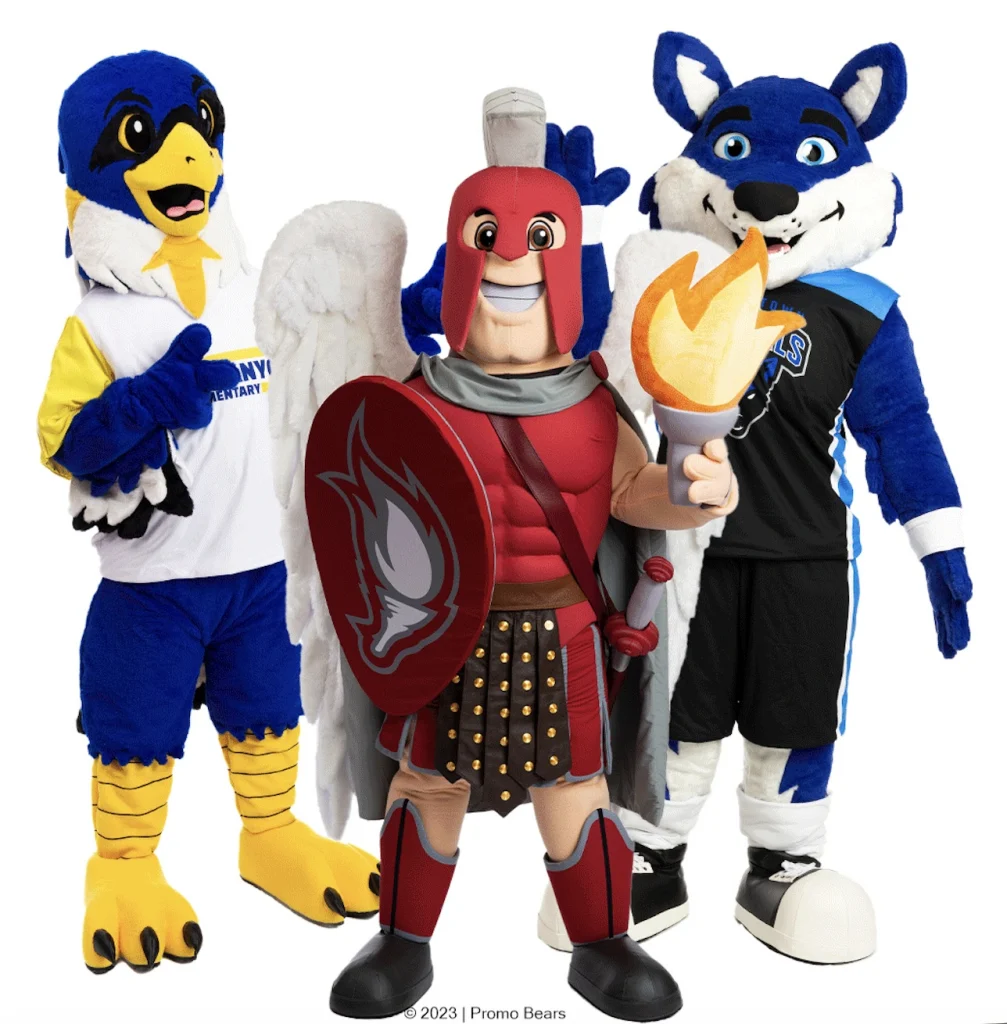
You measure the emotional impact of a brand mascot by tracking a combination of brand recall rates, audience sentiment, social media engagement, and purchase intent data gathered before and after mascot-driven campaigns. No single number tells the whole story. The most useful picture comes from layering qualitative feedback with quantitative signals across multiple touchpoints. The questions below break down exactly how to do that in practice.
Why do brand mascots trigger emotional responses?
Brand mascots trigger emotional responses because the human brain is wired to connect with faces, personalities, and characters. A mascot gives an abstract brand a recognizable identity that audiences can relate to, root for, and remember. This process works through the same psychological mechanisms that make people bond with fictional characters in films or stories.
When a mascot has consistent body language, expressive features, and a clear personality, it signals safety and familiarity. Repeated exposure deepens that bond over time. This is why long-running mascots often carry more emotional weight than a brand’s logo alone. The mascot becomes a shortcut for everything the brand stands for, and audiences respond to that shortcut on an instinctive level.
For marketing managers, this matters because emotional connections directly influence loyalty. Audiences who feel something positive toward a mascot are more likely to remember the brand, recommend it to others, and return to it over time. The emotional impact of a brand mascot is not a soft metric. It sits at the foundation of how brand recognition is built and sustained.
What metrics reveal a mascot’s emotional impact on an audience?
The clearest metrics for measuring a mascot’s emotional impact include brand recall, net promoter score, social media sentiment, engagement rate, and share of voice. Together, these give you a layered view of how an audience feels about your mascot, not just whether they recognize it.
Here is a practical breakdown of the metrics worth tracking:
- Brand recall: How often audiences correctly remember your brand after seeing the mascot without prompting
- Net Promoter Score (NPS): Whether mascot-exposed audiences are more likely to recommend the brand to others
- Sentiment analysis: The ratio of positive to negative language used about the mascot in comments, reviews, and posts
- Engagement rate: Likes, shares, saves, and comments on mascot-related content compared to non-mascot content
- Dwell time: How long audiences spend with mascot-led content, such as videos or event activations
- Survey responses: Direct feedback from audiences on how the mascot makes them feel about the brand
The most revealing insights come from comparing these numbers before and after a mascot is introduced or updated. A baseline measurement makes it possible to isolate the mascot’s actual contribution to audience sentiment and custom mascot engagement over time.
How do you measure brand recall linked to a mascot?
You measure mascot brand recall by running aided and unaided recall surveys with target audience segments, then comparing results against a control group that was not exposed to the mascot. Unaided recall, where respondents name a brand without being shown it, is the stronger indicator of emotional imprinting.
A straightforward approach is to show a sample audience an image or video featuring the mascot, wait a set period (typically 24 to 72 hours), and then ask them to name the brand associated with what they saw. The percentage who answer correctly is your unaided recall score. Running the same test with non-mascot brand content gives you a direct comparison.
Beyond surveys, mascot brand recognition can also be tracked through branded search volume. If searches for a mascot’s name or associated brand increase after a campaign, that is a strong signal that the mascot is driving active recall rather than passive recognition. Tools like Google Trends and Search Console data make this easy to monitor over time without additional research spend.
What’s the difference between emotional engagement and purchase intent for mascots?
Emotional engagement measures how an audience feels about a mascot, while purchase intent measures whether those feelings motivate buying behavior. The two are related, but they are not the same thing. A mascot can generate strong emotional engagement without immediately converting to sales, especially in the early stages of a campaign.
Emotional engagement shows up in metrics like comments, shares, time spent with content, and positive sentiment scores. Purchase intent shows up in actions like clicking through to a product page, adding items to a cart, or redeeming a mascot-linked offer. Both matter, but they serve different strategic purposes.
For brand directors evaluating mascot marketing metrics, the relationship between these two signals tells a useful story. High emotional engagement with low purchase intent usually means the mascot is building awareness and affinity but has not yet been tied closely enough to a product or call to action. Closing that gap often requires connecting mascot-driven content more directly to a specific offer, product line, or event experience. Over time, emotional engagement tends to lift purchase intent as familiarity and trust build with repeated exposure.
How can social media data track mascot sentiment over time?
Social media data tracks mascot sentiment over time by monitoring the language, tone, and volume of audience interactions with mascot-related content across platforms. Sentiment analysis tools categorize mentions as positive, neutral, or negative, giving you a running score of how audience feelings shift across campaigns, seasons, or events.
The most useful social data points for tracking custom mascot engagement include:
- Comment sentiment: Are people using enthusiastic, affectionate, or playful language when they interact with mascot posts?
- Share rate: Sharing is one of the strongest signals of positive emotional response because it requires active effort
- User-generated content (UGC): When fans create their own content featuring your mascot, that is organic emotional investment at its clearest
- Hashtag growth: A mascot-specific hashtag that grows over time indicates deepening audience attachment
- Reply tone: The language audiences use when replying to each other about the mascot reveals community sentiment beyond direct brand interactions
Setting up a consistent tracking cadence is key. Monthly sentiment snapshots allow you to spot trends early. If sentiment dips following a particular campaign or event, that is a signal worth investigating before it affects broader brand perception. Platforms like Sprout Social, Brandwatch, or even native analytics on Instagram and TikTok can support this kind of ongoing monitoring without significant additional investment.
When should a brand redesign a mascot that’s losing emotional impact?
A brand should consider redesigning its mascot when sentiment scores decline consistently over multiple measurement periods, engagement rates drop without an obvious external cause, or audience research shows the mascot no longer reflects how the brand is perceived or who it serves. Redesign is not always the answer, but ignoring the signals is rarely the right move either.
A few specific situations that typically warrant a redesign conversation include a significant brand pivot, a shift in the core audience demographic, or a mascot that has become associated with outdated values through cultural change. In these cases, a refreshed design can restore emotional relevance without abandoning the equity already built.
Before committing to a full redesign, it is worth running focus groups or surveys to identify exactly what is and is not working. Sometimes the issue is not the mascot’s visual design but how it is being used. A mascot that was once featured prominently in campaigns but has faded into the background will naturally see declining emotional impact. Reactivation through a new campaign can be enough to reverse the trend without changing the character itself.
How Promo Bears helps you build mascots with lasting emotional impact
We work with marketing managers and brand directors who understand that a mascot is a long-term brand asset, not a one-time production. At Promo Bears, every custom mascot project starts with a free concept illustration based on your logo or design idea, with unlimited revisions until the result is exactly right. No upfront commitment, no vague estimates.
Here is what makes our approach different:
- Lifelike 3D eyes and an integrated ventilation system for a mascot that looks great and performs in real-world conditions
- A dedicated project manager who guides every step from design approval to delivery
- Production ready in 12 to 16 weeks, with rush options available
- Over 4,000 mascots created for clients including NASA, Amazon, Walmart, and Red Bull
- Full support beyond the costume, including plush toys, giant inflatables, stress balls, and promotional merchandise to extend your mascot across every audience touchpoint
If you are ready to create a mascot that drives real brand recognition and measurable engagement, get a free quote and we will get started with your concept illustration right away.
Frequently Asked Questions
How long does it typically take to see measurable emotional impact from a new brand mascot?
Most brands begin to see statistically meaningful shifts in brand recall and sentiment within 3 to 6 months of consistent mascot deployment, though this depends heavily on campaign frequency and channel reach. Early indicators like social media engagement and comment sentiment tend to move faster than deeper metrics like NPS or purchase intent. Setting a 30-day, 90-day, and 6-month measurement cadence from the mascot’s launch gives you the clearest picture of how emotional impact is building over time.
What's the best way to establish a baseline before launching a mascot campaign?
Run a pre-campaign survey with your target audience segment covering brand recall, sentiment, and purchase intent before the mascot is introduced publicly. Capture your current social media engagement rates, branded search volume, and NPS score during the same window. These baseline numbers are essential because without them, it becomes nearly impossible to isolate how much of any improvement is actually attributable to the mascot versus other marketing activity running at the same time.
Can a mascot be effective for B2B brands, or is emotional impact mostly relevant for consumer-facing companies?
Mascots can absolutely drive emotional impact in B2B contexts, though the strategy looks different. In B2B, a mascot is more likely to build trust, approachability, and memorability at trade shows, conferences, and in content marketing rather than driving impulse purchase behavior. Several well-known B2B brands, including SalesForce with Astro and Mailchimp with Freddie, have used mascots to humanize complex service offerings and improve brand recall in crowded markets.
What are the most common mistakes brands make when trying to measure mascot ROI?
The most common mistake is measuring mascot performance in isolation from the broader campaign, which makes it impossible to determine whether results came from the mascot itself or other creative elements. Another frequent error is relying solely on vanity metrics like follower counts or total impressions rather than sentiment, recall, and intent signals that reflect genuine emotional connection. Brands also tend to measure too infrequently, missing early dips in sentiment that, if caught early, could be corrected before they affect brand perception at scale.
How do you use mascot content at live events to generate measurable emotional engagement data?
Live event activations offer some of the richest emotional data available because you can observe audience behavior directly and collect feedback in real time. Tactics include post-interaction surveys completed on-site, tracking photo and video sharing during the event using a mascot-specific hashtag, and monitoring spikes in branded search or social mentions in the hours and days following the event. Dwell time around the mascot activation area and the volume of unprompted audience-initiated interactions are also strong behavioral indicators of genuine emotional engagement.
Should the same mascot be used across all marketing channels, or should its presentation be adapted per platform?
The mascot’s core identity, personality, and visual design should remain consistent across all channels to build the familiarity that drives emotional impact over time. However, how the mascot is presented and the tone it takes should be adapted to fit each platform’s audience and content norms. For example, a mascot on TikTok might appear in short, playful video formats, while the same character on LinkedIn would be featured in more professional, brand-story-driven content. Consistency in character with flexibility in execution is the approach that protects brand equity while maximizing platform-specific engagement.
What role does mascot merchandise play in extending emotional impact beyond campaigns?
Mascot merchandise transforms a campaign asset into a physical, ongoing touchpoint that keeps the emotional connection alive between active marketing periods. Items like plush toys, branded apparel, or stress balls give audiences something tangible to associate with the brand, reinforcing recall and affinity in everyday environments. From a measurement standpoint, merchandise redemption rates and UGC featuring mascot products are useful signals of how deeply the emotional attachment has taken hold beyond the screen.