
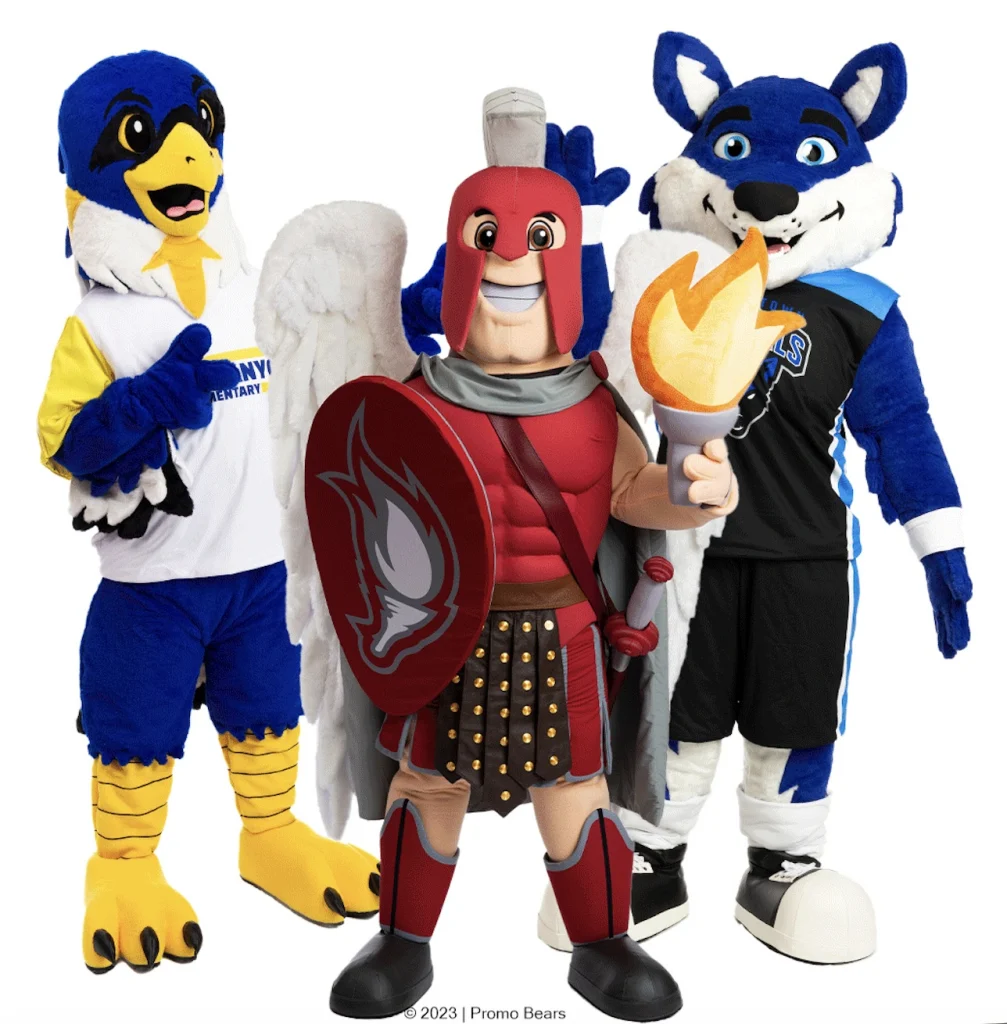
Youth sports clubs benefit from having a dedicated mascot in several meaningful ways. A mascot gives young athletes something to rally around, helps the club stand out in the community, and creates a more exciting atmosphere at games and events. From building team pride to opening up new revenue streams, a well-designed mascot does a lot of heavy lifting for a club of any size.
The sections below break down the specific advantages, what makes a mascot work well for a youth sports setting, and how to know when the time is right to invest in one.
What do youth sports clubs actually gain from a mascot?
Youth sports clubs gain a powerful symbol that unifies players, families, and supporters under a shared identity. A mascot gives the club a visual personality that goes beyond a logo on a jersey. It becomes a recognizable face for the organization, one that kids connect with emotionally and that parents and coaches are proud to represent.
The practical gains are real too. A mascot creates content opportunities across social media, strengthens merchandise appeal, and gives sponsors a more visible platform to associate with. For clubs competing for registrations, community attention, and funding, a mascot is one of the most versatile tools available.
Beyond the promotional angle, there is a genuine human element. Kids love mascots. They remember them. A young player who grows up cheering alongside a club mascot develops a deeper loyalty to that team, and that loyalty often lasts well into adulthood.
How does a mascot help build team identity and club spirit?
A mascot helps build team identity by giving the club a shared character that players, coaches, and fans all recognize and root for. Rather than abstract values on a website, the mascot makes the club’s personality visible and tangible. It becomes a focal point that ties everyone together, regardless of age group or division.
For young athletes especially, identity matters. Kids want to feel like they belong to something. A mascot gives the team a name, a face, and a story. When a player says “I play for the Thunderhawks,” and there is an actual Thunderhawk mascot at games, that sense of belonging becomes much more concrete.
Club spirit also benefits during the harder moments. A recognizable mascot on training gear, on the club’s social pages, and at events keeps morale high even during losing streaks or off-season lulls. It is a consistent reminder of what the team stands for and who they are as a group.
Can a mascot increase revenue for a youth sports club?
Yes, a mascot can meaningfully increase revenue for a youth sports club through merchandise sales, sponsorship opportunities, and stronger community engagement. When supporters can buy a plush toy, a keychain, or a sticker featuring the club mascot, the mascot becomes a direct income source rather than just a branding element.
Merchandise and fan products
Mascot-branded merchandise is one of the most accessible revenue streams for youth clubs. Items like custom plush toys, stress balls, and enamel pins are affordable to produce and easy to sell at games, club events, or through an online store. Parents and young fans are far more likely to buy merchandise featuring a character they love than a plain logo on a product.
Sponsorship and community visibility
Sponsors are drawn to clubs with strong, visible identities. A mascot gives local businesses a recognizable figure to associate with, which makes sponsorship packages more attractive. A mascot appearance at a local event or a photo opportunity on game day gives sponsors real-world visibility that a banner alone cannot match.
Custom Mascot Costume
Ready to bring your mascot to life?
Get a free quote and concept illustration — no commitment, response within 24 hours.
Request a Free Quote →What makes a great mascot for a youth sports team?
A great mascot for a youth sports team is one that reflects the club’s personality, appeals to young fans, and is practical enough to be used consistently. It needs to be visually distinctive, easy to recognize from a distance, and friendly enough that kids actually want to interact with it.
Here are the key qualities that make a mascot work well for a youth sports club:
- Clear visual identity: The mascot should connect to the team name, colors, or local character in a way that feels authentic.
- Kid-friendly design: Approachable features, expressive eyes, and a non-threatening appearance matter when the audience includes young children.
- Versatility: A great mascot translates well across formats, from a full costume to a printed sticker to a plush toy.
- Comfort and wearability: If the mascot costume is uncomfortable or impractical, it will not get used. Good ventilation and a manageable fit make all the difference.
- Originality: A mascot that looks like every other team’s mascot loses its impact. Custom design ensures the club stands out.
The design process matters just as much as the final result. Working with experienced mascot designers who offer concept illustrations and revisions before production ensures the mascot genuinely reflects what the club is about.
How does a mascot improve the matchday experience for young fans?
A mascot improves the matchday experience by giving young fans something to engage with beyond the game itself. For children, interacting with a mascot, getting a high five, or posing for a photo is often the highlight of the day. That kind of positive memory keeps families coming back week after week.
On the sidelines, a mascot brings energy to the crowd. It encourages chanting, celebrates goals, and keeps the atmosphere lively during slower moments in the game. For younger players on the field, seeing the club mascot cheering them on adds a layer of excitement that coaches and parents alone cannot replicate.
The matchday experience also extends to digital content. A mascot in action at a game generates shareable photos and videos that clubs can post across social media. That content builds the club’s online presence and attracts new families who want to be part of an organization with genuine community spirit.
When should a youth sports club invest in a custom mascot?
A youth sports club should invest in a custom mascot when it is ready to strengthen its identity, grow its community presence, or launch a new phase of development. That might mean a rebrand, a new season, a milestone anniversary, or simply a point where the club wants to take its engagement with players and families more seriously.
Timing also matters from a production standpoint. A custom mascot costume typically takes 12 to 16 weeks to produce from design approval to delivery. If the goal is to have the mascot ready for the start of a season or a major event, planning well in advance is important.
Smaller mascot-branded products can be turned around much faster. Stickers, for example, are ready in around 7 to 10 days. Enamel pins, keychains, and magnets typically take 3 to 6 weeks. This means a club can start building mascot recognition through merchandise even before the full costume is ready.
The right moment is also when the club has a clear sense of who the mascot should be. A rushed design rarely captures what makes a club unique. Taking the time to develop the concept properly, with input from players, coaches, and the wider community, leads to a mascot that truly represents the organization.
How Promo Bears helps youth sports clubs bring their mascot to life
We work with youth sports clubs, schools, and community organizations to create custom mascots that genuinely reflect what makes each team unique. Here is what we bring to every project:
- A free concept illustration based on your design idea, with unlimited revisions until you are fully happy
- Mascot costumes with 3D realistic eyes, built-in ventilation, and a comfortable fit for wearers between 5’7″ and 6’1″ (or a custom size)
- A dedicated project manager who handles everything from design to delivery
- A full range of mascot merchandise including plush toys, stickers, keychains, and more
- Over 4,000 custom mascots created for clients ranging from local sports clubs to globally recognized brands
Whether you are starting from scratch or refreshing an existing mascot, we make the process straightforward and enjoyable. Production on mascot costumes runs 12 to 16 weeks, and we offer rush options when timing is tight.
Ready to give your club a mascot it can be proud of? Get a free quote and let us show you what is possible.
Frequently Asked Questions
How much does it typically cost to create a custom mascot for a youth sports club?
The cost of a custom mascot varies depending on what you need. A full mascot costume is a more significant investment, while mascot-branded merchandise like plush toys, stickers, and enamel pins can be produced at a much lower entry point. Many clubs start with smaller branded items to build mascot recognition and generate early revenue before committing to a full costume. Getting a free quote from a specialist like Promo Bears is the best way to understand what fits your club’s budget and goals.
How do we involve our players and community in choosing the mascot design?
Running a naming competition or a design vote among players, parents, and coaches is one of the most effective ways to build early buy-in for a new mascot. You can gather input through a simple online poll, a club newsletter, or even a brainstorming session at practice. When the community feels ownership over the mascot’s identity, engagement with it tends to be much stronger from day one. Sharing early concept illustrations with your audience before finalizing the design is another great way to generate excitement and refine the direction.
What if our club already has a logo — do we still need a custom mascot?
A logo and a mascot serve different purposes, and having both is a genuine advantage. A logo is a graphic mark used for branding consistency, while a mascot is a character with personality that fans — especially kids — can emotionally connect with. Many clubs find that their mascot actually strengthens the logo’s recognition over time by giving it a face and a story. If your existing logo features an animal, a figure, or a symbol, it can often serve as the starting point for a mascot design that feels like a natural extension of your current brand.
Can a mascot work for a very small or newly formed youth sports club?
Absolutely — in fact, introducing a mascot early can accelerate a new club’s growth by helping it establish a strong identity before it has had time to build one through results alone. Smaller clubs can start lean by investing in mascot stickers, pins, or a simple plush toy before committing to a full costume. These lower-cost items still build recognition and generate merchandise revenue. A mascot signals to families that the club is serious about its culture and community, which can be a meaningful differentiator when competing for registrations.
How do we keep the mascot relevant and engaging season after season?
Consistency is key — the more regularly your mascot appears at games, on social media, and across club communications, the more embedded it becomes in your club’s culture. Rotating the person inside the costume, creating mascot-led social media content, and introducing new merchandise items each season all help keep things fresh. You can also involve the mascot in seasonal campaigns, such as a back-to-season launch or an end-of-year awards event. Clubs that treat the mascot as an ongoing character rather than a one-time purchase get significantly more long-term value from the investment.
What common mistakes should youth sports clubs avoid when creating a mascot?
The most common mistake is rushing the design process to meet a deadline, which often results in a mascot that feels generic or does not truly represent the club’s character. Another frequent misstep is designing a mascot that works well as a costume but does not translate cleanly to smaller formats like stickers or social media graphics — versatility across formats should be a design requirement from the start. Clubs also sometimes overlook the practical side of costume wearability, which affects how often the mascot actually gets used. Working with experienced mascot designers who build in revision rounds and consider real-world use cases helps avoid all of these pitfalls.
Can we use our mascot for digital content and social media, or is it mainly for in-person events?
Your mascot can and should be a central part of your digital content strategy. A well-designed mascot character can be adapted into illustrated graphics, animated social media posts, email headers, and website visuals — all without needing the physical costume present. Photos and videos of the mascot in action at games are highly shareable and tend to perform well on platforms like Instagram and Facebook. Some clubs even develop a mascot persona with its own social media presence, which creates a fun, ongoing way to connect with young fans and their families between seasons.