
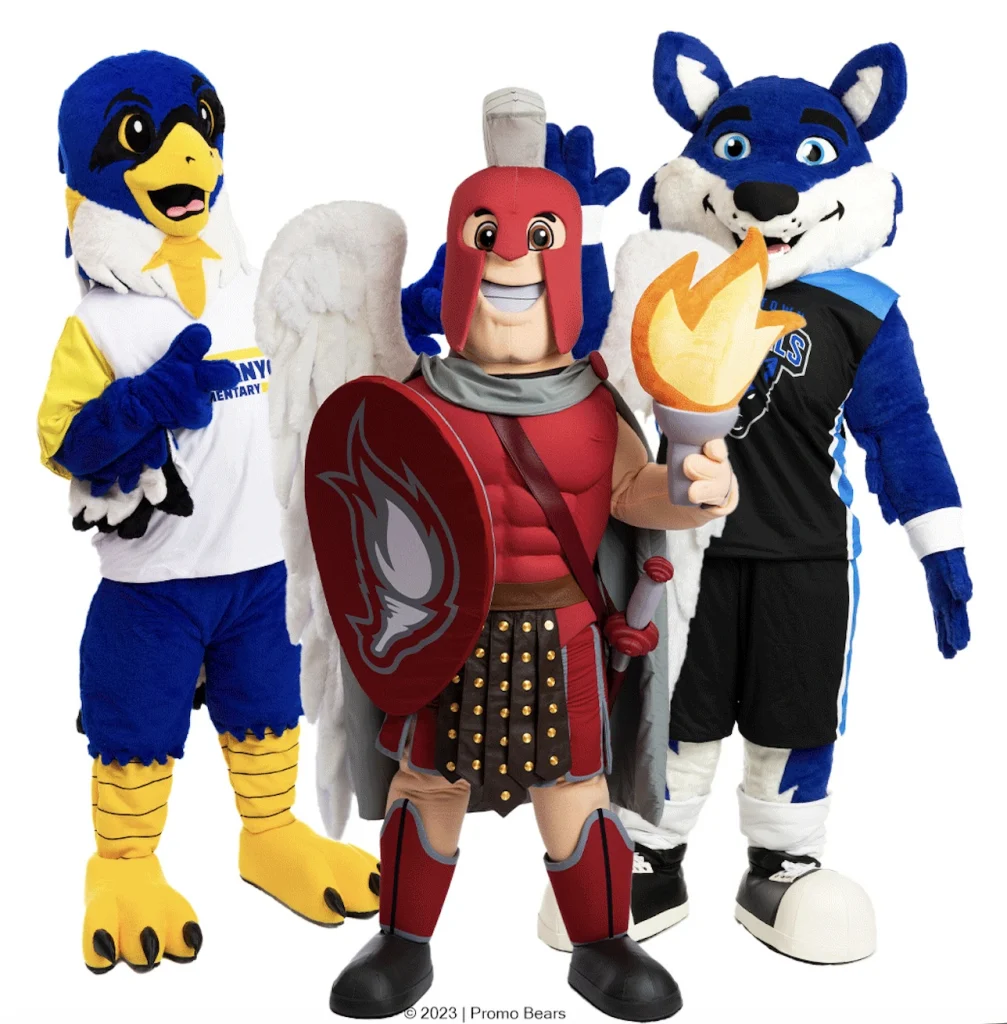
A brand character improves customer engagement by giving your audience something human and relatable to connect with. Unlike a logo or tagline, a character creates emotional resonance: it tells a story, sparks recognition, and invites interaction in ways that static branding simply cannot. The sections below unpack exactly how this works, from buying behavior to long-term loyalty.
What Makes a Brand Character More Memorable Than a Logo?
A brand character is more memorable than a logo because the human brain is wired to respond to faces, personalities, and stories. Characters trigger emotional processing, which encodes memories more deeply than abstract shapes or wordmarks. When customers see a familiar brand mascot, they recall not just the brand but how it made them feel, and that emotional imprint drives recognition far longer.
Logos communicate identity. Characters communicate personality. A well-designed promotional character can express warmth, humor, energy, or trustworthiness in a single glance. That layered communication is something a geometric symbol or color palette struggles to deliver on its own.
Think about the most iconic brand mascots in American culture. They have stayed in public memory for decades not because they appeared on a product label, but because they appeared in stories, at events, and in moments that felt personal. That is the power of character-driven brand recognition.
How Does a Brand Character Influence Buying Behavior?
A brand character influences buying behavior by building trust and familiarity before a purchase decision is made. Consumers are more likely to choose brands they feel they know, and a mascot or promotional character creates a sense of ongoing relationship. That familiarity reduces hesitation and increases the perceived reliability of the brand.
Characters also work as attention anchors. In a crowded retail environment or at a busy event, a recognizable mascot draws the eye immediately. That moment of recognition interrupts the decision-making process in your favor, giving your brand a split-second advantage over competitors without characters.
Beyond attention, characters support storytelling in marketing campaigns. When a mascot appears consistently across social media, events, and merchandise, it creates a narrative thread that keeps customers engaged between purchases. That ongoing engagement shortens the gap between awareness and conversion.
What Types of Brand Characters Work Best for Engagement?
The brand characters that drive the strongest engagement are those with a clear personality, a distinctive visual design, and a strong fit with the brand’s values and audience. The specific form the character takes matters less than how consistently and authentically it represents what the brand stands for.
That said, certain character types consistently outperform others in engagement contexts:
- Animal mascots are universally appealing and easy to adapt across age groups and industries. They carry inherent personality traits that audiences project onto the brand.
- Humanized product characters work especially well in FMCG and retail, turning a commodity into something with a face and a story.
- Superhero or action-oriented characters connect strongly with sports teams, entertainment brands, and youth-focused organizations.
- Friendly community figures suit schools, nonprofits, and local organizations where trust and approachability are the priority.
The common thread across all high-performing characters is consistency. A character that appears in the same form across a mascot costume, a plush toy, a stress ball, and a social media post creates a unified brand experience that multiplies engagement at every touchpoint.
How Do Companies Use Mascot Costumes at Events to Boost Engagement?
Companies use mascot costumes at events to create live, interactive brand experiences that audiences remember and share. A costumed character transforms passive observers into active participants: people want to take photos, interact, and engage in ways they simply would not with a banner or a booth display. That interaction becomes shareable content, extending the event’s reach far beyond the venue.
At trade shows, sporting events, grand openings, and community festivals, a mascot costume serves several practical engagement functions at once:
- Crowd attraction: A well-designed costume draws foot traffic to your space naturally, without requiring aggressive outreach from staff.
- Photo opportunity creation: Guests photograph and post mascot interactions organically, generating social media content that carries your brand further.
- Message delivery: A character can communicate brand values through behavior and interaction in a way that feels entertaining rather than promotional.
- Audience connection: For family-friendly events especially, a mascot costume bridges the gap between the brand and younger audiences who influence household purchasing decisions.
- Merchandise activation: Pairing a costumed character with branded merchandise like keychains, stickers, or plush toys creates a complete brand moment that guests take home.
The key is that the costume itself needs to be high quality. A poorly made or uncomfortable character suit breaks the experience immediately. Lifelike details, proper ventilation, and a design that matches the brand’s visual identity are what separate a memorable mascot appearance from a forgettable one.
Can a Brand Character Improve Long-Term Customer Loyalty?
Yes, a brand character can significantly improve long-term customer loyalty by creating an emotional anchor that keeps audiences connected to the brand over time. Loyalty is built on familiarity and positive association, and a consistently present mascot reinforces both every time it appears. Customers who grow up with a brand character often carry that attachment into adulthood and pass it on to their own families.
Characters also give brands a vehicle for ongoing storytelling. A mascot can evolve, appear in seasonal campaigns, celebrate milestones, and respond to cultural moments in ways that feel authentic and engaging. That ongoing narrative keeps the brand relevant without requiring a complete identity overhaul every few years.
For B2B organizations, loyalty looks different but the principle holds. A character that appears consistently across branded merchandise, event activations, and digital touchpoints signals stability and investment in the brand relationship. It tells partners and clients that this organization is serious about its identity and its long-term presence.
What Should a Brand Consider Before Creating a Mascot Character?
Before creating a mascot character, a brand should clarify its audience, its core values, and the contexts in which the character will appear. A mascot designed without this foundation often ends up visually interesting but strategically hollow: it looks good in isolation but fails to connect with the people it is meant to engage.
The most important questions to answer upfront include:
- Who is the primary audience? Age, interests, and cultural context should directly shape the character’s design and personality.
- What values should the character embody? Energy, trustworthiness, humor, and expertise all communicate differently through design choices.
- Where will the character appear? A mascot used only digitally has different design requirements than one that will be produced as a costume, a plush toy, and a stress ball simultaneously.
- How will the character be maintained? Brand characters require consistent use to build recognition. A one-time activation rarely delivers lasting engagement value.
It is also worth thinking about scalability from the start. A character that works as a 2D illustration but cannot translate into a three-dimensional costume or merchandise product limits your activation options significantly. Working with experienced mascot designers from the concept stage ensures the character is built for every format you will need.
How Promo Bears Helps You Build a Brand Character That Drives Engagement
We work with marketing managers and brand directors across North America to bring mascot characters to life across every format that matters. From the initial concept through to production and delivery, we handle the entire process so your team can focus on the activation strategy rather than the production logistics.
Here is what working with us looks like:
- A free concept illustration based on your logo or design idea, with unlimited revisions until the design is exactly right
- Custom mascot costumes ready in 12 to 16 weeks, built with lifelike 3D eyes, an integrated ventilation system, and genuine wearing comfort
- A full range of branded merchandise to extend your character across every touchpoint, including custom stress balls produced in 10 to 12 weeks with precise PMS color matching
- A dedicated project manager overseeing your order from design approval through quality control and delivery
- Over 4,000 mascots created for clients including NASA, Amazon, Walmart, and Red Bull
Whether you are launching a new character or scaling an existing one across merchandise and events, we are ready to help you build something that genuinely connects with your audience. Get your free quote and let us show you what is possible.