
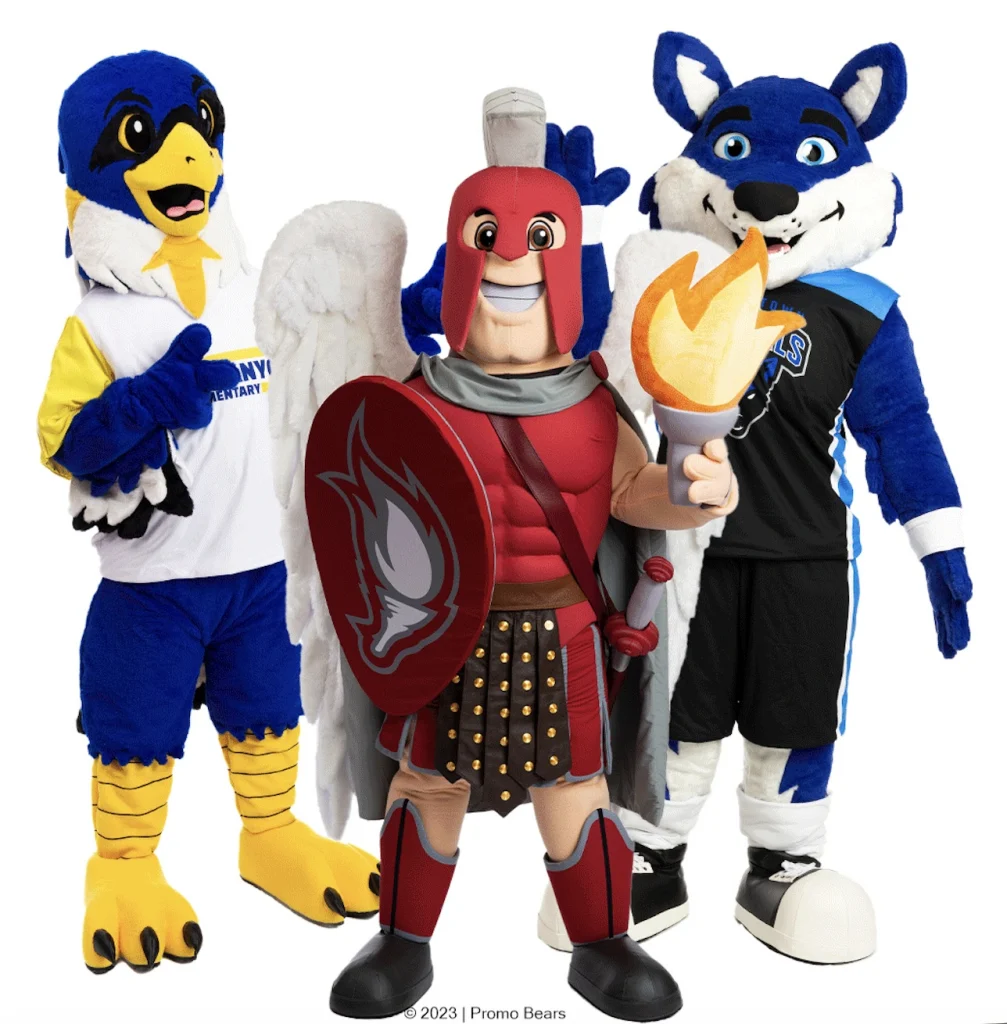
A mascot strengthens club identity over time by giving members, fans, and the broader community a shared symbol they can rally around. It transforms abstract values like team spirit, loyalty, and pride into something visible and tangible. The sections below walk through exactly how that happens, from emotional connection to merchandise revenue and long-term design strategy.
How does a mascot build emotional connection with club members?
A mascot builds emotional connection by giving club members a living, recognizable symbol that represents their shared values and experiences. When members see the mascot at games, events, and on merchandise, those repeated encounters create positive associations over time. The mascot becomes tied to memories, celebrations, and a sense of belonging that goes far deeper than a logo ever could.
Think about what makes a sports team feel like a community rather than just a group of people wearing the same colors. It is rarely the jersey alone. It is the rituals, the chants, and the characters that show up at every event. A mascot for a sports club plays a central role in that ritual layer. It shows up at the opening game, greets young fans, and appears on the banner behind the home bench. Over years, those moments stack up.
Children who grow up attending club events with a beloved mascot carry that emotional imprint into adulthood. They become loyal members, dedicated fans, and eventually the parents bringing their own kids to games. That generational continuity is one of the most powerful things a well-designed mascot can build.
What role does a mascot play in club culture and traditions?
A mascot anchors club traditions by serving as the consistent, recognizable centerpiece of ceremonies, rituals, and community moments. It shows up at season openers, championship celebrations, and community outreach events, giving those occasions a visual focal point that members associate with pride and belonging. Over time, the mascot itself becomes part of the tradition rather than just a feature of it.
Clubs that invest in a mascot early often find that members start creating their own traditions around it. A pre-game handshake with the mascot, a photo at the entrance, a chant that references the character by name. None of these are planned by the club. They emerge organically because people naturally attach meaning to symbols that show up consistently.
This cultural role also extends to how new members are welcomed. A mascot gives newcomers an immediate entry point into the club’s identity. They do not need to know the history or understand the internal culture to feel the warmth of a friendly, well-designed character. That accessibility makes the mascot a powerful onboarding tool for growing clubs.
How does a mascot improve brand recognition for a club?
A mascot improves brand recognition by turning a club’s identity into a distinctive visual character that is instantly memorable across every touchpoint. Unlike a wordmark or abstract logo, a mascot has personality and presence. It appears on merchandise, social media, signage, and in person, creating consistent reinforcement of the club’s brand across multiple channels and contexts.
Recognition compounds over time. The more often fans, sponsors, and community members see the mascot, the stronger the mental association becomes. A well-designed mascot for a sports club can reach audiences that traditional branding never touches, particularly younger fans who respond more naturally to characters than to logos.
Mascots also travel well. When a member wears a mascot-branded hoodie or carries a keychain, the club’s identity moves with them into everyday life. That kind of ambient visibility is something no billboard can replicate. It turns fans into walking brand ambassadors without any additional effort from the club.
Can a mascot increase club merchandise sales and revenue?
Yes, a mascot can meaningfully increase merchandise sales because fans are more likely to buy products featuring a character they feel emotionally connected to. A mascot gives the merchandise range a personality, making items like plush toys, stickers, keychains, and apparel feel like collectibles rather than generic branded goods. That emotional pull translates directly into purchase behavior.
Clubs that introduce a mascot often see their merchandise range expand naturally. Items that would feel flat with just a logo become appealing when they feature a character fans recognize and love. Consider what a well-executed mascot unlocks:
- Plush toys for younger fans and family-oriented audiences
- Enamel pins and keychains for collectors and loyal supporters
- Stickers and temporary tattoos for game days and community events
- Mascot-branded apparel that fans wear beyond the stadium
- Limited edition seasonal items that drive repeat purchases
Each of these product categories creates a new revenue stream. And because the mascot is a unique, club-specific character, none of these products can be replicated by a generic supplier. That exclusivity supports premium pricing and stronger margins.
What makes a mascot design effective for long-term club identity?
An effective mascot design for long-term club identity is one that is distinctive, versatile, and deeply rooted in the club’s specific values and community. It needs to work across a wide range of applications, from a full-size costume at events to a small print on a sticker or keychain, without losing clarity or personality. Timeless character design outlasts trends and stays relevant as the club grows.
Several qualities separate mascots that endure from those that feel dated within a few years:
- Simplicity with personality: The design should be recognizable at a glance, even at small sizes, while still communicating a clear character and attitude.
- Relevance to the club’s story: The best mascots reflect something specific about the club’s location, values, or history rather than using a generic animal or figure.
- Scalability across formats: A strong mascot translates equally well to a full costume, a plush toy, a printed sticker, and a digital avatar.
- Emotional warmth: Characters that feel approachable and friendly build broader appeal across age groups and demographics.
- Flexibility for evolution: The core design should be strong enough to allow subtle updates over the years without requiring a complete rebrand.
Investing time in the design phase pays dividends for decades. A mascot that is rushed or built around a passing trend will need to be replaced. One that is thoughtfully designed becomes a permanent part of the club’s visual identity.
When should a club invest in a professional custom mascot?
A club should invest in a professional custom mascot when it is ready to build a long-term identity strategy, not just fill a short-term marketing gap. The right moment is typically when the club has a stable membership base, a clear sense of its values and community, and a plan to activate the mascot consistently across events, merchandise, and communications.
That said, earlier is almost always better than later. Clubs that introduce a mascot during a growth phase benefit from the character growing alongside the membership. The mascot becomes part of the club’s foundation rather than something bolted on after the fact.
Timing also matters from a production standpoint. A professional custom mascot costume takes 12 to 16 weeks to produce from design approval to delivery. If a club has a season opener, a major event, or a community campaign on the calendar, planning well in advance ensures the mascot arrives ready to make an impact. Rushing the process risks compromising on quality, and a mascot that does not look or feel right will undermine the investment.
Clubs that are expanding into merchandise should also plan the mascot design before commissioning products. Getting the character right first means every subsequent product, from plush toys to stickers, will be consistent and on-brand from the start.
How Promo Bears helps strengthen club identity
At Promo Bears, we work with sports clubs, schools, and organizations across the US and Canada to bring their mascot vision to life. Whether you are starting from scratch or ready to expand an existing character into a full merchandise range, we offer everything you need in one place.
Here is what we bring to every project:
- A free concept illustration based on your design idea or logo, with unlimited revisions until it is exactly right
- Custom mascot costumes with lifelike 3D eyes, a built-in ventilation system, and a comfortable fit for performers
- A full range of mascot merchandise including plush toys, enamel pins, stickers, keychains, and stress balls
- A dedicated project manager who oversees your project from first sketch to final delivery
- Over 19 years of mascot design and production experience, with more than 4,000 mascots created for clients worldwide
We make the process straightforward, transparent, and genuinely enjoyable. You only move to production once you are fully happy with the design, and we keep you informed every step of the way.
Ready to give your club an identity that lasts? get your free quote and let us show you what is possible.
Frequently Asked Questions
How much does a custom mascot costume typically cost, and is it worth the investment for a smaller club?
Custom mascot costume pricing varies depending on complexity, materials, and features, but most professional-quality costumes fall in a range that is accessible to mid-sized clubs when viewed as a long-term asset rather than a one-time expense. For smaller clubs, the return on investment comes from multiple directions: increased merchandise sales, stronger member retention, improved sponsorship appeal, and greater community visibility. Even a modest merchandise range built around a well-designed mascot can recover the initial production cost within a season or two.
What if our club already has a logo — do we still need a separate mascot character?
A logo and a mascot serve different purposes and work best together rather than as substitutes for each other. Your logo handles formal branding — it appears on documents, jerseys, and official communications — while a mascot handles emotional engagement, live events, merchandise, and community outreach. Many clubs start with a logo and later develop a mascot character inspired by it, creating a cohesive visual identity that works across every context. If your logo already features an animal or character, that is often the perfect starting point for a mascot design.
How do we introduce a new mascot to our existing members without it feeling forced or out of place?
The most effective introductions treat the mascot as a community moment rather than a marketing announcement. Consider unveiling the character at a high-energy event like a season opener or a community day, giving members a chance to meet the mascot in person and form an immediate connection. Involving members in the naming process or running a vote on design elements beforehand also builds anticipation and ownership. When fans feel like they had a hand in creating the mascot, adoption happens naturally.
Can a mascot work for a non-sports club, like a school booster group, a charity, or a community organization?
Absolutely — mascots are just as effective for non-sports organizations as they are for sports clubs, because the underlying psychology is the same. Any group that wants to build community, increase visibility, or create emotional engagement with an audience can benefit from a well-designed character. Schools use mascots to foster pride and belonging among students and alumni, charities use them to make campaigns more approachable and memorable, and community organizations use them to create a friendly face for outreach events. The key is ensuring the character reflects the organization’s specific values and audience.
What common mistakes should clubs avoid when designing a mascot for the first time?
The most common mistake is designing a mascot around a trend or a personal preference rather than the club’s actual identity and community. A character that feels clever today can feel dated in five years if it is not rooted in something meaningful and specific to the club. Other frequent pitfalls include choosing overly complex designs that do not scale well to small merchandise formats, skipping the merchandise planning phase so the costume and products end up visually inconsistent, and rushing production to meet a deadline rather than getting the design right first. Working with an experienced mascot design partner helps clubs avoid all of these from the start.
How do we keep the mascot relevant and engaging for members over many years?
Longevity comes from consistent activation rather than constant redesign. The more the mascot shows up — at events, on social media, in newsletters, on merchandise — the stronger the emotional association grows over time. Clubs can keep things fresh by introducing seasonal merchandise, creating mascot-led social media content, or developing mascot appearances around key calendar moments like championships or anniversaries. Minor design refinements every several years can modernize the character without breaking the identity members have already built a connection with.
How do we brief a mascot designer effectively to make sure the final character truly represents our club?
A strong brief covers four core areas: the club’s values and personality, the target audience the mascot needs to connect with, any existing visual identity elements like colors and logos, and specific references or examples of characters the club finds appealing. The more specific and honest the brief, the better the designer can translate your club’s identity into a character that feels genuinely right rather than generic. It also helps to share what you want the mascot to do — appear in a costume at events, feature on plush toys, anchor a social media presence — so the design is built with those applications in mind from day one.