
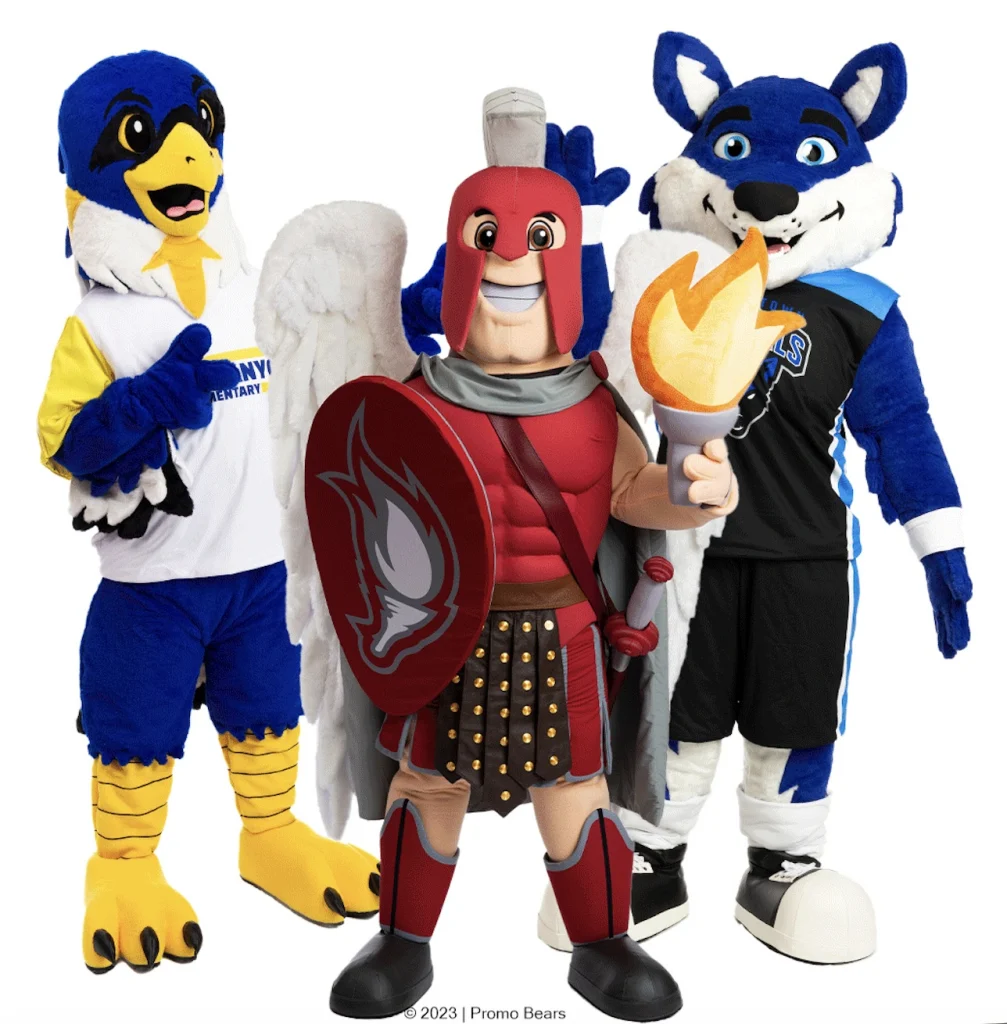
Mascot design improves brand recognition and engagement by giving your brand a face that people remember, connect with emotionally, and actively seek out. A well-designed mascot translates your brand identity into a visual character that works across events, merchandise, social media, and physical spaces. The questions below unpack exactly how that works and what it takes to get it right.
How does a mascot create an emotional connection with an audience?
A mascot creates an emotional connection by turning an abstract brand into a relatable character. People are wired to respond to faces, personalities, and stories. When a mascot has a consistent look, a clear personality, and shows up repeatedly across your brand touchpoints, audiences start to feel something toward it, and that feeling transfers directly to your brand.
This is not about being cute or fun for its own sake. Emotional connection drives loyalty. When fans, customers, or students feel warmly toward a mascot, they are more likely to engage with the brand, share content featuring it, and return again and again. A mascot gives people something to root for.
The key is consistency. A mascot that looks different across materials, or that only appears once a year at a single event, does not build the same kind of bond as one that shows up reliably and behaves in a recognizable way. Think of the mascots tied to major sports franchises or global consumer brands. Their staying power comes from repetition, personality, and emotional resonance built over time.
What makes a mascot design effective for brand recognition?
An effective mascot design for brand recognition is visually distinctive, immediately readable, and tightly aligned with your brand identity. It should be recognizable at a glance, even without a logo next to it. That means bold shapes, a limited and intentional color palette that matches your brand colors, and a personality that reflects what your organization actually stands for.
Several design elements separate a forgettable mascot from one that sticks:
- Simplicity: Clean, bold shapes reproduce well at any size, from a giant inflatable to a small keychain.
- Personality: A mascot with a clear character, whether energetic, friendly, or authoritative, communicates brand values without words.
- Color alignment: Your mascot should use your brand’s colors so it reinforces visual identity every time it appears.
- Versatility: A strong mascot design works in 2D and 3D, in print and in person, as a costume and as a plush toy.
- Uniqueness: It should not look like anyone else’s mascot. Distinctiveness is what makes it yours.
Mascot design is a long-term brand asset. Getting it right at the start saves enormous time and cost down the road, which is why working through a proper design process with experienced mascot designers matters so much.
How does a mascot improve customer engagement at events and campaigns?
A mascot improves customer engagement at events and campaigns by creating a physical, interactive focal point that draws people in. Unlike a banner or a booth display, a mascot character moves, interacts, poses for photos, and generates real human moments. That kind of interaction is what people remember and share.
At trade shows, sporting events, brand activations, and campus events, a custom mascot costume acts as a crowd magnet. It gives attendees a reason to stop, engage, and spend time with your brand rather than walking past. Photo opportunities with a mascot are one of the most organic forms of social sharing available to a brand, and that content spreads far beyond the event itself.
Mascots also make campaigns more memorable. When a character appears consistently across a campaign, whether in video, print, or in-person activations, it gives the campaign a unifying identity. Audiences follow the character, not just the message. That narrative quality keeps people engaged longer and increases recall after the campaign ends.
What types of organisations benefit most from a custom mascot?
Almost any organization with a public-facing brand can benefit from a custom mascot, but certain types see the strongest return. Schools, universities, and sports teams have long understood the power of mascots for building community spirit and loyalty. In the corporate world, brands in retail, hospitality, entertainment, and consumer goods use mascots to humanize their identity and stand out in crowded markets.
Non-profits and government organizations also use mascots effectively, particularly for awareness campaigns, community outreach, and events where they need to communicate in a warm, accessible way rather than a formal one.
The organizations that benefit most share a few things in common. They have a clear brand identity they want to reinforce. They operate in spaces where audience engagement, whether fan loyalty, customer retention, or community participation, directly supports their goals. And they are willing to invest in a mascot as a long-term brand asset rather than a one-off promotional item.
How does mascot merchandise extend brand recognition beyond events?
Mascot merchandise extends brand recognition by turning your character into a daily presence in people’s lives, long after the event is over. A plush toy on a child’s shelf, a keychain on a set of car keys, or a sticker on a water bottle keeps your mascot visible in personal spaces and public settings that no advertising budget could reach.
The range of merchandise formats available makes it easy to match the right product to the right audience and occasion:
- Plush toys are ideal for family-oriented brands, schools, and sports teams. Production typically takes 12 to 18 weeks, so planning ahead matters.
- Keychains, enamel pins, and stickers are affordable, high-volume items that are ready in as little as 3 to 6 weeks and work well as giveaways or retail merchandise.
- Giant mascot inflatables create high-visibility brand moments at outdoor events and are ready in just 3 to 4 weeks.
- Stress balls shaped to your mascot design are a practical desk item that keeps your brand in front of decision-makers. These take 10 to 12 weeks to produce.
Each piece of merchandise functions as a walking advertisement. When fans, students, or customers choose to carry or display your mascot, they become brand ambassadors without being asked. That kind of organic visibility is difficult to replicate through paid channels alone.
What should you look for when choosing a mascot design partner?
When choosing a mascot design partner, look for a team that combines deep design expertise with end-to-end production capability. A great mascot starts with a great design, but it also needs to be built to last, comfortable to wear, and consistent across every format it appears in. Your partner should be able to deliver all of that under one roof.
Specifically, evaluate any potential partner on these points:
- Design process: Do they offer a free concept illustration before you commit? Can you revise the design until it is exactly right?
- Production experience: How many mascots have they produced, and for what kinds of clients?
- Quality of materials: Are the costumes comfortable, ventilated, and easy to clean? Do they hold up over repeated use?
- Project management: Is there a dedicated person overseeing your project from design to delivery?
- Merchandise range: Can they produce the full range of mascot merchandise you need, not just the costume?
- Transparency: Are timelines and pricing clear from the start, without vague estimates?
A mascot is a long-term investment in your brand. The right partner treats it that way, not as a quick production job, but as a creative and strategic collaboration that results in something your organization will use for years.
How Promo Bears helps with mascot design
We have spent over 19 years helping schools, universities, corporations, sports teams, and non-profits bring their brand to life through custom mascot design and production. Every project starts with a free concept illustration based on your logo or design idea, with unlimited revisions until the design is exactly what you need. No upfront commitment, no guesswork.
Here is what we bring to every project:
- Mascot costumes with lifelike 3D eyes, built-in ventilation, and a 12 to 16 week production timeline
- A full range of mascot merchandise, from plush toys and stress balls to giant inflatables and enamel pins
- A dedicated project manager who handles everything from design approval to final delivery
- Thorough quality control with result photos shared for your approval before shipping
- Over 4,000 mascots created for clients including NASA, Amazon, Walmart, and Red Bull
Whether you need a single costume for your school’s sports program or a full merchandise line for a national brand campaign, we are ready to make it happen. Get your free quote and let’s start building something your audience will never forget.
Frequently Asked Questions
How long does the mascot design process typically take from concept to finished costume?
The full process from initial concept to a finished mascot costume generally takes 12 to 16 weeks for production, but you should also factor in the design phase before that. Most reputable design partners will provide a free concept illustration within a few business days, and revisions can take anywhere from a few days to a couple of weeks depending on feedback cycles. To avoid delays, start your project well in advance of any event, campaign launch, or season opener — rushing production almost always compromises quality.
What if I don't have a fully developed brand identity yet — can I still commission a mascot?
Yes, but it is worth establishing at least your core brand elements first, such as your name, primary colors, and the general personality or values you want your brand to convey. A mascot designed without these foundations risks becoming misaligned with your identity as your brand evolves, which can mean costly redesigns later. If your branding is still in development, share whatever direction you have with your design partner and treat the mascot design process as an opportunity to crystallize those brand values visually.
How do I make sure my mascot stays relevant and effective over time?
Longevity comes from designing with versatility in mind from the start and then using your mascot consistently across all brand touchpoints rather than reserving it for special occasions. Periodic, subtle refreshes — updating a costume, adding new merchandise formats, or introducing the mascot in new digital contexts — can keep the character feeling current without abandoning the equity you have built. Avoid drastic redesigns unless absolutely necessary, as they reset the recognition and emotional connection your audience has already developed.
Can a mascot work effectively for digital and social media, not just in-person events?
Absolutely — in fact, a strong mascot can be one of your most versatile digital assets. A 2D illustrated version of your mascot can be animated for social media content, used as a branded avatar, incorporated into email campaigns, or featured in video ads and explainer content. The key is to develop a digital-ready version of your mascot alongside the physical costume, ensuring the character translates cleanly across screen sizes and formats. Brands that deploy their mascot consistently online and offline compound their recognition far faster than those that limit it to live events.
What are the most common mistakes organizations make when introducing a new mascot?
The most common mistake is underusing the mascot after launch — investing in the design and costume but failing to integrate the character into regular marketing, social content, and community touchpoints. Another frequent misstep is designing by committee without clear brand guidelines, which often results in a character that is visually inconsistent or lacks a defined personality. Finally, many organizations skip the merchandise planning stage entirely, missing the opportunity to extend their mascot’s reach well beyond the events where the costume appears.
How much does a custom mascot typically cost, and is it worth the investment?
Costs vary depending on the complexity of the design, the quality of materials, and the scope of merchandise involved, but a professionally produced mascot costume typically represents a meaningful upfront investment. However, when you consider that a well-built costume can last five or more years with proper care, the cost-per-use drops significantly over time. More importantly, the brand recognition, engagement, and loyalty a great mascot generates are difficult to replicate through traditional advertising at any budget — making it one of the higher-ROI long-term brand assets an organization can own.
Do I own the rights to my mascot design, and can I use it across all my marketing materials?
You should own full rights to your custom mascot design upon project completion — this is a critical point to confirm with any design partner before signing a contract. Full ownership means you can use the character across merchandise, digital platforms, print, signage, and any other application without additional licensing fees. Always request written confirmation of intellectual property transfer as part of your agreement, and ensure you receive all original design files in formats suitable for both print and digital use.
Related Articles
- How do you choose the right promotional tool for your brand?
- Can a mascot costume be produced in custom sizes for different wearers?
- How does a mascot strengthen club identity over time?
- What makes a mascot costume effective for brand recognition?
- What event activations are actually driving engagement beyond photo booths and giveaways?