
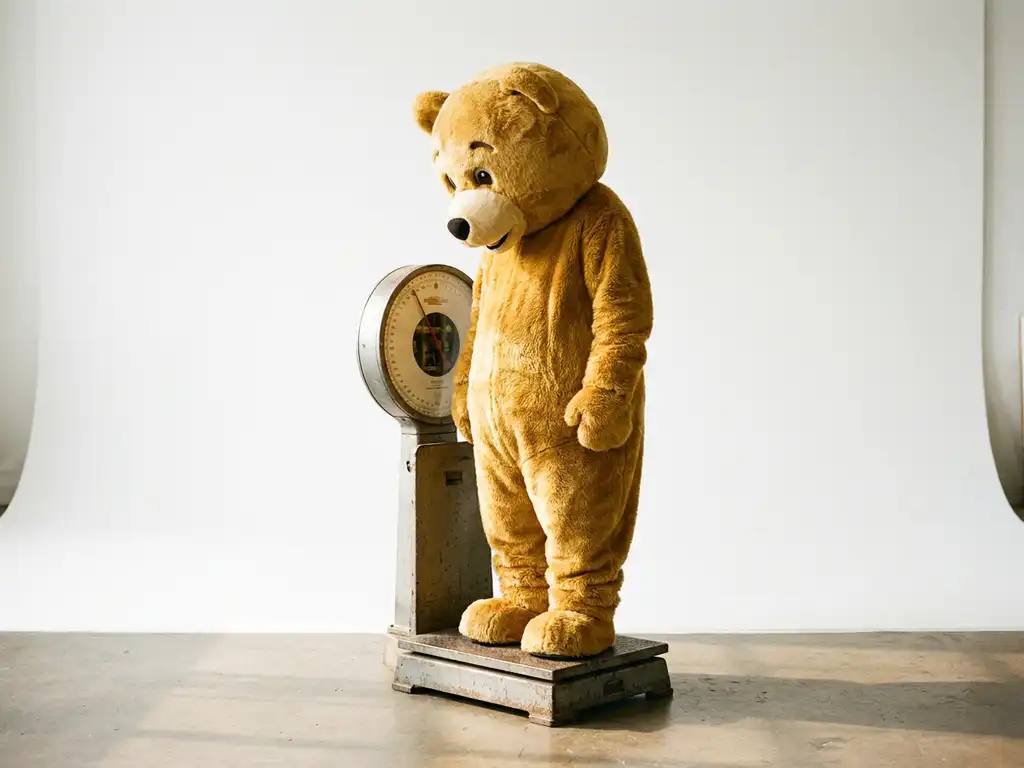
A mascot costume typically weighs between 10 and 25 pounds, with most full-body suits landing in the 15 to 20 pound range. The exact weight depends on the size of the costume, the materials used, and whether the design includes a large head, full-body suit, or additional structural elements. Keep reading to get clear answers on every weight-related question mascot buyers and performers ask most.
What does a mascot costume typically weigh?
Most professional mascot costumes weigh between 10 and 25 pounds in total. A standard full-body costume, including the head, body suit, hands, and feet, usually lands around 15 to 20 pounds. Lightweight designs built for high-activity use can come in closer to 10 pounds, while large, heavily padded, or structurally complex costumes may push toward the upper end of that range.
It is worth noting that the weight is not carried all at once in one place. The head sits on the performer’s shoulders, the body suit is worn like a garment, and the hands and feet are separate pieces. This distribution matters more than the total weight, because an unbalanced costume can feel much heavier than the numbers suggest.
For organizations ordering a custom mascot costume, weight is one of the first practical considerations to discuss during the design phase, especially if performers will be wearing the costume for extended periods at events or games.
What makes a mascot costume heavier or lighter?
The weight of a mascot costume is driven by four main factors: the materials used, the size of the costume, the complexity of the design, and the internal structure. Understanding these factors helps buyers and performers set realistic expectations before production begins.
- Materials: Foam is the most common structural material in mascot heads and bodies. Denser foam adds weight, while lighter open-cell foam keeps things manageable. The outer fabric, whether it is faux fur, fleece, or a custom print material, also contributes to overall mass.
- Head size: The mascot head is almost always the heaviest single component. Larger character heads with dramatic features, wide mouths, or protruding elements require more foam and more structural support, which adds weight.
- Body padding and structure: Costumes that replicate a character’s exaggerated body shape, like a round belly or oversized limbs, need internal padding or wire frames to hold their form. These additions increase weight noticeably.
- Ventilation systems: A built-in ventilation system, which circulates air inside the costume, adds a small amount of weight through fans and wiring but is well worth it for performer comfort and endurance.
- Accessories and extras: Removable props, layered costumes, or detachable elements all contribute additional weight that performers need to account for.
How does mascot costume weight affect the performer?
Mascot costume weight directly affects how long a performer can wear the costume comfortably, how physically demanding the role is, and how safely they can move. Even a well-distributed 15-pound costume becomes tiring after 30 to 45 minutes of active performance, particularly in warm environments or during high-energy events.
The head is the biggest challenge. Because it rests on the performer’s shoulders and neck rather than on the head itself, even a relatively light mascot head, say 8 to 10 pounds, creates strain over time. Performers typically need regular breaks every 20 to 30 minutes to rest their neck and cool down.
A built-in ventilation system makes a significant difference here. Circulating air inside the costume reduces heat buildup, which is one of the primary reasons performers fatigue quickly. When heat is managed, performers can stay in character longer and maintain higher energy levels throughout an appearance.
For organizations planning frequent or long-duration mascot appearances, it is worth factoring wearability and performer comfort into the design brief from the start, not as an afterthought once the costume is already built.
How heavy is a mascot head compared to the body suit?
The mascot head is almost always heavier than any other individual component, typically weighing between 6 and 12 pounds on its own. The body suit, by comparison, usually weighs between 4 and 8 pounds depending on padding and fabric. The hands and feet together typically add another 2 to 4 pounds.
This means the head can account for 40 to 50 percent of the total costume weight, even though it is a single piece. That concentration of weight at the top of the body is why neck and shoulder fatigue is the most commonly reported physical challenge for mascot performers.
Design choices that reduce head weight without compromising appearance include using lighter foam grades, minimizing deep structural undercuts, and keeping protruding features like ears and horns hollow rather than solid. A skilled costume maker will balance the visual impact of the head with its practical wearability.
What’s the difference between a lightweight and a full-body mascot costume?
A lightweight mascot costume is designed specifically to minimize weight and heat retention, usually through thinner foam, breathable fabrics, and a simplified structure. A full-body mascot costume prioritizes visual impact and character accuracy, which typically means more foam, more padding, and a heavier overall build. The trade-off is between wearability and spectacle.
Lightweight costumes work well for performers who need to move frequently, interact closely with crowds, or wear the costume for extended periods. They are popular for school mascots, sports teams, and retail environments where the performer is active for hours at a time.
Full-body costumes are better suited for controlled appearances, photo opportunities, brand launches, and events where the visual impression matters more than long-duration wear. These costumes tend to be more dramatic in shape and detail, making them powerful tools for brand recognition and audience engagement.
The right choice depends on how and where the costume will be used. Most professional mascot producers will ask about the performance context before recommending a construction approach, because a costume built for a 10-minute photo op should be built very differently from one worn at a three-hour community event.
How can you reduce mascot costume weight without losing quality?
Reducing mascot costume weight without sacrificing appearance or durability comes down to smart material choices, structural efficiency, and thoughtful design. It is entirely possible to build a visually striking costume that is also genuinely comfortable to wear, and the best results come from addressing weight during the design phase rather than trying to modify a finished costume.
- Choose lighter foam grades: Not all foam is equal. Lighter, open-cell foams can hold shape well while reducing the overall mass of the head and body significantly.
- Keep protruding features hollow: Ears, horns, snouts, and other character-specific features can be built with hollow interiors instead of solid foam, cutting weight without changing the external look.
- Use breathable outer fabrics: Lighter fabrics reduce total weight and improve airflow, which indirectly reduces how heavy the costume feels to wear because the performer stays cooler.
- Integrate ventilation early: A built-in ventilation system adds a small amount of weight but dramatically reduces heat fatigue, meaning performers can wear the costume longer before needing a break.
- Simplify internal structure where possible: Wire frames and rigid supports add weight. Where the design allows, replacing rigid structure with shaped foam achieves a similar result at lower weight.
Working with experienced mascot designers from the very beginning is the most reliable way to achieve the right balance. Weight management is a craft skill, and it shows in the finished product.
How Promo Bears helps with mascot costume weight and wearability
We design every custom mascot costume with performer comfort as a core requirement, not an optional extra. With over 19 years of experience in mascot design and production, we know exactly how material choices, construction techniques, and design decisions affect how a costume feels to wear over a full event day.
Here is what we bring to every costume project:
- Lifelike 3D eyes and a carefully balanced head construction that minimizes neck strain
- An integrated ventilation system built into every costume to manage heat and extend wear time
- High-quality, lightweight materials selected for both visual impact and performer endurance
- A free concept illustration before any production commitment, with unlimited revisions until the design is exactly right
- A dedicated project manager who oversees everything from the first sketch to final delivery
- Standard sizing for performers between 5’7″ and 6’1″, with custom sizing available on request
- A production timeline of 12 to 16 weeks, with rush options available for tight deadlines
We have created more than 4,000 mascots for organizations ranging from schools and sports teams to globally recognized brands. If you are ready to explore what a custom mascot can do for your brand, get a free quote and let us show you what is possible.
Frequently Asked Questions
How do I know if a mascot costume weight is appropriate for my performer?
Start by assessing your performer’s physical fitness level and the demands of your typical event schedule. A healthy adult can generally manage a 15 to 20 pound costume for short bursts of 20 to 30 minutes with breaks in between, but if your performer is smaller in frame, less physically conditioned, or expected to be highly active, aim for a costume closer to 10 to 12 pounds. Discuss your performer’s profile and event schedule with your mascot producer during the design phase so construction decisions can be made with the right person in mind.
Can one mascot costume fit multiple performers of different sizes?
It depends on the costume design and how much size variation exists between performers. Most professional mascot costumes are built to a standard performer range, such as 5’7u0022 to 6’1u0022, and can accommodate modest differences in body type within that range. However, significant height or weight differences between performers can affect how the costume sits, how the head balances, and how safely the performer can move, so it is worth discussing multi-performer use with your costume maker upfront so they can build in adjustability where possible.
What is the best way to store a mascot costume to prevent it from getting heavier or degrading over time?
Store your mascot costume in a cool, dry environment away from direct sunlight, which can degrade foam and fade fabrics over time. Keep the head upright or supported on a stand to prevent the foam from compressing and losing its shape, and allow the costume to fully air out after each use before storing it in a breathable bag or container. Moisture is the biggest enemy of mascot foam and fabric, so never pack a costume away while it is still damp from a performance.
How often do mascot performers need breaks, and how should rest periods be managed at events?
As a general rule, mascot performers should take a break every 20 to 30 minutes during active appearances, especially in warm or outdoor environments. During breaks, performers should remove the head at minimum, hydrate, and allow their neck and shoulders to recover. Designating a private, air-conditioned rest area near the performance space makes rotation smoother and helps performers return to full energy faster, which is particularly important at multi-hour events like sports games or community festivals.
Is it possible to add a ventilation system to an existing mascot costume, or does it need to be built in from the start?
Retrofitting a ventilation system into an existing costume is possible but significantly more complicated and less effective than building it in during production. Adding fans after the fact often requires cutting into the foam structure, which can compromise the costume’s shape and durability, and the airflow coverage is rarely as good as a purpose-designed system. If performer comfort is a priority, the most cost-effective approach is to specify ventilation as a requirement before production begins rather than addressing it as a modification later.
What should I ask a mascot costume maker about weight before placing an order?
Ask for the estimated weight of each individual component, not just the total costume weight, so you understand how the load will be distributed across the performer’s body. Also ask what foam grades and fabrics they plan to use, whether ventilation is included as standard, and how they balance visual design goals with wearability. A reputable mascot producer should be able to give you clear, specific answers to all of these questions and should proactively raise performer comfort as part of the design conversation.
How does climate or event environment affect how heavy a mascot costume feels to wear?
Heat has a dramatic effect on perceived costume weight because fatigue sets in much faster when a performer is overheating, even if the physical load has not changed. A 15-pound costume worn in a 90-degree outdoor environment will feel significantly more demanding than the same costume worn in an air-conditioned arena. Choosing breathable outer fabrics, integrating a ventilation system, and scheduling more frequent breaks in hot conditions are all practical ways to manage this, and they should be factored into your event planning before the performer ever steps into the costume.