
Marketing a preschool effectively means reaching parents where they already spend their time, building trust before they ever visit your campus, and giving families a reason to choose you over every other option in your area. The most successful preschools combine digital visibility with genuine community presence, turning every touchpoint into a chance to show what makes their program special. Below, we answer the most common questions preschool directors and administrators ask when building a marketing plan from the ground up.
What are the most effective marketing channels for a preschool?
The most effective marketing channels for a preschool are Google Search, local Facebook groups, word-of-mouth referrals, and community events. These four channels consistently drive enrollment inquiries because they reach parents at the exact moment they are actively searching for childcare options or asking trusted friends for recommendations.
Google Search captures parents who are already in decision mode, typing phrases like “preschool near me” or “best preschool in [city].” A well-optimized Google Business Profile alone can generate a steady stream of calls and website visits without any paid advertising budget.
Facebook groups dedicated to local parenting communities are equally powerful. Parents routinely ask for preschool recommendations in these groups, and a single glowing mention from a current family can reach hundreds of local parents overnight.
Word-of-mouth remains the single highest-converting channel for preschools. Parents trust other parents far more than they trust advertising. Every satisfied family is a potential referral source, which is why your marketing strategy should include a deliberate effort to delight current families, not just attract new ones.
Community events round out the mix. Attending local fairs, library story times, and neighborhood festivals puts your school’s name and face in front of families before they even begin their formal search.
How does a preschool build trust with parents before enrollment?
A preschool builds trust with parents before enrollment by offering transparency, showcasing its educators, and making it easy for prospective families to experience the environment firsthand. Trust is built through consistent, honest communication long before a parent ever submits an application.
Open house events are one of the most effective trust-building tools available. Inviting parents to walk through classrooms, meet teachers, and ask questions in a low-pressure setting removes the uncertainty that holds many families back from committing.
Video content is another strong trust signal. Short clips showing a typical morning routine, a teacher reading to a group, or children working on a craft project give parents a genuine window into daily life at your school. Authenticity matters far more than production quality here.
Parent testimonials, especially in video format, carry significant weight. Prospective families want to hear from people who were once in their exact position. Featuring real stories from current families on your website and social media pages addresses the unspoken question every parent has: “Will my child be happy and safe here?”
Clear, upfront communication about curriculum, safety protocols, staff qualifications, and tuition also signals professionalism and honesty. Parents who feel informed feel confident, and confident parents enroll.
What role does social media play in preschool marketing?
Social media plays a central role in preschool marketing by keeping your school visible between enrollment cycles, showcasing daily life in the classroom, and building an ongoing relationship with both current and prospective families. It functions as a living, breathing version of your school’s reputation.
Facebook and Instagram are the two platforms that matter most for preschools in the American market. Facebook skews slightly older and is where many parents participate in local community groups, making it ideal for sharing blog posts, event announcements, and enrollment reminders. Instagram is highly visual and works well for short video clips and photo highlights of classroom activities.
Consistency beats frequency. Posting three times per week with genuine, relatable content outperforms daily posting of generic material. The goal is to make parents feel connected to your community even before they enroll.
One important note: always obtain proper photo and video consent from families before sharing any images of children. This is both a legal requirement and a trust signal that responsible parents notice and appreciate.
Children’s marketing ideas that perform especially well on social media include behind-the-scenes glimpses of classroom setup, teacher spotlights, seasonal craft projects, and short parent testimonial clips. These formats generate genuine engagement because they reflect real life rather than polished advertising.
How can a preschool increase enrollment through local SEO?
A preschool can increase enrollment through local SEO by optimizing its Google Business Profile, building consistent local citations, and creating content that targets the specific neighborhood and city-level search terms parents use when looking for childcare. Local SEO is one of the highest-ROI marketing investments a preschool can make in 2026.
Start with your Google Business Profile. Claim and verify it, add accurate hours, upload genuine photos of your facility, and actively request reviews from satisfied families. Schools with a high volume of recent, positive reviews consistently rank above competitors in local map results.
Your website should include your city and neighborhood name naturally throughout the text, particularly on the homepage and contact page. A page titled “Preschool in [City Name]” that answers common parent questions can rank for highly targeted local searches and drive qualified traffic directly to your enrollment page.
Building local citations means ensuring your school’s name, address, and phone number appear consistently across directories like Yelp, Childcare.com, and local chamber of commerce listings. Inconsistencies across these platforms can quietly suppress your search rankings.
Encourage every new family to leave a Google review after their first month. A simple, friendly email asking for honest feedback and providing a direct link to your review page makes this easy for busy parents and generates the social proof that both Google and prospective families rely on.
What promotional products work best for preschool brand awareness?
The promotional products that work best for preschool brand awareness are items that children use daily and parents carry into the community, including branded tote bags, stickers, keychains, and custom plush toys. The best children’s marketing ideas in this category combine fun for the child with visibility for the brand.
When a child carries a branded backpack tag or wears a sticker with your school’s mascot on it, your school’s name travels with that family into grocery stores, playgrounds, and pediatrician waiting rooms. These organic impressions are far more credible than any paid advertisement.
Here are the promotional products that consistently deliver strong results for preschools and early education programs:
- Custom stickers featuring your school mascot or logo, ready in as little as 7 to 10 days
- Branded keychains for parents, which keep your school name visible every single day
- Custom plush toys shaped like your school mascot, which children genuinely love and keep for years
- Drawstring bags that children use for gym clothes, library books, or after-school activities
- Custom inflatables for open house events and community fairs that stop foot traffic and generate photo opportunities
The key principle behind effective promotional product selection is usefulness. An item that gets used repeatedly generates far more brand impressions than a novelty item that sits in a drawer. Think about what parents and children actually carry, wear, or display in their daily lives.
How do you measure whether your preschool marketing is working?
You measure whether your preschool marketing is working by tracking enrollment inquiry volume, the source of each inquiry, your tour-to-enrollment conversion rate, and your cost per enrolled student. Without these four data points, it is impossible to know which marketing activities deserve more investment and which should be cut.
Start by asking every prospective family a simple question during their first contact: “How did you hear about us?” Record the answers consistently. Over time, this single question reveals which channels are actually driving inquiries versus which ones simply feel active.
Your website analytics tell a parallel story. Track how many visitors land on your enrollment or contact page each month, where they came from, and how many complete an inquiry form. A spike in Google traffic that does not produce more inquiries signals a mismatch between what your site promises and what parents are looking for.
Tour conversion rate is one of the most telling metrics for preschools. If families are touring but not enrolling, the marketing is working, but something in the in-person experience needs attention. If families are not booking tours at all, the marketing itself needs adjustment.
Set a simple monthly review habit. Look at your inquiry numbers, your tour bookings, and your new enrollments side by side. Trends over three to six months are far more meaningful than any single week’s data, and they give you the confidence to make real decisions about where to focus your energy and budget.
How Promo Bears helps with preschool marketing
Promo Bears is a full-service promotional products partner that helps preschools and early education programs bring their brand to life through custom merchandise that parents and children genuinely love. Whether you are preparing for an open enrollment event, a community fair, or a new school year launch, we have the products and the expertise to make your school stand out.
Our most popular products for preschools and education-focused organizations include:
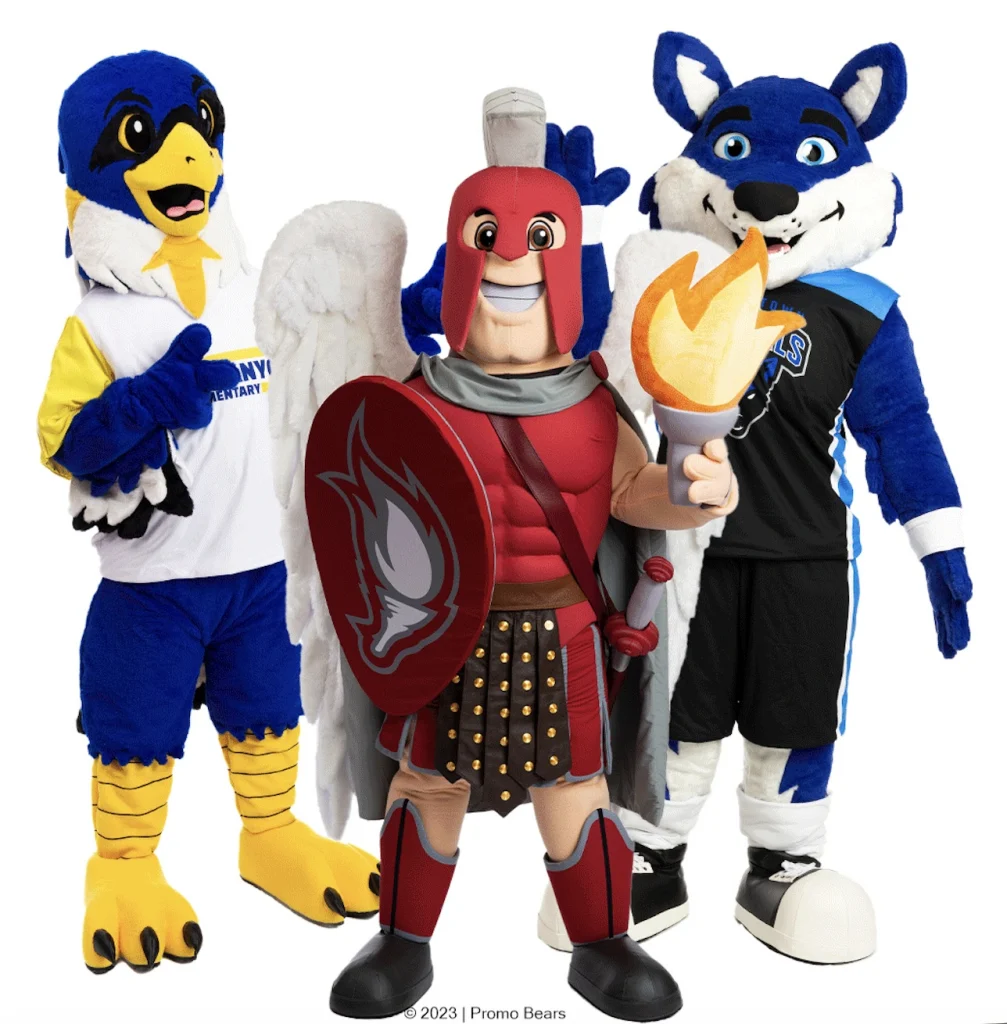
- Custom mascot costumes that bring your school character to life at events, ready in 12 to 16 weeks with a free concept illustration and unlimited revisions included
- Custom plush toys shaped like your school mascot, which children treasure and parents display proudly at home
- Branded stickers and keychains that travel with families into the community every single day, turning your current families into walking ambassadors
- Giant mascot inflatables that create an unmissable visual presence at open houses and local events, ready in just 3 to 4 weeks
- Drawstring bags and tote bags that children use daily, keeping your school name visible long after the event is over
Every project starts with zero upfront commitment. You receive a free concept illustration based on your logo or mascot idea, with unlimited revisions until the design is exactly right. A dedicated project manager handles the entire process from first sketch to delivery at your door. If you are ready to turn your school’s brand into something families remember, get a free quote and let us show you what is possible.
Frequently Asked Questions
How much should a preschool budget for marketing each year?
Most preschool directors find that allocating 3% to 7% of annual tuition revenue toward marketing is a practical starting point. For a school generating $300,000 in tuition, that translates to roughly $9,000 to $21,000 per year — enough to cover Google Business Profile optimization, social media content, promotional products for events, and one or two community sponsorships. The exact number matters less than spending consistently and tracking which activities produce actual enrollment inquiries so you can shift budget toward what works.
What is the biggest marketing mistake preschools make?
The most common mistake is focusing entirely on attracting new families while neglecting the current ones. Current families are your most credible and cost-effective marketing channel — they generate word-of-mouth referrals, write Google reviews, and share your posts on social media. A school that invests in delighting enrolled families through small gestures like branded gifts, appreciation events, and consistent communication will almost always out-enroll a competitor that spends the same budget purely on paid advertising.
How do I market a preschool that is brand new with no reviews or reputation yet?
Start by building social proof from scratch as quickly as possible. Invite a small group of founding families to enroll at a discounted rate in exchange for honest testimonials and Google reviews after their first month. Host a well-promoted open house event and document it thoroughly with photos and short video clips for your social media pages. Simultaneously, claim and fully optimize your Google Business Profile and reach out to local parenting Facebook groups to introduce your program — authentic introductions from a real director perform far better than promotional posts.
How far in advance should a preschool start marketing for the upcoming school year?
Ideally, preschool enrollment marketing should begin six to nine months before the school year starts. Many parents in competitive markets begin researching preschool options as early as 12 months in advance, particularly for programs with waitlists. Running open house events in late winter and early spring, ramping up social media content in January, and sending email campaigns to your inquiry list by February gives you the runway to fill seats before summer — when most families have already made their decision.
Should a preschool run paid ads, and if so, where?
Paid advertising can be highly effective for preschools, but only after the organic foundations are in place — a complete Google Business Profile, a functional website with a clear enrollment call-to-action, and at least a handful of positive reviews. Google Local Services Ads and standard Google Search Ads targeting phrases like ‘preschool near me’ or ‘daycare in [city]’ tend to deliver the strongest return because they capture parents who are already actively searching. Facebook and Instagram ads work better for awareness and retargeting parents who have already visited your website but have not yet submitted an inquiry.
How can a preschool stand out at community events and local fairs?
The preschools that generate the most leads at community events are the ones that give families a memorable, interactive experience rather than just a table with brochures. Custom mascot costumes, giant inflatables, and hands-on activities for children draw foot traffic and create natural photo opportunities that parents share on social media. Pair the visual draw with a simple giveaway — branded stickers, plush toys, or drawstring bags — and collect contact information through a prize drawing or a sign-up for your next open house. Follow up with every contact within 48 hours while the interaction is still fresh.
What should a preschool website include to convert visitors into enrolled families?
A high-converting preschool website needs five core elements: a clear statement of what makes your program unique, genuine photos or video of your actual classrooms and teachers, parent testimonials that address safety and child happiness directly, transparent information about tuition and the enrollment process, and a single prominent call-to-action — typically a ‘Schedule a Tour’ or ‘Apply Now’ button visible without scrolling. Many preschool websites lose prospective families by burying the enrollment process or failing to answer the questions parents have before they are ready to call, so treat your website as your best 24/7 salesperson.