
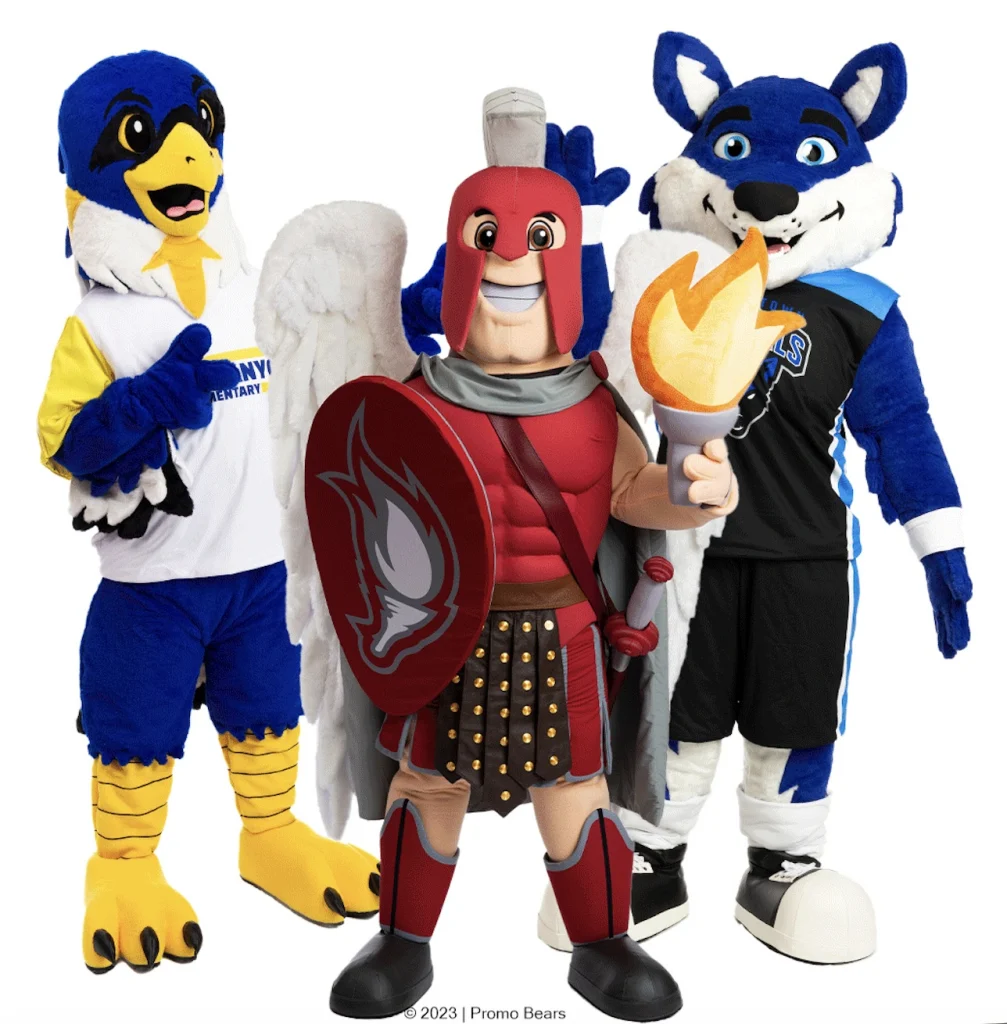
A mascot stands out by combining a bold, instantly readable visual identity with a distinct personality that reflects the brand it represents. The most memorable mascots are not just well-designed — they are strategically built to connect emotionally with an audience, perform across multiple formats, and remain consistent whether they appear on a banner, a costume, or a social media post. Below, we unpack the key questions every brand should ask when building or refining a mascot that truly gets noticed.
What makes a mascot instantly recognizable?
A mascot becomes instantly recognizable through a combination of a strong silhouette, bold color choices, and a single dominant visual trait that sets it apart. When someone can identify your mascot from across a stadium or in a thumbnail-sized image, the design is doing its job. Recognition is built on visual simplicity, not complexity.
The most iconic mascots in sports, retail, and entertainment share a few core design principles. Their outlines are distinctive even without color. Their color palette is tight — usually two or three brand colors used consistently. And they have one feature that anchors the character: an oversized head, a signature accessory, or an unmistakable expression.
Strong mascot design also means avoiding visual clutter. Every detail added to a mascot should serve a purpose. If it does not reinforce the character or the brand, it dilutes the impact. Simplicity is not a limitation in mascot design — it is a competitive advantage.
How does personality make a mascot more memorable?
Personality transforms a mascot from a graphic element into a brand character that audiences actually care about. A mascot with a clear, consistent personality creates emotional connections that pure visual design cannot achieve on its own. People remember how a character made them feel far longer than they remember what it looked like.
Defining a mascot’s personality means making deliberate choices about traits: Is it energetic or calm? Playful or authoritative? Approachable or aspirational? These traits should mirror the brand’s own values and speak directly to the target audience. A mascot designed for a children’s sports league will carry a very different energy than one representing a corporate financial brand.
Once the personality is defined, it needs to be expressed consistently. That means the mascot behaves the same way whether it is waving at fans at a live event, appearing in a social post, or featured on branded merchandise. Consistency across touchpoints is what turns a character into a recognizable brand asset rather than a one-off visual.
What design mistakes make mascots blend into the crowd?
The most common design mistakes that cause mascots to blend in are generic shapes, overly complex artwork, poor color contrast, and a personality that does not connect to the brand. These issues often stem from treating mascot design as a logo exercise rather than a character-building process.
- Generic shapes: Using an animal or character type that dozens of other brands already use, without a distinctive twist, makes differentiation almost impossible.
- Too much detail: Intricate linework and excessive features may look impressive in isolation but become unreadable at small sizes or from a distance.
- Weak color choices: Colors that do not align with the brand palette or that clash with common backgrounds make the mascot visually inconsistent.
- No clear expression: A neutral or ambiguous facial expression fails to communicate personality, leaving audiences with no emotional hook.
- Inconsistent proportions: A mascot that looks different across formats — stretched on a banner, cropped on a pin, distorted on a costume — loses credibility and recognition quickly.
Avoiding these pitfalls requires treating the mascot as a living brand character from the very beginning, with a design system that accounts for how it will be used across every format and context.
How can a mascot stand out at live events and activations?
At live events, a mascot stands out through physical presence, interactive energy, and format variety. A well-crafted costume that moves comfortably, looks polished from every angle, and fits the performer well is the foundation. Beyond the costume itself, how the mascot engages with the crowd is what creates lasting impressions.
Mascots that interact — posing for photos, high-fiving fans, playing along with event themes — generate far more social sharing and word-of-mouth than those that simply walk through a venue. The physical quality of the costume matters here too. A mascot with lifelike 3D eyes, a built-in ventilation system, and a comfortable fit allows the performer to stay in character longer and engage more naturally with the audience.
Complementing the costume with supporting formats amplifies the impact significantly. Giant mascot inflatables placed at venue entrances create a dramatic first impression. Branded merchandise like mascot stickers or keychains given away at the event extends the mascot’s reach well beyond the day itself. When the live experience and the branded takeaways work together, the mascot becomes a full event strategy rather than just a costume.
Which mascot formats work best across different brand channels?
Different brand channels call for different mascot formats, and the strongest mascot programs use a coordinated mix rather than relying on a single execution. The right format depends on the channel’s purpose, audience, and scale.
- Custom mascot costumes are the most powerful format for live events, sports activations, school appearances, and in-store experiences where direct human interaction drives engagement.
- Giant mascot inflatables work exceptionally well for outdoor events, storefronts, and trade show entrances where large-scale visual impact is the goal. These typically take 3 to 4 weeks to produce.
- Plush toys and soft merchandise are ideal for retail, fan merchandise, and fundraising — they extend the mascot into everyday life and create a tangible emotional connection.
- Mascot stickers, keychains, and enamel pins are cost-effective giveaway formats that work across events, direct mail, and retail packaging, keeping the character in front of audiences consistently. Mascot stickers, for example, can be ready in approximately 4 weeks.
- Digital mascot assets — illustrated versions optimized for social media, email, and digital advertising — ensure the character translates cleanly to screen-based channels without losing its visual identity.
The brands that get the most value from their mascots treat these formats as a connected ecosystem. A mascot introduced through a live costume appearance is reinforced by merchandise, amplified by digital content, and anchored by large-format visuals at key touchpoints.
When should a brand consider redesigning or refreshing its mascot?
A brand should consider refreshing its mascot when the character no longer reflects the brand’s current identity, fails to resonate with its target audience, or has become visually inconsistent across formats. A mascot that was designed a decade ago may carry outdated aesthetics or associations that no longer serve the brand’s direction.
Signs that a refresh is overdue include declining audience engagement with mascot content, difficulty adapting the design to new formats like digital platforms or merchandise, or feedback that the character feels disconnected from the brand’s current values. Sometimes the issue is not the concept itself but the execution — a mascot with a strong underlying character can be modernized without losing its established recognition.
A full redesign makes sense when the brand itself has undergone a significant shift in positioning, audience, or visual identity. A lighter refresh — updating proportions, refining colors, or improving the costume’s construction and comfort — is often enough when the core character remains relevant. Either way, the process should start with a clear brief: who the mascot is for, what it needs to communicate, and where it will live.
How Promo Bears helps your mascot stand out
We specialize in bringing mascots to life across every format a brand needs. Whether you are starting from scratch or looking to elevate an existing character, our team of mascot experts with over 19 years of experience handles the entire process from concept to delivery.
Here is what working with us looks like:
- A free concept illustration based on your logo or design idea, with unlimited revisions until the design is exactly right
- Custom mascot costumes featuring lifelike 3D eyes, an integrated ventilation system, and a comfortable fit — ready in 12 to 16 weeks
- Giant mascot inflatables for high-impact event presence, produced in 3 to 4 weeks
- Mascot merchandise including plush toys, stickers, keychains, and more to extend your mascot’s reach across every touchpoint
- A dedicated project manager who oversees every stage, from design approval through quality control and delivery
We have created over 4,000 mascots for brands including NASA, Red Bull, Amazon, and Walmart — and we bring that same level of craft and care to every project, regardless of size. If you are ready to build a mascot that genuinely stands out, get your free quote and let us show you what is possible.
Frequently Asked Questions
How long does it typically take to develop a mascot from concept to final product?
The timeline varies depending on the format. A custom mascot costume generally takes 12 to 16 weeks from approved design to delivery, while giant inflatables are typically produced in 3 to 4 weeks, and merchandise like stickers can be ready in approximately 4 weeks. Planning ahead — especially for seasonal events, product launches, or sports seasons — is the best way to avoid rushed timelines that can compromise quality.
How much does it cost to create a professional mascot costume?
Mascot costume pricing depends on factors like complexity of the design, number of characters, materials used, and the level of detail required (such as lifelike 3D eyes or integrated ventilation systems). Rather than working with a fixed budget in mind, it helps to start with a clear brief and request a custom quote so costs can be scoped accurately to your specific needs. Many providers, including Promo Bears, offer a free concept illustration before any financial commitment is required.
Can a mascot be adapted for both a live costume and digital use without losing visual consistency?
Yes, but it requires intentional planning during the design phase. A mascot built with a clean silhouette, a tight color palette, and simple proportions will translate naturally across a physical costume, digital illustrations, and merchandise formats. The key is to develop a master design system — including front, side, and three-quarter views — that serves as the reference point for every format so the character always looks like itself, regardless of the medium.
What should a brand prepare before approaching a mascot design company?
At minimum, you should have a clear sense of your brand’s values, your target audience, and the primary contexts where the mascot will be used (live events, digital, retail, etc.). Having your logo, brand color codes, and any existing brand guidelines on hand will also speed up the process significantly. The more specific your brief — including personality traits, tone, and any characters or styles you want to avoid — the more efficiently the design team can develop a concept that hits the mark from the start.
How do we maintain mascot consistency when multiple people perform the costume at different events?
Consistency in performance comes down to documentation and training. Creating a mascot character guide that outlines approved gestures, behaviors, and interaction styles gives every performer a shared reference point regardless of their experience level. Pairing this with a pre-event briefing and a well-fitted costume — one that allows natural movement and does not restrict visibility — makes it far easier for different performers to deliver a consistent, on-brand experience at every appearance.
Is it better to use an existing character type (like a popular animal) or create something entirely original?
Both approaches can work, but the deciding factor is differentiation. Using a common character type (a bear, eagle, or lion, for example) is not inherently a problem — the issue arises when no distinctive twist is applied to separate it from the dozens of similar mascots already in use. An original character concept offers more room for uniqueness but requires stronger storytelling to build recognition from scratch. The best approach is to start with what authentically represents your brand and then push the design until it is unmistakably yours, regardless of the character type.
What is the best way to introduce a new mascot to an audience for maximum impact?
A strong mascot launch combines a live debut with a coordinated rollout across brand channels. Introducing the mascot at a high-visibility event — a season opener, a grand opening, or a major activation — creates a memorable first impression and generates organic social content through fan interactions and photos. Simultaneously releasing digital assets, branded merchandise, and behind-the-scenes content about the mascot’s creation builds narrative and gives audiences multiple ways to connect with the character from day one.
Related Articles
- What is the best branded merchandise alternative for sports teams in 2026?
- How do you use a mascot to create consistent content across platforms?
- How do companies improve brand recognition at live events?
- How do you turn customers into brand ambassadors through mascots?
- What's another name for company swag?