
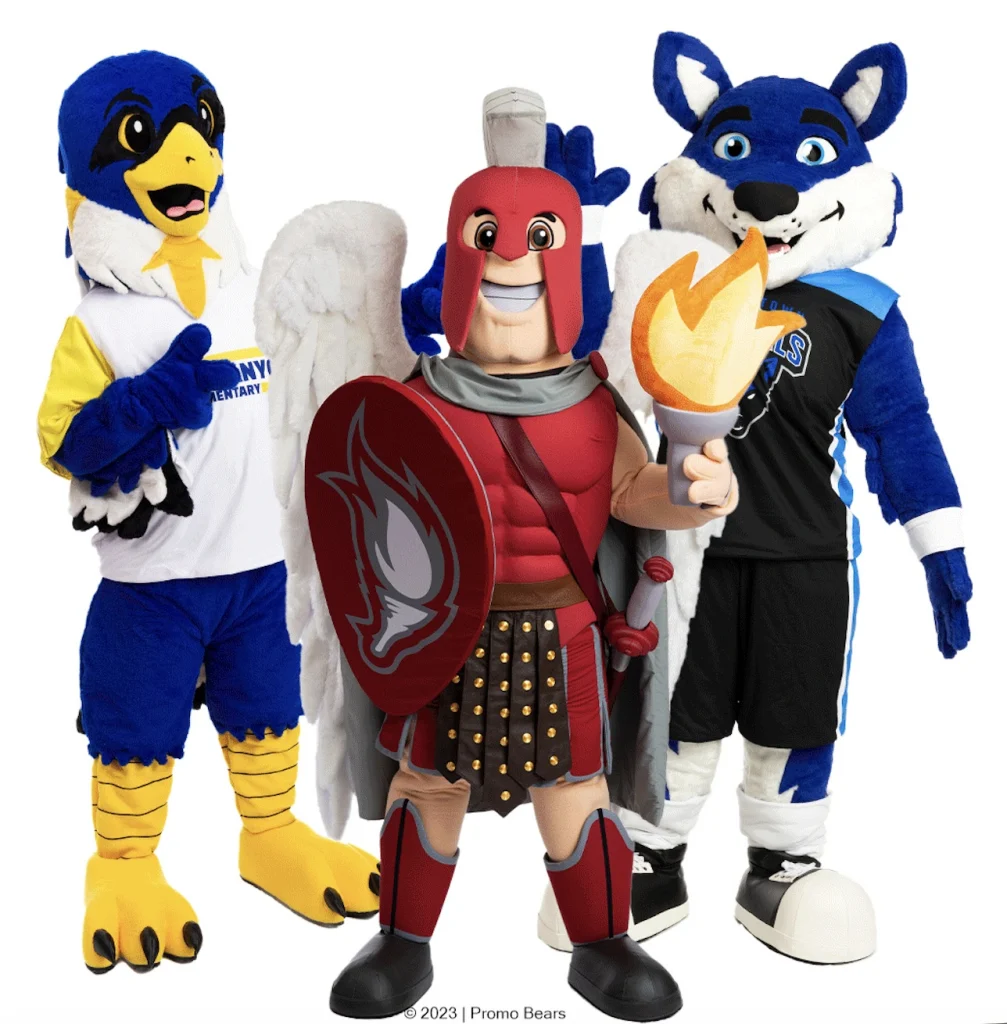
Picking a brand mascot comes down to choosing a character that authentically represents your brand’s personality, connects emotionally with your target audience, and can be expressed consistently across multiple formats. The best mascots are not just visually appealing — they carry a clear identity, a defined role, and a long-term strategic purpose. This article walks through the key questions every brand manager should answer before committing to a mascot design.
What makes a mascot a good fit for a brand?
A mascot is a good fit for a brand when it reflects the brand’s core values, appeals directly to its target audience, and can function across multiple touchpoints without losing its identity. The character should feel like a natural extension of the brand rather than an add-on — something that could only belong to that specific organization.
The strongest mascots share a few defining traits. They are visually distinctive enough to be recognized at a glance. They carry an emotional quality — warmth, energy, humor, authority — that mirrors how the brand wants its audience to feel. And they are versatile enough to appear on a stage at a live event, on a social media post, and on a piece of merchandise without looking out of place.
Before finalizing any mascot concept, ask yourself whether a stranger could look at the character and immediately associate it with your industry or brand values. If the answer is no, the design needs more work. A mascot that requires explanation is a mascot that has not yet done its job.
What are the different types of brand mascots?
Brand mascots generally fall into four categories: animal characters, human or humanized characters, product-based characters, and abstract or creature-based characters. Each type carries different associations and works better in certain brand contexts than others.
- Animal mascots are the most widely used because animals already carry built-in emotional associations — bears suggest strength and friendliness, eagles convey power, dogs communicate loyalty. They translate well into costume form and appeal across age groups.
- Human or humanized mascots work well for brands that want to project expertise, relatability, or a specific cultural identity. They tend to feel more aspirational and are common in sports and lifestyle brands.
- Product-based mascots turn the brand’s own product into a character, which reinforces product recognition while adding personality. They are especially effective in food, beverage, and consumer goods categories.
- Abstract or creature-based mascots give brands the most creative freedom. These invented characters can be designed from scratch to embody any combination of traits, making them ideal for brands in tech, entertainment, or any sector where differentiation is a priority.
The right type depends on your audience, your industry, and how you plan to use the mascot. A university sports team has different needs than a retail chain or a corporate services company.
How do you define your mascot’s personality and role?
You define a mascot’s personality by mapping it directly to your brand’s tone of voice and the emotional response you want to trigger in your audience. The mascot’s role is then determined by where and how it will be deployed — whether as a live performer at events, a digital character on social media, a product character on merchandise, or all three.
Start by listing three to five adjectives that describe your brand. Energetic, trustworthy, playful, bold, approachable — these become the personality pillars your mascot must embody. Every design choice that follows, from color to posture to facial expression, should reinforce those adjectives.
The mascot’s role matters just as much as its appearance. A mascot designed primarily for live events needs to work as a wearable costume, which means comfort, visibility, and performance durability are non-negotiable. A mascot designed primarily for digital content can prioritize visual detail over practicality. Many brands need both, which is why the design process should account for all intended use cases from the very beginning rather than retrofitting a design later.
What’s the difference between a logo character and a mascot costume?
A logo character is a two-dimensional graphic figure used in brand identity materials, while a mascot costume is a three-dimensional, wearable version of that character built for live interaction. The two serve different purposes, require different design considerations, and are produced through entirely different processes.
A logo character lives on screens and printed materials. It can include fine detail, complex shading, and small elements that would be impossible to reproduce in physical form. A mascot costume, by contrast, must be structurally sound, safe to wear, comfortable for extended periods, and visually impactful at a distance. Features like 3D eyes, ventilation systems, and durable outer materials are essential for a costume that performs well in real-world conditions.
The design process for a mascot costume typically begins with a 2D concept illustration and then moves into three-dimensional production. This means that some design elements present in a logo character may need to be simplified or reinterpreted for the costume version. Working with a team experienced in both illustration and costume production helps bridge that gap without losing the character’s core identity.
If your brand already has a logo character, that is an excellent starting point. If you are starting from scratch, designing with the costume in mind from the beginning will save significant time and revision cycles later.
How do you brief a mascot design company?
A strong mascot brief includes your brand values, target audience, intended use cases, preferred visual style, and any existing brand assets the character should align with. The more specific your brief, the faster the design process moves and the closer the first concept will be to what you actually need.
Here is what to include in a complete mascot brief:
- Brand overview: Who you are, what you do, and the core values your mascot must communicate.
- Target audience: Age range, interests, and the emotional tone that resonates with them.
- Mascot type and character direction: Animal, human, abstract, or product-based — and any specific character traits you want the design to convey.
- Use cases: Where the mascot will appear — live events, merchandise, digital content, signage, or a combination.
- Visual references: Examples of styles you like and dislike. Reference images are far more useful than written descriptions alone.
- Brand assets: Your logo, brand colors (including any PMS references), and existing visual guidelines.
- Timeline and budget: Your required delivery date and your investment range, so the production team can plan accordingly.
A well-prepared brief does not limit creativity — it focuses it. Design teams produce better work when they understand the boundaries and objectives clearly from the start.
What should you look for in a mascot production partner?
The right mascot production partner combines creative capability with production expertise, offers transparent pricing from the start, and provides dedicated project management throughout the entire process. Experience matters enormously in this category — mascot production is a specialized craft that sits at the intersection of character design, costume engineering, and brand strategy.
Look for a partner that offers a free concept illustration before any financial commitment. This tells you two things: they are confident enough in their process to invest in the relationship upfront, and they understand that a brand decision of this scale requires seeing the vision before signing off on it. Unlimited revisions at the concept stage are also a strong indicator of a partner who prioritizes getting the design right rather than rushing to production.
Production quality indicators to evaluate include the use of 3D realistic eyes, integrated ventilation systems for wearer comfort, and a documented quality control process that includes result photos before shipping. A partner who takes quality seriously will show you the finished product before it leaves their facility.
Finally, consider the full scope of what you need. Many brands start with a mascot costume and then want to extend the character across merchandise — plush toys, stress balls, keychains, inflatables, and more. A partner who can handle all of that under one roof, with consistent character representation across every product type, is far more valuable than multiple vendors who each handle one piece of the puzzle. You can explore the full range of what is possible at Promo Bears.
How Promo Bears helps you pick and build the right brand mascot
We have spent over 19 years helping brands across North America bring mascot characters to life — from the initial concept all the way through to costume production and branded merchandise. Our process is designed to take the guesswork out of every stage.
Here is what working with us looks like in practice:
- A free concept illustration based on your logo or design idea, with unlimited revisions until the result is exactly right
- A dedicated project manager who oversees your project from first brief to final delivery
- Custom mascot costumes featuring 3D realistic eyes and a built-in ventilation system, ready in 12 to 16 weeks
- A full range of mascot merchandise including plush toys, stress balls (10 to 12 weeks), giant mascot inflatables (3 to 4 weeks), keychains, stickers, and more
- Rigorous quality control with result photos shared before your order ships
Whether you are starting from scratch or ready to extend an existing character across new formats, we are the 360° partner you need to make it happen. Get your free quote and let us bring your brand mascot to life.
Frequently Asked Questions
How much does it typically cost to develop a brand mascot from concept to finished costume?
Mascot development costs vary widely depending on complexity, materials, and the scope of deliverables. A full custom mascot costume from a professional production partner generally ranges from a few thousand dollars to well over ten thousand, depending on size, detail level, and features like ventilation systems or animatronic elements. It is worth requesting a detailed quote upfront that covers concept illustration, revisions, production, and shipping separately so there are no surprises along the way.
What if we already have a mascot character but want to refresh or modernize it?
A mascot refresh is often more strategic than starting from scratch — you retain the brand equity and audience recognition already built around the existing character while updating it to feel current and versatile. The key is identifying which core design elements carry the most recognition (silhouette, color palette, signature expression) and preserving those while modernizing secondary details. Share your existing assets, including any historical versions of the character, with your production partner so they can evolve the design intentionally rather than accidentally erasing what makes it recognizable.
How do we protect our mascot character legally once it has been designed?
Once your mascot design is finalized, you should work with an intellectual property attorney to register it as a trademark and, where applicable, as a copyrighted work. This protects the character’s visual identity from being copied or used without authorization by competitors or third parties. Make sure your contract with the design and production company explicitly assigns full ownership of all artwork and design files to your brand upon completion — never assume ownership transfers automatically.
How do we introduce a new mascot to our audience effectively?
A mascot launch works best when it is treated as a campaign rather than a single reveal. Build anticipation with teaser content before the official debut, then introduce the character across all channels simultaneously — social media, your website, email, and any live events — to create a cohesive first impression. Give the mascot a clear role from day one: a debut appearance at a major event, a social media series, or a product launch tie-in all help audiences understand who the character is and why it matters to the brand.
What common mistakes should we avoid when designing a brand mascot?
The most common mistakes include designing a mascot in isolation from the rest of the brand identity, creating a character that appeals to the design team rather than the target audience, and failing to plan for all intended use cases before production begins. Another frequent pitfall is over-complicating the design with fine details that look great on screen but become impossible to reproduce accurately in costume or merchandise form. Keeping the character bold, simple, and purposeful from the start saves significant time and budget down the line.
Can a mascot costume be used outdoors and in different weather conditions?
Yes, but the costume needs to be built with outdoor use in mind from the start. High-quality mascot costumes designed for outdoor environments typically feature UV-resistant materials, reinforced seams, and enhanced ventilation systems to manage heat buildup during extended wear. If your mascot will regularly appear at outdoor events, communicate this clearly in your brief so your production partner can specify appropriate materials and construction methods — a costume built for a climate-controlled arena will not hold up the same way at an outdoor summer festival.
How do we maintain consistency when the mascot appears across merchandise, digital content, and live events simultaneously?
Consistency starts with a comprehensive mascot style guide that documents the character’s approved color values, proportions, expressions, and usage rules across every format. This guide should be created alongside the mascot itself, not as an afterthought. Working with a single production partner who handles both the costume and merchandise ensures that the character is interpreted consistently across every product type, rather than drifting in appearance when different vendors each apply their own interpretation.