
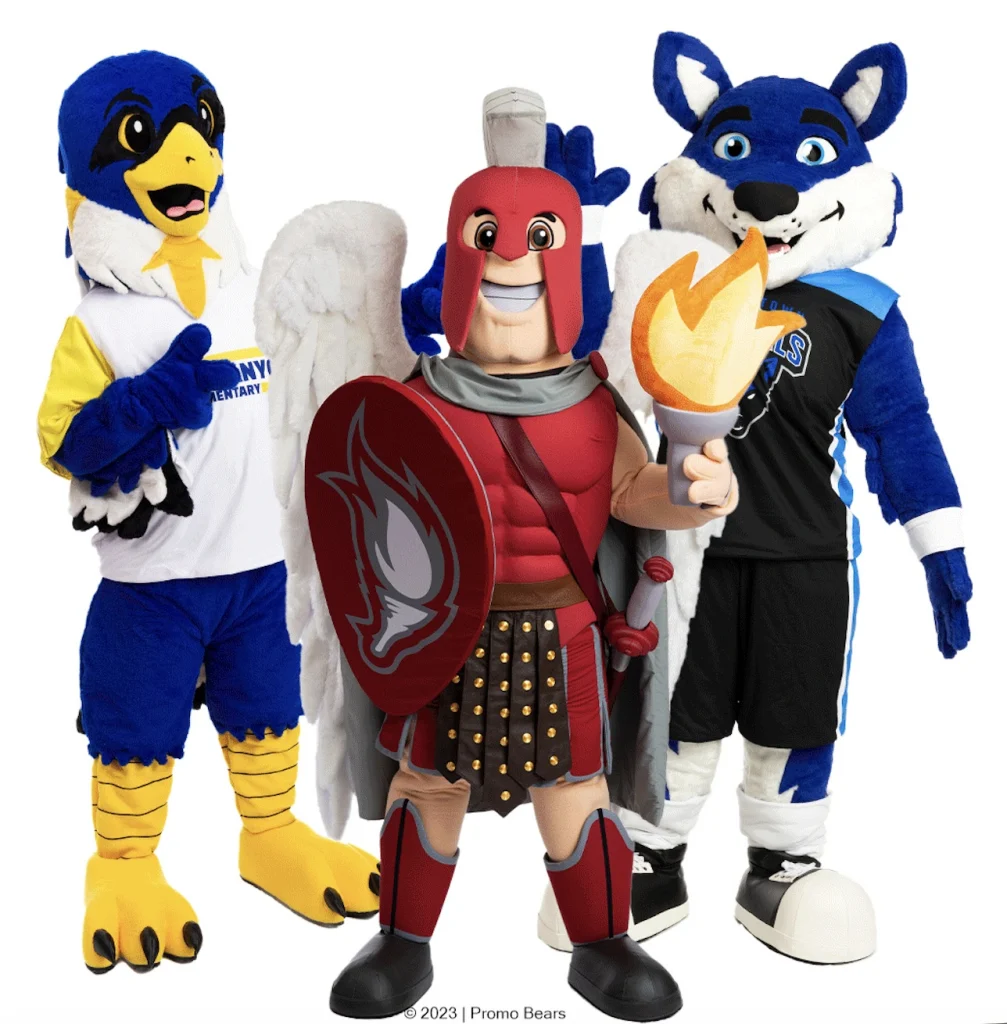
The most effective way to strengthen brand recognition is to create consistent, memorable touchpoints that connect your audience to your brand across every interaction. This means aligning your visual identity, messaging, and physical presence so people recognize you instantly, whether they see your logo on a screen or your mascot at a live event. The sections below break down the key strategies, tools, and metrics that make brand recognition efforts actually work.
What are the most effective ways to build brand recognition?
The most effective ways to build brand recognition are brand consistency, strategic repetition, and emotional connection. When your audience sees the same colors, tone, and personality across every channel, your brand becomes familiar. Familiarity builds trust. Trust drives preference. The brands people remember most are the ones that show up repeatedly and always feel the same.
In 2026, the competitive landscape for brand attention is more crowded than ever. Standing out requires more than a polished logo. It requires a deliberate strategy that touches your audience at multiple points, both digitally and physically. The most successful brand recognition efforts combine several approaches working together:
- A clearly defined visual identity applied consistently across all platforms
- A recognizable brand voice that sounds the same whether it appears in an email, a social post, or a product label
- Physical brand experiences that create real-world impressions, such as events, promotional merchandise, and branded characters
- Repetition through paid and organic channels to keep your brand top of mind
- Distinctive brand assets like mascots, color palettes, or taglines that are instantly associated with you
No single tactic works in isolation. The brands that build the strongest recognition layer these strategies on top of one another, creating a presence that is hard to ignore and even harder to forget.
How does brand consistency affect how people remember your brand?
Brand consistency directly shapes how easily people recognize and recall your brand. When your audience encounters the same visual cues, tone, and personality across every touchpoint, their brain begins to associate those elements with your brand automatically. Inconsistency, on the other hand, creates confusion and slows down the recognition process significantly.
Think of brand consistency as the foundation of memory. Every time someone sees your brand presented in the same way, that memory trace gets stronger. Over time, a consistent brand becomes a shortcut in the mind of your audience. They do not need to think twice about who you are or what you stand for.
For marketing managers and brand directors, this has a very practical implication. Every asset your team produces, from a social media graphic to a trade show display to a promotional product, should feel like it came from the same place. When it does, your brand recognition compounds. When it does not, you are essentially starting from scratch with every new impression.
Consistency also builds credibility. A brand that looks and sounds professional and coherent signals reliability to potential customers and partners. That perception of reliability is one of the most powerful drivers of long-term brand preference.
What role do promotional products play in brand recognition?
Promotional products play a powerful role in brand recognition because they create physical, lasting impressions that digital content cannot replicate. When someone holds, wears, or uses a branded item, they form a tangible connection with your brand. That connection is repeated every time they interact with the product, making promotional merchandise one of the most cost-effective tools for sustained visibility.
Unlike a social media post that disappears from a feed in minutes, a well-made promotional product stays in someone’s life for months or even years. A branded stress ball on a desk, a plush toy in a child’s room, or a custom keychain on a set of keys represents dozens or hundreds of brand impressions over its lifetime, all from a single item.
For B2B brands, promotional products also serve a strategic purpose at events, trade shows, and client meetings. They give your brand a physical presence that reinforces your identity long after the interaction ends. The key is choosing products that are genuinely useful or memorable, so recipients keep them rather than discard them.
The most effective promotional products are those that align with your brand personality and deliver real value to the recipient. A thoughtfully designed custom item communicates that your brand pays attention to quality and detail, which reflects positively on everything else you do.
How can a custom mascot strengthen brand recognition?
A custom mascot strengthens brand recognition by giving your brand a face, a personality, and an emotional identity that people genuinely connect with. Mascots are one of the most powerful branding tools available because they are inherently memorable. A well-designed mascot becomes a visual shorthand for everything your brand represents, and it works across virtually every channel and format.
When people see a mascot at a live event, on packaging, in a social media video, or on a branded product, they immediately associate it with your organization. That instant recognition is exactly what brand building is designed to achieve. Mascots also have a unique ability to generate emotional engagement, which deepens brand loyalty far beyond what a logo alone can accomplish.
From a practical standpoint, a custom mascot gives your brand team a versatile asset. You can deploy it in a full-size costume at events, reproduce it as a plush toy or stress ball for merchandise, scale it up as a giant inflatable for outdoor activations, or use it across digital content. Each of these applications reinforces the same brand identity, multiplying the recognition effect.
Mascots also travel well. They work for schools, sports teams, retailers, hospitality brands, and corporate organizations alike. Whatever your industry, a mascot with a distinct personality and design becomes a brand ambassador that audiences of all ages respond to positively.
Which industries benefit most from mascot-based brand recognition?
The industries that benefit most from mascot-based brand recognition are those where emotional connection, audience engagement, and memorable experiences drive business outcomes. This includes retail, sports and entertainment, food and beverage, hospitality, education, and corporate services. In each of these sectors, a mascot gives the brand a personality that resonates with audiences on a human level.
In retail and FMCG, mascots help products stand out on crowded shelves and in competitive advertising environments. In sports and entertainment, they energize fans and build community identity. In education, they create school spirit and a sense of belonging. In hospitality and corporate services, they humanize brands that might otherwise feel distant or transactional.
What these industries share is a need to turn passive audiences into active brand advocates. A mascot accelerates that process because it gives people something to root for, photograph, engage with, and talk about. Word of mouth generated by a mascot appearance at an event, for example, extends the reach of your brand far beyond the people who were physically present.
Even in sectors that might seem less obvious, such as healthcare, government, or financial services, mascots have proven effective when the goal is to make a brand feel approachable and trustworthy. The key is designing a mascot that genuinely reflects the organization’s values and speaks to its specific audience.
How do you measure whether your brand recognition efforts are working?
You measure brand recognition efforts by tracking a combination of awareness metrics, engagement signals, and direct feedback from your audience. No single number tells the full story, but together these indicators give you a clear picture of whether your brand is becoming more recognizable over time.
The most reliable ways to track progress include:
- Brand awareness surveys: Ask your target audience whether they recognize your brand name, logo, or mascot without prompting. Tracking this unprompted recall over time shows whether your recognition is growing.
- Social media mentions and share of voice: Monitor how often your brand is mentioned organically compared to competitors. Increased organic mentions signal that more people are thinking and talking about you.
- Direct and branded search traffic: When more people search for your brand name directly, it indicates stronger recognition. A rising trend in branded search volume is a strong positive signal.
- Event and activation engagement: Track how many people interact with your mascot, promotional booth, or branded experience at events. High engagement rates reflect strong recognition and curiosity.
- Merchandise uptake: When people actively want to own your branded products, it shows your brand has moved beyond recognition into genuine affinity.
The most important thing is to establish a baseline before launching major brand recognition initiatives. Without a starting point, it is impossible to know whether your efforts are moving the needle. Set clear benchmarks, measure consistently, and look for trends rather than one-time spikes.
How Promo Bears helps you improve brand recognition
We help organizations at every stage of their brand recognition journey, from concept to delivery, with custom products designed to make your brand impossible to ignore. Whether you are looking to make a statement at a major event or build a merchandise program that keeps your brand visible year-round, we have the expertise and the product range to make it happen.
Here is what we bring to the table:
- Custom mascot costumes built from your design, featuring 3D realistic eyes, a built-in ventilation system, and a comfortable fit, ready in 12 to 16 weeks with a dedicated project manager overseeing every step
- Custom stress balls shaped to your exact design with PMS color matching and full-color print options, produced in 10 to 12 weeks after design approval
- Giant mascot inflatables that create instant visual impact at outdoor events and activations, ready in just 3 to 4 weeks
- Plush toys, keychains, stickers, and more, giving you a full range of branded merchandise to suit any campaign or budget
- A free concept illustration based on your logo or idea, with unlimited revisions before production begins, so you know exactly what you are getting before committing
Every project starts with zero upfront commitment. You get a free concept illustration, a fixed quote based on your exclusive design, and a dedicated project manager who sees your order through from first sketch to final delivery. We have created over 4,000 mascots for brands including NASA, Amazon, Walmart, and Bridgestone, and we bring that same level of care and professionalism to every client we work with.
Ready to take your brand recognition to the next level? Get your free quote and let us show you what is possible.
Frequently Asked Questions
How long does it typically take to see measurable improvements in brand recognition?
Brand recognition is a long-term investment, and most organizations begin to see meaningful shifts in awareness metrics within 6 to 12 months of consistent, multi-channel effort. The timeline depends heavily on your starting baseline, budget, and how frequently your audience is exposed to your brand. The key is to stay consistent and resist the urge to change your visual identity or messaging before the repetition has had time to work in your favor.
What is the biggest mistake brands make when trying to improve recognition?
The most common mistake is inconsistency — using different logos, colors, tones, or messaging across different channels without a unifying brand standard. This forces your audience to re-learn who you are with every new touchpoint instead of reinforcing the memory traces already built. Before investing in any new brand recognition tactic, audit your existing assets to make sure everything already in market looks and sounds like it comes from the same brand.
How do I choose the right promotional products for my brand recognition goals?
Start by thinking about your audience’s lifestyle and what they will actually use on a daily basis, since utility is the single biggest driver of how long a promotional product stays in someone’s life. Items that sit on a desk, travel in a bag, or are used in the home generate far more impressions over time than novelty products that get discarded quickly. Align the product’s personality with your brand — a tech company might choose sleek, functional items, while a children’s brand might lean into plush toys or colorful keychains.
Can a mascot work for a B2B brand, or is it only effective for consumer-facing companies?
Mascots are absolutely effective for B2B brands and are increasingly being used in sectors like logistics, finance, and professional services to humanize what might otherwise feel like faceless organizations. At trade shows and industry events, a mascot draws attention to your booth, creates natural conversation starters, and gives attendees something memorable to associate with your company long after the event. The key for B2B applications is designing a mascot that feels professional and aligned with your brand values rather than overly playful, so it resonates with a business audience.
What should I have ready before starting a custom mascot or promotional product project?
At minimum, you should have your brand guidelines ready — including your logo files, PMS color codes, and any notes on your brand personality or tone. If you have a mascot concept or character already in mind, reference images or sketches are helpful, but they are not required since many suppliers, including Promo Bears, offer free concept illustrations based on your logo alone. The clearer you can be about how and where you plan to use the product, the better your supplier can tailor the design and materials to fit your actual use case.
Is it worth investing in brand recognition if I have a limited marketing budget?
Yes — in fact, brand recognition is often one of the highest-return investments available to brands with limited budgets precisely because it compounds over time. A single well-designed promotional product or mascot can generate thousands of impressions over its lifetime at a fraction of the cost of paid advertising. The key is to prioritize consistency and quality over volume: a smaller number of high-impact, well-designed touchpoints will outperform a large quantity of generic, forgettable ones every time.
How do I make sure my brand recognition efforts stay consistent when multiple team members or agencies are involved?
The most effective solution is a centralized brand style guide that documents every element of your visual identity and brand voice — including approved logo versions, color codes, typography, tone of voice guidelines, and usage rules for assets like your mascot. Share this guide with every internal team member, agency, and vendor involved in producing brand materials, and designate one person as the brand guardian responsible for approving new assets before they go live. This single step eliminates the majority of consistency problems that erode brand recognition over time.