
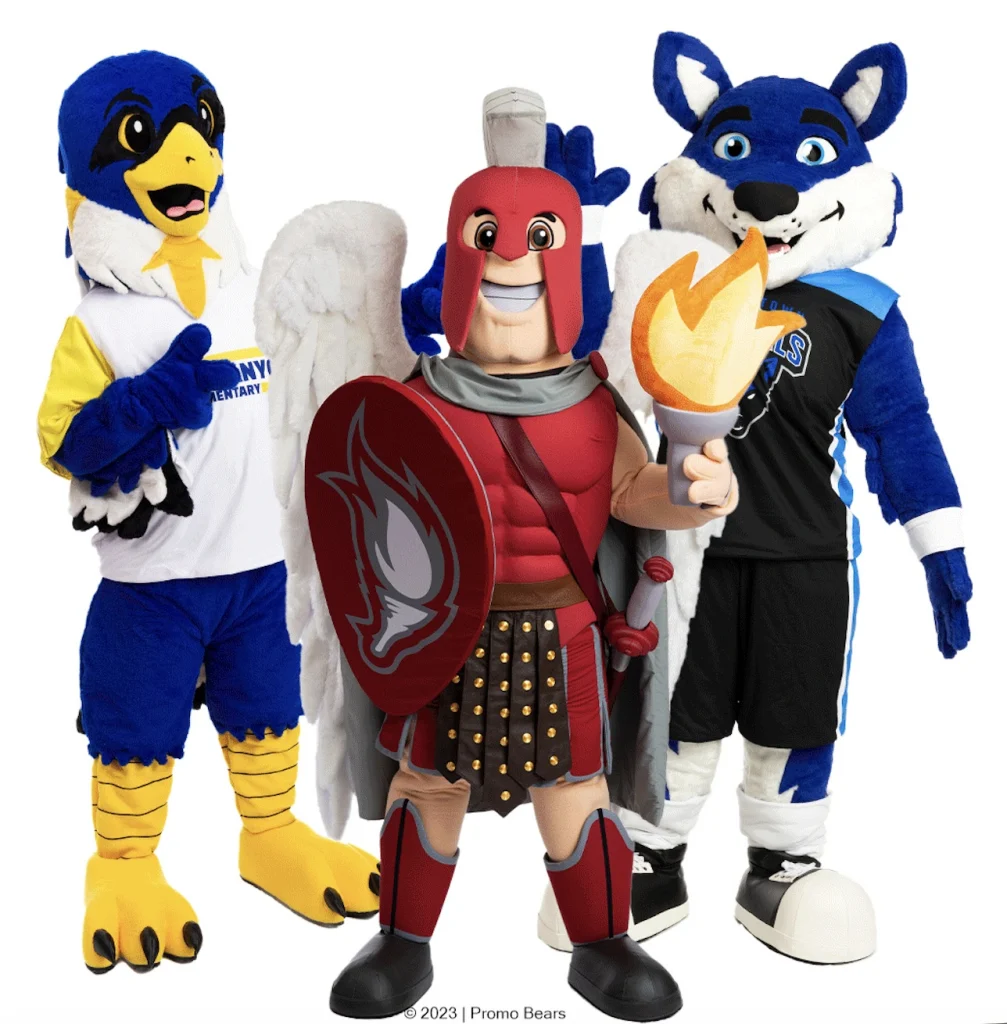
Yes, a SaaS company can absolutely benefit from using a mascot to humanize its brand. Software products are often abstract and hard to visualize, and a well-designed brand character gives your company a face, a personality, and an emotional hook that resonates with both users and buyers. This article walks through the key questions SaaS marketing teams are asking about mascots in 2026, from what makes them effective to when a physical costume actually makes sense.
Do SaaS brands actually benefit from using a mascot?
Yes, SaaS brands benefit from mascots in meaningful ways. A brand mascot for a SaaS company creates a visual anchor that makes abstract software feel approachable and memorable. When your product is a dashboard, an API, or a workflow tool, a mascot gives people something to connect with emotionally, which is a real advantage in crowded B2B software markets.
The challenge most SaaS companies face is differentiation. Pricing pages look similar, feature lists blur together, and buyers are comparing five vendors at once. A strong brand character cuts through that noise. It gives your product a personality that lingers after the demo ends and the browser tab closes.
Mascots also do quiet, consistent work across every touchpoint. They show up in onboarding emails, error messages, loading screens, and event booths. Over time, that consistency builds brand recognition without requiring a bigger ad budget. For SaaS companies investing in long-term brand equity, that compounding effect is genuinely valuable.
What makes a mascot effective for a software brand?
An effective mascot for a software brand is one that visually communicates the product’s core value or personality without needing words to explain it. It should feel like a natural extension of your brand identity, not a character that was bolted on as an afterthought. The most successful tech mascots are simple, scalable, and emotionally resonant.
Here are the qualities that separate a strong SaaS mascot from a forgettable one:
- Clarity of personality: The character should reflect your brand voice, whether that’s friendly and playful, calm and reliable, or bold and energetic.
- Visual simplicity: A design that works at any size, from a favicon to a trade show banner, is far more useful than one that only looks good in full resolution.
- Relevance to your audience: B2B buyers respond to different cues than consumers. Your mascot should feel credible and professional while still being warm.
- Flexibility across formats: The best mascots work in 2D digital formats, as stickers and merchandise, and eventually as physical costumes or inflatables for events.
- Memorability: Simple shapes, strong colors, and a distinctive silhouette make a mascot instantly recognizable even without a logo next to it.
Getting the design right from the start matters more than most teams expect. A mascot that feels off-brand or visually inconsistent can actually create confusion rather than clarity, so investing in a thoughtful design process upfront pays off across every future use of the character.
How does a mascot help SaaS companies at events and trade shows?
At events and trade shows, a mascot gives your SaaS brand a physical presence that software alone cannot create. When every other booth is a screen, a banner, and a bowl of candy, a mascot costume or giant inflatable immediately draws attention and gives attendees a reason to stop, engage, and remember your brand after the event.
SaaS companies often struggle with event marketing because their product is invisible. You cannot hand someone your software to hold. A mascot solves that problem by giving your brand a tangible, photogenic identity that people want to interact with and share on social media.
The practical benefits at events are straightforward. A costumed mascot creates natural conversation starters for your sales team. It generates organic social content when attendees take photos. It makes your booth easy to find in a crowded hall. And it leaves a lasting impression that reinforces your brand long after the event ends.
For SaaS companies attending multiple events per year, the investment in a custom mascot costume pays for itself through increased booth traffic, stronger brand recall, and more memorable interactions with potential buyers and partners.
When should a SaaS company invest in a physical mascot costume?
A SaaS company should invest in a physical mascot costume when it has an established brand character and a regular presence at in-person events, conferences, or community gatherings. If your team attends three or more events per year, a physical costume transforms each appearance from a generic booth setup into a branded experience that people genuinely remember.
The timing also matters from a brand maturity standpoint. A physical mascot costume makes the most sense once your brand character is locked in visually, because the costume becomes a long-term asset you will use for years. Changing the design after the costume is produced is costly, so teams that invest in a physical costume typically do so after the digital mascot has already been tested and refined.
From a production standpoint, custom mascot costumes take 12 to 16 weeks to produce, so planning ahead is important. If your next major conference is six months away, now is a realistic time to start the design process. Rush options are available for tighter timelines, but building in lead time gives you more flexibility during the design revision stage.
Budget is another consideration. A physical costume is a meaningful investment, but for marketing teams that regularly attend events, the cost per use drops significantly over time. For SaaS brands that sponsor industry conferences or host their own user events, a mascot costume is one of the most reusable and high-impact brand assets you can own.
What’s the difference between a digital mascot and a physical mascot costume?
A digital mascot is a 2D or 3D illustrated character used across online channels, including websites, apps, social media, and marketing materials. A physical mascot costume is a wearable version of that character, built for in-person events, activations, and live brand experiences. Both serve your SaaS brand identity, but they work in different contexts and deliver different types of engagement.
Digital mascots: reach and consistency
A digital mascot lives everywhere your brand lives online. It can be animated, adapted for different emotional states, resized for any format, and updated relatively quickly. For SaaS companies, the digital mascot is usually the starting point because it integrates naturally into product interfaces, email campaigns, and social content. It builds brand recognition at scale without requiring physical production or logistics.
Physical mascot costumes: presence and memorability
A physical mascot costume creates something a digital character simply cannot: a real, human moment. When someone at a trade show takes a photo with your mascot, shakes its hand, or watches it interact with a crowd, the emotional impact is far stronger than seeing the same character on a screen. Physical costumes also extend into merchandise, with custom mascot merchandise like plush toys, stickers, and keychains turning your character into a tangible brand ambassador that people take home.
For SaaS brands, the most effective approach is to start with a strong digital mascot design and then expand into physical formats as your event calendar and brand maturity grow. The two formats reinforce each other: the digital mascot builds familiarity, and the physical costume delivers the live experience that deepens the connection.
How Promo Bears helps SaaS companies bring their mascot to life
We work with marketing teams and brand directors who want a mascot that works as hard as they do, across digital channels, event floors, and branded merchandise. Here is what we bring to the table for SaaS brands:
- A free concept illustration based on your logo or brand idea, with unlimited revisions until it is exactly right
- Custom mascot costume production with 3D realistic eyes, a built-in ventilation system, and a comfortable fit for performers
- A dedicated project manager who handles everything from design approval through to delivery
- A full range of mascot merchandise, including plush toys, stickers, keychains, and stress balls (produced in 10 to 12 weeks), to extend your brand beyond the event booth
- Giant mascot inflatables ready in 3 to 4 weeks for high-visibility event activations
We have created more than 4,000 custom mascots for brands across tech, retail, sports, and beyond. If your SaaS brand is ready to give its mascot a physical presence, get a free quote and let us show you what your character could look like in full costume form.
Frequently Asked Questions
How do we get started if we don't have a mascot design yet?
The best starting point is defining your brand personality before touching any design tools. Write down three to five adjectives that describe how you want your product to feel, then use those as a creative brief for a designer or mascot production company. Many mascot studios, including Promo Bears, offer a free concept illustration based on your logo or brand idea, which makes it easy to explore what your character could look like before committing to a full production budget.
Can a mascot work for a B2B SaaS brand without feeling too playful or unprofessional?
Absolutely. The tone of your mascot is entirely a design and personality choice, not an inherent limitation of the format. Many successful B2B mascots are calm, authoritative, and polished rather than cartoonish or silly. The key is aligning the character’s visual style and personality with the expectations of your specific buyer audience, whether that’s enterprise IT leaders, marketing ops teams, or startup founders.
What common mistakes should SaaS teams avoid when creating a mascot?
The most common mistake is designing a mascot in isolation from the broader brand identity, resulting in a character that feels disconnected from the product’s voice and visual system. Another frequent misstep is over-complicating the design with too many details, which makes the mascot hard to reproduce at small sizes, in merchandise, or as a physical costume. Finally, avoid finalizing a mascot design before testing it with a sample of your actual target audience, since internal teams often have blind spots about how the character reads to outsiders.
How long does the full process take from concept to finished mascot costume?
The typical timeline from initial concept to a finished physical mascot costume is around 14 to 20 weeks, accounting for design revisions, approval rounds, and production. The design phase usually takes two to four weeks depending on how many revision rounds are needed, followed by 12 to 16 weeks of costume production. If you also want mascot merchandise like plush toys or keychains, those run on a separate 10 to 12 week production track and can often be started in parallel once the design is approved.
What if our mascot design needs to be updated after the costume is already produced?
Minor updates, like color refreshes or logo changes, can sometimes be accommodated depending on the materials used, but significant redesigns typically require producing a new costume. This is exactly why locking in a strong, future-proof design before production begins is so important. Investing extra time and revision rounds during the digital design phase is far less costly than reprinting or remaking a physical costume down the line.
How do we measure whether our mascot is actually working for our brand?
For digital channels, track engagement metrics on content that features the mascot versus content that doesn’t, including click-through rates on onboarding emails, social media shares, and time-on-page for landing pages featuring the character. For events, compare booth traffic, lead volume, and social media mentions from events where you used the mascot costume against those where you didn’t. Over time, brand recall surveys and net promoter score trends can also help you measure the mascot’s contribution to overall brand affinity.
Can the same mascot character work across both enterprise and SMB audiences?
Yes, but it requires thoughtful execution. The core character can remain consistent while the tone of the surrounding content and context adapts to each audience segment. For example, the same mascot might appear in a playful animated GIF for a self-serve SMB onboarding email and in a clean, professional illustration on an enterprise-focused case study. The visual consistency builds brand recognition across segments while the messaging and presentation flex to meet each audience where they are.