
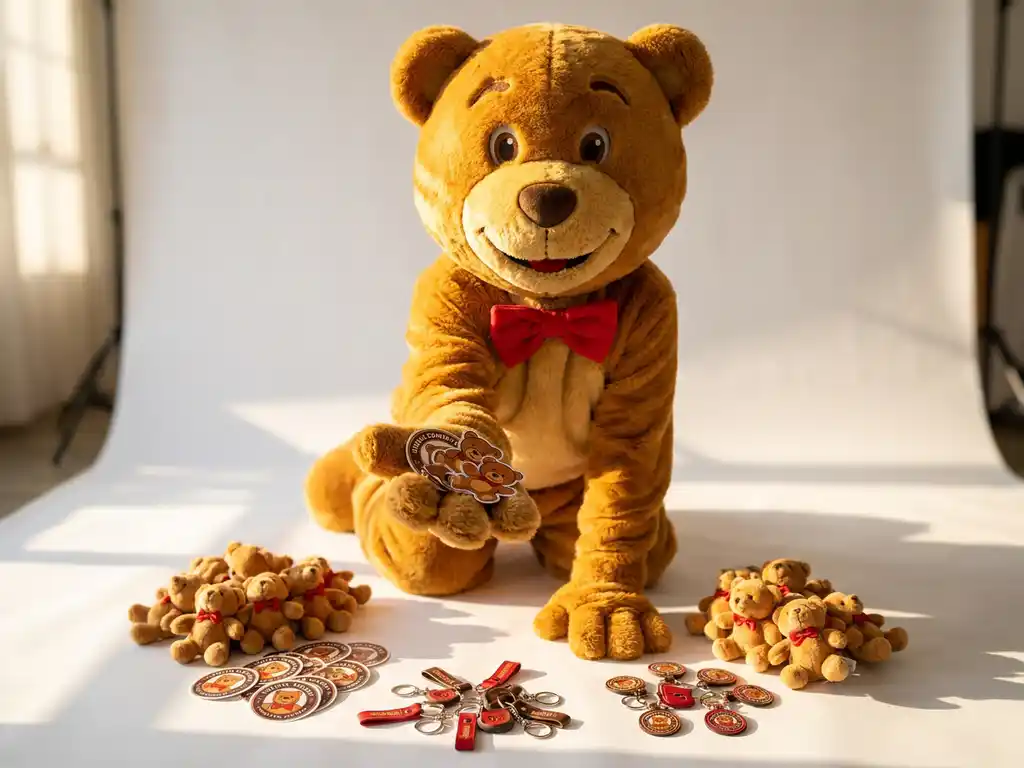
Freebies are low-cost or no-cost items given away to promote a brand, reward loyalty, or create goodwill with an audience. The most common examples include branded pens, tote bags, keychains, stickers, stress balls, plush toys, and custom inflatables used at events. The right freebie does more than fill a bag — it keeps your brand visible long after the moment of handout. Below, we answer the most common questions about freebies so you can make smarter choices for your next campaign.
What types of items are commonly given away as freebies?
The most commonly given away freebies include branded stationery, wearables, drinkware, tech accessories, and tactile novelty items. These categories cover everything from simple pens and notepads to custom stress balls, tote bags, water bottles, USB drives, and keychains. The best-performing freebies are items people actually use in daily life, keeping the brand in front of them repeatedly.
Here is a quick overview of the most popular freebie categories:
- Stationery: Pens, notepads, sticky notes, and rulers
- Wearables: T-shirts, caps, lanyards, and tote bags
- Drinkware: Branded mugs, water bottles, and travel cups
- Tech accessories: USB drives, phone stands, and charging cables
- Tactile novelties: Stress balls, fidget items, and squeezable figures
- Stickers and keychains: Affordable, lightweight, and easy to distribute at scale
- Plush toys and mascots: High-impact items for brand-forward campaigns
The category you choose depends largely on your audience, your budget, and where the item will be distributed. A tech accessory suits a corporate conference well, while a plush toy or stress ball resonates strongly at a family-friendly event or sports game.
What makes a freebie effective for brand promotion?
An effective freebie for brand promotion is one that people keep, use repeatedly, and associate positively with your brand. Usefulness is the single biggest driver of retention. If someone uses an item daily, your logo earns repeated impressions at virtually no ongoing cost. Relevance to the recipient’s lifestyle and the quality of the item also determine whether it ends up in a drawer or on a desk.
Beyond utility, a freebie works best when it reflects your brand’s personality. A generic pen with a small logo printed on the side is forgettable. A custom stress ball shaped like your product or mascot is a conversation starter. The more distinctive the item, the more it stimulates word of mouth and turns recipients into informal brand ambassadors.
Durability matters too. A freebie that breaks or fades quickly damages brand perception rather than building it. Investing slightly more per unit in quality materials often delivers a far better return than distributing large volumes of low-quality items that end up in the bin.
What are the best freebie ideas for events and trade shows?
The best trade show giveaways are portable, practical, and visually distinctive enough to attract attention on a crowded show floor. Items like custom stress balls, branded tote bags, reusable drinkware, and mini plush figures consistently perform well because they are easy to carry, immediately useful, and memorable. At trade shows especially, your freebie often works as a walking advertisement as attendees carry it around the venue.
When selecting trade show giveaways, consider these principles:
- Make it portable: Attendees are already carrying bags and brochures. Lightweight, compact items get taken home; heavy or bulky ones get left behind.
- Make it useful on the day: Items like tote bags, pens, or phone stands get used immediately, putting your brand in motion during the event itself.
- Make it visually bold: A brightly colored, uniquely shaped item draws people to your booth before they even read your signage.
- Make it shareable: Fun, tactile, or quirky items get photographed and shared on social media, extending your reach beyond the venue.
- Make it relevant: Tie the item to your product, service, or brand story so the connection is clear and memorable.
Custom stress balls are a particularly strong choice for trade show giveaways. They are compact, tactile, and endlessly customizable in shape and color, making them one of the most effective tools for keeping your brand top of mind long after the event ends.
How do branded freebies differ from standard promotional products?
Branded freebies and standard promotional products are often used interchangeably, but there is a meaningful distinction. Standard promotional products are typically off-the-shelf items with a logo printed on them. Branded freebies, at their best, are fully customized items designed to reflect a specific brand identity, including shape, color, texture, and messaging. The difference is between putting a sticker on someone else’s product and creating something entirely your own.
A standard pen with a logo is a promotional product. A stress ball shaped like your company mascot, molded in your exact brand colors, and finished with fine detail that reflects your product is a branded freebie that tells a story. The latter creates a much stronger association between the item and your brand because the item itself is the brand.
For organizations that take brand experience seriously, fully custom items deliver significantly more impact. They signal investment, creativity, and attention to detail, which in turn shapes how recipients perceive the brand behind the gift.
What freebies work best for schools, sports teams, and non-profits?
For schools, sports teams, and non-profits, the most effective freebies are items that build community identity, create a sense of belonging, and are affordable enough to distribute at scale. Stickers, keychains, custom stress balls, plush mascots, and branded wristbands all perform well in these contexts because they connect recipients to something they care about, whether that is their school, their team, or a cause.
Schools and sports teams benefit especially from mascot-themed merchandise. A stress ball shaped like the school mascot, or a small plush figure representing the team, creates an emotional connection that a generic branded pen simply cannot replicate. These items become collectibles and symbols of pride rather than throwaway giveaways.
Non-profits, on the other hand, benefit from freebies that communicate mission and values. Items like reusable tote bags, seed packets, or cause-branded wristbands reinforce the organization’s message every time they are used. Budget is often tighter in this sector, so choosing versatile items with a strong visual impact per unit cost is especially important.
How do you choose the right freebie for your audience?
Choosing the right freebie starts with understanding three things: who your audience is, where and when they will receive the item, and what you want them to feel or do afterward. A freebie for a corporate conference audience should feel professional and practical. A freebie for a children’s sports day should be fun, safe, and tactile. Matching the item to the context is the foundation of a successful giveaway strategy.
Ask yourself these questions before committing to a freebie:
- Will this person use this item in their daily life?
- Does this item reflect our brand’s personality and values?
- Is the quality high enough to make a positive impression?
- Is this item appropriate for the setting where it will be distributed?
- Does the item give people a reason to talk about us or share it?
Budget is a real constraint, but it should inform quantity rather than quality. A smaller number of genuinely impressive, high-quality freebies will outperform a large volume of forgettable ones every time. When in doubt, choose something tactile and visually distinctive, as these qualities drive the strongest recall.
How Promo Bears helps you find the perfect freebie
At Promo Bears, we specialize in creating fully custom freebies and promotional products that do far more than carry a logo. Our custom stress balls are a standout example of what branded freebies can achieve when they are built around your specific design, mascot, or product concept rather than an off-the-shelf template.
Here is what makes our approach different:
- Fully custom shapes: Every stress ball is molded to your design, not adapted from a standard shape
- PMS color matching: Your brand colors are reproduced precisely, not approximated
- Free concept artwork: Every project starts with a free illustration and unlimited revisions
- Physical prototype approval: You approve a sample before bulk production begins
- Dedicated project manager: One point of contact from concept to delivery
- Production time: 10 to 12 weeks after design approval, with rush options available
Whether you are planning trade show giveaways, a school campaign, or a large-scale brand activation, we bring over 19 years of expertise to every project. Request a free quote today and let us show you what a truly custom freebie can do for your brand.
Frequently Asked Questions
How far in advance should I order custom freebies for an event?
For fully custom items like shaped stress balls or plush mascots, you should plan for a lead time of 10 to 14 weeks from design approval to delivery. This accounts for artwork finalization, prototype production, your approval, and bulk manufacturing. For large events like trade shows or annual campaigns, starting the process three to four months out gives you a comfortable buffer and avoids costly rush fees.
What is a realistic budget per unit for quality branded freebies?
Budget varies significantly by item type, quantity, and customization level, but a useful rule of thumb is to spend more per unit on fewer items rather than spreading a thin budget across a high volume of low-quality pieces. Entry-level freebies like stickers and keychains can cost under $1 per unit at scale, while custom stress balls, plush figures, and drinkware typically range from $3 to $10 per unit depending on order size. The key metric to focus on is cost-per-impression, not cost-per-unit — a $6 item someone uses daily for a year delivers far more value than a $0.50 item that gets thrown away.
How many freebies should I order for a trade show or event?
A practical starting point is to estimate your expected foot traffic and order enough for 50 to 75 percent of that number, reserving your best or most expensive items for engaged visitors rather than every passerby. For a trade show booth expecting 500 visitors, ordering 250 to 375 units of a premium freebie and supplementing with a higher-volume, lower-cost item like stickers gives you flexibility without overcommitting your budget. Always factor in a small buffer of 10 to 15 percent for unexpected demand, staff use, or post-event follow-up gifting.
Can I use the same freebie across multiple campaigns, or should each campaign have its own item?
Reusing a freebie across campaigns is perfectly valid when the item is evergreen and not tied to a specific event or date, but campaign-specific items almost always outperform generic ones in terms of recall and relevance. If your brand runs recurring events like annual trade shows or seasonal promotions, consider maintaining a core freebie that stays consistent for brand recognition while introducing a limited-edition or event-specific variant to create novelty and urgency. The combination of familiarity and freshness is a powerful driver of engagement.
What are the most common mistakes brands make when choosing freebies?
The most common mistake is prioritizing quantity over quality — ordering thousands of cheap items because the per-unit cost is low, only to find that recipients discard them immediately, which wastes the entire budget. A close second is choosing an item based on personal preference rather than audience fit; a freebie that appeals to your marketing team may be completely irrelevant to the people you are trying to reach. Finally, many brands underestimate the importance of visual boldness, opting for subtle, understated designs that get lost in a crowded event environment when a distinctive shape or color would have made the item instantly recognizable.
Are eco-friendly or sustainable freebies worth the extra cost?
Yes, especially if your target audience skews toward environmentally conscious consumers or if sustainability is part of your brand’s core messaging. Eco-friendly freebies like reusable tote bags, seed packets, bamboo stationery, or recycled-material stress balls signal that your brand puts values into practice rather than just talking about them, which strengthens brand trust. The cost premium for sustainable materials has also narrowed considerably in recent years, making it easier to choose greener options without a significant budget impact. When the item reinforces your brand story, the return on investment goes well beyond the physical product itself.
How do I measure whether my freebie campaign actually worked?
Measuring freebie effectiveness starts with defining your goal before the campaign launches — whether that is booth traffic, social media mentions, lead generation, or brand recall. At events, you can track engagement by comparing booth visit rates or lead capture numbers against previous events where no freebie or a different freebie was used. For broader campaigns, monitoring branded hashtags, social media tags, and post-event survey responses asking how attendees heard about you can surface direct attribution. For the most accurate picture, include a simple question in your follow-up communications asking recipients whether they still have or use the item.