
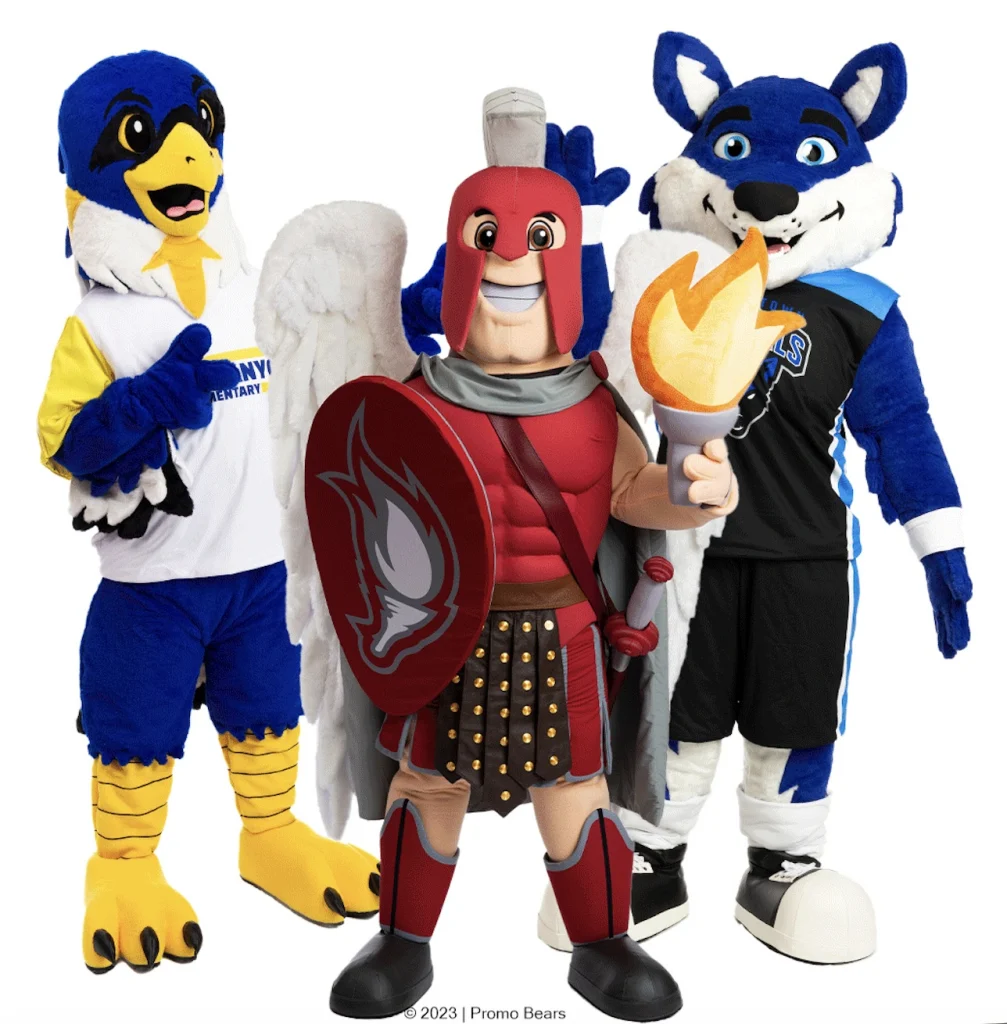
Mascots are symbolic characters that represent a brand, team, school, or organization in a way that is instantly recognizable and emotionally engaging. Some of the most famous examples include the Geico Gecko, the Michelin Man, Tony the Tiger, and sports icons like the Philadelphia Eagles’ Swoop or the Chicago Bulls’ Benny the Bull. From Fortune 500 companies to local high schools, mascots come in countless forms and serve a powerful role in building identity and loyalty. Below, we break down the most common types, share standout examples, and explain what makes them work.
What makes a mascot recognizable and effective?
A mascot becomes recognizable and effective when it has a strong visual identity, a consistent personality, and a clear connection to the brand or organization it represents. The most successful mascots are simple enough to be remembered at a glance, yet distinctive enough to stand apart from everything else in a crowded environment.
Several qualities separate a forgettable character from a truly iconic one:
- Bold, distinctive design: Strong shapes, clear colors, and expressive features make a mascot easy to recognize from a distance, whether on a jersey, a billboard, or a product package.
- Personality alignment: The mascot’s character should reflect the values of the organization. A playful mascot works for a children’s brand; a fierce one fits a competitive sports team.
- Consistency across touchpoints: A mascot that appears the same way on merchandise, social media, events, and signage builds familiarity faster than one that changes with every application.
- Emotional connection: People remember how a mascot made them feel. Characters that generate warmth, excitement, or humor tend to stick in memory far longer than purely informational branding.
Effective mascot design also considers the practical side. A costume mascot, for example, needs to be comfortable enough for someone to wear for extended periods, visible enough to command attention in a crowd, and durable enough to withstand repeated use. These functional requirements shape the design just as much as the aesthetic ones.
What are some famous brand mascots?
Some of the most famous brand mascots in history include the Michelin Man (Bibendum) for Michelin Tires, Tony the Tiger for Kellogg’s Frosted Flakes, the Geico Gecko, the Energizer Bunny, Mr. Clean, the Pillsbury Doughboy, and Ronald McDonald. These characters have become so embedded in popular culture that many people recognize them independently of the products they represent.
What these mascots share is decades of consistent use paired with a personality that resonates with their target audience. Tony the Tiger projects energy and achievement, which speaks directly to parents and children. The Geico Gecko is witty and approachable, helping to humanize an otherwise dry insurance category. The Michelin Man communicates reliability and endurance without saying a single word.
In more recent years, brands have expanded mascot use into digital and experiential marketing. Characters like the Duolingo Owl have built enormous social media followings by leaning into humor and cultural relevance. Meanwhile, companies like Amazon, Walmart, and Nestlé have used custom mascot costumes at live events to create memorable, shareable brand moments that no digital ad can replicate.
The common thread across all of these examples is intentionality. Each mascot was created with a specific audience and emotional goal in mind, and each has been deployed consistently enough to build genuine recognition over time.
What are some well-known sports mascots?
Well-known sports mascots include Benny the Bull (Chicago Bulls), Swoop (Philadelphia Eagles), Uga the Bulldog (University of Georgia), the San Diego Chicken, Gritty (Philadelphia Flyers), and Wally the Green Monster (Boston Red Sox). These characters have become beloved fixtures in their respective sports communities, often generating as much fan affection as the athletes themselves.
Sports mascots serve a unique function. They energize the crowd during timeouts and slow moments, engage younger fans who may not yet follow the game closely, and give teams a visual identity that extends beyond the players on the field or court. A great sports mascot becomes a symbol of the fan experience itself.
Gritty is a perfect case study. When the Philadelphia Flyers introduced the character in 2018, the reaction was initially mixed. Within weeks, however, Gritty had become a cultural phenomenon, embraced by fans and media alike because of the mascot’s chaotic, unpredictable personality. The lesson for any organization is that a mascot with a strong, committed character will always outperform a safe, generic one.
At the professional level, mascots also appear on merchandise, in advertising, and at community events, making them a revenue-generating asset in addition to a fan engagement tool. At the college level, mascots like Uga or the Michigan Wolverine inspire deep alumni loyalty that spans generations.
What types of mascots do schools and universities use?
Schools and universities most commonly use animal mascots, mythological creatures, and human archetypes as their representative characters. Eagles, bulldogs, tigers, bears, and wildcats are among the most popular choices at both the K-12 and collegiate levels, chosen for their associations with strength, speed, or ferocity.
The choice of mascot often reflects the school’s regional identity, founding history, or core values. A school in the Pacific Northwest might choose a bear or a wolf; a Southern university might lean toward a bulldog or a gator. These choices are rarely arbitrary. They are meant to create a sense of belonging and pride that connects students, alumni, athletes, and staff across generations.
Beyond the character itself, the physical mascot costume plays a major role in school spirit. A well-crafted costume that appears at games, pep rallies, and community events makes the mascot feel real and present rather than just a logo on a sweatshirt. Schools that invest in high-quality, professionally produced costumes consistently report stronger engagement at events and greater enthusiasm from their student body.
Universities also use mascots strategically for recruitment. A recognizable, energetic mascot at college fairs and open days creates a positive first impression that reinforces the school’s culture and community. In this sense, the mascot functions as both a morale booster and a marketing asset.
How do companies create their own custom mascot?
Companies create a custom mascot by starting with a clear brief that defines the character’s personality, target audience, and intended use, then working with a professional design team to develop a visual concept before moving into physical production. The process typically involves concept illustration, revision rounds, final design approval, and then costume or merchandise fabrication.
The most effective approach follows a structured sequence:
- Define the character’s purpose and personality: Before any design work begins, the organization needs to answer key questions. Who is the mascot for? What emotions should it evoke? Where will it appear? These answers shape every design decision that follows.
- Develop a concept illustration: A professional illustrator translates the brief into a visual character. This stage should include multiple revision rounds until the design truly reflects the brand’s identity and goals.
- Finalize the design across all applications: The approved character should be adapted for every intended use, from a full-body costume to smaller merchandise like stickers, plush toys, and keychains.
- Select the right production partner: Quality varies enormously between producers. Organizations should look for a partner with proven experience, transparent timelines, and a quality control process that includes final approval before shipping.
- Plan for rollout and consistency: A mascot launch is most effective when it is coordinated across events, social media, and merchandise simultaneously, creating a unified brand moment rather than a gradual, unnoticed introduction.
The timeline is also an important planning consideration. A fully custom mascot costume typically takes 12 to 16 weeks from design approval to delivery. Smaller mascot merchandise like stickers can be produced in as little as four weeks, while plush toys generally require 12 to 18 weeks depending on production volume and shipping method. Building these lead times into the project plan from the start prevents last-minute pressure that can compromise quality.
How Promo Bears helps you bring your mascot to life
We at Promo Bears specialize in end-to-end custom mascot creation, from the very first sketch to the moment your character arrives at your door. Whether you are a marketing manager at a national brand, a sports team director, or a university administrator, we make the entire process straightforward, transparent, and genuinely exciting.
Here is what working with us looks like:
- Free concept illustration based on your logo, design idea, or character concept, with unlimited revisions until you love it
- Dedicated project manager who oversees every stage from design to delivery, keeping you informed throughout
- Premium costume production with 3D realistic eyes, a built-in ventilation system, and a comfortable fit for wearers between 5’7″ and 6’1″ as standard, with custom sizing available
- Full merchandise range including plush toys, stress balls, stickers, keychains, inflatables, and more, all featuring your mascot character
- Rigorous quality control with result photos shared for your final approval before anything is packed and shipped
With over 4,000 mascots created for clients including NASA, Red Bull, Bridgestone, and Amazon, we bring the experience and creative capability that serious brands require. If you are ready to give your organization a character that builds recognition, drives engagement, and turns heads at every event, get your free quote today and let us show you what is possible.
Frequently Asked Questions
How much does it typically cost to create a custom mascot costume?
The cost of a custom mascot costume varies depending on complexity, materials, and the level of detail involved, but professional-grade costumes generally range from a few thousand dollars to upward of $10,000 or more for highly detailed, premium builds. While it may be tempting to cut costs with a lower-budget option, a poorly made costume can undermine your brand’s credibility and wear out quickly under regular use. Think of a quality mascot costume as a long-term investment — one that will represent your organization at hundreds of events over many years.
What if I don't have a mascot design yet — can I still get started?
Absolutely — in fact, many organizations come to the creation process with nothing more than a general idea, a brand personality, or a rough concept. A good mascot design partner will guide you through character development from scratch, asking the right questions about your audience, values, and intended use before any illustration work begins. Starting without a finished design is completely normal and often leads to a more thoughtful, purpose-built character than simply adapting an existing logo.
How do I know if my mascot design will work well as a physical costume versus just a 2D illustration?
Not every illustrated character translates cleanly into a wearable costume — features like very thin limbs, extremely detailed textures, or complex color gradients can be difficult or impossible to reproduce in fabric and foam. Before finalizing your design, it’s worth discussing costume feasibility with your production partner early in the process so any adjustments can be made at the illustration stage rather than after production begins. An experienced mascot maker will flag potential issues proactively and suggest design modifications that preserve the character’s look while making it practical to build and wear.
How should we care for and maintain a mascot costume to extend its lifespan?
Proper maintenance is essential for keeping a mascot costume looking its best and lasting through years of use. Most costume heads and body pieces should be spot-cleaned regularly and allowed to air out thoroughly after each wear, while fabric components like gloves and footwear can often be hand-washed or machine-washed on a gentle cycle. Storing the costume in a cool, dry environment — ideally on a form or in a dedicated storage bag — prevents compression damage and keeps the foam structure intact. Your production partner should provide specific care instructions tailored to the materials used in your costume.
Can a mascot costume be worn by performers of different sizes?
Most professional mascot costumes are built around a standard size range — typically accommodating wearers between approximately 5’7u0022 and 6’1u0022 — but custom sizing is available for organizations that need a broader fit range. If multiple people will be performing in the same costume, it’s worth communicating this during the design phase so padding, internal harnesses, and ventilation can be adjusted accordingly. Some organizations also commission two costumes to ensure they always have a backup available for high-frequency event schedules.
What common mistakes should organizations avoid when launching a new mascot?
One of the most common mistakes is introducing a mascot without a coordinated launch plan — debuting the character quietly on one channel while leaving others untouched leads to confusion and missed momentum. Another frequent misstep is inconsistency: using different versions of the mascot across merchandise, digital content, and live appearances erodes recognition rather than building it. Finally, organizations sometimes underestimate the importance of the performer behind the costume — investing in brief training on movement, crowd interaction, and character expression makes an enormous difference in how the mascot is received by audiences.
Beyond costumes, what other mascot merchandise is worth investing in early?
Plush toys and stickers tend to offer the best return early on because they are affordable to produce, easy to distribute, and highly effective at building emotional connection — especially with younger audiences. Keychains and stress balls work well as giveaways at trade shows, community events, or school open days where you want something tangible that keeps your mascot top of mind. As your mascot gains recognition, expanding into larger merchandise like inflatables or branded apparel becomes a natural next step that reinforces the character’s presence across more touchpoints.