
Every successful marketing campaign relies on the right mix of communication strategies to reach, engage, and convert its target audience. Understanding the different types of promotional tools available gives brands the foundation they need to make smarter, more impactful decisions about where to invest their budget and energy.
Whether you are planning a product launch, a trade show appearance, or a long-term brand awareness campaign, knowing how each promotional tool works and when to use it can make the difference between a campaign that fades quickly and one that builds lasting recognition. This guide breaks down the five main types of promotional tools and helps you choose the right approach for your goals.
What are promotional tools, and why do brands use them?
Promotional tools are the methods and materials brands use to communicate with their target audience, generate interest, and drive action. They span everything from advertising and public relations to in-person events and physical promotional products. Brands use them to build awareness, influence purchasing decisions, and create memorable experiences that keep them top of mind.
The core purpose of any promotional tool is to bridge the gap between a brand and its audience. A well-chosen tool does not just deliver a message—it creates an impression that lasts. That is why leading brands invest in a mix of promotional strategies rather than relying on a single channel. Each tool serves a different function, reaches a different audience segment, and delivers a different kind of value.
Understanding the full landscape of promotional tools also helps brands avoid overspending on tactics that do not align with their objectives. When you know what each tool does best, you can build campaigns that are both efficient and effective.
What are the five main types of promotional tools?
The five main types of promotional tools are advertising, sales promotion, public relations, personal selling, and direct marketing. Together, these form what marketing professionals call the promotional mix. Each plays a distinct role in how a brand communicates with its audience and drives engagement.
Here is a closer look at each type:
- Advertising: Paid, non-personal communication through channels such as television, radio, print, outdoor media, and digital platforms. Advertising is ideal for building broad awareness quickly.
- Sales promotion: Short-term incentives designed to stimulate immediate action, such as discounts, coupons, contests, and free samples. This tool is highly effective at driving trial and boosting short-term sales.
- Public relations (PR): Earned media and reputation management through press coverage, events, sponsorships, and community engagement. PR builds credibility and trust over time.
- Personal selling: Direct, one-on-one communication between a sales representative and a potential customer. This is the most personalized promotional tool and works best for high-value or complex products and services.
- Direct marketing: Targeted communication sent directly to individuals, including email campaigns, direct mail, SMS, and personalized digital outreach. Direct marketing excels at reaching specific audience segments with tailored messages.
Many successful campaigns use a combination of these tools rather than relying on just one. The most effective promotional mixes are those in which each tool reinforces the others, creating a consistent brand experience across every touchpoint.
Which type of promotional tool is most effective for brand recognition?
Advertising is traditionally the most powerful tool for building broad brand recognition quickly, but promotional products consistently outperform digital ads when it comes to long-term recall and emotional connection. Unlike a banner ad that disappears after a few seconds, a physical branded item stays in someone’s environment for weeks, months, or even years.
Brand recognition is built through repeated, positive exposure. The more often someone encounters your brand in a meaningful context, the more familiar and trustworthy it becomes. Advertising achieves this through frequency across mass channels, while promotional products achieve it through physical presence in everyday life.
The key advantage of tangible branded items is that they engage multiple senses. A person who holds, uses, or displays a branded product forms a stronger association with that brand than someone who simply sees an ad. This is why physical promotional tools remain a staple in the marketing strategies of globally recognized organizations, from sports teams to Fortune 500 companies.
Promotional Products
Looking for custom promotional products?
From plush toys to inflatables — get in touch and we’ll help you find the right solution for your brand.
How do promotional products differ from other promotional tools?
Promotional products are physical, branded items given to an audience to increase visibility and goodwill. Unlike advertising, which interrupts, or sales promotions, which incentivize, promotional products create a positive association by offering genuine value. They are the only promotional tool that the recipient keeps, uses, and may share with others.
This distinction makes promotional products uniquely powerful in several ways:
- They provide ongoing brand exposure without recurring media costs
- They create a tangible, emotional connection between the brand and the recipient
- They travel beyond the original recipient, extending reach organically
- They are associated with generosity rather than a sales pitch, which builds trust
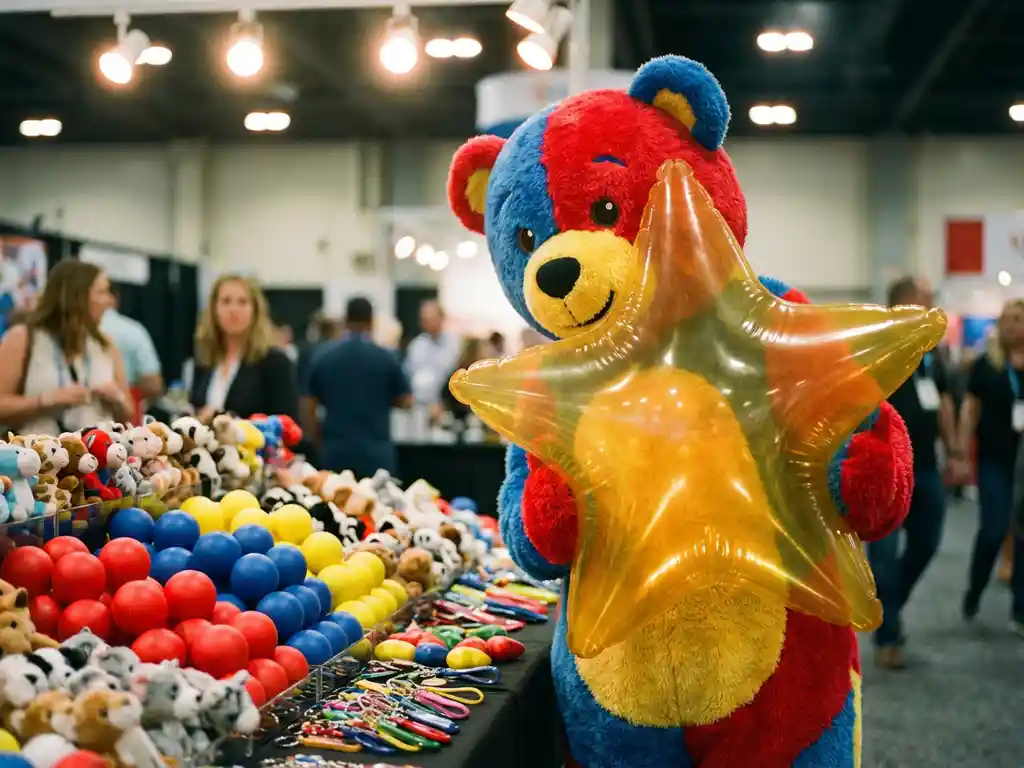
The range of promotional products available is vast, from branded apparel and stationery to custom stress balls, plush toys, and mascot merchandise. The most effective promotional products are those that align with the brand’s identity and serve a genuine purpose in the recipient’s daily life. A well-designed, high-quality item becomes a miniature brand ambassador that works continuously on your behalf.
When should a business use each type of promotional tool?
The right promotional tool depends on your campaign objective, audience, budget, and timeline. Different tools perform best at different stages of the customer journey and in different business contexts.
Matching tools to objectives
Use advertising when you need to build awareness quickly across a large audience, particularly for new product launches or seasonal campaigns. Sales promotions work best when you need to drive immediate action, clear inventory, or encourage first-time trial. Public relations is most valuable for building long-term credibility and managing brand reputation, especially during significant company milestones or crises.
Timing and context
Personal selling is most effective for high-value B2B transactions in which relationships and trust are central to the buying decision. Direct marketing performs well when you have a defined audience segment and a specific, personalized message to deliver. Promotional products shine at events, trade shows, onboarding moments, and any situation in which you want to leave a lasting physical impression.
A common mistake is treating these tools as mutually exclusive. The most impactful campaigns integrate multiple tools strategically, using each one where it performs best while maintaining a consistent brand message throughout.
How do you choose the right promotional tools for your campaign?
Choosing the right promotional tools starts with clearly defining your campaign objective, target audience, and budget. From there, you evaluate which tools are best suited to reach that audience in the right context and at the right moment in their journey with your brand.
Follow this process to make a well-informed decision:
- Define your goal: Are you building awareness, driving sales, rewarding loyalty, or launching something new? Your objective determines which tools belong in your mix.
- Know your audience: Where does your audience spend its time? What kind of communication does it respond to? A younger, digital-native audience may respond well to social advertising, while a professional B2B audience may value personal selling and branded merchandise.
- Set your budget: Some tools, like advertising, require significant ongoing spend. Others, like promotional products, have a one-time production cost and deliver long-term exposure.
- Consider your timeline: Advertising and digital campaigns can launch quickly. Custom promotional products require lead time for design and production—for example, custom stress balls take 10 to 12 weeks from design approval to delivery.
- Measure and iterate: Track the performance of each tool and refine your mix based on what drives the best results for your specific brand and audience.
The most effective campaigns are those that combine tools thoughtfully, ensuring each one plays a clear role and contributes to a unified brand experience. When your promotional mix is aligned with your strategy, every investment works harder and delivers a greater return.
How Promo Bears helps you make an impact with promotional products
We specialize in high-quality, fully custom promotional products that give your brand a lasting physical presence. Whether you are equipping a trade show booth, rewarding loyal customers, or launching a new campaign, we create branded items that people genuinely want to keep and use.
Our custom stress balls are a standout example of what sets us apart:
- Fully custom shapes based on your own logo, mascot, or product concept
- Precise PMS color matching for perfect brand accuracy
- Made from durable, high-quality PU foam with fine-detail molding
- Free concept artwork and unlimited revisions before production begins
- The option to approve a physical prototype before committing to a bulk order
- A production time of 10 to 12 weeks after design approval, with rush options available
- Worldwide shipping to the USA, Canada, Europe, Australia, and beyond
Every order is guided by a dedicated project manager from the first concept to final delivery, so you always know exactly where your project stands. With over 19 years of experience and more than 4,000 custom projects delivered for brands like NASA, Amazon, and Nestlé, we know what it takes to produce promotional products that truly represent your brand.
Ready to turn your brand into something people can hold? Contact us and let us bring your concept to life.