
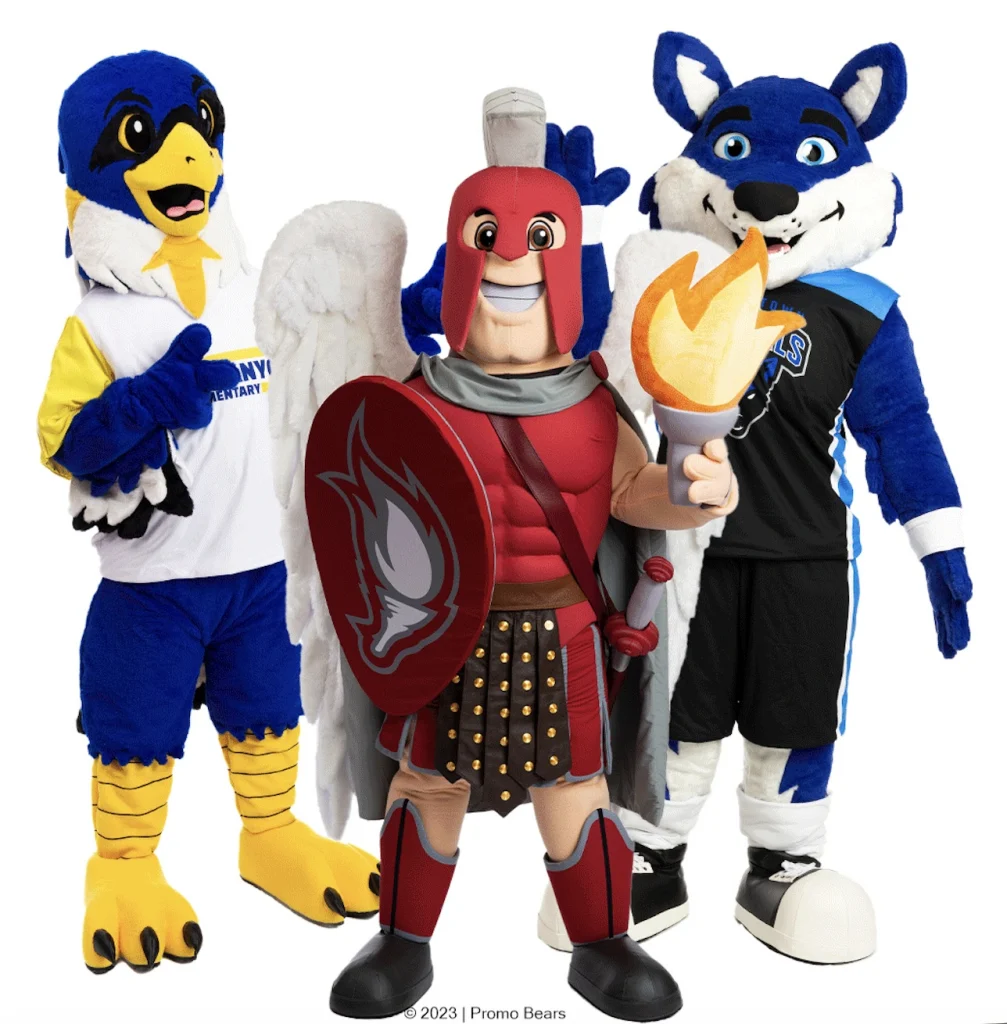
A custom mascot for a sports club builds a recognizable identity that fans connect with emotionally, turning passive spectators into active, loyal supporters. When a club has a mascot that fans can cheer for, wear on merchandise, and see at every game, it creates a sense of belonging that goes far beyond the sport itself. The sections below break down the specific ways a mascot delivers real value for sports clubs at every level.
How does a custom mascot boost fan engagement at sports events?
A custom mascot boosts fan engagement at sports events by giving the crowd a physical, interactive focal point that generates energy and excitement. Unlike a scoreboard or a banner, a mascot moves through the stands, interacts with fans directly, and creates moments that people remember and share. That kind of live interaction is something no digital campaign can fully replicate.
At games, a mascot performs during timeouts, celebrates goals, and rallies the crowd when energy dips. Kids gravitate toward mascots naturally, which means families stay engaged throughout the entire event rather than just during active play. Parents who come for the experience, not just the sport, are more likely to return for the next game.
Social media amplifies this further. Fans photograph and film mascot interactions constantly, and those posts reach audiences who were not at the event. A well-designed, visually striking mascot becomes a recurring character in fan-generated content, which effectively extends the club’s reach without any additional marketing spend.
What are the main benefits of a custom mascot for a sports club?
The main benefits of a custom mascot for a sports club include stronger fan loyalty, improved brand recognition, increased merchandise revenue, and greater appeal to sponsors. A mascot acts as a living extension of the club’s identity and strengthens the emotional connection between the team and its community over time.
Here is a breakdown of the core benefits:
- Fan loyalty: A mascot gives fans a character to rally around, which deepens their emotional investment in the club beyond wins and losses.
- Brand recognition: A distinctive mascot makes the club instantly recognizable, both at events and across merchandise, social media, and marketing materials.
- Community connection: Mascots appear at school visits, community events, and charity functions, making the club a visible presence beyond match days.
- Sponsor appeal: Sponsors are drawn to mascots because they offer high-visibility placement opportunities that reach broad, engaged audiences.
- Merchandise revenue: A popular mascot drives sales of plush toys, keychains, stickers, and apparel, creating a reliable income stream for the club.
- Family-friendly atmosphere: Mascots make events more welcoming for families with young children, which grows the club’s fan base over the long term.
Together, these benefits make a custom mascot one of the most versatile investments a sports club can make. It pays dividends across marketing, community relations, and revenue generation simultaneously.
How can a sports club mascot increase merchandise revenue?
A sports club mascot increases merchandise revenue by giving fans a character they want to own, wear, and gift to others. When fans have an emotional connection to a mascot, they actively seek out products that feature it. This creates consistent demand for a wide range of items beyond standard team apparel.
Popular mascot merchandise categories for sports clubs include plush toys, enamel pins, keychains, stickers, stress balls, and even inflatable versions of the mascot for stadium displays. Each of these products serves a different buyer: kids want plush toys and stickers, adults often collect enamel pins and keychains, and clubs use larger inflatables and banners for in-venue branding.
The key to maximizing merchandise revenue is consistency. When the mascot design is strong and the character has genuine personality, fans develop an attachment over time. That attachment translates into repeat purchases, especially when new merchandise drops align with seasons, championships, or special events.
Clubs that invest in a well-designed custom mascot costume from the start tend to find that merchandise sales follow naturally, because the mascot is already built into the fan experience at every game.
What makes a custom mascot more effective than a generic one?
A custom mascot is more effective than a generic one because it is built around the club’s specific identity, colors, and values rather than borrowed from a template that any other organization could use. Fans recognize and connect with something that feels genuinely theirs, not a stock character that happens to be wearing the right jersey.
Generic mascots are forgettable by design. They do not carry the unique visual cues that make a club’s brand instantly recognizable. A custom mascot, on the other hand, is designed from the ground up to reflect the club’s name, region, history, or spirit. That specificity is what makes it memorable.
There is also a practical advantage. A custom mascot can be adapted across every touchpoint: the costume worn at games, the plush toy sold in the team shop, the inflatable arch at the stadium entrance, and the sticker on a kid’s water bottle. When all of these share the same character, the club builds a cohesive visual identity that strengthens brand recognition at every interaction.
Generic mascots rarely translate well across merchandise formats because they were not designed with that flexibility in mind. A custom design built with production in mind from the start gives the club far more versatility.
How do sports clubs use mascots to attract sponsors?
Sports clubs use mascots to attract sponsors by offering them a high-visibility, fan-friendly platform that reaches audiences in a positive, engaging context. Sponsors are not just buying a logo placement; they are associating their brand with a beloved character that fans already trust and enjoy.
A mascot creates multiple sponsorship touchpoints that a simple banner or jersey patch cannot. Sponsors can be featured on mascot merchandise, integrated into mascot appearances at community events, or highlighted in social media content that features the mascot. Each of these is a genuine value-add that sponsors can point to when justifying their investment internally.
For sponsors targeting families and younger audiences specifically, a mascot is particularly persuasive. Children remember mascots, and the brands associated with them benefit from that positive association. This is why family-oriented brands in retail, food and beverage, and entertainment actively seek out sports clubs with strong mascot programs.
Clubs that can show sponsors a well-produced mascot with an active presence at events and on social media are in a much stronger negotiating position than clubs that rely solely on traditional signage.
What should a sports club consider when ordering a custom mascot costume?
When ordering a custom mascot costume, a sports club should consider design specificity, production timeline, comfort and wearability, and the supplier’s ability to deliver consistent quality. Getting these factors right from the start avoids costly delays and ensures the mascot performs well at events from day one.
- Design clarity: Start with a clear brief. The more specific the club can be about colors, character type, and personality, the more accurately the manufacturer can bring the vision to life. Look for a supplier that provides a free concept illustration before production begins.
- Production timeline: Custom mascot costumes typically take 12 to 16 weeks to produce. Plan well in advance of the season opener or a major event to avoid rushing the process.
- Comfort and ventilation: The person wearing the mascot will be active for extended periods. A good costume includes a built-in ventilation system and is sized appropriately for the performer.
- Ease of cleaning: Mascot costumes see heavy use. Materials should be easy to clean and maintain so the costume stays looking sharp throughout the season.
- Merchandise compatibility: Think about how the mascot design will translate to smaller products like plush toys, keychains, and stickers. A design that works in three dimensions and at small scale gives the club far more flexibility.
- Revision process: Choose a supplier that offers unlimited design revisions before production starts. This protects the club from committing to a design that does not fully represent the brand.
One practical note on timing: if the club also wants mascot merchandise ready for the season launch, factor in separate production timelines. Plush toys, for example, take 12 to 18 weeks in total, while smaller items like keychains, enamel pins, and stickers can be ready in as little as 3 to 6 weeks. Planning all of this together from the start saves significant time and coordination effort.
How Promo Bears helps sports clubs strengthen their identity with a custom mascot
We work with sports clubs at every level to design and produce custom mascots that genuinely represent their brand. From the first free concept illustration to the final quality check before shipping, we handle the entire process so the club can focus on the season ahead.
Here is what we bring to every mascot project:
- A free concept illustration based on your logo or design idea, with unlimited revisions until it is exactly right
- Lifelike 3D eyes, a built-in ventilation system, and materials that are comfortable to wear and easy to clean
- A dedicated project manager who oversees every step from design approval to delivery
- Production of the full mascot merchandise range, including plush toys, keychains, enamel pins, stickers, and giant inflatables
- Over 4,000 mascots created for clubs, brands, schools, and organizations across North America and beyond
Whether you are building a mascot for a sports club from scratch or refreshing an existing character, we are here to make it happen. Get your free quote and start the conversation today.
Frequently Asked Questions
How much does a custom sports club mascot costume typically cost?
The cost of a custom mascot costume varies depending on complexity, size, and the level of detail in the design, but most professional-grade costumes range from a few thousand dollars upward. While the upfront investment may seem significant, it pays for itself quickly when you factor in merchandise revenue, increased sponsorship value, and the long-term fan engagement the mascot generates. Requesting a free quote from your supplier is the best way to get an accurate figure based on your specific design requirements.
How do we introduce a new mascot to our fan base effectively?
The most effective mascot launches combine a live debut at a high-attendance event with a coordinated social media rollout that builds anticipation beforehand. Consider giving the mascot a name, a backstory, and even a social media account of its own to create an ongoing narrative fans can follow. Involving the community in the process — such as running a naming contest — is a proven way to generate buzz and give fans immediate ownership over the character.
Who typically wears the mascot costume, and does it require special training?
Most sports clubs assign the mascot role to a staff member, volunteer, or hired performer who is comfortable with physical activity and crowd interaction. While no formal certification is required, basic performer training is strongly recommended — covering crowd safety, how to interact with children, and how to manage the physical demands of wearing the costume for extended periods. Many suppliers can point clubs toward mascot performer resources, and some professional mascot entertainers offer training workshops specifically for new costume wearers.
Can a mascot be used effectively by smaller or amateur sports clubs, not just professional teams?
Absolutely — in many ways, smaller clubs benefit even more from a mascot because it helps level the playing field in terms of brand identity and community presence. A well-designed mascot gives a grassroots or amateur club the same professional, cohesive look that larger organizations spend significantly more to achieve. It also strengthens local community ties, which is often the primary growth driver for clubs at that level.
What if our club already has a logo — can the mascot be designed around it?
Yes, and this is actually the ideal starting point for a custom mascot design. A skilled mascot designer will use your existing logo’s colors, iconography, and overall style as the foundation for the character, ensuring the mascot feels like a natural extension of your brand rather than a separate element. Sharing your logo, brand guidelines, and any character ideas you have in mind gives the design team everything they need to create a mascot that is immediately recognizable as yours.
How do we keep the mascot feeling fresh and relevant over multiple seasons?
Keeping a mascot relevant comes down to consistent visibility and evolving the character’s presence rather than its design. Introduce the mascot into new contexts each season — community school visits, charity appearances, social media challenges, or themed game-day activations — to keep fan interest high. Releasing limited-edition merchandise tied to milestones, championships, or seasonal events is another effective way to re-energize fan engagement around an established mascot without changing the core character.
What happens if the costume gets damaged during the season — can it be repaired or replaced?
Most professional mascot costume suppliers offer repair services and can produce replacement parts such as heads, hands, or feet if a specific component becomes damaged. It is worth asking your supplier about their repair and replacement policy before placing your order, and keeping a basic repair kit on hand for minor touch-ups between events. For clubs with a heavy event schedule, some organizations commission a second costume as a backup, which also allows two performers to appear simultaneously at different locations.
Related Articles
- How do you maintain and clean a custom mascot costume after events?
- What is the difference between a generic and a custom sports club mascot?
- Should a sports club rebrand its mascot to strengthen club identity?
- What sells well at a craft show?
- How do promotional products support a brand during economic uncertainty?