
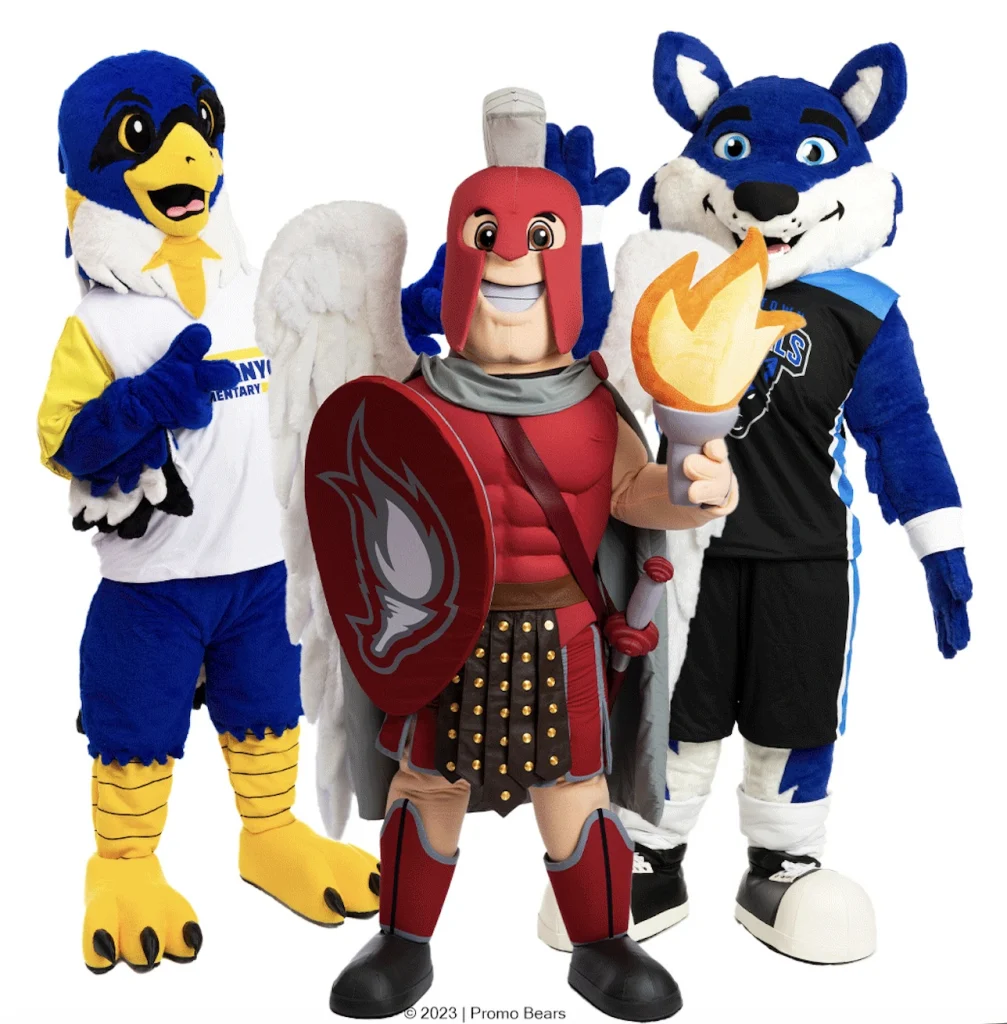
Using a brand character for your business delivers real, measurable benefits: it makes your brand instantly recognizable, builds emotional connections with your audience, and gives your marketing a consistent, memorable face across every touchpoint. Brand characters work because people respond to personalities far more readily than they respond to logos alone. Below, we answer the most common questions marketers and brand leaders ask before investing in one.
How does a brand character increase customer engagement?
A brand character increases customer engagement by giving your audience something to connect with emotionally. People naturally respond to characters, faces, and personalities. When your brand has a recognizable figure, customers are more likely to stop, look, share, and interact with your content and campaigns than they would with a standard logo or tagline alone.
Think about how mascots perform at live events, on social media, and in retail environments. A character creates moments worth photographing, sharing, and talking about. That organic word-of-mouth is one of the most powerful engagement drivers available to any brand, and a well-designed mascot generates it consistently.
Brand characters also create continuity across campaigns. Whether your character appears on a custom stress ball at a trade show or waves at fans during a game, the experience feels connected. That consistency deepens familiarity, and familiarity drives engagement over time.
What types of businesses benefit most from a brand character?
Almost any business can benefit from a brand character, but the impact is strongest for organizations where emotional connection, community, and repeat interaction matter most. These include sports teams, universities, retail brands, entertainment companies, hospitality groups, and FMCG brands that compete in crowded markets where standing out is a daily challenge.
That said, corporate brands in sectors like finance, healthcare, and technology have also seen strong results from mascot marketing. A character humanizes complex or abstract services and makes a brand feel more approachable to everyday customers.
Here are the business types that consistently see the strongest returns from a brand character:
- Sports teams and leagues looking to build fan loyalty and merchandise revenue
- Universities and schools that want to strengthen community spirit and alumni identity
- Retail and FMCG brands competing for shelf presence and consumer recognition
- Event and entertainment companies where live engagement is central to the experience
- Non-profits and government organizations that need to make campaigns more relatable and accessible
- Hospitality and tourism brands that want to create a distinctive, shareable identity
How does a brand mascot improve brand recognition?
A brand mascot improves brand recognition by giving your identity a distinct visual anchor that audiences remember far more easily than a name or abstract logo. Characters engage the part of the brain wired for faces and personalities, which means they are processed faster and retained longer than most other brand assets.
Consistency is the engine behind this effect. When your mascot appears across merchandise, events, digital channels, and physical spaces, every appearance reinforces the same visual memory. Over time, customers begin to associate the character with your brand instinctively, even before they read your name.
Strong brand recognition also reduces the effort required to win new customers. When someone already has a positive association with your mascot from a past event or a friend’s social post, the barrier to trust is significantly lower. That is why mascot marketing remains one of the most cost-effective long-term investments in brand awareness available to marketing teams today.
Can a brand character directly boost revenue?
Yes, a brand character can directly boost revenue through multiple channels. Characters drive merchandise sales, increase foot traffic at events, improve conversion rates in campaigns, and create licensing opportunities for established brands. The financial impact is real and measurable when the character is deployed strategically across the right touchpoints.
At events and retail locations, a mascot draws attention and encourages dwell time, which directly correlates with higher purchase rates. In digital campaigns, content featuring a recognizable character consistently outperforms generic branded content in terms of engagement and click-through rates.
Merchandise is another direct revenue stream. Branded plush toys, keychains, and other character merchandise generate income while simultaneously acting as mobile advertising. Every time a customer uses or displays your branded item, they extend your reach without any additional spend on your part.
What’s the difference between a brand character and a brand mascot?
A brand character is any personified figure used to represent a brand, which can exist as an illustration, animation, or digital avatar. A brand mascot is a specific type of brand character that is typically brought to life physically, appearing at events, in costumes, or as a tangible presence that audiences can interact with in person.
In practice, the two terms are often used interchangeably, and many brands use both forms simultaneously. A character might appear in advertising and on packaging as a 2D illustration while also existing as a full mascot costume for live events and appearances.
The key distinction that matters for your strategy is activation. A brand character lives primarily in media and communications. A brand mascot lives in the real world, creating physical, memorable experiences that no digital asset can fully replicate. For brands that operate in spaces where live engagement matters, investing in both dimensions of the same character delivers the greatest combined impact.
How do you create a brand character for your business?
Creating a brand character for your business involves defining the character’s personality, translating that into a visual design, and then deciding how and where it will be activated. The process works best when it starts with your brand values and your audience, not with the design itself.
Follow these steps to build a brand character that works:
- Define the character’s role and personality. Decide what your character represents and how it should make your audience feel. Friendly and approachable? Energetic and bold? The personality should mirror your brand’s core identity.
- Develop the visual concept. Work with experienced designers who understand mascot design and brand identity. The look should be distinctive, scalable across formats, and immediately readable at a distance.
- Refine through revision. Great character design rarely happens in one pass. Plan for multiple rounds of feedback and iteration until the design feels exactly right.
- Plan your activation channels. Decide where the character will appear: events, merchandise, digital campaigns, retail, or all of the above. The character should be designed with these contexts in mind from the start.
- Produce your assets. Depending on your plan, this may include a mascot costume, plush toys, branded merchandise, inflatables, or digital assets. Each product type has its own production timeline, so build your launch schedule accordingly.
- Launch and maintain consistency. Introduce your character across all channels simultaneously where possible, and commit to using it consistently. Recognition builds through repetition.
How Promo Bears helps you bring your brand character to life
We specialize in turning brand characters into physical, high-impact assets that your audience can see, touch, and remember. Whether you are starting from scratch or already have a character concept ready to produce, we handle every stage of the process from design to delivery.
Here is what working with us looks like:
- Free concept illustration based on your logo or design idea, with unlimited revisions until it is exactly right
- Custom mascot costumes produced in 12 to 16 weeks, featuring 3D realistic eyes, a built-in ventilation system, and exceptional comfort for the wearer
- Branded merchandise including plush toys, stress balls, keychains, stickers, and more, all produced in your character’s likeness
- Giant inflatables and inflatable arches ready in as little as 3 to 4 weeks for high-visibility event presence
- A dedicated project manager who oversees every step, from the first sketch to the moment your order arrives at your door
We have created over 4,000 mascots for brands including NASA, Amazon, Red Bull, and Walmart, and we bring that same level of expertise and care to every project, regardless of size. Ready to get started? Request your free quote today and see what your brand character could look like.