
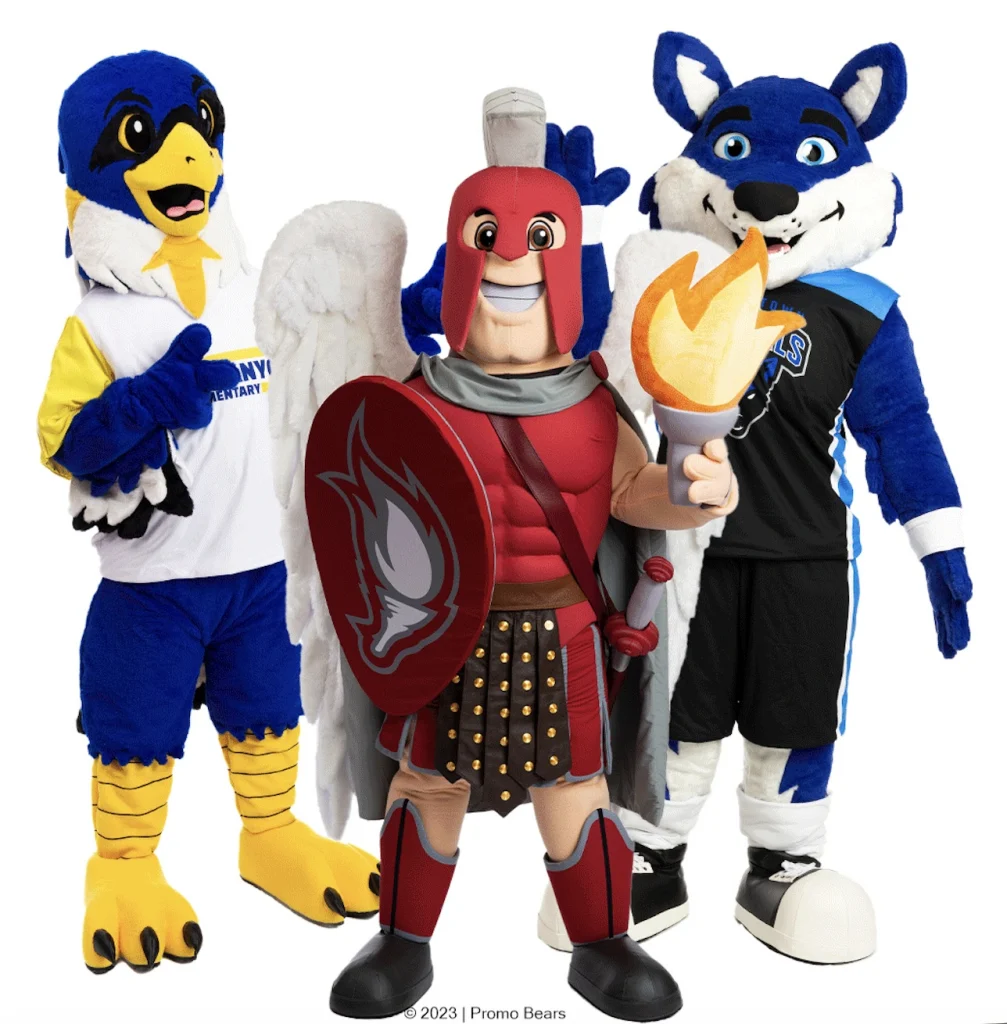
The Big Ten Conference has 18 member schools, each represented by a unique mascot that reflects the university’s identity, traditions, and community pride. From legendary costumed characters to live animal ambassadors, these mascots are among the most recognized in college sports. Below, we answer the most common questions about Big Ten mascots and what makes them such powerful brand symbols.
Who are all the Big Ten mascots by school?
Each of the 18 Big Ten schools has an official mascot that represents its athletic programs. The mascots range from costumed characters to live animals, and several schools have both. Here is the full roster of Big Ten mascots by school as of 2026.
- Illinois: Chief Illiniwek (retired) and Illini Pride
- Indiana: Hoosier (no official costumed mascot)
- Iowa: Herky the Hawk
- Maryland: Testudo the Terrapin
- Michigan: Wolverine (no single official costumed character)
- Michigan State: Sparty
- Minnesota: Goldy Gopher
- Nebraska: Herbie Husker and Lil’ Red
- Northwestern: Willie the Wildcat
- Ohio State: Brutus Buckeye
- Penn State: Nittany Lion
- Purdue: Purdue Pete and the Boilermaker Special
- Rutgers: The Scarlet Knight
- Wisconsin: Bucky Badger
- USC: Tommy Trojan and Traveler (a white horse)
- UCLA: Joe Bruin
- Oregon: The Duck (based on Donald Duck)
- Washington: Harry the Husky
Each of these mascots plays a central role in game-day energy, alumni engagement, and the broader brand identity of the university. Some have been around for nearly a century, while others are more recent additions to the Big Ten family.
Which Big Ten mascot is the most famous?
Brutus Buckeye of Ohio State University is widely considered the most famous Big Ten mascot. Brutus is instantly recognizable across the country, appearing on merchandise, national broadcasts, and major sporting events. His bold design and the massive Ohio State fan base have made him a cultural icon far beyond the boundaries of college football.
Sparty of Michigan State is a close second in terms of national recognition. Sparty’s warrior-inspired design has earned him multiple awards, including being named the top mascot in college sports by several national publications over the years. His muscular, dramatic appearance stands out in a conference filled with animals and cartoon characters.
Bucky Badger of Wisconsin and Goldy Gopher of Minnesota also command strong recognition, particularly in the Midwest. What sets the most famous Big Ten mascots apart is not just their design but the consistency and frequency with which they appear across merchandise, social media, and community events. A great mascot becomes a brand mascot in the truest sense, representing the school’s values and spirit on and off the field.
What are the oldest Big Ten mascots?
Several Big Ten mascots have histories stretching back nearly 100 years, making them some of the most enduring brand mascots in American sports. Herky the Hawk of Iowa has been around since 1948, while Bucky Badger of Wisconsin was introduced in 1940. Goldy Gopher of Minnesota dates back to 1930, making him one of the oldest in the conference.
Brutus Buckeye was introduced in 1965, which is relatively young compared to some of the other Big Ten mascots, yet he has become one of the most recognized. Purdue Pete has roots going back to the 1940s, and the Nittany Lion of Penn State has represented the university since the early 1900s in various forms.
The longevity of these mascots speaks to their effectiveness as brand symbols. When a mascot design is strong enough to survive for decades, it means it resonates deeply with students, alumni, and fans. That kind of lasting recognition is exactly what a well-crafted mascot can deliver for any organization, not just universities.
Which Big Ten schools have live animal mascots?
Several Big Ten schools use live animals as official or ceremonial mascots alongside their costumed characters. USC’s Traveler, a white Andalusian horse, is one of the most dramatic live mascots in college sports, galloping across the field after every Trojan touchdown. Washington’s Harry the Husky is also represented by a live Siberian Husky who attends games and university events.
Live animal mascots create a powerful emotional connection with fans, but they also come with significant responsibilities around animal welfare, training, and logistics. For this reason, most schools pair their live animal with a costumed version that can travel more freely, appear at community events, and engage with fans up close.
The costumed mascot is ultimately the more versatile and scalable brand mascot. It can visit schools, appear at charity events, interact with children, and represent the university in situations where a live animal simply cannot go. This is why even schools with live animal mascots invest heavily in high-quality costumed versions.
How do Big Ten mascots impact school spirit and brand identity?
Big Ten mascots have a measurable impact on school spirit, fan engagement, and long-term brand recognition. A well-designed mascot creates an emotional connection that transcends the game itself. Students, alumni, and fans rally around a mascot as a symbol of shared identity, pride, and community, which translates directly into stronger attendance, merchandise sales, and donor engagement.
From a brand identity perspective, a mascot functions as a living logo. It makes abstract values like strength, loyalty, and tradition tangible and memorable. Research in sports marketing consistently shows that schools with strong, distinctive mascot identities tend to build more loyal fan bases and generate more merchandise revenue over time.
Big Ten mascots also serve as powerful recruitment tools. Prospective students and athletes often form their first emotional impression of a university through its mascot, long before they ever visit campus. That first impression matters enormously, and it is shaped almost entirely by the quality and consistency of the mascot’s design and presence.
For any organization, whether a university, a sports team, or a corporate brand, the lesson from Big Ten mascots is clear. A great mascot is not just a costume. It is a strategic brand asset that builds community, drives engagement, and creates lasting loyalty.
How Promo Bears helps you build a mascot with real brand impact
Big Ten mascots prove that a great mascot can become one of the most powerful brand assets an organization owns. Whether you represent a school, a sports team, or a company, we can help you create a custom mascot that delivers that same kind of lasting recognition and emotional connection.
At Promo Bears, our custom mascot costume production service is built around your vision, with no upfront commitment required. Here is what you get when you work with us:
- A free concept illustration based on your logo or design idea, with unlimited revisions
- Lifelike 3D eyes, an integrated ventilation system, and exceptional wearing comfort
- A dedicated project manager who oversees every step from design to delivery
- Thorough quality control with result photos shared before shipment
- Production completed in 12 to 16 weeks, with rush options available
- Over 4,000 mascots created for clients including NASA, Amazon, and Walmart
Your mascot can also be extended into a full merchandise line, from plush toys and stress balls to inflatables and stickers, turning every fan and customer into a brand ambassador.
Ready to create a mascot that stands out as boldly as Brutus or Sparty? Get your free concept illustration and let us show you what is possible.
Frequently Asked Questions
How much does it typically cost to create a custom mascot costume for a school or organization?
The cost of a professional custom mascot costume varies depending on complexity, materials, and features like ventilation systems or animatronic elements, but high-quality mascots generally range from a few thousand to tens of thousands of dollars. The investment is well worth it when you consider the long-term brand value a great mascot delivers — Big Ten programs have generated millions in mascot-related merchandise revenue over decades. Working with an experienced mascot maker like Promo Bears, you can get a free concept illustration before committing any budget, so you know exactly what you’re getting.
What makes a mascot design strong enough to last for decades, like Bucky Badger or Goldy Gopher?
The most enduring mascot designs share a few key traits: a bold, simple silhouette that reads clearly from a distance, a personality that authentically reflects the organization’s values, and a design flexible enough to adapt across merchandise, digital media, and live appearances without losing its identity. Mascots like Bucky Badger have also benefited from consistent, high-quality representation over the years — the design evolves slightly but never loses its core character. When starting your own mascot project, prioritize distinctiveness and versatility over trend-chasing.
Can a small school, minor league team, or business really benefit from having a mascot the way Big Ten programs do?
Absolutely — in fact, smaller organizations often see an even more dramatic impact because a mascot instantly elevates their perceived professionalism and brand presence in a competitive landscape. A local school or business with a well-crafted mascot stands out at community events, on social media, and in marketing materials in a way that generic logos simply cannot match. The emotional engagement a mascot creates works the same way whether you have 100,000 fans or 1,000 customers.
What should I consider before choosing a mascot concept or character for my organization?
Start by identifying the core values and personality traits your organization wants to project — strength, friendliness, innovation, community — and then find a character archetype that naturally embodies those qualities. You should also research whether your chosen character concept conflicts with existing mascots in your region or industry, since differentiation is key to building a memorable brand identity. Finally, think about versatility: your mascot will need to work as a costume, a logo, a plush toy, and a digital avatar, so the design should translate well across all of those formats.
How do you manage mascot appearances effectively to maximize fan engagement?
The most impactful mascot programs treat the character as a year-round brand ambassador, not just a game-day prop — scheduling appearances at community events, school visits, charity functions, and social media content shoots keeps the mascot visible and emotionally relevant between seasons. Establishing clear appearance guidelines, a dedicated handler or performer, and a content calendar for the mascot’s social media presence are all best practices used by top college programs. Consistency of personality and appearance across every touchpoint is what transforms a mascot from a costume into a genuine brand icon.
What is the difference between a costumed mascot and a live animal mascot, and which is better for most organizations?
Live animal mascots create a powerful, authentic emotional moment — there is nothing quite like USC’s Traveler galloping across the field — but they come with significant logistical, financial, and ethical responsibilities around animal welfare, training, and transportation that most organizations are not equipped to manage. Costumed mascots, by contrast, are infinitely more versatile: they can travel freely, interact safely with fans of all ages, appear at indoor events, and be replicated across merchandise. For the vast majority of schools, teams, and businesses, a high-quality costumed mascot delivers greater brand ROI and far fewer operational headaches.
How long does it take to go from a mascot idea to a finished costume ready for public appearances?
With a professional mascot manufacturer, the process from initial concept to finished costume typically takes 12 to 16 weeks, covering design approvals, material selection, construction, and quality control. The design phase — including concept illustrations and revisions — usually happens in the first few weeks and is the most collaborative part of the process, so having clear reference materials like your logo, color palette, and brand guidelines ready will help speed things up. If you have a specific event deadline, many manufacturers, including Promo Bears, offer rush production options to accommodate tighter timelines.