
Lack of brand awareness is most often caused by inconsistent messaging, weak market presence, and a failure to create memorable experiences that stick with your audience. When your brand does not show up consistently, speak to the right people, or leave a lasting impression, it simply fades into the background. The sections below break down each root cause and show you exactly what to do about it.
How does inconsistent brand identity reduce recognition?
Inconsistent brand identity reduces recognition because your audience never forms a stable mental image of who you are. When your logo, colors, tone of voice, and visual style shift from one platform to the next, people cannot build a reliable association with your brand. Recognition depends on repetition, and repetition only works when the message stays the same.
Think of the brands you recognize instantly. They show up the same way every single time, whether on a trade show floor, a social media feed, or a product package. That consistency trains the brain to connect a visual or verbal cue directly to a feeling or memory. When that cue keeps changing, the connection never forms.
For marketing managers and brand directors, this is one of the most common and costly mistakes. A brand guide that is not enforced across teams, agencies, and vendors leads to fragmented output that confuses rather than builds. The fix starts with a clear, documented brand identity and a commitment to applying it everywhere, from digital campaigns to physical promotional products.
Why does a weak market presence limit brand visibility?
A weak market presence limits brand visibility because your audience simply does not encounter you often enough to remember you. Visibility is a numbers game. The more touchpoints your brand occupies, the more likely it is that your target audience will recognize and recall you when a purchasing decision arises.
Market presence is not just about advertising spend. It includes the physical spaces your brand occupies, the events you attend, the merchandise people carry, and the experiences you create in the real world. A brand that exists only online or only in one channel is invisible to large segments of its potential audience.
Expanding your presence means showing up where your audience already is. That might mean sponsoring community events, equipping your team with branded gear, or deploying eye-catching promotional tools at high-traffic locations. Every touchpoint adds to the mental shelf space your brand occupies in the minds of potential customers.
What role does poor audience targeting play in low brand awareness?
Poor audience targeting plays a central role in low brand awareness because even the best creative work is wasted when it reaches the wrong people. If your messaging is not reaching the individuals who are most likely to engage with your brand, buy your product, or advocate for your organization, your awareness efforts produce little return.
Many brands make the mistake of targeting broadly in an attempt to reach everyone. In practice, this means reaching no one particularly well. A message designed for everyone is optimized for no one, and it rarely resonates deeply enough to be remembered.
Effective targeting starts with a clear picture of your ideal audience: their industry, their role, their challenges, and the moments when they are most receptive to your message. Once you know who you are speaking to, every creative and distribution decision becomes sharper and more effective. The result is higher recall among the people who actually matter to your business.
How does lack of memorable brand experiences affect recall?
A lack of memorable brand experiences directly reduces recall because human memory is built on emotion and experience, not passive exposure. People forget what they see in passing, but they remember how something made them feel. If your brand never creates a moment worth remembering, it will not be remembered.
This is especially relevant at live events, trade shows, retail environments, and community activations, where the opportunity to create a real, physical connection with your audience is enormous. A brand that shows up with generic materials and no distinct personality blends into the background. A brand that creates a moment, a laugh, a photo opportunity, or a tangible piece of merchandise that someone takes home, earns a place in memory.
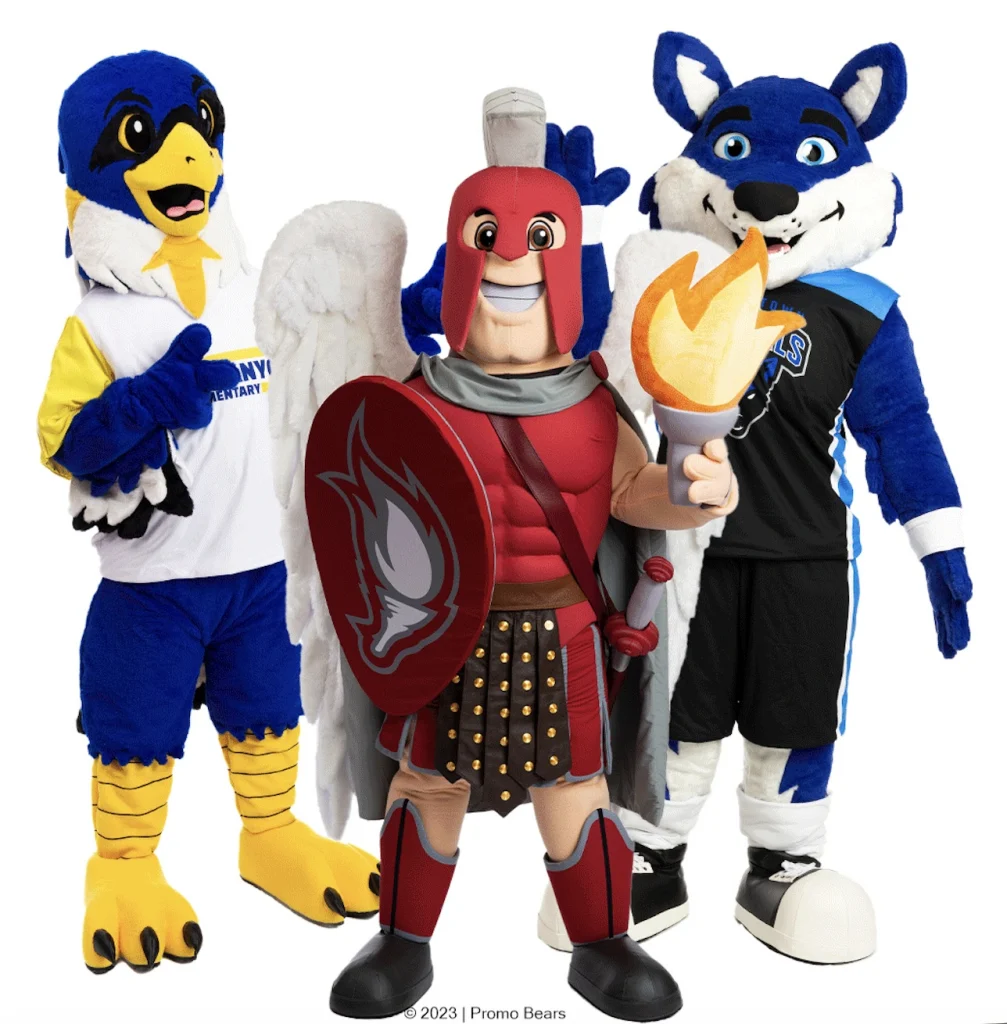
Physical brand experiences are particularly powerful because they engage multiple senses at once. A custom mascot that interacts with your audience, a giant inflatable that stops people in their tracks, or a branded product that someone uses every day, these are the kinds of touchpoints that build lasting recall. The goal is to give people something to talk about, share, and remember long after the event is over.
What are the most effective ways to fix low brand awareness?
The most effective ways to fix low brand awareness are to establish a consistent visual identity, expand your presence across multiple touchpoints, sharpen your audience targeting, and invest in experiences that people genuinely remember. None of these require an unlimited budget. They require focus, consistency, and creative thinking about how your brand shows up in the world.
Here is a practical starting point for brands looking to improve brand recognition in 2026:
- Audit your brand consistency across every channel, from your website and social media to your printed materials and physical products. Identify where the gaps are and close them.
- Identify your highest-value audience segments and concentrate your messaging where those people are most active and most receptive.
- Invest in physical brand presence at events, in retail environments, and in community spaces where your audience gathers in real life.
- Create experiences, not just impressions. Give people something to interact with, photograph, share, and take home.
- Use branded merchandise strategically. Products that people use and carry extend your brand’s reach far beyond the original point of contact.
The brands that win on awareness are the ones that show up consistently, speak to the right people, and create moments worth remembering. That combination turns passive exposure into genuine recognition, and recognition into revenue.
How Promo Bears helps you improve brand recognition
We specialize in exactly the kind of physical brand experiences that drive lasting recognition. From custom mascot costumes to giant inflatables and promotional merchandise, every product we create is designed to make your brand impossible to ignore.
Here is what we bring to the table for marketing teams and brand directors:
- Custom mascot costumes that bring your brand character to life, ready in 12 to 16 weeks with a free concept illustration and unlimited revisions included.
- Giant mascot inflatables that create instant visual impact at events and activations, with a turnaround of just 3 to 4 weeks.
- Custom stress balls with full PMS color matching and your exact shape, produced in 10 to 12 weeks and built to keep your brand in your audience’s hands long after the event ends.
- A dedicated project manager who oversees every step from concept to delivery, so your team stays focused on strategy while we handle production.
- End-to-end service across mascot costumes, plush toys, keychains, stickers, inflatables, and more, giving you a single trusted partner for all your brand experience needs.
With over 4,000 custom mascots created for brands like NASA, Amazon, and Walmart, we know what it takes to make a brand stand out. If you are ready to turn your brand identity into something people genuinely remember, get a free quote and let us show you what is possible.
Frequently Asked Questions
How long does it typically take to see measurable improvements in brand awareness after making changes?
Brand awareness improvements are rarely overnight results. Most brands begin to see measurable shifts in recognition and recall within three to six months of consistently applying changes across all touchpoints. The timeline depends on the size of your audience, the frequency of your touchpoints, and how dramatically different your new approach is from what you were doing before. Tracking metrics like unaided recall, social mentions, and direct traffic can help you measure progress along the way.
What is the most common mistake brands make when trying to increase awareness on a limited budget?
The most common mistake is spreading a limited budget too thin across too many channels, resulting in a weak presence everywhere instead of a strong presence somewhere. A more effective approach is to identify the one or two channels or environments where your target audience is most concentrated and go deep there first. A single well-executed event activation or a strategic run of branded merchandise will generate more recall than a diluted presence across five platforms. Focus beats volume every time when resources are constrained.
How do I know if my brand identity is inconsistent enough to be hurting my awareness efforts?
A quick brand audit across your own touchpoints is the fastest way to find out. Pull up your website, your most recent social media posts, your printed materials, your email templates, and any physical products or merchandise side by side and compare them. If the colors, fonts, logo usage, tone of voice, or overall visual style differ noticeably between any of these, inconsistency is likely costing you recognition. You can also ask someone outside your organization to describe your brand after reviewing those materials — if they struggle to give a clear, unified answer, that is a strong signal that your identity needs tightening.
Are physical brand experiences like mascots and inflatables only effective for large companies with big event budgets?
Not at all. Physical brand experiences are highly scalable and can be just as impactful for regional businesses, nonprofits, and growing brands as they are for enterprise-level organizations. A custom mascot or branded inflatable is a one-time investment that can be reused across dozens of events, making the cost per impression extremely low over time. Even smaller community activations, local sponsorships, or pop-up appearances with the right physical branding can generate significant word-of-mouth and social sharing that extends reach far beyond the event itself.
How should branded merchandise be chosen to actually improve brand recall rather than just being a giveaway?
The key is to choose merchandise that people will use repeatedly in visible, everyday contexts rather than items that get discarded or stored away. Products like custom stress balls, drinkware, tote bags, or keychains that integrate naturally into someone’s daily routine keep your brand in front of both the recipient and everyone around them. The item should also feel relevant and valuable to your specific audience — a generic pen carries far less brand equity than something thoughtfully matched to your audience’s lifestyle or profession. Quality matters too; a well-made product reflects positively on your brand every time it is used.
What is the difference between brand awareness and brand recognition, and why does it matter?
Brand awareness refers to how familiar your target audience is with your brand’s existence, while brand recognition is the ability to identify your brand when exposed to a visual or verbal cue like a logo, color, or tagline. Awareness is the broader category; recognition is a more specific and measurable outcome of sustained awareness efforts. The distinction matters because recognition is what drives purchasing decisions — a customer does not need to remember everything about your brand, but they do need to be able to pick you out from the competition at the moment of choice. Building consistent visual identity and memorable experiences is what moves audiences from vague awareness to reliable recognition.
Can improving brand awareness directly impact sales, or is it purely a top-of-funnel metric?
Brand awareness absolutely impacts sales, though the connection is often indirect and plays out over time. Higher awareness means your brand is more likely to be included in a buyer’s consideration set when a purchasing decision arises, which is the critical first step in any sales cycle. Research consistently shows that people prefer to buy from brands they recognize, even when competing products are functionally similar. Investing in awareness today shortens the sales cycle tomorrow by reducing the amount of convincing needed at the point of purchase.