
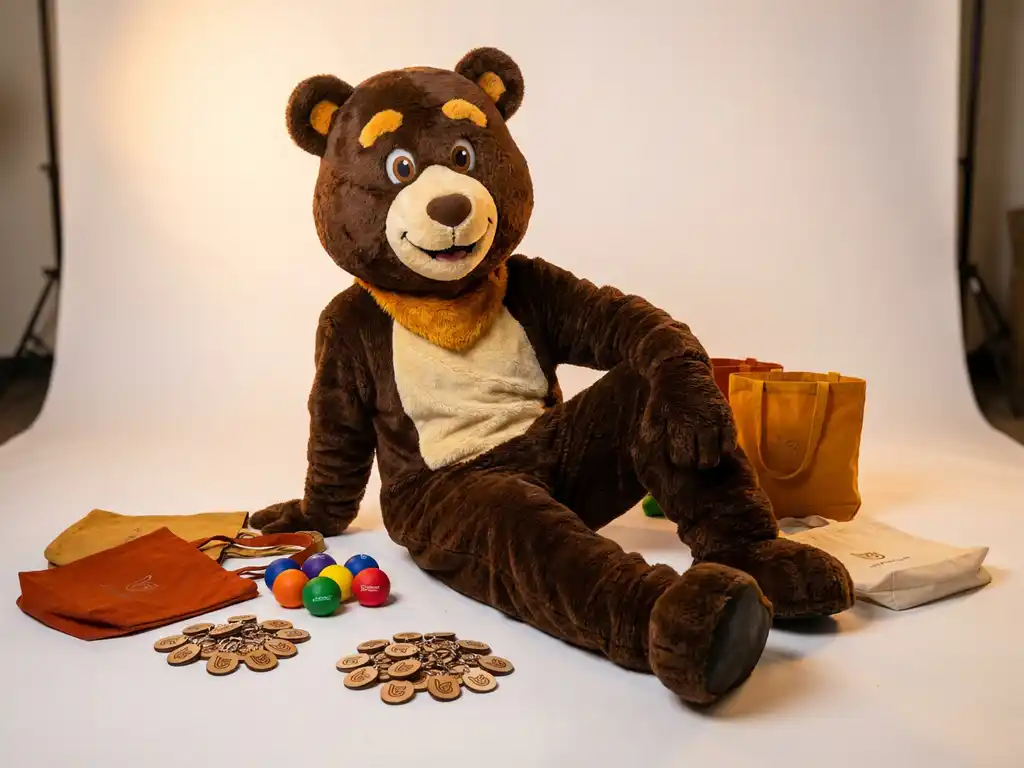
In business, swag refers to branded merchandise given away to promote a company, build goodwill, or increase brand visibility. The word is commonly used to describe any free item carrying a company’s logo or message, from pens and tote bags to custom stress balls and apparel. This article unpacks where the term comes from, what it really means, and how to make it work harder for your brand.
Where does the word swag come from in business?
The word swag in a business context evolved from older slang meaning a bundle of goods or loot, with roots tracing back to 18th-century English. In the promotional world, it came to describe the bags of branded freebies handed out at trade shows and corporate events. Over time, it became shorthand for any branded giveaway item a company distributes to promote itself.
The term gained significant momentum in Silicon Valley during the tech boom of the 1990s and 2000s, when startups began handing out branded T-shirts, water bottles, and gadgets at conferences. That culture spread quickly across industries, and today swag is a universally understood term in marketing and events circles worldwide.
It carries a casual, energetic connotation that sets it apart from more formal terms like “corporate gifts” or “promotional merchandise,” which is part of why it stuck. Swag feels generous and fun, which is exactly the impression companies want to leave.
Does swag stand for a specific acronym?
Swag is not officially an acronym, though several backronyms have been invented over the years. The most popular is Stuff We All Get, which describes the branded freebies handed out at events. Another version is Souvenirs, Wearables, and Gifts. These are clever constructions, but neither is the true origin of the word.
The acronym interpretations spread largely through office culture and social media because they feel fitting and memorable. They are useful shorthand for explaining the concept to someone unfamiliar with the term, but they were invented after the fact to match an already popular word, not the other way around.
So if someone asks whether swag is an acronym, the honest answer is: not originally, but the backronyms are widely used and widely understood.
What types of items count as business swag?
Business swag covers a broad range of branded items designed to be given away freely to customers, prospects, employees, or event attendees. Almost any physical item carrying a company’s logo or message qualifies, as long as it is intended to promote the brand rather than be sold as a product.
Common categories of company swag include:
- Wearables: T-shirts, hats, hoodies, lanyards, and socks
- Desk and office items: notebooks, pens, mouse pads, and custom stress balls
- Drinkware: branded mugs, water bottles, and tumblers
- Tech accessories: USB drives, phone stands, and wireless chargers
- Bags and carriers: tote bags, backpacks, and drawstring bags
- Fun and novelty items: keychains, stickers, plush toys, and inflatables
The best swag items share a few qualities: they are useful or enjoyable enough that recipients actually keep them, and they are branded clearly enough that the company stays visible every time the item is used.
What’s the difference between swag, merch, and promotional products?
Swag, merch, and promotional products all refer to branded physical items, but they differ in intent and context. Swag is given away for free to build brand awareness. Merch (short for merchandise) is typically sold to fans or customers who want to show affiliation with a brand. Promotional products is the formal industry term covering both, with an emphasis on items used in marketing campaigns.
Think of it this way: when a band sells a T-shirt at a concert, that is merch. When a software company hands out branded water bottles at a trade show, that is swag. When a marketing agency orders custom items to distribute as part of a product launch, those are promotional products. The lines between the three blur frequently in everyday conversation, which is why the terms are often used interchangeably.
For B2B marketers, the distinction matters mainly in terms of budget framing. Swag and promotional products are typically treated as marketing expenses, while merch can generate direct revenue and is sometimes managed as a separate product line.
Why do companies invest in branded swag?
Companies invest in branded swag because it creates tangible, lasting touchpoints with their audience that digital advertising simply cannot replicate. A well-chosen branded item sits on someone’s desk or travels in their bag for months, delivering repeated brand impressions at a fraction of the cost of ongoing ad spend.
The strategic reasons behind swag investment include:
- Brand recall: Physical items engage multiple senses and tend to be remembered far longer than a banner ad or email
- Goodwill and reciprocity: Receiving a gift, even a small one, creates a positive emotional association with the brand
- Event impact: Swag makes a company stand out at trade shows, conferences, and sponsorship activations
- Employee engagement: Branded items given to staff reinforce company culture and pride
- Word of mouth: Distinctive or high-quality swag gets noticed, photographed, and shared on social media
The return on investment from company swag is strongest when the items are genuinely useful or visually distinctive. Generic, low-quality giveaways often end up in the bin, which wastes budget and does nothing for brand perception.
What makes swag actually memorable and effective?
Memorable swag solves a problem, sparks a reaction, or reflects the brand’s personality in a way that feels intentional rather than generic. The most effective branded items are ones that recipients choose to keep, use regularly, or share with others because they genuinely enjoy them.
Effectiveness comes down to three factors: relevance to the audience, quality of production, and distinctiveness of the design. A beautifully made item that feels premium signals that the brand values quality. A design that is creative or unexpected gets attention and starts conversations. An item that fits naturally into the recipient’s daily life stays visible far longer than something that sits in a drawer.
Custom shapes and fully branded designs consistently outperform standard items with a simple logo print. When a piece of swag reflects the brand’s identity in three dimensions, rather than just stamping a logo onto a generic product, it becomes something people genuinely want to hold onto.
How Promo Bears helps you create company swag that people actually keep
At Promo Bears, we specialize in fully custom branded merchandise that goes well beyond the standard logo-on-a-pen approach. With over 19 years of experience in custom design and production, we help marketing managers and brand directors create swag that genuinely represents their brand and delivers lasting visibility.
Our custom stress balls are a standout example of swag done right. Unlike generic round stress balls with a one-color print, every piece we produce is:
- Fully custom-shaped to match your logo, mascot, or product concept
- Made from durable, high-quality PU foam with precise color matching
- Designed with free concept artwork and unlimited revisions until it is exactly right
- Available with a physical prototype for approval before bulk production begins
Production takes 10 to 12 weeks after design approval, with rush options available for time-sensitive campaigns. Every order is guided by a dedicated project manager from first sketch to final delivery, and we ship worldwide.
If you are ready to invest in company swag that people actually keep, request a free quote and let us show you what is possible.
Frequently Asked Questions
How much should a company budget for branded swag?
Swag budgets vary widely depending on quantity, item type, and campaign goals, but a useful starting point is to think in terms of cost-per-impression rather than upfront spend. A high-quality custom item that costs $10–$20 per unit but gets used daily for a year delivers far better ROI than a $1 throwaway that ends up in the trash. For trade shows, many companies allocate 10–20% of their total event budget to branded giveaways, while employee swag programs are often treated as a separate line item within HR or culture budgets.
What are the most common mistakes companies make when ordering swag?
The biggest mistake is prioritizing low unit cost over perceived value, which results in generic items that recipients discard immediately — wasting the entire budget. Other common pitfalls include ordering items that have no relevance to the target audience, underestimating production lead times (especially for fully custom pieces), and neglecting to plan a distribution strategy so the swag actually reaches the right people. Always factor in shipping timelines and request a physical prototype before committing to a full production run.
How far in advance should I order custom swag for an event or campaign?
For fully custom-shaped items, you should plan for a minimum of 10–12 weeks from design approval to delivery, which means starting the process at least 3–4 months before your event date. Standard promotional products with simple logo printing can often be turned around in 2–4 weeks, but custom shapes, color-matched materials, and prototype approvals all require additional lead time. Building in a buffer of two to three extra weeks is always a smart move to account for revision rounds or shipping delays.
Is custom-shaped swag only worth it for large order quantities?
Not necessarily — while unit costs do decrease with higher quantities due to tooling and production efficiencies, custom-shaped swag can be worthwhile even for mid-sized runs if the item will be used in high-value contexts, such as VIP gifting, executive events, or flagship product launches. The key question to ask is whether the impression the item makes justifies the per-unit investment. A smaller run of truly memorable swag will consistently outperform a massive run of forgettable generic items.
Can swag be used effectively for remote or virtual audiences, not just in-person events?
Absolutely — direct mail swag campaigns have become increasingly popular for engaging remote employees, virtual event attendees, and online customers. Sending a curated swag package directly to someone’s home or office creates a personal, tangible connection that stands out in an inbox-saturated world. The key is pairing the physical item with a clear message or campaign moment, such as a product launch, onboarding kit, or customer appreciation initiative, so the swag feels intentional rather than random.
How do I choose the right swag item for my specific audience?
Start by thinking about your audience’s daily environment and habits — a tech-savvy audience might appreciate a wireless charger or phone stand, while an outdoor or wellness-focused crowd might respond better to a branded water bottle or fitness accessory. The more closely the item maps to how your audience actually spends their time, the more likely it is to be kept and used. If you are unsure, a custom stress ball or novelty shaped item tied to your brand’s identity is a safe, universally appealing choice that also sparks curiosity and conversation.
What information do I need to have ready before requesting a custom swag quote?
To get the most accurate quote quickly, it helps to have a clear idea of your desired quantity range, your event or delivery deadline, and any existing brand assets such as your logo files, brand color codes, and any mascot or product imagery you want to incorporate. You should also have a general concept in mind — for example, whether you want a custom-shaped item, a specific product category, or a particular use case. Even if the concept is rough, a good supplier will work with you to refine it, so do not let an unfinished idea stop you from starting the conversation.