
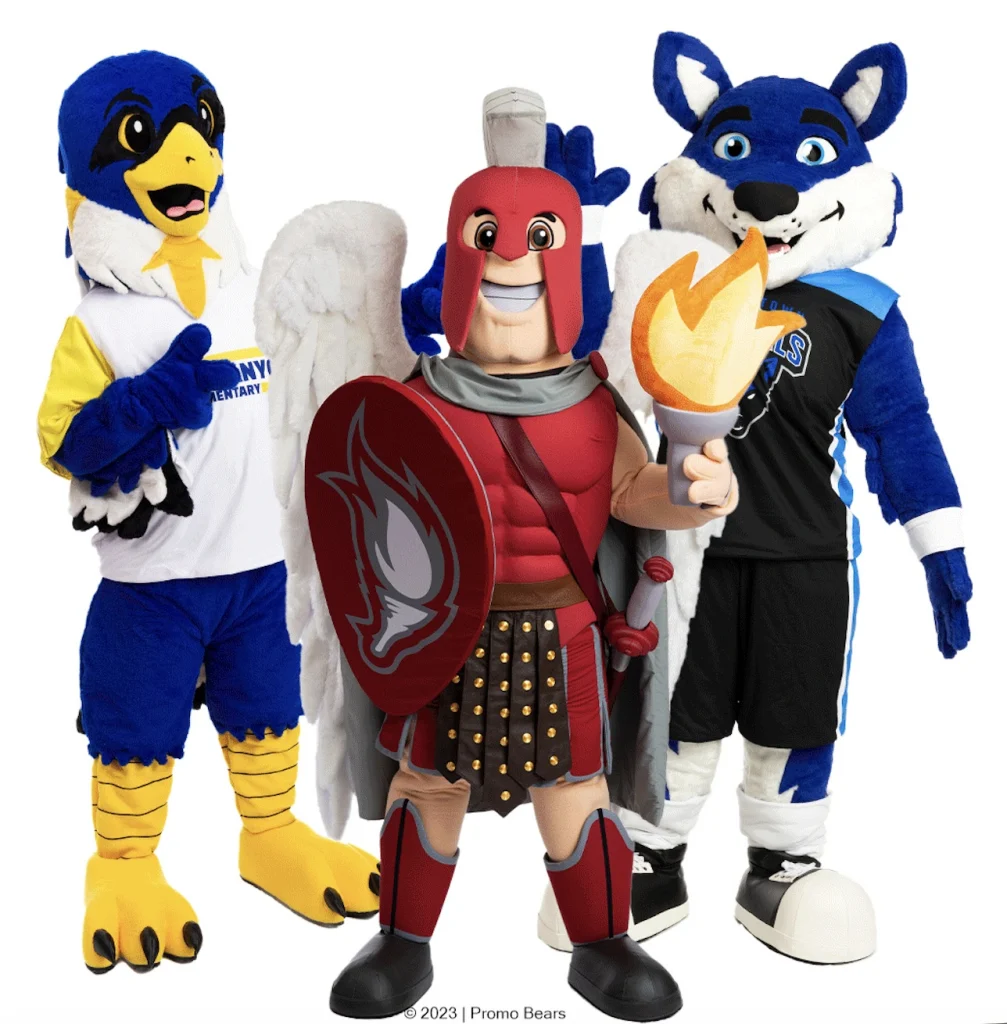
A brand mascot is a character, figure, or symbol that represents a company’s personality and values in a way that people can emotionally connect with. Unlike a logo or tagline, a mascot is relatable, memorable, and capable of building genuine affection for a brand over time. The sections below answer the most common questions brands ask before creating their own mascot.
How does a brand mascot differ from a logo?
A brand mascot and a logo both represent a company visually, but they serve very different purposes. A logo is a static graphic mark that identifies a brand. A mascot is a character with personality, expression, and movement that brings a brand to life. Where a logo signals recognition, a mascot builds an emotional connection and makes a brand feel human.
Think of a logo as the face of a company and a mascot as its voice and personality. A logo communicates “this is who we are” at a glance. A mascot communicates “this is how we feel” over time, through repeated interactions at events, in advertising, and on merchandise.
Mascots are also far more versatile in how they can be used. A logo sits on a product or a sign. A mascot can walk through a crowd, high-five fans at a game, hand out samples at a trade show, or star in a social media campaign. That range of expression is something a static mark simply cannot deliver.
What makes a mascot effective for brand recognition?
An effective brand mascot is distinctive, consistent, and emotionally resonant. The most recognizable mascots share a few core qualities: a clear visual identity that stands out in any environment, a personality that reflects the brand’s values, and the flexibility to appear across multiple formats without losing their character.
Consistency is perhaps the most important factor. A mascot that appears at every touchpoint, from packaging to live events to digital content, trains audiences to associate that character with the brand automatically. Over time, the mascot becomes a shortcut in the mind of the consumer, triggering brand recall faster than a name or logo alone.
Physical presence also plays a significant role. A mascot costume worn at events creates real, face-to-face moments that leave lasting impressions. Research in brand experience consistently shows that in-person interactions generate stronger emotional memories than passive advertising. A mascot that shakes hands, poses for photos, and interacts with people in real time is doing something no digital ad can replicate.
What types of mascots do brands use?
Brands use a wide range of mascot types depending on their industry, audience, and personality. The most common categories include animal characters, human characters, product-based characters, and abstract or creature-based figures. Each type carries different associations and works better in certain contexts.
- Animal mascots are the most universally popular. They are approachable, easy to anthropomorphize, and work across audiences of all ages. Bears, lions, eagles, and dogs are common choices for sports teams, schools, and consumer brands.
- Human characters give brands a relatable, person-like ambassador. They are often used in service industries or by brands that want to project a specific lifestyle or expertise.
- Product-based mascots literally bring a product to life, turning a food item, appliance, or object into a character. This approach reinforces product recognition while adding personality.
- Abstract or fantasy characters are invented creatures or figures that do not exist in nature. These give brands maximum creative freedom and can be made entirely unique, which makes them especially powerful for differentiation.
The right type depends on the brand’s audience and tone. A university might lean toward an animal mascot to build school spirit, while a tech company might prefer a sleek abstract character that signals innovation. The most important thing is that the mascot feels authentic to the brand rather than borrowed from a generic template.
How can a mascot increase customer engagement?
A brand mascot increases customer engagement by giving people something to interact with, share, and feel attached to. Characters naturally invite participation in ways that logos and slogans do not. People take photos with mascots, share those photos on social media, collect mascot merchandise, and remember the experience long after it happens.
At live events, a mascot costume transforms passive attendees into active participants. The mascot becomes a focal point that draws people in, creates shareable moments, and generates organic word-of-mouth. For brands that attend trade shows, sponsor community events, or run retail activations, this kind of spontaneous engagement is extremely difficult to manufacture through traditional advertising.
Beyond live events, mascots extend engagement through merchandise. Plush toys, stress balls, keychains, stickers, and other branded items featuring the mascot keep the character in front of customers long after the event is over. Every time someone uses a mascot-branded item, they are reinforcing their connection to the brand. This turns customers and fans into brand ambassadors without any additional marketing spend.
Which organizations benefit most from having a brand mascot?
Any organization that wants to build an emotional connection with its audience can benefit from a brand mascot, but certain sectors see particularly strong returns. Schools and universities, sports teams, consumer brands, retailers, entertainment companies, and non-profits are among the organizations that get the most value from a well-developed mascot strategy.
Schools and sports teams have used mascots for generations to build community identity and school spirit. The mascot becomes a symbol that unites students, alumni, and fans around a shared identity, and it shows up everywhere from uniforms to merchandise to social media.
For consumer-facing companies, especially in retail, food and beverage, and hospitality, a mascot adds a layer of personality that makes the brand feel more human and approachable. In competitive markets where product differentiation is difficult, a memorable character can be the factor that tips a consumer’s preference.
Non-profits and government organizations also benefit because mascots make serious messages more accessible. A mascot can help communicate important information in a way that feels friendly rather than institutional, which is especially valuable when the target audience includes children or community members who might otherwise disengage.
How do you create a custom mascot for a brand?
Creating a custom brand mascot starts with defining the character’s personality, values, and visual direction before any design work begins. The process moves from concept to illustration to production, and the most effective mascots are built through close collaboration between the brand and the design team. Rushing this stage leads to generic results that do not truly represent the brand.
- Define the character concept. Decide what the mascot should represent, what personality it should have, and how it should make people feel. Consider the audience, the brand’s tone, and the contexts where the mascot will appear.
- Develop a concept illustration. A skilled designer translates the concept into a visual character. This is the stage where the mascot’s look, proportions, colors, and expressions are established. Revisions at this stage are far easier than changes during production.
- Refine and approve the design. Review the illustration against the brand’s identity and the character brief. Make adjustments until the design feels completely right. Production should never begin until the design is fully approved.
- Select the product formats. Decide which physical forms the mascot will take. A full costume is the most impactful for live events, but plush toys, inflatables, stickers, and other merchandise extend the mascot’s reach into everyday life.
- Manage production and quality control. Work with a production partner who conducts thorough quality checks before shipping. For mascot costumes, this includes verifying comfort, ventilation, appearance, and durability.
The timeline for mascot production varies by product type. A full custom mascot costume typically takes 12 to 16 weeks from design approval to delivery. Giant mascot inflatables can be ready in 3 to 4 weeks, while mascot stickers take approximately 4 weeks. Planning ahead ensures the mascot is ready when it is needed most.
How Promo Bears helps you build a powerful brand mascot
We specialize in bringing brand mascots to life across every format your organization needs. Whether you are starting from scratch or expanding an existing character into new products, we offer a complete end-to-end service that covers everything from the first concept sketch to final delivery.
Here is what working with us looks like:
- A free concept illustration based on your logo or design idea, with unlimited revisions until the design is exactly right
- Custom mascot costumes featuring 3D realistic eyes, a built-in ventilation system, and exceptional comfort, ready in 12 to 16 weeks
- A full range of mascot merchandise including plush toys, stress balls, inflatables, keychains, stickers, and more
- A dedicated project manager who oversees every step from design approval to delivery
- Rigorous quality control with result photos shared for your final approval before shipping
We have created over 4,000 mascots for organizations ranging from schools and sports teams to globally recognized brands like NASA, Amazon, and Red Bull. If you are ready to give your brand a character that people will remember, get your free quote and let us show you what is possible.
Frequently Asked Questions
How much does it typically cost to create a custom brand mascot?
The cost of a custom brand mascot varies depending on the type and number of products you need. A full custom mascot costume is the most significant investment due to the materials, craftsmanship, and production time involved, while merchandise items like plush toys, stickers, and inflatables are considerably more affordable. The best approach is to request a free quote based on your specific needs, as pricing depends on design complexity, quantity, and product format. Thinking of your mascot as a long-term brand asset rather than a one-time expense helps put the investment in perspective, since a well-built mascot can deliver value across events, merchandise, and marketing for years.
What if I don't have a mascot concept yet — can I still get started?
Absolutely — you don’t need a fully formed idea to begin the process. A skilled mascot design team can develop a concept from as little as your logo, brand colors, or a general description of your organization’s personality and values. The discovery phase is specifically designed to help brands that are starting from scratch, and a good design partner will ask the right questions to guide you toward a character that feels authentic. Starting with a free concept illustration is a low-risk way to explore possibilities before committing to full production.
How do I make sure my mascot stays consistent across different formats and products?
Consistency starts with a fully approved master design that establishes the mascot’s proportions, colors, expressions, and key features before any products are made. This design serves as the reference standard for every format, whether it’s a costume, a plush toy, a sticker, or a digital graphic. Working with a single production partner who manages all your mascot products is the most reliable way to ensure consistency, since they can apply the same design standards across every item. Avoid sourcing different mascot products from multiple vendors, as variations in interpretation can gradually erode the character’s visual identity.
How do I introduce a new mascot to my audience effectively?
A strong mascot launch combines a live debut with a coordinated digital rollout to maximize reach and impact. Introducing the mascot at a high-attendance event — such as a game, a grand opening, or a community gathering — creates an immediate, memorable first impression that generates organic social sharing. Simultaneously, releasing the mascot across your social media channels with behind-the-scenes content, a name reveal, or an origin story builds anticipation and gives your online audience a reason to engage. The goal is to make the mascot feel like an event in itself, not just a new logo variation.
Can a mascot work for a B2B brand, or is it only effective for consumer-facing companies?
Mascots can absolutely work for B2B brands, though the strategy looks slightly different than it does for consumer companies. In B2B contexts, mascots are particularly effective at trade shows and industry conferences, where standing out in a crowded exhibit hall is a genuine challenge and a mascot costume draws foot traffic naturally. They also humanize a brand in sales materials, email campaigns, and company culture initiatives, making the organization feel more approachable to potential clients and partners. The key is designing a character whose personality aligns with the professional tone of the industry rather than defaulting to a cartoonish or overly playful style.
What are the most common mistakes brands make when creating a mascot?
The most common mistake is rushing the design phase to meet a deadline, which often results in a generic character that could belong to any brand rather than one that feels distinctly yours. Another frequent misstep is failing to think through all the contexts where the mascot will appear — a design that looks great on a banner may not translate well into a wearable costume or a small sticker. Brands also sometimes neglect to establish usage guidelines, leading to inconsistent depictions of the mascot over time. Taking the time to fully develop the character concept, approve a final design, and document how the mascot should and should not be used will prevent these problems from the start.
How do I measure whether my mascot is actually working?
Mascot effectiveness can be measured through both quantitative and qualitative signals across your marketing channels. On the quantitative side, track social media engagement rates on posts featuring the mascot versus those without it, monitor merchandise sales, and measure foot traffic or interaction rates at events where the mascot appears. Qualitatively, pay attention to whether customers mention the mascot in reviews, tag the brand in photos with the character, or reference it in conversations — these are strong indicators of genuine emotional connection. Over time, brand recall surveys can also reveal whether your audience associates the mascot with your organization, which is the clearest measure of long-term mascot success.