
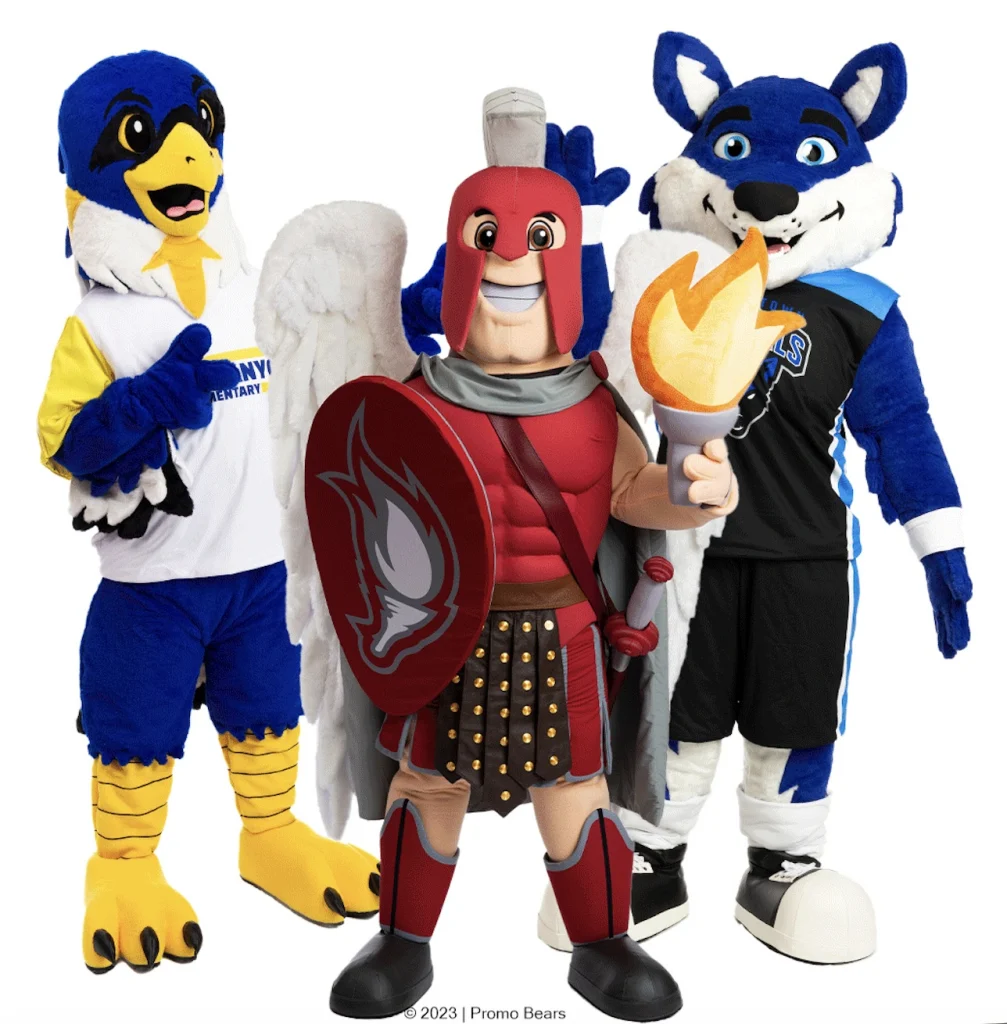
A great example of a brand mascot is the Geico Gecko, a friendly animated lizard that has become one of the most recognizable brand mascots in American history. Other iconic examples include Tony the Tiger (Kellogg’s), the Michelin Man, and Ronald McDonald. What makes these mascots so effective is their ability to give a brand a personality that people remember, trust, and connect with emotionally.
Brand mascots work across virtually every industry, from food and beverage to insurance and sports, because they translate abstract brand values into a face that audiences can relate to. The sections below unpack what separates a great mascot from a forgettable one, why major brands invest in them, and how you can create one for your own organization.
What makes a brand mascot successful?
A successful brand mascot is memorable, consistent, and emotionally resonant. It has a clear personality that reflects the brand’s values, a distinctive visual identity that stands out across different formats, and the flexibility to appear across multiple touchpoints without losing its impact. The best mascots feel like characters, not just logos with faces.
Several qualities consistently separate high-performing mascots from those that fade into the background:
- A distinct personality: Whether it is playful, authoritative, or warm, the mascot’s character should mirror what the brand stands for.
- Visual simplicity: The design needs to be bold enough to work on a billboard and small enough to read on a keychain.
- Emotional connection: The most beloved mascots make people feel something, whether that is nostalgia, excitement, or trust.
- Consistency over time: Mascots that evolve gradually while keeping their core identity intact build stronger recognition than those that are redesigned too frequently.
- Versatility: A strong mascot works in costume form at live events, as a plush toy in a store, and as a digital character in social media campaigns.
Brands that invest in mascots with these qualities tend to see stronger audience retention and more organic word of mouth because the character becomes a shorthand for everything the brand represents.
What are the most famous brand mascots of all time?
The most famous brand mascots of all time include Tony the Tiger (Kellogg’s Frosted Flakes), the Michelin Man (Michelin), Ronald McDonald (McDonald’s), the Geico Gecko, Mr. Clean, and the Pillsbury Doughboy. These characters have endured for decades because they are deeply embedded in popular culture and consistently reinforced across advertising, packaging, and live experiences.
Tony the Tiger, introduced in 1952, is arguably the gold standard for mascot longevity. His confident, energetic personality has stayed relevant across generations by evolving with the times while keeping his core identity intact. The Michelin Man, known as Bibendum, dates back to 1898 and remains one of the oldest continuously used brand mascots in the world, proving that a well-designed character can outlast entire marketing eras.
In the sports world, mascots like the Philadelphia Phillies’ Phillie Phanatic and the San Diego Chicken have become cultural institutions in their own right, drawing as much fan attention as the teams themselves. These examples show that a brand mascot is not limited to consumer goods. Any organization with an audience can benefit from a character that fans rally around.
Why do so many big brands use mascots?
Big brands use mascots because they create an immediate, human connection that logos and taglines alone cannot achieve. A mascot gives a brand a face, a voice, and a personality, making it easier for consumers to form an emotional bond. Research in consumer psychology consistently shows that people respond more strongly to characters than to abstract symbols or corporate identities.
There are several practical reasons why major organizations continue to invest in mascots year after year:
- Faster brand recognition: A distinctive character is processed more quickly by the brain than text or abstract imagery, which means faster recall at the point of purchase.
- Cross-channel flexibility: A mascot can appear in TV commercials, on product packaging, at live events in costume form, and across social media without losing coherence.
- Audience appeal across age groups: Characters resonate with children and adults alike, making them especially powerful for brands that serve broad demographics.
- Differentiation in crowded markets: In categories where products are similar, a mascot becomes a key differentiator that keeps one brand top of mind over competitors.
- Long-term brand equity: A well-managed mascot builds equity over time. The longer it is used consistently, the more recognition and trust it accumulates.
For marketing managers and brand directors who need to justify ROI on brand investments, mascots offer a measurable return through improved recall, stronger engagement at events, and increased merchandise revenue.
What’s the difference between a brand mascot and a brand logo?
A brand logo is a static visual mark that identifies a company, while a brand mascot is a character with personality, movement, and emotional depth. The logo communicates identity; the mascot communicates character. Both serve brand recognition, but they operate on different levels of audience engagement.
Think of the Nike Swoosh versus a sports team’s costumed mascot. The Swoosh is instantly recognizable and carries enormous brand equity, but it does not interact with fans at games, appear in skits, or get hugged by children at community events. A mascot does all of those things, creating experiences that a logo simply cannot replicate.
The two are not mutually exclusive. Many of the most successful brand identities use both: a clean, scalable logo for professional communications and a mascot character for experiential marketing, merchandise, and audience engagement. When the mascot is designed with the brand’s visual language in mind, the two elements reinforce each other naturally.
What types of organizations benefit most from a brand mascot?
Organizations that benefit most from a brand mascot are those that need to build emotional connections with a specific audience over time. This includes sports teams, schools and universities, consumer brands, retail companies, entertainment organizations, nonprofits, and event-driven businesses. Any organization where audience loyalty and engagement are strategic priorities is a strong candidate for a mascot.
Sports teams are the most obvious example because mascots are central to fan culture and game-day experience. But the value extends far beyond athletics. Universities use mascots to build school spirit and alumni identity. Retail brands use them to create memorable in-store experiences. Nonprofits use them to humanize their cause and make outreach more approachable.
In the corporate world, companies in sectors like hospitality, FMCG, and entertainment find that a mascot helps them stand out at trade shows, community events, and product launches in ways that standard branded materials simply cannot match. A mascot in costume form at a live event creates a photo opportunity, a social media moment, and a lasting memory that a banner or brochure never will.
How do you create a custom mascot for your brand?
Creating a custom mascot starts with defining the character’s personality, then translating that personality into a visual design, and finally producing the mascot across the formats you need, whether that is a costume, plush toy, inflatable, or digital asset. The process works best when the mascot is rooted in your brand’s existing identity rather than designed in isolation.
Here is how the process typically unfolds:
First, define what your mascot should communicate. Consider your audience, your brand values, and the emotional tone you want the character to carry. A mascot for a children’s hospital should feel warm and reassuring. A mascot for a sports brand should feel energetic and bold.
Second, work with experienced mascot designers who can translate that brief into a visual concept. The best partners will provide a free concept illustration based on your logo or design idea, with revisions until the design is exactly right, before any production commitment is made.
Third, choose the formats that match your use cases. A custom mascot costume is ideal for live events and appearances. Mascot merchandise such as plush toys, keychains, and stickers extends the character into everyday touchpoints. Giant inflatables make an impact at outdoor events and stadium entrances.
Production timelines vary by product. A custom mascot costume typically takes 12 to 16 weeks. Giant mascot inflatables are ready in 3 to 4 weeks. Plush toys generally take 12 to 18 weeks depending on production and shipping method. Planning ahead ensures your mascot is ready when you need it most.
How Promo Bears helps you bring your brand mascot to life
We specialize in turning brand identities into fully realized mascot characters, with over 19 years of experience and more than 4,000 custom mascots created for organizations across North America and beyond. Whether you are starting from scratch or ready to expand an existing mascot into new formats, we offer end-to-end support from concept to delivery.
Here is what working with us looks like:
- Free concept illustration: Every project starts with a no-commitment design based on your logo or brief, with unlimited revisions until the design is exactly right.
- Custom mascot costumes: Built for comfort, ventilation, and visual impact, with lifelike 3D eyes and a production timeline of 12 to 16 weeks.
- Mascot merchandise: Extend your character into plush toys, stress balls, keychains, stickers, and more, all custom-shaped and color-matched to your brand.
- Giant inflatables: Ready in 3 to 4 weeks, perfect for outdoor events, stadium entrances, and high-visibility brand moments.
- Dedicated project management: A single point of contact oversees your project from design approval through quality control and delivery.
If you are ready to give your brand a face that people remember, we would love to show you what is possible. Get your free concept illustration and a fixed quote based on your exclusive design today.
Frequently Asked Questions
How much does it typically cost to create a custom brand mascot?
The cost of a custom brand mascot varies depending on the format and complexity of the project. A custom mascot costume generally represents the largest investment due to materials, craftsmanship, and production time, while mascot merchandise items like plush toys or keychains are available at lower per-unit costs, especially at higher quantities. The best approach is to request a free concept illustration and fixed quote from your mascot partner before committing, so you know exactly what you are getting and at what price with no surprises.
What if I don't have a mascot design yet — can I still get started?
Absolutely. Many organizations come to mascot creators with nothing more than a brand brief, a logo, or a rough idea of the personality they want to convey. A reputable mascot design partner will translate that input into a concept illustration at no cost, giving you a visual starting point before any production commitment is made. From there, you can refine the design through revisions until the character feels exactly right for your brand.
How do I make sure my mascot stays relevant over time and doesn't feel outdated?
The key is to build a mascot with a strong, timeless core identity while allowing for subtle, gradual evolution rather than dramatic redesigns. Iconic mascots like Tony the Tiger have remained relevant for over 70 years by modernizing their visual style incrementally without abandoning the personality traits that made them recognizable in the first place. Regularly deploying your mascot across new channels — such as social media, live events, and digital content — also keeps the character fresh and visible to new audiences.
Can a small business or startup benefit from a brand mascot, or is this only for large companies?
Brand mascots are just as effective for small businesses and startups as they are for large corporations — in fact, they can be an even more powerful differentiator when you are trying to stand out in a crowded local market or build a loyal customer base from scratch. A well-designed mascot gives a smaller brand a memorable identity and a personality that larger, more corporate competitors often lack. Starting with a single format, such as a plush toy or a digital mascot for social media, allows you to introduce the character without a large upfront investment.
What common mistakes should I avoid when creating a brand mascot?
The most common mistakes include designing a mascot that does not align with the brand’s core values, creating a visual design that is too complex to scale across different formats, and launching a mascot without a clear plan for how it will be used consistently over time. Another frequent pitfall is redesigning the mascot too aggressively or too soon, which disrupts the recognition equity you have already built. Working with experienced mascot designers from the start and committing to a consistent deployment strategy will help you avoid most of these issues.
How should I use my mascot across different marketing channels to maximize its impact?
The most effective mascot strategies deploy the character consistently across every relevant touchpoint: in costume at live events and community appearances, as merchandise that fans and customers can take home, on social media through animated content or branded posts, and on product packaging or marketing materials. Each format reinforces the others, building cumulative recognition over time. Prioritize the channels where your target audience is most active, then expand into additional formats as your mascot gains traction.
What should I look for when choosing a mascot production company?
Look for a partner with a proven portfolio of custom mascots across multiple formats, a transparent design process that includes revisions before production begins, and clear communication about timelines, quality standards, and what is included in the price. Experience matters significantly in mascot production because the craftsmanship of a costume or the accuracy of a plush toy directly affects how your brand is perceived in the real world. A company that offers a free concept illustration with no commitment upfront is a strong signal that they are confident in their work and focused on getting the design right before asking for your investment.