
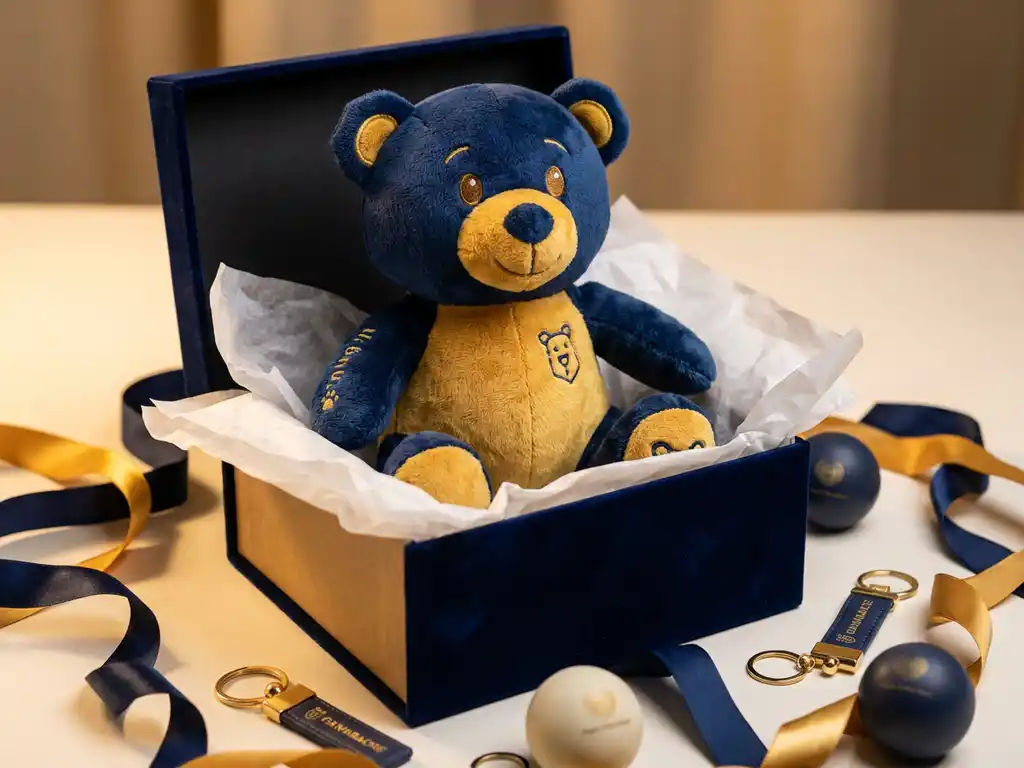
A corporate gift is any item a company gives to clients, employees, partners, or stakeholders to express appreciation, strengthen relationships, or reinforce brand identity. These gifts range from practical everyday items to premium branded merchandise, and they serve a clear business purpose: building goodwill and keeping your brand front of mind. Below, we answer the most common questions about corporate gifting to help you make smarter decisions for your brand.
What types of items count as corporate gifts?
Corporate gifts include any item given by a business to a client, employee, partner, or prospect in a professional context. This covers a broad spectrum: branded merchandise, premium food and drink hampers, tech accessories, personalised stationery, experience vouchers, and custom promotional products. The defining factor is intent – the item is given to build or maintain a business relationship.
In practice, corporate gifts tend to fall into a few clear categories:
- Branded merchandise: Items featuring your logo or brand identity, such as custom stress balls, tote bags, mugs, or notebooks
- Premium gifts: Higher-value items like tech accessories, leather goods, or curated gift sets for key clients
- Experiential gifts: Event tickets, spa vouchers, or dining experiences that create memorable moments
- Edible gifts: Branded confectionery, hampers, or beverages often used during the holiday season
- Personalised keepsakes: Custom-engraved or fully tailored items that reflect the recipient’s role or interests
The common thread across all of these is that they carry a message beyond the item itself: your company values the relationship enough to invest in it.
What is the difference between a corporate gift and a promotional product?
The key difference between a corporate gift and a promotional product is the audience and purpose. Corporate gifts are given to specific individuals – clients, employees, or partners – to nurture existing relationships. Promotional products are distributed broadly to raise brand awareness, often at events, trade shows, or as part of marketing campaigns.
Think of it this way: a branded pen handed out at a trade show is a promotional product. That same pen, personalised and presented in a gift box to a long-term client, becomes a corporate gift. The item can be identical – the context and intention are what distinguish them.
Corporate gifts tend to have a higher perceived value and are often more personalised. Promotional products prioritise reach and volume. Both play important roles in a brand strategy, but they serve different moments in the customer relationship.
Who typically receives corporate gifts?
Corporate gifts are most commonly given to clients, employees, and business partners. Beyond these core groups, companies also send gifts to prospects they want to convert, vendors who support their operations, and key stakeholders such as investors or board members.
The occasion often shapes who receives a gift. End-of-year gifting programmes typically target long-term clients and staff. New business wins might prompt a welcome gift to a newly signed client. Employee milestones – work anniversaries, promotions, or outstanding performance – are natural moments for internal gifting.
In B2B contexts, gifting is often strategic. Decision-makers and senior contacts at partner organisations are prime recipients because maintaining those relationships directly impacts business outcomes. The goal is always to make the recipient feel genuinely valued, not just marketed to.
What makes a corporate gift effective for brand recognition?
An effective corporate gift for brand recognition is useful, well-made, and closely tied to your brand identity. When a recipient uses the item regularly, your brand stays visible in their daily environment – which is the core mechanism behind gifting as a brand-building tool.
Several factors determine whether a corporate gift actually moves the needle on brand recognition:
- Relevance to the recipient: A gift that fits the recipient’s lifestyle or professional context gets used more often, increasing brand exposure.
- Quality of the item: A well-crafted gift reflects positively on your brand. A cheap or poorly made item does the opposite.
- Distinctiveness: Generic gifts are forgotten quickly. Fully custom items – like a stress ball shaped after your brand mascot or product – create a lasting impression that standard merchandise simply cannot match.
- Consistent branding: Colour, logo placement, and overall design should align with your brand guidelines so the item feels like a natural extension of your identity.
- Emotional resonance: Gifts that surprise or delight the recipient create a positive emotional association with your brand that lingers long after the moment of giving.
The most effective corporate gifts are the ones that recipients keep on their desks, carry in their bags, or share with colleagues – turning a single gift into ongoing brand visibility.
How much should a company spend on corporate gifts?
There is no universal rule for corporate gift budgets, but most companies calibrate spend based on the value of the relationship. A token gift for a broad client base might sit between £10 and £30 per item, while a premium gift for a top-tier client or key partner could justify £50 to £150 or more.
A few practical considerations help guide the decision:
- Relationship tier: Invest more in high-value clients and strategic partners than in general contacts.
- Volume vs. value: A large-scale gifting programme for hundreds of recipients calls for a different budget model than a curated selection of premium gifts for a short list of VIPs.
- Tax and compliance rules: In many markets, corporate gifts above a certain value must be declared or may be subject to tax. Check local regulations before setting your budget.
- ROI framing: Think of gifting as an investment in retention and loyalty, not just an expense. A well-chosen gift that keeps a valued client engaged is often worth far more than its price tag.
The most important thing is that the gift feels considered and appropriate – not that it hits a specific price point. A thoughtful, fully custom item at a modest cost often outperforms an expensive but generic one.
What are the best corporate gift ideas for companies in 2026?
The best corporate gifts in 2026 are those that combine practicality, personalisation, and strong brand visibility. As gifting becomes more competitive, companies are moving away from generic items toward fully custom merchandise that genuinely reflects their brand and resonates with recipients.
Some of the strongest options for this year include custom stress balls shaped to your brand or mascot design, branded tech accessories like wireless chargers or earbuds, sustainable items such as reusable bottles or eco-friendly notebooks, and custom plush toys or mascot merchandise for brands with a strong visual identity. Experiences – whether virtual or in-person – also continue to perform well as premium gifts for senior contacts.
The trend is clearly toward items that tell a brand story rather than simply carry a logo. Recipients are more likely to keep and use a gift that feels unique to the brand giving it, which means custom shapes, specific colour matching, and thoughtful design are no longer optional extras – they are the standard that effective corporate gifting demands.
How Promo Bears helps with corporate gifting
We specialise in fully custom promotional products that go far beyond the standard branded giveaway. For companies looking to make a real impression with their corporate gifts, our range covers everything from custom mascot costumes and giant inflatables to smaller merchandise that carries serious brand impact.
One of our most popular corporate gift solutions is our custom stress balls, which are crafted 100% to your specifications. Unlike off-the-shelf options with a simple logo print, our stress balls are precision-moulded in any shape you need – your product, mascot, logo, or a completely original concept – using durable PU foam with specific PMS colour matching for perfect brand consistency.
Here is what makes our custom stress balls stand out as a corporate gift:
- Fully custom shapes based on your own design or concept
- Specific PMS colour matching for precise brand accuracy
- Free concept artwork with unlimited revisions before production begins
- Option to approve a physical prototype before committing to your full order
- Production completed in 10 to 12 weeks after design approval, with rush options available
- Worldwide shipping to clients across the USA, Canada, Europe, Australia, and beyond
- A dedicated project manager guiding every order from concept to delivery
Whether you are planning a large-scale gifting campaign or a targeted run of premium branded merchandise, we are ready to bring your idea to life. Request a free quote today and find out how we can turn your brand into something recipients will actually want to keep.
Frequently Asked Questions
How far in advance should we order custom corporate gifts?
For fully custom items like precision-moulded stress balls or branded merchandise, you should plan at least 14–16 weeks ahead to allow time for design, artwork revisions, prototype approval, and production. Standard production alone typically runs 10–12 weeks after design sign-off, so factoring in lead time is critical — especially for seasonal campaigns like end-of-year gifting. If you’re working with a tighter deadline, ask your supplier about rush production options, though these may carry an additional cost.
What are the most common mistakes companies make with corporate gifting?
The most common mistake is choosing gifts based on price or convenience rather than relevance and quality — a cheap, generic item can actually damage brand perception rather than strengthen it. Another frequent misstep is leaving gifting too late, which forces rushed decisions and limits customisation options. Companies also sometimes overlook the importance of packaging and presentation; even a well-chosen gift loses impact when it arrives in plain, unbranded packaging with no personalised message.
How do we handle corporate gifting across different countries and cultures?
Cultural awareness is essential in international corporate gifting — what is considered a thoughtful gesture in one country can be inappropriate or even offensive in another. Research local customs around gift-giving etiquette, acceptable value thresholds, and any items that carry negative symbolism in specific cultures before placing your order. Working with a supplier that offers worldwide shipping and has experience fulfilling international orders can also simplify logistics significantly and help ensure gifts arrive on time and in perfect condition.
Can we order corporate gifts in small quantities, or is there a minimum order requirement?
Minimum order quantities (MOQs) vary depending on the type of product and the level of customisation involved. Fully custom items — such as precision-moulded stress balls in a unique shape — typically require a higher MOQ to justify the tooling and production setup costs, making them most cost-effective for mid-to-large gifting programmes. If you need a smaller run for a targeted VIP list, it’s worth discussing your requirements directly with your supplier, as some offer tiered pricing or can advise on the most cost-efficient approach for your specific volume.
How do we measure the ROI of a corporate gifting programme?
Measuring gifting ROI starts with defining what success looks like before you launch — whether that’s client retention rates, repeat purchase frequency, employee satisfaction scores, or new business conversion from prospects who received a gift. Tracking these metrics before and after a gifting campaign gives you a clear picture of its business impact. Qualitative feedback is equally valuable; a simple follow-up message asking recipients about the gift can reveal how it was received and strengthen the relationship further.
Is it possible to get a physical sample or prototype before committing to a full order?
Yes, and for fully custom items this step is strongly recommended. Approving a physical prototype before production begins allows you to verify the shape accuracy, colour matching, material quality, and overall finish — ensuring the final product genuinely reflects your brand standards. Reputable custom merchandise suppliers, including Promo Bears, offer prototype approval as a standard part of the process, giving you complete confidence before your full order goes into production.
What information do we need to provide to get started with a custom corporate gift order?
To kick off a custom order, you’ll typically need to share your brand guidelines (including logo files and PMS colour references), a brief describing the item you have in mind, your target quantity, and your required delivery date. If you have a specific shape or concept in mind — such as a product replica or mascot design — reference images or sketches are helpful even at an early stage. Most suppliers will handle the rest, including concept artwork and revisions, so you don’t need a finished design to request a quote and start the conversation.