
Marketing budgets are precious, and every product you put your brand on should work hard for your business. Whether you are planning a trade show giveaway, stocking your online store, or building a loyalty campaign, you have probably come across the terms promotional products and branded merchandise used interchangeably. But they are not quite the same thing, and understanding the difference can help you make smarter decisions for your brand.
This guide breaks down both concepts clearly, answers the questions marketers ask most often, and helps you determine which approach best fits your goals.
What are promotional products, and how are they defined?
Promotional products are branded items given away for free to raise awareness, generate leads, or drive a specific marketing action. They are tools of persuasion, not products for sale. A pen with your logo at a trade show, a tote bag handed out at a community event, or a stress ball sent as part of a direct mail campaign are all classic examples of promotional products in action.
The defining characteristic is intent. Promotional products exist to create a touchpoint between a brand and its audience. They are typically low-cost per unit, produced in high volumes, and distributed at no charge. Their value lies in visibility and recall, keeping your brand top of mind long after the initial interaction.
Industries from healthcare and education to retail and sports have relied on promotional products for decades because they offer something digital advertising cannot: a physical, tangible connection with the recipient. When someone holds, uses, or wears something with your logo on it, your brand enters their daily life in a very real way.
What is branded merchandise, and what makes it different?
Branded merchandise refers to products that carry a brand’s identity and are typically sold rather than given away for free. Think of a sports team’s jersey, a coffee brand’s reusable cup, or a tech company’s hoodie available in its online store. These items generate revenue while simultaneously acting as walking advertisements for the brand.
What sets branded merchandise apart is perceived value. Recipients or buyers actively want the item, not just the brand exposure it delivers. This means the quality bar is higher, the design investment is greater, and the product often becomes part of the customer’s identity. Wearing a brand’s merchandise signals affiliation, loyalty, or aspiration.
Branded merchandise also tends to have a longer lifecycle. A high-quality branded item purchased by a fan or loyal customer will be used far more frequently and for far longer than a free giveaway item, multiplying the number of brand impressions it generates over time.
What is the difference between promotional products and branded merchandise?
The core difference between promotional products and branded merchandise comes down to purpose, pricing, and perceived value. Promotional products are free giveaways designed to drive awareness or a specific action. Branded merchandise is sold to consumers and builds deeper brand affinity while generating revenue.
Here is a clear side-by-side breakdown:
- Distribution: Promotional products are given away; branded merchandise is sold.
- Primary goal: Promotional products drive awareness or leads; branded merchandise builds loyalty and generates income.
- Perceived value: Branded merchandise carries higher perceived value because people choose to spend money on it.
- Design investment: Branded merchandise typically demands higher design and production quality.
- Audience relationship: Promotional products reach broad audiences; branded merchandise targets existing fans and loyal customers.
- Lifecycle: Branded merchandise tends to have a longer useful life and generates more impressions over time.
That said, the line between the two can blur. A high-quality custom stress ball given away at a corporate event can carry the perceived value of branded merchandise if it is well designed and genuinely useful. The distinction matters most when you are setting your strategy and budget, not when you are choosing the actual product.
Which is better for brand recognition: promotional products or branded merchandise?
Both approaches build brand recognition, but they do so at different stages of the customer relationship. Promotional products are better for reaching new audiences quickly and at scale. Branded merchandise is better for deepening recognition among people who already know and love your brand.
If your goal is to introduce your brand to as many people as possible, promotional products win on reach and cost efficiency. A well-chosen giveaway at a large event can put your brand in front of hundreds or thousands of people in a single day. The key is choosing items that people will actually keep and use, because a discarded giveaway generates zero impressions.
Branded merchandise, on the other hand, turns customers into ambassadors. When someone buys and wears your branded item in public, they are endorsing your brand to everyone they encounter. This kind of organic, word-of-mouth exposure is difficult to replicate with paid advertising and carries a level of social proof that traditional promotional products cannot match.
For most brands, the smartest strategy combines both. Use promotional products to attract and engage new audiences, and offer branded merchandise to reward and amplify your most loyal customers.
What types of products work best for both categories?
The most effective products for both categories are items that are genuinely useful, visually appealing, and closely associated with the brand’s identity. Utility drives usage, and usage drives impressions.
Top performers in the promotional products category
Items that work particularly well as promotional giveaways tend to be compact, practical, and easy to distribute. Strong performers include:
- Custom stress balls and tactile desk items
- Branded tote bags and reusable drinkware
- Keychains, lanyards, and badge holders
- Pens, notebooks, and stationery
- Branded stickers and patches
Top performers in the branded merchandise category
Branded merchandise that sells well tends to have strong lifestyle appeal and premium quality. Successful categories include apparel such as T-shirts, hoodies, and caps, as well as limited-edition collectibles, plush toys, and high-end accessories. The product needs to feel like something worth owning, not just something that happens to have a logo on it.
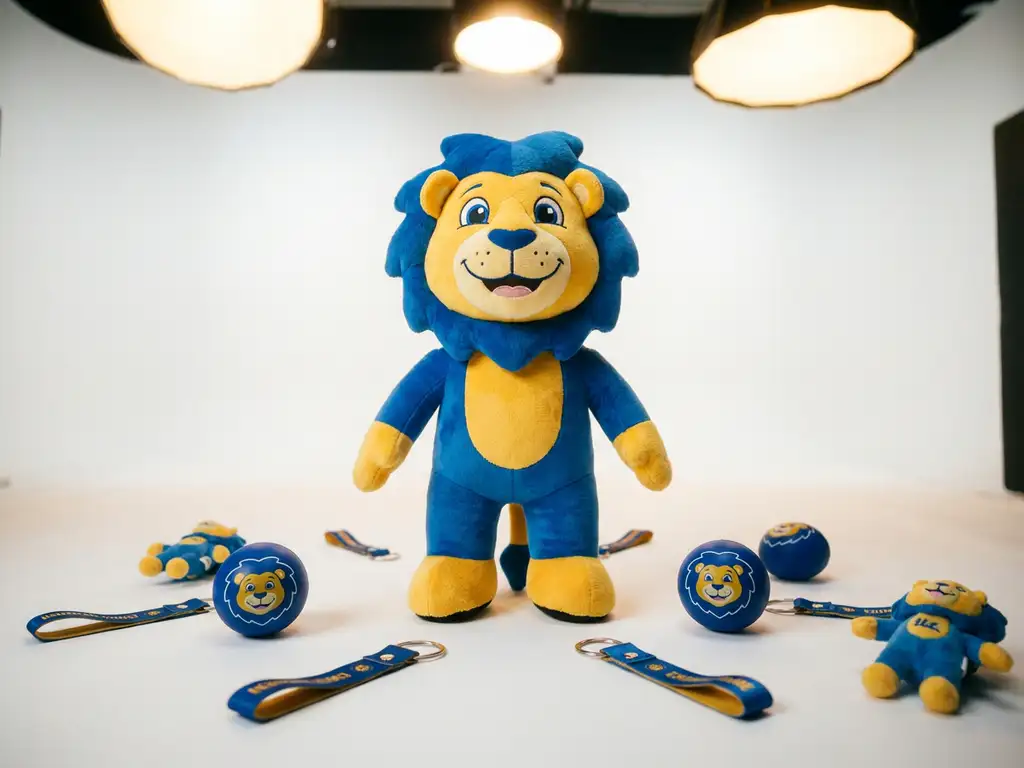
Custom plush toys and mascot merchandise sit interestingly in both worlds. They can be given away as premium promotional items at events or sold as branded collectibles in a merchandise store, making them among the most versatile product types available.
How do you choose the right promotional or branded products for your brand?
Choosing the right products starts with three questions: Who is your audience? What action do you want them to take? And what impression do you want to leave? Your answers will guide every other decision, from product type and quantity to budget and design approach.
Follow this process to make confident decisions:
- Define your goal: Are you driving awareness, rewarding loyalty, generating leads, or creating revenue? Each goal points to a different product strategy.
- Know your audience: A product that resonates with university students will not necessarily work for corporate executives. Match the item to the lifestyle and preferences of the recipient.
- Prioritize utility and quality: Products that get used generate ongoing impressions. Invest in quality that reflects well on your brand rather than choosing the cheapest option available.
- Align with your brand identity: The product, its shape, color, and design should feel like a natural extension of your brand, not an afterthought.
- Consider the context: A trade show giveaway has different requirements than a customer loyalty gift or an event merchandise item. Context shapes everything from size and weight to packaging.
- Work with a partner who offers free concept artwork: Before committing to a bulk order, you should be able to see exactly what your product will look like. Free concept illustrations and unlimited revisions protect your investment.
Budget matters, too, but it should follow strategy rather than lead it. A smaller quantity of high-quality, well-designed products will almost always outperform a large volume of generic items that end up in the bin.
How Promo Bears helps you get the most out of promotional products
We offer a full-service solution for brands that take promotional products seriously. Whether you need a standout giveaway for your next event or a custom collectible for your merchandise range, our team brings more than 19 years of experience to every project, from the first concept sketch to final delivery.
One of our most popular and versatile promotional products is our custom stress balls. Unlike standard suppliers that offer basic shapes with a simple one-color print, we build every stress ball entirely around your brand:
- Fully custom shapes based on your logo, mascot, product, or original concept
- Precise PMS color matching for brand consistency
- Full-color print options available on round stress balls
- High-quality PU foam that captures fine detail and vibrant color
- Free concept artwork and unlimited revisions before production begins
- A dedicated project manager from design to delivery
- Worldwide shipping to the US, Canada, Europe, Australia, and beyond
Production takes 10 to 12 weeks after design approval, with rush options available for tight timelines. Every order starts with a free concept illustration, so you know exactly what you are getting before committing to a bulk run.
Ready to turn your brand into something people can hold, squeeze, and remember? Contact us today, and let us show you what a truly custom promotional product can do for your brand.