
Promotional tools and branded merchandise are not the same thing, even though both serve marketing goals. Promotional tools are tactics and channels used to communicate a message, such as email campaigns, discount codes, or social media ads. Branded merchandise refers to physical products carrying your brand, designed to be kept, used, and seen repeatedly over time.
The distinction matters because the two serve different purposes in a brand strategy. Promotional tools tend to drive short-term action, while branded merchandise builds long-term recognition and emotional connection. Understanding when to use each, and how to combine them, helps you get more out of every marketing dollar you spend.
Which one actually drives brand recognition — promotional tools or branded merchandise?
Branded merchandise drives stronger long-term brand recognition than most promotional tools. A physical product with your logo gets seen, touched, and used repeatedly, creating ongoing impressions without additional spend. Promotional tools like ads or emails create awareness in the moment, but that visibility disappears once the campaign ends. Merchandise keeps working long after it leaves your hands.
That said, branded merchandise and promotional tools are not in competition. They work at different stages of the customer journey. A well-timed promotional campaign can introduce your brand to new audiences, while a piece of branded merchandise turns that initial awareness into something lasting. The brands that consistently rank highest for recognition tend to invest in both, using promotional tools to reach people and merchandise to make the impression stick.
For B2B brands especially, high-quality merchandise signals professionalism and attention to detail in a way that a digital ad simply cannot replicate. When a decision-maker receives a well-made branded item, it communicates that your organization takes quality seriously across the board.
What counts as a promotional tool in marketing?
A promotional tool in marketing is any tactic, channel, or mechanism used to communicate a brand message, drive awareness, or encourage a specific action. Promotional tools are typically campaign-based and time-limited. Common examples include paid advertising, email marketing, social media promotions, discount codes, loyalty programs, press releases, and event sponsorships.
These tools are built around delivering a message to an audience at a specific moment. Their effectiveness is usually measurable in the short term through metrics like click-through rates, conversion rates, and campaign reach. Once the campaign ends, however, so does the exposure.
Promotional tools are powerful for generating immediate responses. A limited-time offer or a targeted ad campaign can move people quickly through a purchase decision. But because they are temporary by nature, they require ongoing investment to maintain visibility. The moment the budget stops, so does the reach.
What is branded merchandise and what forms does it take?
Branded merchandise refers to physical products that carry a brand’s logo, colors, or character, and are distributed to customers, fans, employees, or event attendees. Unlike promotional tools, branded merchandise is designed to be kept and used over time, creating repeated brand impressions through everyday use. It is a tangible extension of your brand identity.
Branded merchandise takes many forms depending on the goal and audience:
- Wearables: T-shirts, caps, and bags that turn recipients into walking brand ambassadors
- Desk and office items: Notebooks, pens, and mugs used daily in professional settings
- Event merchandise: Items distributed at trade shows, sports events, or brand activations
- Collectibles and novelty items: Custom stress balls, keychains, enamel pins, and plush toys that create an emotional connection
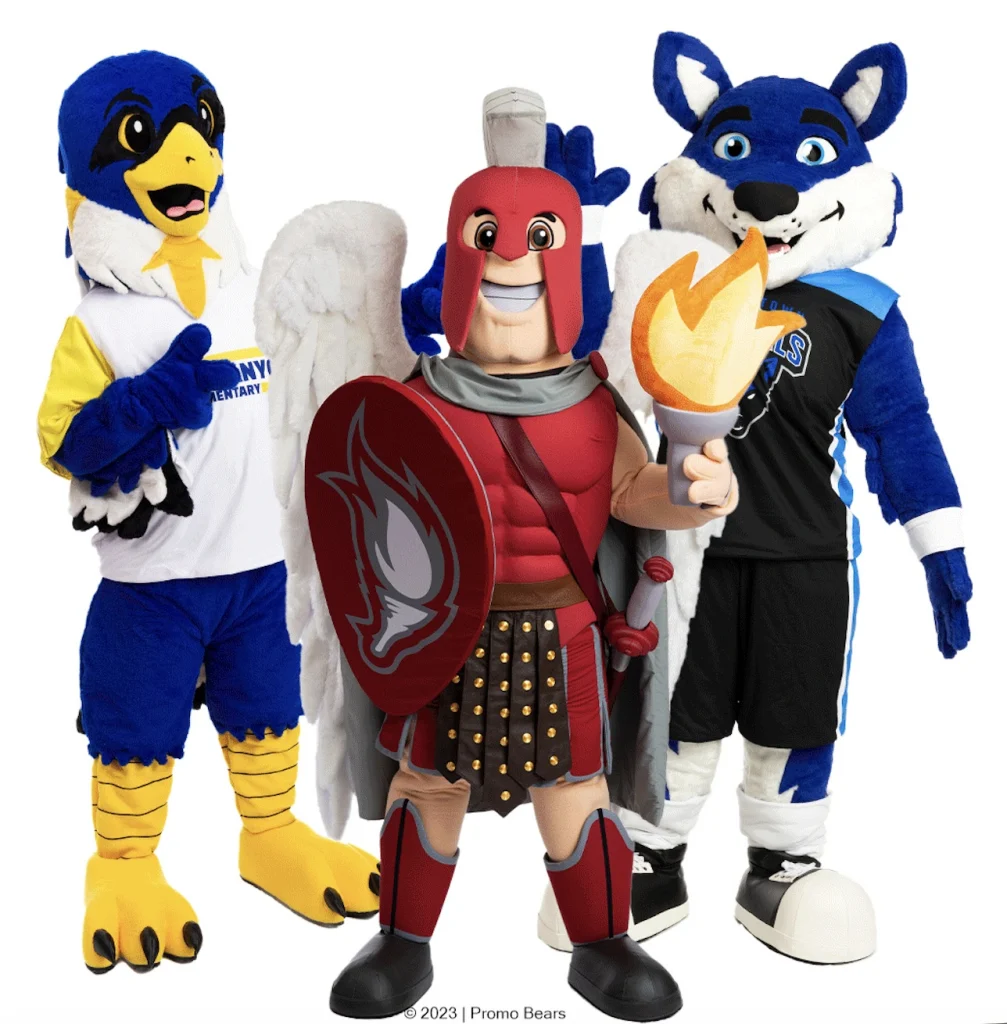
- Large-format items: Custom mascot costumes, giant inflatables, and inflatable arches used for high-visibility brand moments
- Digital companion products: Stickers, temporary tattoos, and mascot stickers that bridge physical and digital brand presence
The format you choose should reflect where your audience encounters your brand and what kind of impression you want to leave. A stress ball handed out at a trade show creates a different experience than a custom mascot costume at a sporting event, but both serve the same underlying goal: keeping your brand visible and memorable long after the initial interaction.
Can promotional tools and branded merchandise work together?
Yes, promotional tools and branded merchandise work best when used together as part of a coordinated strategy. Promotional tools build reach and drive initial awareness, while branded merchandise reinforces that awareness through physical, lasting touchpoints. Combining both creates a more complete brand experience that moves people from first exposure to genuine loyalty.
A practical example: a brand running a social media campaign to promote a product launch can amplify the impact by distributing branded merchandise at a related event. The campaign drives traffic and awareness online, while the merchandise creates a tangible memory that keeps the brand top of mind after the event ends. Each element strengthens the other.
For event-driven campaigns, the timing of merchandise production matters. Items like custom branded inflatables take three to four weeks to produce, while plush toys and stress balls require longer lead times of ten to twelve weeks or more. Planning your promotional calendar with those production windows in mind ensures your merchandise is ready when your campaign goes live, not after.
When should a brand invest in merchandise over promotional tools?
A brand should prioritize merchandise over promotional tools when the goal is long-term recognition, emotional connection, or building a community around the brand rather than driving an immediate transaction. Merchandise is the stronger investment when you need your brand to stay visible between campaigns, or when you want to reward and retain existing customers and partners.
Specific situations where merchandise outperforms promotional tools include:
- Trade shows and live events: Physical items create a reason to visit your booth and a lasting reminder after attendees leave
- Employee and partner gifting: Branded merchandise builds internal culture and turns employees into genuine brand advocates
- Sponsorships and sports partnerships: Custom mascot costumes and large-format inflatables create visual impact that no digital ad can replicate at a live venue
- Brand launches and rebrands: Merchandise makes a new identity tangible and memorable in a way that announcements alone cannot
- Loyalty and retention programs: Exclusive branded items reward your best customers and deepen their connection to your brand
Promotional tools remain the better choice when speed is the priority, when you need to reach a large audience quickly, or when you are testing a message before committing to a larger investment. The decision is rarely either/or. It is more often a question of which plays the lead role in a given campaign.
What types of branded merchandise deliver the highest ROI?
Branded merchandise delivers the highest return on investment when it is genuinely useful, visually distinctive, and closely tied to your brand identity. Items that get used regularly generate repeated impressions at no additional cost, which makes them far more efficient than single-use giveaways. The more relevant the item is to your audience’s daily life or interests, the longer it stays in circulation.
From a pure visibility standpoint, large-format items like custom mascot costumes and giant inflatables generate an outsized return at events. A mascot costume worn at a game or brand activation is seen by thousands of people in person and often appears in photos and social content shared online, extending the reach well beyond the event itself.
For ongoing brand presence, items with strong daily utility tend to outperform novelty products. Custom stress balls, keychains, and bags are used repeatedly, keeping your brand in front of the recipient and anyone who sees them using them. Items that carry a strong visual identity, such as a recognizable mascot character or a distinctive color, perform better than generic products with a small logo applied.
The key factor in ROI is not the unit cost of the item. It is the number of impressions generated over the product’s lifetime divided by the total investment. A well-made plush toy or custom inflatable that gets photographed, shared, and displayed for months delivers a cost per impression that most paid advertising channels cannot match.
How Promo Bears helps you get more from branded merchandise
We work with marketing managers and brand teams across the US and Canada to turn brand identities into physical products that genuinely perform. Whether you are planning a major event, launching a new brand character, or looking for merchandise that keeps your brand visible year-round, we have the product range and the experience to make it happen.
Here is what working with us looks like in practice:
- Every project starts with a free concept illustration based on your logo or design idea, with unlimited revisions until it is exactly right
- We produce custom mascot costumes in 12 to 16 weeks, built for comfort, visibility, and long-term use
- Our stress balls are fully custom shaped with PMS color matching, ready in 10 to 12 weeks
- Giant mascot inflatables and inflatable arches are available with turnaround times of three to four weeks
- A dedicated project manager handles your order from concept to delivery, so nothing falls through the cracks
We have created over 4,000 mascots and branded products for organizations ranging from local sports teams to globally recognized brands. If you are ready to see what branded merchandise can do for your brand, get a free quote and we will put together a concept and a fixed price based on your specific design.
Frequently Asked Questions
How do I figure out the right budget split between promotional tools and branded merchandise?
A practical starting point is to allocate a larger share of your budget to promotional tools when launching or entering a new market, and shift more toward merchandise as your audience grows and retention becomes the priority. Many brands find a 60/40 or 70/30 split in favor of promotional tools during acquisition phases, then rebalance as they invest in loyalty and community. The most important factor is matching the spend to the goal: if you need reach fast, lean on promotional tools; if you need lasting impressions, merchandise earns its place in the budget.
What are the most common mistakes brands make when ordering custom merchandise for an event?
The single biggest mistake is underestimating production lead times. Items like custom mascot costumes require 12 to 16 weeks, and plush toys or stress balls need 10 to 12 weeks, so brands that start the process a month before an event almost always end up disappointed or empty-handed. The second most common error is choosing items based on low unit cost rather than relevance and quality — a cheap, generic giveaway does little for brand perception and often ends up in the trash. Always tie your merchandise selection to your audience’s actual habits and interests, not just what fits the budget.
Can small businesses benefit from branded merchandise, or is it mainly a strategy for large brands?
Branded merchandise is highly effective for small businesses precisely because it creates a professional, memorable impression that punches above the brand’s size. A well-designed custom item signals quality and credibility in a way that a digital ad from an unknown brand often cannot. Small businesses also tend to have tighter, more defined communities — local customers, loyal regulars, event attendees — which makes merchandise even more impactful since every item reaches someone already predisposed to engage with the brand.
How do I measure the ROI of branded merchandise when it doesn't have a direct click-through or conversion rate?
The most practical framework is to track impressions over the product’s useful lifetime: estimate how many times the item is seen per day or week, multiply by the weeks it stays in active use, and divide your total investment by that number to get a cost-per-impression figure. For event items like mascot costumes or inflatables, factor in social media appearances — photos and videos shared by attendees extend reach well beyond the venue. You can also measure softer indicators like booth traffic at events, post-event survey recall, or repeat engagement rates from customers who received merchandise compared to those who did not.
What makes a branded merchandise item worth keeping versus one that gets thrown away?
Items that earn a permanent place in someone’s life are genuinely useful, visually appealing, and feel like a gift rather than an advertisement. Quality matters enormously here — a well-made bag, a comfortable branded cap, or a distinctive plush mascot gets kept because it delivers real value to the recipient. Items that are cheap, generic, or carry an oversized logo with no design thought tend to be discarded quickly. The best branded merchandise leads with the product experience first and lets the branding reinforce it, rather than the other way around.
Is branded merchandise effective for B2B companies, or is it better suited to consumer-facing brands?
Branded merchandise is arguably more impactful in B2B contexts because the audience is smaller, relationships are higher-value, and the bar for standing out is lower. A decision-maker who receives a high-quality, thoughtfully designed branded item associates that level of care with how your organization operates overall — it functions as a tangible proof point for your brand’s standards. B2B merchandise works especially well at trade shows, in account-based gifting programs, and as part of onboarding kits for new clients or partners, where the goal is to build trust and stay top of mind throughout a longer sales cycle.
How do I choose the right type of branded merchandise for a trade show versus a sports sponsorship?
For trade shows, prioritize items with strong daily utility — stress balls, notebooks, bags, or keychains — that give attendees a practical reason to keep and use them back at the office, generating repeated impressions in a professional setting. For sports sponsorships and live events, visibility at scale is the priority, making large-format items like custom mascot costumes, giant inflatables, and inflatable arches the stronger choice since they are seen by thousands in person and frequently appear in fan photos and media coverage. In both cases, the item should feel native to the environment: a trade show audience expects something practical and professional, while a stadium crowd responds to energy, scale, and visual spectacle.
Related Articles
- How do you start the mascot design process from scratch?
- What is the difference between mascot design and logo design?
- What are the key differences between standard and custom promotional products?
- What should a first-time buyer know before ordering promotional products?
- What is a good corporate gift for a man?