
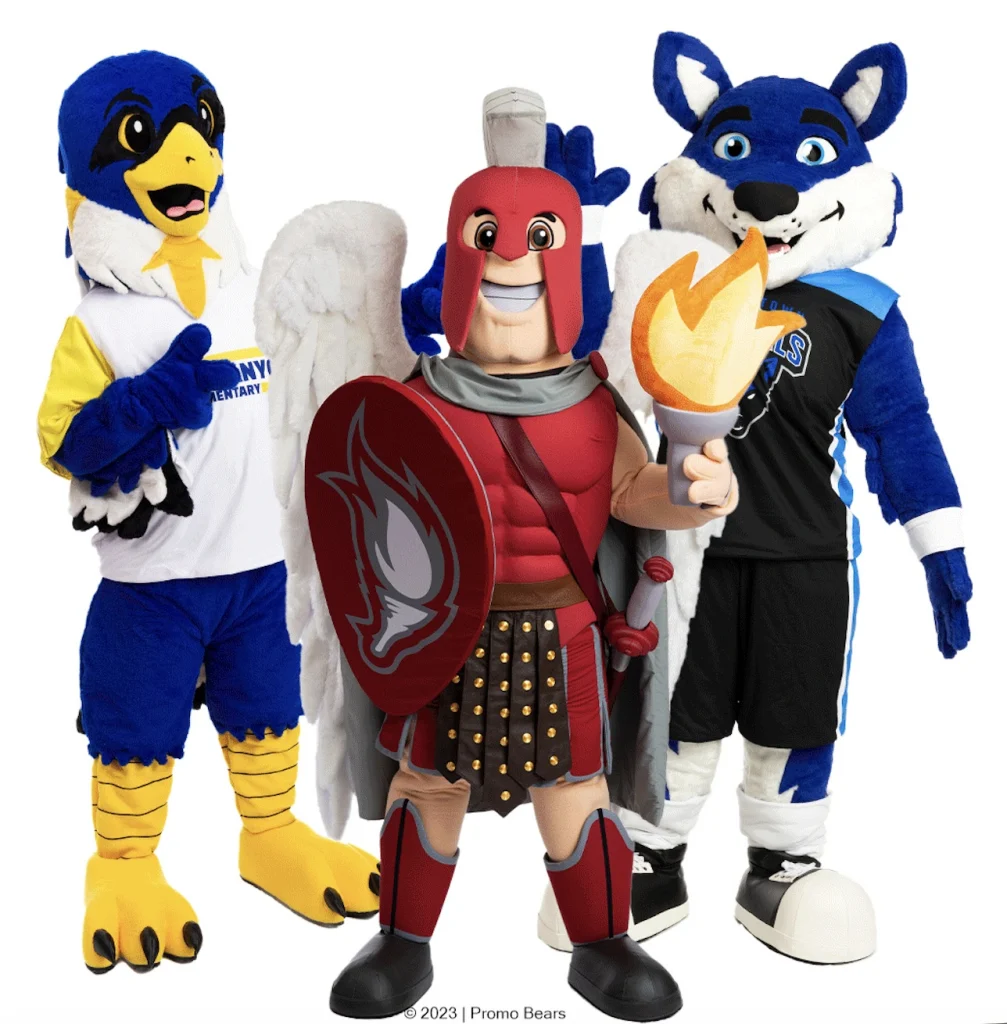
The oldest brand mascot still in active use today is the Michelin Man, known as Bibendum, who made his first appearance in 1898. Created for the Michelin tire company, this iconic figure has represented the brand for well over a century, making him the longest-running corporate mascot in advertising history. Below, we explore how mascots like Bibendum came to be, what makes them endure, and why brands around the world continue investing in them.
Which brand mascot has been around the longest?
The Michelin Man, officially named Bibendum, is widely recognized as the oldest brand mascot still in active use. He was introduced in 1898 and has represented the Michelin tire company continuously ever since. That makes him a brand mascot with a lifespan of over 125 years, an achievement no other corporate character has matched.
Bibendum was conceived by illustrator O’Galop, who based the design on a stack of tires that resembled a human silhouette. From the very beginning, the character was designed to be memorable and approachable, two qualities that have kept him relevant through every era of marketing. While his look has been refined over the decades, his core identity has never changed.
Other contenders for the title of oldest mascot include the Quaker Oats man, who dates back to 1877, and Mr. Peanut from Planters, introduced in 1916. However, these characters have undergone more significant redesigns or periods of reduced visibility, making Bibendum the most consistently maintained mascot in brand history.
How did brand mascots originate in advertising?
Brand mascots originated in the late 19th century as a way to give faceless companies a recognizable, human-like identity. Before mass media, companies relied heavily on visual symbols to build trust with consumers who could not easily verify product quality. A friendly character made a brand feel familiar and safe, which translated directly into customer loyalty.
The earliest mascots appeared on product packaging and in print advertisements. Companies quickly discovered that a character with a consistent personality was far easier for consumers to remember than a company name or slogan alone. This insight drove rapid adoption across industries, from food and beverages to tobacco and household goods.
The rise of radio in the 1920s and television in the 1950s accelerated mascot culture dramatically. Characters could now speak, move, and develop personalities over time, deepening the emotional connection between brands and their audiences. By the mid-20th century, mascots had become a cornerstone of American advertising strategy.
What makes a brand mascot last for over 100 years?
A brand mascot lasts for over 100 years when it is built on a simple, flexible concept that can evolve with changing audiences without losing its core identity. The most enduring mascots share a handful of qualities: they are visually distinctive, emotionally resonant, and tied directly to what the brand actually does or stands for.
Several key factors separate century-old mascots from those that fade within a decade:
- Simplicity of design: Characters with clean, recognizable silhouettes are easier to reproduce across formats, from packaging to digital media, without losing impact.
- Emotional connection: Mascots that feel warm, playful, or trustworthy build genuine affection rather than just awareness.
- Relevance to the product: The strongest mascots reinforce what the brand sells, so the character and the product reinforce each other in the consumer’s mind.
- Consistent investment: Brands that maintain their mascots across generations keep them culturally present rather than allowing them to fade into nostalgia.
- Willingness to evolve: Subtle modernization of color, proportion, or expression keeps a mascot feeling current without erasing its heritage.
Bibendum, for example, has been slimmed down and made more dynamic over the decades to reflect contemporary design sensibilities, but he has never been replaced. That balance between consistency and evolution is the defining quality of any mascot built to last.
Which industries have the oldest mascot traditions?
The food and beverage industry has the oldest and deepest mascot tradition, followed closely by automotive, insurance, and consumer goods. These sectors were among the first to sell branded products at scale, which created an early need for recognizable characters that could build trust across a geographically dispersed customer base.
In food and beverage, characters like the Quaker Oats man, Tony the Tiger from Kellogg’s, and the Pillsbury Doughboy became household names because they appeared on products that consumers purchased repeatedly. Repetition built familiarity, and familiarity built loyalty.
The sports industry also has a long mascot tradition, particularly in American professional and collegiate sports. Team mascots serve a slightly different function than commercial mascots since they build community identity rather than product awareness, but the psychological mechanism is identical. A physical mascot costume worn at games creates emotional energy and gives fans a living symbol to rally around.
Insurance and financial services adopted mascots later, largely in the second half of the 20th century, as a way to humanize industries that consumers often found intimidating or impersonal. Characters like the GEICO Gecko and Flo from Progressive are relatively recent by mascot standards, but they demonstrate that the strategy works just as powerfully in service industries.
How have the oldest brand mascots changed over time?
The oldest brand mascots have changed primarily through visual modernization, personality refinement, and media adaptation. While their fundamental identities remain intact, their appearance and the way they communicate have been updated in each era to match the expectations of contemporary audiences.
Bibendum is a clear example. In his earliest illustrations, he was depicted as a heavyset, cigar-smoking figure holding a glass of nails and glass shards, a reference to the brand’s claim that Michelin tires could withstand road debris. Today, he is leaner, friendlier, and appears across digital platforms, mobile apps, and social media. The character is the same, but the execution reflects 2026 design standards.
The Quaker Oats man has gone through several redesigns, most recently in 2012 and again in 2022, each time making him appear slightly younger and more approachable. These updates were driven by consumer research showing that the original figure felt dated to younger shoppers.
What the most successful long-running mascots have in common is that their owners treat them as living brand assets rather than static logos. They are actively managed, occasionally refreshed, and consistently deployed across every relevant touchpoint. That level of intentional stewardship is what separates a mascot that survives a century from one that is quietly retired after a decade.
Why do brands still invest in mascots today?
Brands still invest in mascots today because a well-designed character creates emotional engagement that traditional advertising cannot replicate. In a media environment where consumers are exposed to thousands of brand messages daily, a mascot gives a brand a consistent, memorable personality that cuts through the noise and builds genuine affection over time.
Research into consumer behavior consistently shows that people form stronger memories of information when it is attached to a character or story rather than a product feature or price point. A mascot activates that same storytelling instinct, making the brand easier to recall and more pleasant to engage with.
For marketing managers and brand directors working in competitive sectors, a mascot also delivers measurable advantages at events, trade shows, and retail activations. A physical mascot costume creates moments that audiences photograph and share, extending brand reach organically. That kind of earned visibility is increasingly difficult to achieve through paid media alone.
Beyond awareness, mascots build community. Whether it is a sports team, a university, or a consumer brand, a mascot gives audiences a shared symbol to identify with, which deepens loyalty and encourages the kind of word-of-mouth that no advertising budget can fully replicate.
How Promo Bears Helps You Create a Mascot Built to Last
If the history of brand mascots proves anything, it is that the right character, executed with quality and care, can become one of the most valuable assets a brand owns. At Promo Bears, we help organizations bring exactly that kind of lasting mascot to life.
Here is what we bring to every project:
- A free concept illustration based on your logo or design idea, with unlimited revisions until the result is exactly right
- Lifelike 3D eyes and an integrated ventilation system for a mascot that looks professional and is comfortable to wear
- A dedicated project manager who oversees every step from design to delivery
- Production ready in 12 to 16 weeks, with rush options available
- Rigorous quality control and result photos shared for your approval before shipping
We have created over 4,000 mascots for clients ranging from global brands to local schools, and every project starts with zero upfront commitment. If you are ready to invest in a brand mascot that can stand the test of time, get your free quote today and let our team show you what is possible.
Frequently Asked Questions
How much does it typically cost to commission a custom brand mascot costume?
The cost of a professional custom mascot costume varies depending on complexity, materials, and the level of detail required, but most high-quality mascots range from $2,000 to $10,000 or more. Simpler designs with fewer moving parts or accessories tend to sit at the lower end of that range, while fully articulated, premium-finish costumes for major brands can exceed it. The best approach is to request a free quote with your concept so you can get an accurate estimate before committing to anything.
What are the most common mistakes brands make when designing a mascot?
The most common mistake is designing a mascot that looks visually impressive in one format but fails to translate across others, such as a character that works beautifully in print but becomes unrecognizable when scaled down to a social media icon or reproduced on a foam costume. Another frequent error is creating a character whose personality or appearance is not clearly connected to what the brand actually does, which weakens the reinforcement effect that makes mascots so powerful. A third mistake is treating the mascot as a one-time project rather than a long-term brand asset that requires consistent use and occasional modernization to stay relevant.
How do you keep a mascot feeling fresh without losing the brand recognition it has built up?
The key is to update execution details rather than core identity — think proportions, color saturation, expression, and digital adaptability rather than a complete character overhaul. The most successful long-running mascots, like Bibendum and the Quaker Oats man, have been refined multiple times while keeping their silhouette and personality instantly recognizable. A useful rule of thumb is that if a loyal customer from 20 years ago would still recognize the character immediately, the update has struck the right balance between fresh and familiar.
Can small businesses and local organizations benefit from having a mascot, or is it mainly a strategy for large brands?
Mascots are arguably even more powerful for small businesses and local organizations because they create a memorable identity in markets where advertising budgets are limited and word-of-mouth matters most. A local school, sports team, restaurant, or regional retailer can build genuine community affection around a well-designed character in ways that no paid media campaign can replicate at the same cost. The physical presence of a mascot costume at local events, games, or store openings generates organic social sharing and community engagement that delivers outsized return on investment for smaller organizations.
What should I prepare before starting the mascot design process?
Before reaching out to a mascot manufacturer, it helps to have your brand guidelines ready, including your logo, color palette, and any existing visual identity documents, as these give designers a strong foundation to work from. It is also worth thinking through where and how the mascot will primarily be used — whether at live events, on packaging, across digital channels, or all three — because intended use cases influence design decisions like costume weight, mobility, and visual simplicity. You do not need a fully formed concept to get started; many manufacturers, including Promo Bears, offer free concept illustrations so you can explore ideas before committing.
How long does a professionally made mascot costume typically last, and how should it be maintained?
A high-quality custom mascot costume, when properly cared for, can last anywhere from five to ten years or more depending on how frequently it is used and the conditions it is exposed to. Regular maintenance includes spot cleaning after each use, deep cleaning at the end of active seasons, proper storage in a cool and dry environment, and periodic inspection of seams, zippers, and structural components. Investing in a spare head or interchangeable accessories from the outset is a practical way to extend the overall lifespan of the costume and protect your investment.
Are there industries or brand types where mascots tend to underperform or feel out of place?
Mascots can feel misaligned in industries where the primary brand values are gravitas, exclusivity, or clinical authority, such as luxury goods, high-end financial advisory services, or certain areas of healthcare, where a playful character might undercut the trust and seriousness the brand needs to project. That said, even traditionally serious sectors like insurance and finance have found success with mascots by designing characters that are approachable without being frivolous, as GEICO and Progressive have demonstrated. The deciding factor is usually whether a mascot’s personality can authentically reflect the brand’s core promise rather than contradict it.