
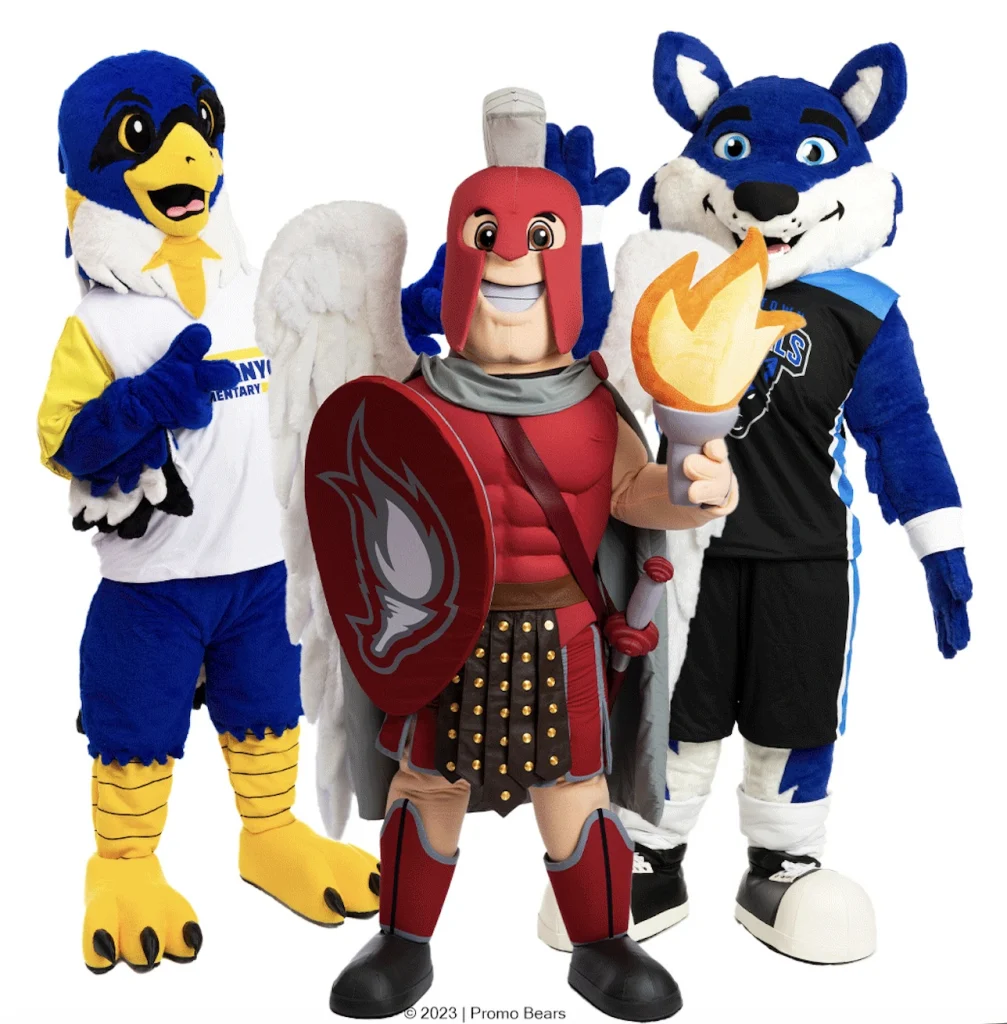
A great sports mascot stands out by combining a memorable character design with genuine emotional connection to the team and its fans. The best mascots are instantly recognizable, expressive enough to perform without words, and consistent with the brand they represent. Below, we break down the key questions every team, school, or organization should consider before bringing a sports mascot to life.
What traits do the most iconic sports mascots share?
The most iconic sports mascots share a handful of defining qualities: a bold, distinctive visual identity, a strong personality that translates across different settings, and a deep connection to the team’s story. These traits work together to make a mascot instantly recognizable and genuinely loved by fans of all ages.
Great mascots tend to have exaggerated, expressive features that communicate emotion clearly from a distance. Wide eyes, dynamic poses, and vibrant colors all help a mascot read well in a packed stadium or on a broadcast screen. Beyond looks, the best mascots have a consistent personality that performers can bring to life reliably, whether they are hyping up a crowd, greeting a child at a community event, or starring in a social media clip.
Longevity matters too. Iconic mascots evolve gradually over time without losing their core identity. They become symbols in their own right, associated not just with wins and losses, but with the culture and community surrounding the team.
How does mascot design affect fan engagement?
Mascot design directly affects fan engagement by shaping how approachable, exciting, and memorable the character feels to the audience. A well-designed sports mascot invites interaction, generates content, and gives fans a focal point for their enthusiasm that goes beyond the scoreboard.
From a visual standpoint, strong mascot design uses color psychology, proportions, and facial expression to trigger an emotional response. Warm, rounded features tend to feel friendly and welcoming, which is especially important for family audiences. Sharper, more dynamic designs communicate energy and competitive spirit, which resonate with older fans and die-hard supporters.
Design also determines how versatile a mascot can be across different formats. A mascot that looks great in a full costume also needs to translate well onto merchandise, digital content, and signage. When the design is cohesive across all these touchpoints, it reinforces brand recognition every time a fan encounters it.
What makes a mascot costume comfortable enough to perform in?
A mascot costume is comfortable enough to perform in when it is built with a proper ventilation system, lightweight materials, and a fit that allows a full range of movement. Without these features, performers overheat quickly and their energy drops, which directly affects the quality of the fan experience.
The key comfort features to look for in a professional mascot costume include:
- A built-in ventilation system that circulates air and reduces heat buildup inside the costume
- Lightweight foam and fabric construction that minimizes the overall weight the performer carries
- Strategically placed vision panels so the performer can see clearly without restricting the character’s appearance
- A secure but adjustable fit that accommodates different body types without compromising mobility
- Easy-to-clean materials that hold up through repeated use and washing
Professional mascot costumes are typically sized to fit performers between 5’7″ and 6’1″, though custom sizing is always an option for organizations with specific needs. The more comfortable a performer feels, the longer they can stay in character and the more authentic the fan experience becomes.
Should a sports mascot reflect the team’s brand or its local community?
A sports mascot should ideally reflect both the team’s brand and its local community, because the strongest mascots draw meaning from both sources. When a mascot connects to local identity, it deepens community pride. When it aligns with the team’s visual brand, it reinforces recognition and consistency across all marketing channels.
In practice, this balance looks different for every organization. A university mascot might lean into regional history or local wildlife to build a sense of place. A professional sports franchise might prioritize brand color alignment and a more universal character concept that travels well across merchandise and broadcast media.
The risk of ignoring community connection is a mascot that feels generic, one that could belong to any team anywhere. The risk of ignoring brand alignment is a mascot that creates visual confusion when placed alongside other brand assets. The smartest mascot branding decisions address both, using the character’s backstory and personality to bridge the two.
How do professional sports teams use mascots beyond game day?
Professional sports teams use mascots beyond game day for community outreach, school visits, corporate partnerships, social media content, and merchandise revenue. A mascot that only appears at home games is a significantly underutilized brand asset.
Some of the most effective off-field uses of a sports mascot include:
- School and youth programs: Mascots visit local schools to promote reading, healthy habits, or team values, building loyalty with the next generation of fans.
- Charity and nonprofit events: A mascot appearance adds excitement to fundraisers and community events while associating the team with positive causes.
- Corporate sponsor activations: Mascots appear at partner events, trade shows, and brand activations, adding entertainment value to business relationships.
- Social media and digital content: Short videos, behind-the-scenes clips, and interactive posts featuring the mascot consistently drive high engagement.
- Merchandise and licensing: A well-designed mascot character generates revenue through plush toys, apparel, keychains, and other branded products year-round.
Teams that invest in their mascot as a strategic brand asset, rather than just a game-day entertainer, see a measurable return in fan loyalty and community presence.
What’s the difference between a mascot costume and a mascot character?
A mascot character is the creative concept: the personality, backstory, name, and visual identity that define who the mascot is. A mascot costume is the physical product that brings that character to life. Both are essential, but confusing the two leads to incomplete mascot programs that underdeliver on their potential.
The character comes first. Before a single stitch is sewn, the organization needs to define what the mascot represents, how it behaves, and what emotional tone it sets. Is it playful and goofy, or fierce and competitive? Does it have a name and a backstory, or is it purely visual? These decisions shape everything from the costume design to how performers are briefed and trained.
The costume is then the execution of that character in physical form. A great costume captures the character’s personality through its proportions, expression, and color palette. It also needs to function as a performance tool, built for durability, comfort, and visual impact at scale. When the character and the costume are developed together with the same creative vision, the result is a mascot that feels authentic and complete rather than a character wearing an off-the-shelf outfit.
How Promo Bears helps you create a standout sports mascot
We specialize in turning sports mascot ideas into fully realized, high-performance mascot costumes built for real-world use. Here is what sets our process apart:
- Free concept illustration: Every project starts with a no-commitment concept drawing based on your logo, character, or idea, with unlimited revisions until you are completely satisfied.
- 3D realistic eyes and built-in ventilation: Our costumes are engineered for performer comfort and visual impact, so your mascot looks great and performs reliably.
- Dedicated project manager: One point of contact guides your project from the first sketch through quality control and delivery.
- Full merchandise range: Beyond the costume, we produce plush toys, custom stress balls, keychains, stickers, and giant inflatables to extend your mascot across every fan touchpoint.
- Proven track record: With over 4,000 mascots created for clients including NASA, Amazon, and Walmart, we bring the experience your brand deserves.
Ready to build a sports mascot that truly stands out? Get your free quote and start with a complimentary concept illustration today.