
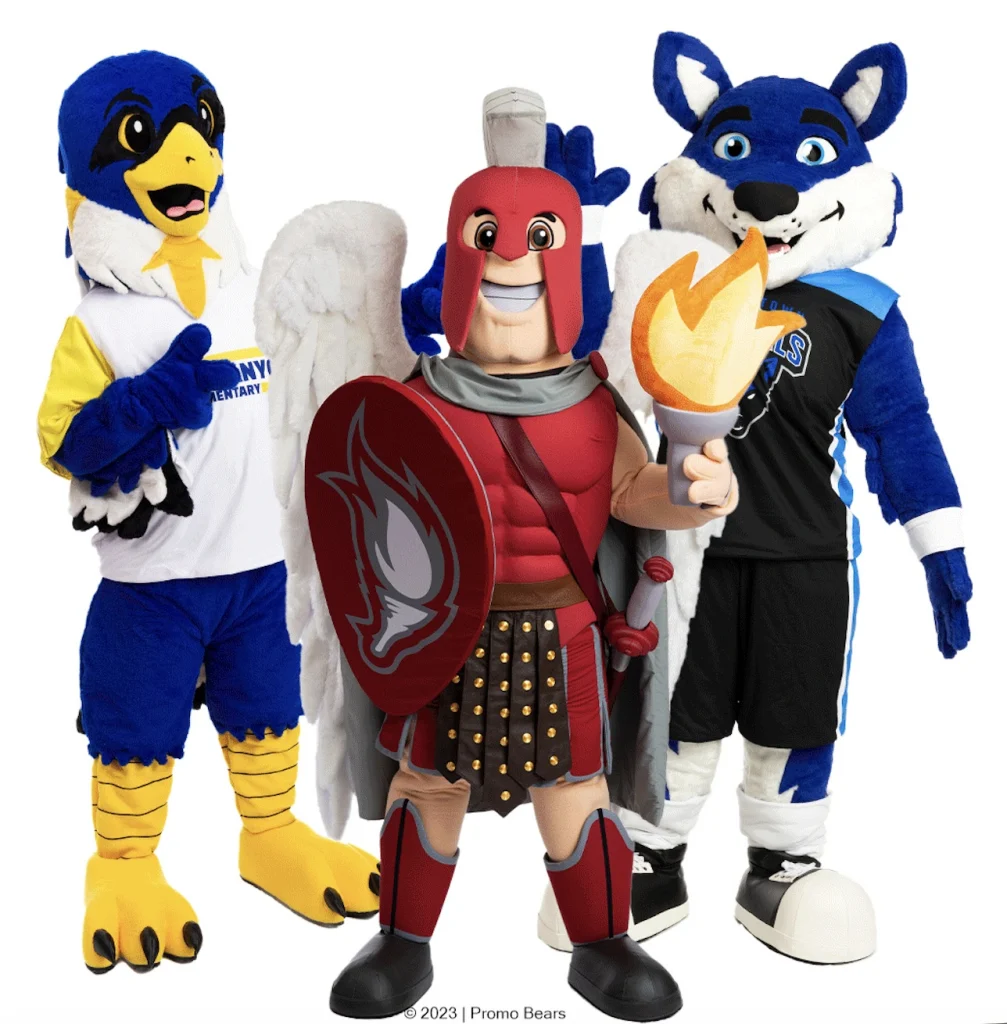
An effective mascot combines instant visual recognition, a strong personality, and a clear connection to the brand or organization it represents. The best mascots are bold enough to stand out in a crowd, expressive enough to create emotional connections, and versatile enough to work across events, merchandise, and digital channels. The questions below unpack exactly what separates a forgettable character from one that genuinely moves the needle for your brand.
What qualities make a mascot instantly recognizable?
A mascot becomes instantly recognizable through a combination of bold design, distinctive colors, and a strong silhouette. When someone can identify your character from across a stadium or in a thumbnail-sized image, that mascot is doing its job. Recognizability is not accidental. It is the result of deliberate design choices that prioritize clarity over complexity.
The most recognizable mascots share several key traits:
- A strong, simple silhouette that reads clearly at any size or distance
- Distinctive color combinations that align with the brand’s identity and stand apart from competitors
- Expressive facial features, especially the eyes, which communicate personality and emotion at a glance
- Consistent design elements that translate across a full-body costume, printed merchandise, and digital formats
- A memorable personality trait that gives the character a reason to exist beyond just looking good
Simplicity is the secret weapon here. Overcomplicated designs lose their impact when scaled down to a keychain or viewed from 50 feet away. The most enduring mascots strip away the unnecessary and double down on what makes them unique.
How does a mascot strengthen brand identity?
A mascot strengthens brand identity by giving abstract brand values a face, a personality, and a physical presence. Where a logo communicates what a brand looks like, a mascot communicates how a brand feels. It transforms a set of guidelines into a living, breathing character that audiences can connect with on a human level.
For marketing managers and brand directors, this distinction matters enormously. A mascot creates consistency across every touchpoint, from live events and social media to product packaging and in-store displays. When your audience sees the same character showing up everywhere, it builds familiarity, and familiarity builds trust.
Mascots also give brands a storytelling vehicle. A character can react to current events, celebrate wins, comfort fans after losses, and carry seasonal campaigns without ever diluting the core brand message. That kind of flexibility is difficult to achieve with a logo alone.
What’s the difference between a logo and a mascot?
A logo is a static visual mark that identifies a brand. A mascot is a dynamic character that represents the brand’s personality and engages audiences emotionally. The key difference is interactivity: a logo is seen, while a mascot is experienced.
Think of a logo as the brand’s signature and the mascot as its ambassador. The logo appears on every product, document, and advertisement to signal ownership and origin. The mascot appears at events, on merchandise, and in campaigns to generate excitement, encourage interaction, and make the brand feel approachable.
For organizations that operate in high-engagement environments like sports, retail, education, or entertainment, a mascot fills a gap that a logo simply cannot. It shows up in the physical world, interacts with real people, and creates moments that audiences remember and share. A logo cannot high-five a fan. A mascot can.
What types of organizations benefit most from a mascot?
Organizations that benefit most from a mascot are those where audience engagement, community building, and brand experience are central to their mission. This includes sports teams, schools and universities, retail brands, entertainment companies, and consumer-facing corporations in sectors like FMCG and hospitality.
That said, the value of a mascot extends well beyond obvious candidates. Consider the following:
- Sports teams and athletic programs use mascots to energize fans, build school spirit, and create merchandise revenue streams that fund programs.
- Consumer brands use mascots to humanize their products, drive recognition in crowded markets, and build loyalty that outlasts individual campaigns.
- Universities and schools use mascots to unite student bodies, attract prospective students, and strengthen alumni connections.
- Non-profits and government organizations use mascots to communicate complex messages in an accessible, approachable way.
- Event-driven companies in retail and hospitality use mascots to create memorable in-person experiences that drive word of mouth and repeat visits.
In short, any organization that wants to turn passive audiences into active brand ambassadors has a strong case for investing in a custom mascot costume.
How does mascot design affect wearability and performance?
Mascot design directly affects how comfortable, safe, and effective the costume is for the person wearing it. A mascot that looks stunning in a sketch but is exhausting to wear for more than 20 minutes will underperform in the real world. Great mascot design balances visual impact with practical wearability.
The most important design considerations for performance include:
- Ventilation systems built into the head and body to manage heat and airflow during extended wear
- Visibility through the eyes, which should be designed so the performer can see clearly and react naturally to their environment
- Weight distribution across the costume to reduce fatigue during events and appearances
- Material choices that balance durability, comfort, and ease of cleaning after repeated use
- Fit flexibility to accommodate performers of varying heights while maintaining the intended appearance
A well-engineered mascot costume is not just a visual product. It is a performance tool. When the performer inside is comfortable and confident, the character comes alive in ways that no amount of design polish can replicate from the outside.
How can a mascot increase customer engagement and revenue?
A mascot increases customer engagement by creating memorable, shareable experiences that audiences actively seek out and talk about. It drives revenue by becoming a platform for merchandise sales, event activations, and brand campaigns that generate measurable returns on the original investment.
The engagement effect works because mascots trigger an emotional response that logos and slogans rarely achieve on their own. When a mascot interacts with a child at a retail event, poses for photos at a sports game, or appears in a social media campaign, it creates moments that people share with their networks. That organic reach has real commercial value.
On the revenue side, a strong mascot opens up an entire ecosystem of branded merchandise. Plush toys, keychains, stickers, and stress balls all become viable product lines once a character has enough recognition and affection behind it. Organizations that invest in their mascot identity consistently find that the character pays for itself many times over through merchandise alone, not to mention the brand recognition benefits that compound over time.
How Promo Bears helps you build a mascot that works
We bring everything covered in this article together under one roof. At Promo Bears, we have spent over 19 years helping schools, sports teams, corporate brands, and non-profits create mascots that are visually striking, physically comfortable, and built to perform. Every project starts with a free concept illustration based on your logo or design idea, with unlimited revisions until the result is exactly right.
Beyond the costume itself, we produce the full range of mascot merchandise that turns a single character into a complete brand experience:
- Custom mascot costumes ready in 12 to 16 weeks, featuring 3D realistic eyes, an integrated ventilation system, and a dedicated project manager from start to delivery
- Plush toys completed in 12 to 18 weeks depending on shipping method
- Stress balls in fully custom shapes with PMS color matching, ready in 10 to 12 weeks
- Mascot stickers produced in approximately 4 weeks
- Giant mascot inflatables delivered in 3 to 4 weeks for high-impact event activations
Whether you are starting from scratch or expanding an existing mascot program, we are ready to help you build something that genuinely engages your audience and delivers a return on your investment. Get your free quote and let’s bring your mascot to life.
Frequently Asked Questions
How much does a custom mascot costume typically cost, and what factors affect the price?
Custom mascot costume pricing varies based on complexity of design, materials used, size, and the level of detail required. Simpler characters with fewer moving parts or intricate features tend to be more affordable, while highly detailed, multi-component costumes with advanced ventilation systems and realistic eyes will sit at a higher price point. The best way to get an accurate figure for your specific project is to request a free quote, which allows a manufacturer to assess your design requirements and provide a tailored estimate rather than a rough ballpark.
What if I don't have a design ready — can I still commission a mascot?
Absolutely. Many organizations come to mascot makers with nothing more than a concept, a brand name, or an existing logo, and that is more than enough to get started. A good mascot design partner will translate your brand values, color palette, and personality goals into a character concept, typically providing an initial illustration for your review. From there, revisions refine the design until it accurately represents what you envisioned, so having a finished design beforehand is not a prerequisite.
How do I choose the right performer to wear our mascot costume?
The ideal mascot performer is someone who is physically comfortable in confined, warm spaces, naturally expressive through body language, and genuinely enthusiastic about audience interaction — since facial expressions are hidden, all communication happens through movement and gesture. Look for candidates with a background in performance, athletics, or customer-facing roles, and prioritize energy and stamina over appearance. Once selected, invest time in performer training so they understand the character’s personality, safe movement techniques, and how to engage different audience types, from young children to adult fans.
How should we care for and maintain a mascot costume to extend its lifespan?
Proper maintenance starts immediately after each use: air the costume out thoroughly, spot-clean any soiled areas, and store it in a cool, dry environment away from direct sunlight to prevent color fading and material degradation. The head unit should be stored on a stand or stuffed to retain its shape, while the body suit should be hung rather than folded to avoid permanent creases. For deep cleaning, always follow the manufacturer’s specific guidelines, as different foam densities and fabric types require different care approaches — improper washing is one of the most common causes of premature costume damage.
Can a mascot be effectively used in digital and social media campaigns, or is it mainly for live events?
A mascot is one of the most versatile assets a brand can have in the digital space. Characters can be adapted into illustrated or animated versions for social media content, email marketing, website graphics, and video campaigns, giving you a consistent brand personality across both physical and digital channels. Short-form video platforms in particular are well-suited to mascot content, where behind-the-scenes footage, character-driven skits, and fan interaction clips tend to generate strong organic engagement. The key is maintaining the character’s core personality traits consistently whether it appears in-person at an event or as a digital illustration in an Instagram post.
What are the most common mistakes organizations make when developing a mascot?
The most frequent mistake is over-complicating the design — adding too many details that look impressive in a full-size illustration but become unreadable on merchandise or from a distance. Another common pitfall is failing to involve the end-users (performers and marketing teams) early in the design process, which can result in a costume that is visually strong but impractical to wear or difficult to scale across different formats. Organizations also sometimes neglect to think beyond the costume itself, missing the revenue and engagement opportunities that come from a coordinated merchandise strategy built around the same character.
How long does a well-made mascot costume typically last, and when should we consider a redesign or replacement?
A professionally manufactured mascot costume, with proper care and maintenance, can last anywhere from three to seven years depending on how frequently it is used and the conditions it is exposed to. High-use mascots appearing at multiple events per week will naturally wear faster than those used only for seasonal campaigns. Signs it may be time for a refresh or replacement include visible structural damage, fading colors that no longer match brand standards, foam that has lost its shape, or a character design that feels dated relative to where your brand has evolved — a redesign can be an opportunity to modernize the mascot while retaining the recognition equity it has already built.