
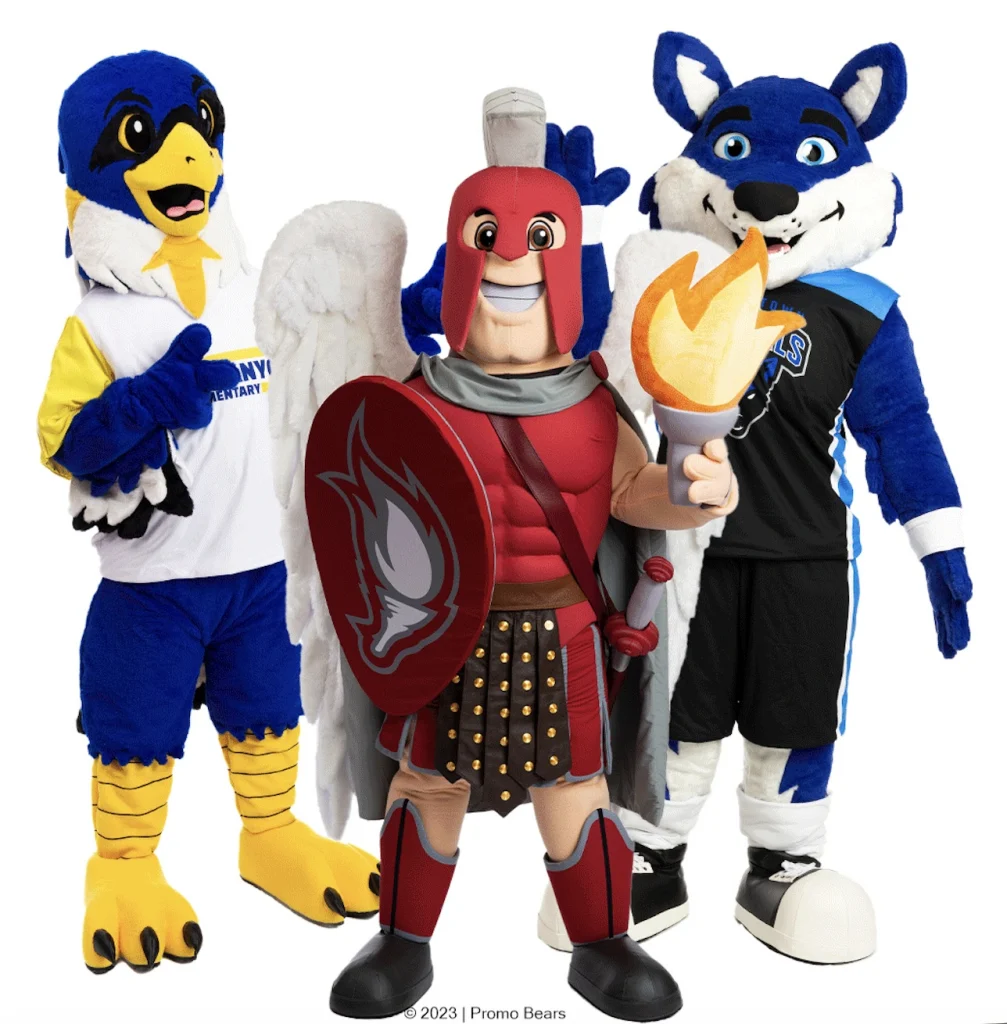
A mascot for a sports club is effective at building identity when it gives fans a visual and emotional anchor that goes beyond the team’s name or colors. The best mascots combine strong character design with a consistent presence across live events, merchandise, and community outreach. Below, we break down the specific qualities, strategies, and decisions that make a sports club mascot genuinely powerful.
What qualities make a sports club mascot memorable?
A memorable sports club mascot has a distinct personality, a design that reads clearly from a distance, and an emotional quality that fans of all ages can connect with. It is not just about looking good on a logo. The mascot needs to feel alive, both in costume form and across every piece of branded material the club produces.
The most effective mascots share a few key traits:
- Clear visual identity: Bold shapes, strong color contrast, and a silhouette that is instantly recognizable in a crowded stadium
- A defined character: Energetic, friendly, fierce, or playful. The personality should reflect the club’s values and the community it represents
- Versatility: A mascot that works on a giant inflatable, a plush toy, a stress ball, and a costume without losing its character is far more useful than one that only looks good in one format
- Authenticity: Fans respond to mascots that feel genuinely connected to the team’s story, region, or heritage rather than something generic that could belong to any club
When these qualities come together, the mascot stops being a marketing tool and starts becoming a genuine symbol of the club.
How does a mascot strengthen fan loyalty over time?
A mascot strengthens fan loyalty by creating consistent emotional touchpoints across seasons, generations, and platforms. Fans who grew up cheering alongside a mascot carry that connection into adulthood, and that emotional memory is one of the most durable forms of brand loyalty a sports club can build.
Consistency is the engine behind this loyalty. When a mascot shows up reliably at every home game, every community event, and across the club’s merchandise, it becomes part of the fabric of what it means to support the team. That kind of presence builds familiarity, and familiarity builds trust.
Mascots also give fans something to rally around during difficult seasons. A strong team identity, anchored by a recognizable mascot, keeps supporters engaged even when results on the field are not going the club’s way. The mascot becomes a symbol of the club itself, separate from any single season’s performance.
What’s the difference between a mascot and a logo for brand identity?
A logo is a static visual mark that represents the club’s brand. A mascot is a living, interactive character that brings that brand to life. Both are important for club identity, but they serve different functions and create different kinds of connection with fans.
A logo works at a distance and in silence. It appears on kits, signage, and digital platforms, communicating the club’s identity without any interaction required. A mascot, on the other hand, creates real-time emotional experiences. It moves through the crowd, interacts with children, fires up supporters before kickoff, and gives fans something to photograph and share.
The most effective clubs use both in a complementary way. The logo anchors the visual identity, while the mascot humanizes it. When a mascot’s design is rooted in the same visual language as the club’s logo, such as shared colors, shapes, or symbolic references, the two elements reinforce each other and create a stronger overall brand identity than either could achieve alone.
How do sports clubs use mascots to engage younger audiences?
Sports clubs use mascots to engage younger audiences by giving children a character they can relate to, interact with, and collect. Kids connect with characters in a way they do not always connect with adult athletes, and a well-designed mascot can turn a young fan’s first stadium visit into a lifelong memory.
Practical engagement strategies include:
- Pre-match appearances: The mascot greeting fans as they enter the stadium creates an immediate, positive first impression for young visitors
- Merchandise designed for kids: Plush toys, keychains, stickers, and temporary tattoos featuring the mascot give children something tangible to take home
- School and community visits: Taking the mascot costume into local schools builds awareness and emotional connection before children are even old enough to attend matches independently
- Social media content: Short, fun videos featuring the mascot in character perform well with younger audiences and help clubs grow their digital following
- Junior fan programs: Positioning the mascot as the face of a kids’ club or membership program gives young fans a direct relationship with the character
Reaching younger fans through the mascot is one of the smartest long-term investments a sports club can make. The fans you win at age six are the season ticket holders of 2036.
What makes a mascot costume effective at live events?
A mascot costume is effective at live events when it is visually striking, comfortable enough for extended wear, and built to handle the physical demands of crowd interaction. A costume that looks great in photos but is difficult to perform in will limit what the mascot character can actually do, and that limits the fan experience.
Comfort and visibility are the two most practical factors. The performer inside the costume needs adequate ventilation to stay cool during a full match, and they need sightlines that allow safe movement through crowded spaces. A built-in ventilation system is not optional for professional use. It is what separates a costume that gets worn once from one that becomes a regular part of the matchday experience.
Durability matters just as much. A live event mascot costume takes real physical wear. It gets hugged, bumped, photographed in all weather conditions, and used repeatedly across a long season. The materials and construction need to hold up to that use while remaining easy to clean between appearances.
We build every custom mascot costume with lifelike 3D eyes, an integrated ventilation system, and materials selected for both durability and comfort. The result is a costume that performs as well in the second half of a July afternoon game as it does in the first five minutes.
When should a sports club consider redesigning its mascot?
A sports club should consider redesigning its mascot when the character no longer reflects the club’s identity, when the design has become visually outdated, or when fan engagement with the mascot has noticeably declined. A redesign is not a failure. It is a strategic decision to keep the brand relevant.
Common triggers for a mascot redesign include:
- A rebrand of the club’s overall visual identity, including a new logo or color palette
- A shift in the club’s community positioning or target audience
- A mascot design that was created before modern production standards and no longer translates well across digital and physical formats
- Negative associations that have built up around the existing character over time
- A merger, name change, or significant milestone that calls for a fresh start
When redesigning, it is worth preserving elements that fans already love. A complete overhaul can alienate supporters who have emotional ties to the existing character. The most successful redesigns update the mascot’s look and production quality while keeping the core personality and visual references that made the original work.
Timing also matters. A redesign launched alongside a new season, a stadium upgrade, or a major anniversary gives the new mascot a natural moment to step into the spotlight.
How Promo Bears helps you build a stronger club identity
Building a mascot for a sports club is one of the most effective ways to strengthen club identity, deepen fan loyalty, and create memorable experiences at live events. Getting it right means having a partner who understands both the creative and the practical side of mascot production.
At Promo Bears, we have spent over 19 years helping sports clubs, brands, and organizations create mascots that genuinely work. Here is what we bring to every project:
- A free concept illustration based on your design idea, with unlimited revisions until it is exactly right
- Custom mascot costumes with 3D eyes, built-in ventilation, and a standard production time of 12 to 16 weeks, with rush options available
- A full range of mascot merchandise including plush toys, keychains, stickers, and stress balls to extend your mascot’s reach beyond the stadium
- A dedicated project manager who oversees every step from design to delivery
- A thorough quality control process with result photos shared for your approval before shipping
Whether you are launching a brand new mascot or refreshing an existing one, we are ready to help you build something your fans will love for years to come. Get a free quote and let’s get started.
Frequently Asked Questions
How much does it typically cost to create a custom sports club mascot costume?
The cost of a custom mascot costume varies depending on complexity, materials, size, and production features like ventilation systems and 3D eyes. Entry-level professional costumes can start in the low thousands, while fully custom, performance-grade suits for active live event use typically range higher. The best approach is to request a free quote with your specific design concept, as pricing is almost always project-dependent. Think of it as a long-term investment — a well-built costume used consistently across a full season delivers far more value per dollar than a cheaper option that needs replacing after a handful of appearances.
How do we involve fans in the mascot creation process without losing creative control?
Involving fans in the process is a smart strategy that builds buy-in before the mascot even launches — but it works best when you define the boundaries first. Consider running a naming contest, a vote between two or three pre-designed character options, or a poll on personality traits, rather than opening the design entirely to public input. This gives fans a genuine sense of ownership while keeping the creative and brand decisions in the hands of your club and design team. The result is a mascot that feels community-driven without the risk of a design-by-committee outcome.
What should we look for when hiring someone to perform in the mascot costume?
The best mascot performers combine physical stamina, strong non-verbal communication skills, and the ability to read a crowd and adapt in real time — all without being able to speak or show facial expressions. Look for candidates with backgrounds in physical performance, dance, theater, or even sports, as they tend to have the body awareness needed to make the character feel alive. Equally important is temperament: the performer needs to stay in character, stay patient with children, and represent the club professionally in every interaction. Investing time in proper training and clear performance guidelines is just as important as the costume itself.
Can a mascot work effectively for a smaller or lower-league sports club with a limited budget?
Absolutely — in fact, smaller clubs often see a proportionally larger impact from a mascot because community identity and local connection are even more central to their fan base. A mascot does not need to appear at every event or have an extensive merchandise line from day one. Starting with a well-designed costume and a consistent presence at home games, then gradually expanding into merchandise and community visits as budget allows, is a perfectly viable approach. The key is investing in quality design upfront, since a mascot that looks professional builds credibility even for a club that is still growing.
How do we keep a mascot feeling fresh and relevant season after season without doing a full redesign?
Keeping a mascot engaging over time is largely about programming and creativity rather than design changes. Rotate the mascot’s social media content, give it seasonal storylines, introduce limited-edition merchandise tied to specific campaigns or milestones, and find new community partnerships that put the character in front of new audiences. Small visual updates — like a special kit-matching outfit for cup runs or a seasonal accessory — can refresh the character’s look without touching the core design. The mascot should feel like it has a life beyond matchday, and consistent, imaginative content is what makes that happen.
What common mistakes should sports clubs avoid when launching a new mascot?
The most common mistakes are launching without a clear character brief, underestimating the importance of the live costume experience, and failing to plan for consistent deployment after the initial reveal. A mascot that appears at the season opener and then disappears for months loses momentum fast — consistency is what builds emotional connection. Clubs also sometimes design a mascot that looks great as a flat illustration but does not translate well into a three-dimensional costume or small-scale merchandise, so testing the design across multiple formats before finalizing it is essential. Finally, skipping community and youth engagement in favor of focusing only on matchday appearances leaves a significant portion of the mascot’s potential value untapped.
How long does the full process of designing and producing a mascot costume typically take?
From initial concept to finished costume in hand, the full process typically takes between 12 and 16 weeks for a professionally produced custom suit, though this can vary based on design complexity and revision rounds. The timeline generally breaks down into a concept and illustration phase, a revision and approval phase, physical production, and quality control before shipping. If your club has a specific launch date in mind — such as a season opener, a stadium anniversary, or a major match — it is worth building that timeline backward from the event and starting the process earlier than you think you need to. Rush production options are sometimes available, but planning ahead gives you the most flexibility and the best result.
Related Articles
- What role do promotional products play in making culture visible?
- Can a mascot costume improve customer engagement with young audiences?
- How does mascot design improve brand recognition and engagement?
- How do promotional products support employee onboarding programs?
- How do promotional products perform compared to other offline marketing channels?