
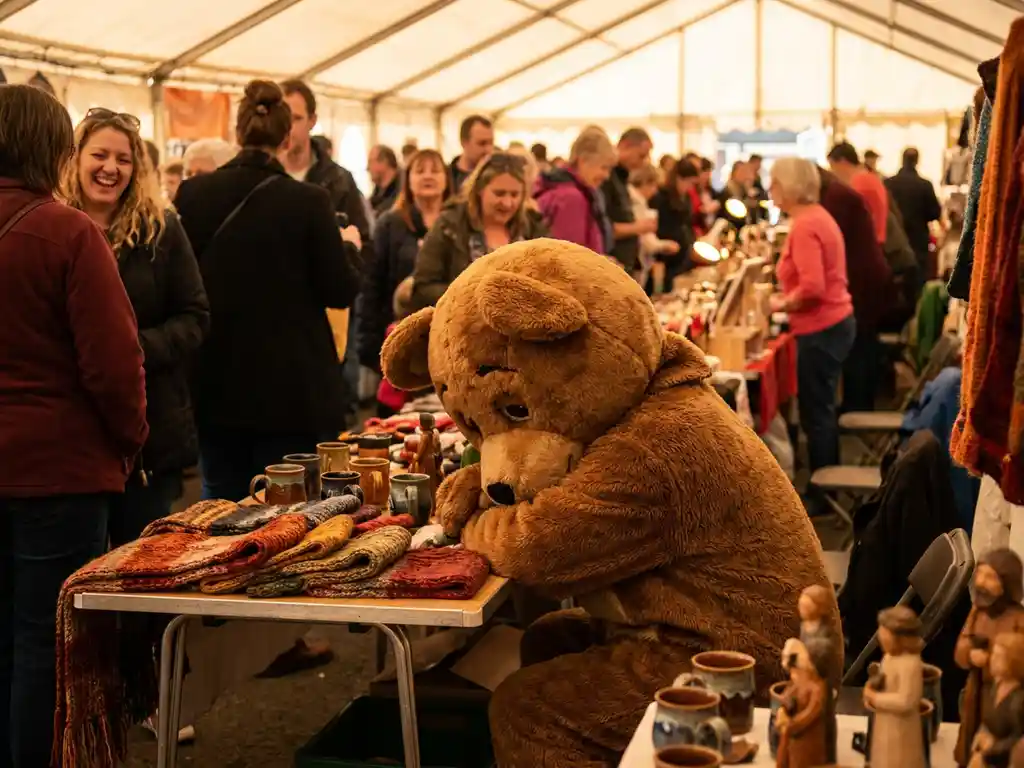
The products you should avoid selling at a craft fair are those that are oversaturated, too fragile to transport safely, priced too low to be profitable, or legally restricted without the right permits. Craft fairs reward originality, practicality, and clear value — so the wrong product choice can mean a long day with little to show for it. Below, we break down the most common pitfalls so you can walk into your next fair with confidence.
Which product categories are already oversaturated at craft fairs?
The most oversaturated product categories at craft fairs include generic candles, mass-produced jewelry, basic soap bars, printed tote bags, and watercolor prints. These items appear at nearly every market stall, which makes it extremely difficult for a new seller to stand out — no matter how good their version is. Oversaturation drives prices down and reduces buyer urgency.
This does not mean these products are inherently bad. It means that if you sell them without a genuinely distinctive angle, you are competing on price alone — and that is a race to the bottom. Shoppers at craft fairs are looking for something they have not seen before. If your table looks like five others in the same row, most visitors will walk past without stopping.
Before committing to a product category, visit a few local craft fairs as a shopper first. Count how many vendors are selling similar items. If you spot more than three stalls with the same type of product, that market is likely saturated in your area. Focus instead on products that reflect a genuinely unique skill, a local angle, or a niche that is underrepresented.
What types of items are too fragile or impractical to sell at craft fairs?
Items that are too fragile or impractical to sell at craft fairs include large ceramic sculptures, full-size glass artwork, oversized framed prints, and delicate paper goods with no protective packaging. These products are difficult to transport without damage, hard to display safely on a standard table, and stressful to hand over to customers who may be carrying shopping bags or navigating a crowd.
Practicality matters at every stage of the craft fair experience — not just for buyers, but for you as a seller. Consider the following before choosing what to bring:
- Can the item survive a car journey packed alongside other stock?
- Does it require special display equipment that is hard to set up in a short window?
- Will a customer be able to carry it home comfortably?
- Is it likely to get damaged if someone picks it up and puts it down?
- Does it need refrigeration or special storage conditions?
If the answer to any of these questions creates a logistical headache, reconsider whether the item is right for the craft fair format. Products that are compact, durable, and easy to bag up tend to perform far better in this environment.
Why do low-priced items often fail at craft fairs?
Low-priced items often fail at craft fairs because the economics simply do not work. When you factor in the cost of materials, your time, the stall fee, travel, and packaging, items priced under a certain threshold rarely generate enough revenue to make the day worthwhile. Craft fair shoppers generally expect handmade quality and are willing to pay for it — but only if the value is clearly communicated.
There is also a psychological dimension to pricing. Items priced very cheaply can actually signal low quality to buyers, making them less likely to purchase. A handmade item priced at a fair market rate feels more credible and desirable than the same item priced as though it came from a discount bin.
Here is a simple way to check whether your pricing makes sense before the fair:
- Calculate your total material cost per unit.
- Estimate your production time and assign an hourly rate you are comfortable with.
- Add a share of your stall fee, travel costs, and packaging per unit sold.
- Add a profit margin on top of that total.
- If the resulting price feels too high for the market, the product may not be the right fit — not the price.
Products that cannot be priced sustainably without looking overpriced for the venue are better suited to online sales or wholesale channels, where the cost structure is different.
What products are legally restricted or require permits to sell at craft fairs?
Products that are commonly legally restricted or require permits to sell at craft fairs include homemade food and beverages, alcohol, CBD products, certain cosmetics, items containing trademarked characters or logos, and handmade toys intended for children. The specific rules vary by country, state, and even individual event, so it is essential to check regulations before your first sale.
Food sellers, in particular, face some of the most complex requirements. Depending on your location, you may need a food handler’s license, a cottage food permit, or proof that your products were made in a certified kitchen. Selling without the correct documentation can result in being asked to pack up mid-event or facing fines.
Fan art and items featuring recognizable brand logos or cartoon characters are another common trap. Even if you created the artwork yourself, selling it commercially without a license from the rights holder is a copyright infringement. This applies to everything from popular film characters to sports team logos.
Always contact the event organizer before the fair to ask whether your product category requires any specific documentation. Most reputable craft fairs will tell you upfront what is and is not permitted.
How do you know if your product is a good fit for a craft fair audience?
A product is a good fit for a craft fair audience if it is visually appealing from a distance, easy to understand at a glance, priced for an impulse or considered purchase, and offers something that cannot easily be found in a high street shop. Craft fair shoppers are drawn to originality, craftsmanship, and personal stories — not products that feel mass-produced or generic.
Think about the typical craft fair visitor. They are browsing, often with a loose budget and an openness to discovering something new. They respond to products that have a clear identity, a story behind them, and a sense of care in how they are presented. If your product requires a lengthy explanation before someone understands what it is or why they would want it, that is a warning sign.
Test your product concept before investing in a full stall. Share photos in relevant online communities, ask for honest feedback from people outside your immediate circle, and consider selling a small batch through a local pop-up or online marketplace first. Real buyer behavior is far more informative than guesswork.
How Promo Bears helps you make a lasting impression beyond the fair
Craft fairs are a brilliant way to connect with people face to face — but the brands and sellers who get the most out of them are the ones who think beyond the stall. That is where branded promotional products come in. At Promo Bears, we help businesses, schools, and organizations create tangible, memorable items that keep their brand visible long after the event is over.
Our custom stress balls are one of our most popular products for exactly this reason. Unlike standard promotional items, ours are fully custom shaped to match your logo, mascot, or product concept — built from durable PU foam with precise color matching and fine detail. They are compact enough to hand out at any event, practical enough to sit on someone’s desk for months, and distinctive enough to actually be kept rather than thrown away.
Here is what makes our custom stress balls a smart choice for trade show giveaways and event promotions:
- Fully custom shapes based on your own design or concept — no standard molds
- PMS color matching available for precise brand consistency
- Free concept artwork included, with unlimited revisions
- Option to approve a physical prototype before bulk production
- Production time of 10 to 12 weeks after design approval, with rush options available
- Worldwide shipping to the USA, Canada, Europe, Australia, and beyond
Whether you are preparing for a trade show, a community fair, or a large-scale brand campaign, the right giveaway leaves a lasting impression. Request a free quote today and let us help you create something your audience will actually want to keep.
Frequently Asked Questions
How many products should I bring to my first craft fair?
For your first craft fair, aim for a focused range of 3 to 5 distinct product types rather than a large, scattered inventory. Having too many different items can overwhelm shoppers and make your table look unfocused, while a curated selection tells a clearer brand story. Bring enough stock of each item to last the full day — running out early is a good problem, but arriving underprepared is not. A general rule of thumb is to bring roughly twice what you realistically expect to sell, especially if you are unsure of foot traffic.
What are the most common mistakes first-time craft fair sellers make?
The most common mistakes include underpricing products out of nervousness, failing to bring enough change or a card payment option, and neglecting the visual presentation of their stall. Many first-timers also forget essential supplies like extra price tags, a tablecloth, bags for purchases, and business cards or a way to capture repeat customer details. Arriving without a plan for how to display your items at varying heights is another frequent oversight — a flat table of products is far less eye-catching than one with levels, stands, and props that draw the eye.
Can I sell at a craft fair if I also sell the same products online?
Absolutely — in fact, selling across both channels is a smart strategy that many successful makers use. Craft fairs give customers a chance to see, touch, and connect with your products in person, which can drive follow-up purchases through your online store. Make sure to have your website, Etsy shop, or social media handles clearly displayed at your stall so browsers who do not buy on the day can find you later. Some sellers even offer a small exclusive discount for in-person purchases to incentivize on-the-spot buying.
How do I handle it if my products are not selling well mid-fair?
If sales are slow mid-fair, start by observing whether people are stopping at your table at all — if they are not, the issue is likely your display or signage rather than the products themselves. Try repositioning your most visually striking item to the front, adding a clear price to everything, or simply smiling and making brief, friendly eye contact with passersby. If people are stopping but not buying, listen to the questions they ask and the comments they make — that real-time feedback is invaluable for adjusting your pitch or pricing at future events.
What should I do if a competing vendor is selling almost the same product as me?
Finding a near-identical product at a neighbouring stall can be unsettling, but the best response is to lean into what makes your version distinct rather than trying to undercut on price. Focus on your story, your craftsmanship, your packaging, and your customer interaction — these are all differentiators that a shopper will notice. If the overlap is significant and recurring at multiple events, it is also worth using the experience as motivation to evolve your product line toward something more uniquely yours. Craft fair audiences are perceptive, and authenticity consistently wins over imitation.
Is it worth applying to juried craft fairs, and how are they different?
Juried craft fairs require sellers to apply and have their work reviewed and approved by a selection panel before being offered a stall — and they are absolutely worth pursuing once you have a polished product range. Because entry is curated, these events tend to attract more serious buyers with higher spending intent, and the overall quality of vendors means less direct competition from mass-produced or low-effort products. Prepare a strong application with clear, well-lit photos of your products and display setup, and be ready to describe your making process, as handmade authenticity is usually a key judging criterion.
How can I collect customer information at a craft fair to build a mailing list?
The most effective low-friction method is to offer a simple incentive in exchange for an email address — such as entry into a small giveaway, a discount code for your online shop, or a free downloadable resource relevant to your niche. Keep a physical sign-up sheet on your table or use a tablet with a simple form if you have reliable connectivity. Make sure to comply with applicable data privacy regulations such as GDPR or CAN-SPAM by being transparent about how you will use their contact details. A well-maintained mailing list built at in-person events can become one of your most valuable long-term marketing assets.