
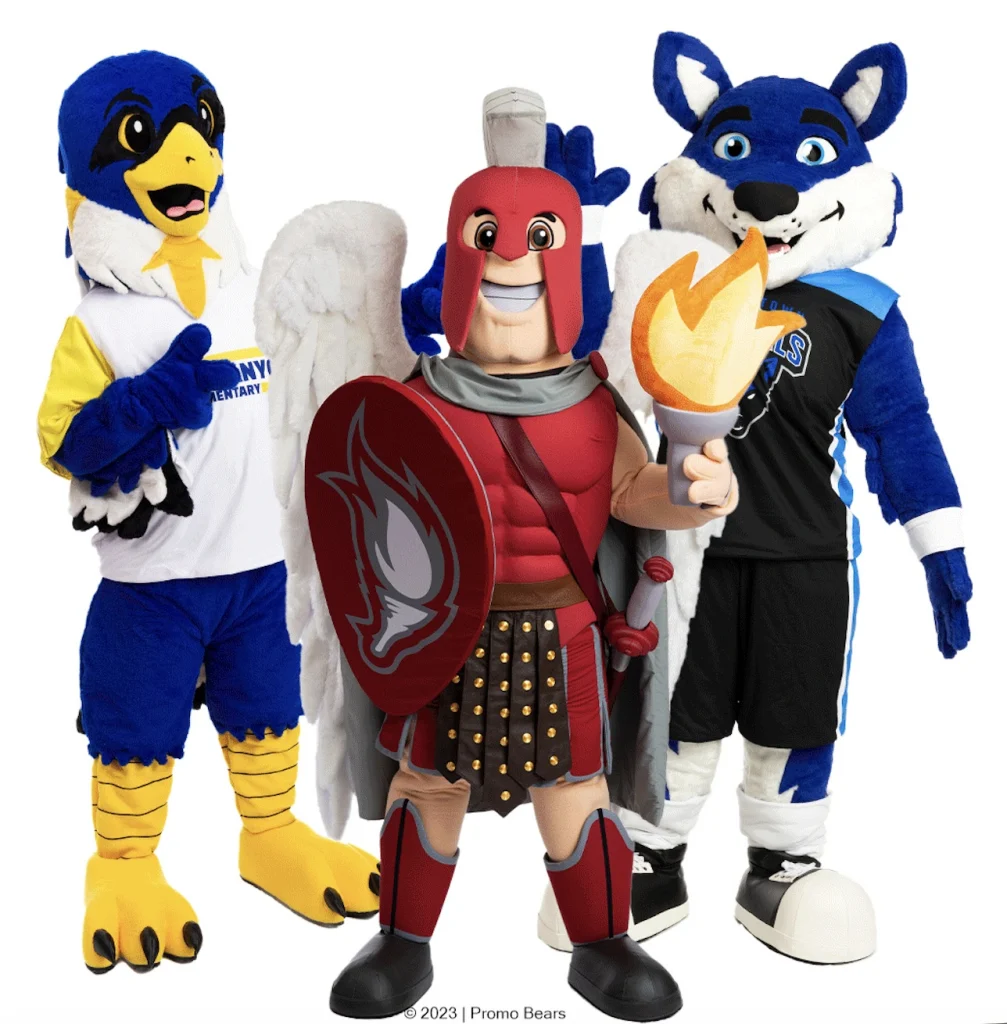
A good mascot combines instant visual recognition, a strong connection to the brand it represents, and the practical qualities that make it easy to wear, reproduce, and love. The best mascots are not just eye-catching characters — they are strategic brand assets that communicate personality, build emotional bonds with audiences, and work consistently across every format and platform. Below, we break down the specific qualities that separate a truly great mascot from one that gets forgotten.
What makes a mascot instantly recognizable?
A mascot becomes instantly recognizable through a bold, simple silhouette and a distinctive color palette that stands out at a glance. The strongest mascot designs rely on exaggerated features, high-contrast colors, and a clear visual personality that communicates character even from a distance or at a small size. Complexity is the enemy of recognition.
Think about the mascots that have stood the test of time. They all share a few design fundamentals: a unique shape that reads clearly in two seconds or less, a limited set of colors that are consistent across every application, and facial expressions or physical traits that are immediately associated with the brand they represent.
In mascot design, simplicity is a deliberate creative decision. A design that looks great on a giant inflatable, a stress ball, and a social media avatar is far more powerful than one that only works in a single format. The goal is a character so visually distinct that audiences recognize it before they even read the name next to it.
Custom Mascot Costume
Looking for a custom mascot costume?
Get a free quote and concept illustration — no commitment, response within 24 hours.
Request a Free Quote →How does a mascot reflect a brand’s identity?
A mascot reflects a brand’s identity by translating abstract values — like energy, trust, friendliness, or innovation — into a physical character with personality, expression, and attitude. Every design choice, from the mascot’s posture to its color scheme, should reinforce what the brand stands for and how it wants its audience to feel.
This is why the design process should always start with the brand itself. What is the organization’s mission? Who is the target audience? What emotions should the mascot trigger? A university mascot communicates school spirit and community pride. A corporate mascot for a tech brand might project precision and forward-thinking energy. A mascot for a children’s retail brand needs warmth and approachability above all else.
The most effective mascots are not generic characters dropped onto a logo. They are purpose-built representations of a brand’s story, values, and audience relationship. When the mascot feels like a natural extension of the brand rather than an add-on, it becomes a genuinely powerful marketing tool.
What physical qualities make a mascot costume comfortable to wear?
A mascot costume is comfortable to wear when it is lightweight, well-ventilated, and sized correctly for the performer. The best costumes balance durability with wearability, featuring an integrated ventilation system to manage heat, 3D realistic eyes that give the performer good visibility, and materials that are easy to move in during extended wear.
Comfort is not a luxury in mascot costume production — it is a performance requirement. A performer who is overheating, struggling to see, or restricted in movement cannot deliver the energetic, engaging presence that makes a mascot effective. Physical discomfort directly impacts the quality of every brand interaction the mascot is part of.
Key physical qualities to look for in a well-made mascot costume include:
- A built-in ventilation system to regulate temperature during active wear
- Lifelike 3D eyes that provide the performer with clear sightlines
- Lightweight construction that reduces fatigue during long events
- A standard fit designed for performers between 5’7″ and 6’1″, with custom sizing available
- High-quality materials that hold their shape and color after repeated use
A costume that checks all of these boxes allows the performer to stay in character longer, move more naturally, and create the kind of memorable interactions that audiences remember long after the event is over.
How versatile should a good mascot be across different formats?
A good mascot should work seamlessly across every format it will appear in, from a full-scale costume at a live event to a printed sticker, a plush toy, a stress ball, or a social media graphic. Versatility is one of the most practical tests of a strong mascot design, and it should be considered from the very first concept stage.
Format versatility matters because mascots rarely live in just one place. A brand that invests in a custom mascot costume will almost certainly want that same character on promotional merchandise, digital platforms, and marketing materials. If the original design is too complex to reproduce at a small scale or too detailed to translate into a plush toy, the brand loses the consistency that makes mascots so powerful.
The smartest mascot design strategies plan for multi-format use from day one. A character designed with clean lines, a bold palette, and a simple silhouette will translate beautifully whether it appears on a giant inflatable at a stadium, a keychain at a trade show, or a sticker on a product package. That consistency is what builds recognition over time.
What role does audience connection play in mascot effectiveness?
Audience connection is the single most important factor in mascot effectiveness. A mascot that resonates emotionally with its target audience creates loyalty, encourages sharing, and turns passive observers into active brand ambassadors. Without that emotional hook, even the most visually impressive mascot remains just a costume.
The best mascots feel like they belong to the audience as much as they belong to the brand. School mascots inspire fierce pride among students and alumni. Sports team mascots become symbols of community identity. Corporate mascots that genuinely reflect the values and personality of their audience build trust in a way that traditional advertising rarely achieves.
Building audience connection starts with understanding who the mascot is designed for. Age, cultural context, sense of humor, and emotional triggers all influence how a character is received. A mascot designed with the audience in mind — rather than just the brand’s internal preferences — is far more likely to generate the kind of organic enthusiasm that drives word-of-mouth and long-term brand recognition.
How easy should a mascot costume be to maintain and clean?
A mascot costume should be straightforward to clean and maintain, because a costume that is difficult to care for will quickly show wear, develop hygiene issues, and create logistical headaches for the teams responsible for managing it. Ease of maintenance is a practical quality that directly affects the costume’s longevity and the brand’s image.
Mascot costumes are worn in active, often outdoor environments. They absorb sweat, collect dirt, and are handled repeatedly by performers and sometimes by enthusiastic fans. A costume built from high-quality, easy-to-clean materials with removable or washable components protects that investment and keeps the mascot looking sharp event after event.
A care manual included with the costume is a practical necessity, not an optional extra. It ensures that everyone who handles the costume knows exactly how to clean, store, and transport it correctly, extending the life of the product and protecting the quality of the character’s appearance over time.
How Promo Bears helps you create a mascot with all the right qualities
At Promo Bears, we design and produce custom mascots built around every quality covered in this article. From the very first free concept illustration to final delivery, our team works with you to create a character that is visually bold, brand-aligned, comfortable to wear, and ready to perform across every format your campaign demands.
Here is what you get when you work with us:
- A free concept illustration based on your logo or design idea, with unlimited revisions until you are completely satisfied
- A dedicated project manager who oversees every stage from design to delivery
- Mascot costumes featuring 3D realistic eyes, an integrated ventilation system, and high-quality materials that are easy to clean
- A full range of mascot merchandise to extend your character across formats, including plush toys, stress balls, stickers, and more
- A thorough quality control review with results photos shared for your approval before shipping
With over 19 years of experience in mascot design and more than 4,000 mascots created for brands including NASA, Amazon, and Walmart, we know exactly what it takes to build a mascot that connects with audiences and delivers real brand value. Ready to bring your mascot to life? Get your free quote and let’s get started.
Frequently Asked Questions
How long does it typically take to design and produce a custom mascot costume from scratch?
The timeline for a custom mascot costume varies depending on design complexity and production requirements, but most projects run between 6 to 12 weeks from initial concept to delivery. This includes the design approval phase, material sourcing, fabrication, and quality control review. Planning ahead is critical — brands that rush production often compromise on fit, finish, or detail, so building lead time into your event or campaign schedule is always the smarter approach.
What is the best way to brief a mascot designer so the final character truly reflects my brand?
The most effective briefs combine visual references with a clear written description of your brand’s personality, target audience, and the emotions you want the mascot to trigger. Share your brand guidelines, logo, color palette, and examples of mascots you admire — even from outside your industry. The more context a designer has about who the mascot is speaking to and what it should make people feel, the more purposeful and on-brand the final character will be.
Can an existing mascot design be updated or refreshed without losing audience recognition?
Yes — a well-executed mascot refresh can modernize a character’s look while preserving the core visual elements that audiences already associate with your brand. The key is to evolve rather than replace: retain the signature silhouette, color palette, and defining features while updating proportions, expressions, or styling to feel more contemporary. Abrupt redesigns that abandon familiar traits risk losing the emotional equity built up with your audience over time.
What common mistakes should brands avoid when designing a mascot for the first time?
The most common mistakes include overcomplicating the design with too many colors or fine details that don’t scale down well, designing without a specific audience in mind, and treating the mascot as an afterthought rather than a strategic brand asset. Brands also frequently underestimate the importance of format versatility — a mascot designed only with the costume in mind will struggle when it needs to appear on merchandise, digital platforms, or printed materials. Starting with simplicity and a clear brand strategy prevents most of these pitfalls.
How many performers should be trained to wear a mascot costume for a busy event season?
Having at least two to three trained performers for a single mascot is strongly recommended, especially for organizations with a busy event calendar. Mascot performance is physically demanding, and relying on a single performer creates a significant risk if that person is unavailable due to illness, scheduling conflicts, or fatigue. Cross-training multiple performers also ensures consistency in how the character moves and interacts with audiences, which is essential for maintaining a coherent brand experience.
Is it possible to create mascot merchandise that matches the costume if the character was designed by a different company?
Yes, in most cases mascot merchandise can be produced to match an existing character as long as you have access to the original design files, brand color specifications, and any relevant style guides. Providing detailed reference materials — including multiple angles of the character and Pantone color codes — gives the merchandise producer what they need to maintain visual consistency across products. Working with a single vendor who handles both the costume and merchandise production from the start is the most reliable way to guarantee a perfect match.
At what point in a rebranding process should a company introduce or update its mascot?
A mascot introduction or update should happen after the core brand identity — including the new name, logo, color palette, and messaging — has been finalized, not before. Designing a mascot before the brand foundation is locked in risks misalignment that requires costly revisions later. Once the brand strategy is set, the mascot can be developed as a purposeful extension of it, ensuring every design decision reinforces the new identity rather than contradicting it.