
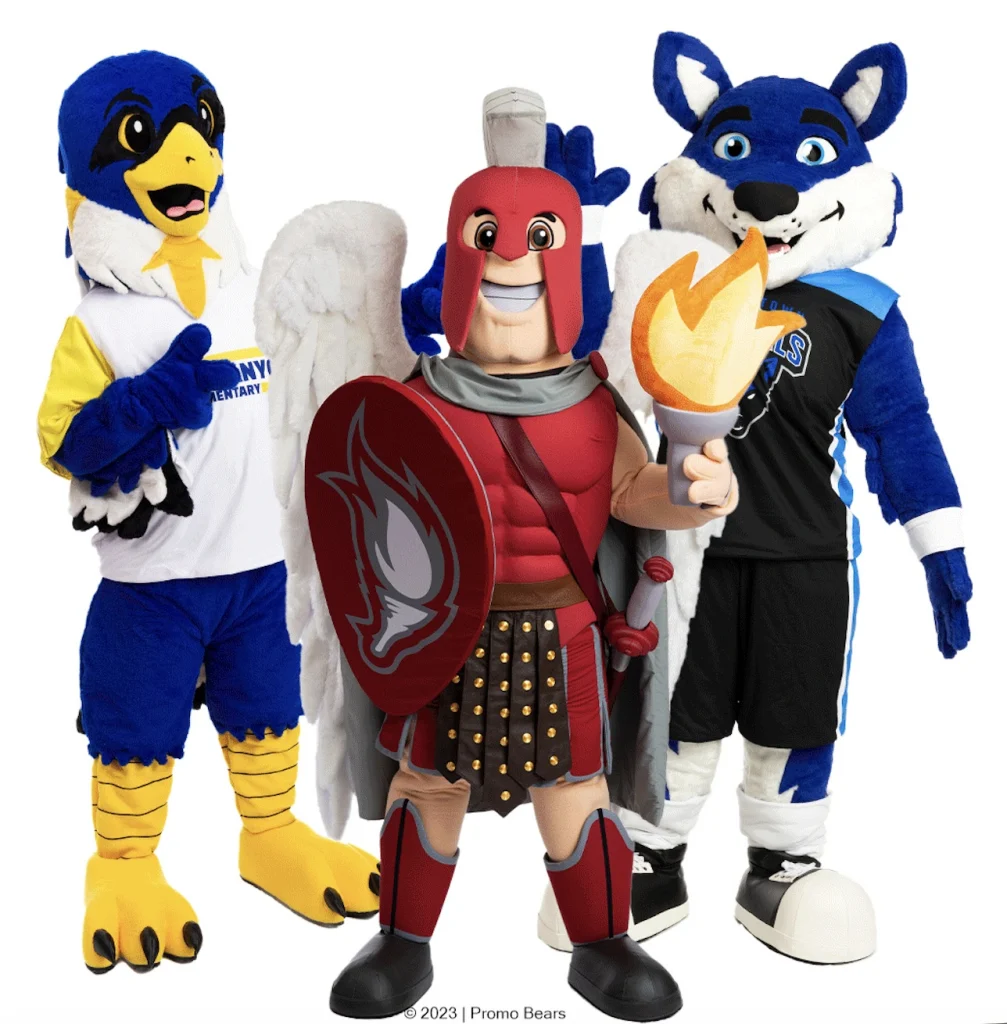
When building a child-friendly brand image, look for a vendor who combines creative expertise with proven safety standards, a transparent production process, and a genuine understanding of what resonates with younger audiences. The right partner brings your brand to life in a way that feels approachable, playful, and trustworthy to both children and the parents or educators who influence their world. Below, we answer the most common questions marketing managers ask before choosing a vendor for child-friendly branding.
What makes a brand image truly child-friendly?
A child-friendly brand image is one that communicates warmth, approachability, and fun in a way that children immediately connect with and that parents trust. It relies on bright, inviting visuals, friendly characters, simple messaging, and products that feel safe and engaging rather than corporate or intimidating.
For brands targeting families, schools, or younger consumers, the visual identity needs to do two jobs at once. It has to excite children while also reassuring the adults around them. That means avoiding anything that feels threatening, confusing, or overly complex. Characters with round shapes, expressive faces, and vibrant colors tend to perform well because they trigger positive emotional responses in children from a very young age.
Consistency matters too. A child-friendly brand image is not just a mascot or a logo. It shows up across every touchpoint, from promotional merchandise to event appearances, and it needs to feel cohesive every time. When a child sees your mascot at a school event and then again on a keychain or a plush toy, that repeated positive association builds real brand loyalty early on.
What types of promotional products work best for child-friendly branding?
The most effective promotional products for child-friendly branding are tactile, fun, and genuinely useful to children. Items like plush toys, stickers, stress balls, keychains, and custom inflatables consistently perform well because they create a hands-on connection with your brand that kids actually want to keep and share.
Here is a quick look at what works and why:
- Plush toys: Soft, huggable, and highly memorable. Children form strong emotional bonds with plush characters, which makes them powerful long-term brand ambassadors in the home.
- Stickers: Low cost, fast to produce (around 7 to 10 days), and universally loved by kids. They travel everywhere and extend your brand’s reach organically.
- Stress balls: Tactile and fun for older children and teens. Custom shapes with PMS color matching make them distinctive rather than generic. Production runs 10 to 12 weeks, so plan ahead.
- Keychains and enamel pins: Collectible items that children and teens love. They are easy to distribute at events and carry your brand wherever they go.
- Giant inflatables and mascot costumes: Perfect for events, school visits, and retail activations. A life-size mascot creates unforgettable moments that children talk about long after the event ends.
The key is choosing products that feel like gifts rather than advertisements. When a child genuinely wants to keep or use something, your brand stays in their world in the most natural way possible.
How do you evaluate a vendor’s creative capability for child-friendly designs?
Evaluate a vendor’s creative capability by reviewing their portfolio of character-based work, asking about their revision process, and checking whether they offer a free concept illustration before you commit. A strong vendor will show you a wide range of styles, demonstrate experience with mascots and friendly characters, and give you full creative control over the final design.
Beyond the portfolio, ask these questions before signing anything:
- Do you provide a free concept illustration based on my brief, or do I pay upfront for design work?
- How many revision rounds are included, and is there a limit?
- Do your designers have experience creating characters specifically for child-facing brands?
- Can you show examples of mascots or merchandise you have produced for schools, family brands, or youth-oriented organizations?
- Will I receive a fixed quote based on my approved design before production begins?
A vendor who hesitates on any of these questions is worth approaching with caution. The best creative partners are transparent about their process and confident enough in their work to show you a concept before asking for a financial commitment.
What quality and safety standards should a mascot vendor meet?
A mascot vendor serving child-friendly brands should meet rigorous quality standards around materials, construction, wearability, and safety. For costumes specifically, look for built-in ventilation systems, non-toxic and durable materials, and a thorough quality control process that includes visual inspection and result photos before shipment.
For merchandise products like plush toys, stress balls, and keychains that may end up in children’s hands, ask your vendor about material safety. Products intended for younger audiences should use non-toxic materials and meet applicable product safety standards in the markets where they will be distributed.
On the production side, quality control should not be an afterthought. Ask whether the vendor conducts a final inspection before shipping and whether you receive approval photos or samples before mass production begins. A vendor who skips this step introduces unnecessary risk into your campaign.
Comfort matters for mascot costumes too. A performer who is overheating or uncomfortable will not deliver the energetic, engaging experience that makes a child-friendly mascot appearance memorable. Look for costumes with integrated ventilation, realistic 3D eyes for good visibility, and a fit that works for the performers on your team.
Should you work with a specialist vendor or a general promotional products supplier?
For child-friendly branding, a specialist vendor almost always delivers better results than a general promotional products supplier. Specialists bring deeper creative expertise, more refined production processes, and a stronger understanding of what makes mascots and character-based merchandise connect emotionally with younger audiences.
General suppliers can handle commodity items like branded pens or tote bags efficiently. But when your brand image depends on a custom mascot costume, a character-driven plush toy, or a giant inflatable that needs to look spectacular at a school event, the difference in quality between a specialist and a generalist becomes very visible very quickly.
Specialists also tend to offer a more complete end-to-end service. Rather than managing a costume vendor, a merchandise supplier, and an inflatable producer separately, a specialist partner handles everything from the initial concept illustration through to delivery. That kind of consolidated partnership saves time, reduces the risk of inconsistency across products, and gives you a single point of contact who understands your brand inside and out.
How do you justify the ROI of a child-friendly mascot to internal stakeholders?
Justify the ROI of a child-friendly mascot by framing it as a long-term brand asset rather than a one-time expense. A well-designed mascot generates value across multiple campaigns, events, and product lines, which means the cost per impression decreases significantly over time compared to disposable marketing materials.
When presenting to internal stakeholders, focus on these concrete value drivers:
- Brand recognition: A distinctive mascot makes your brand immediately identifiable in crowded environments like school fairs, retail activations, or community events.
- Emotional engagement: Children who form a positive connection with a mascot become loyal customers and brand advocates. That loyalty often extends to the whole family.
- Earned media and word of mouth: A memorable mascot appearance generates social sharing, photos, and organic conversations that extend your campaign’s reach without additional spend.
- Merchandise revenue: Mascot-branded merchandise like plush toys, stickers, and keychains can generate direct revenue while reinforcing brand awareness.
- Reusability: Unlike a one-time ad placement, a custom mascot costume can appear at dozens of events over several years.
The strongest ROI argument is longevity. A quality mascot costume built to last, combined with a range of branded merchandise that children actually want, creates a brand presence that compounds in value over time rather than disappearing after a single campaign cycle.
How Promo Bears helps you build a child-friendly brand image
We have spent nearly two decades helping brands, schools, sports teams, and organizations create characters and merchandise that genuinely connect with younger audiences. From custom mascot costumes ready in 12 to 16 weeks to plush toys, stickers, stress balls, and giant inflatables, we handle every element of your child-friendly brand identity under one roof.
Here is what you get when you work with us:
- A free concept illustration based on your logo or design idea, with unlimited revisions
- A dedicated project manager who oversees your order from first sketch to final delivery
- Custom mascot costumes with 3D realistic eyes, built-in ventilation, and a thorough quality control process
- A full range of child-friendly merchandise including plush toys, stress balls, keychains, stickers, and inflatables
- Fixed pricing based on your approved design, with no vague estimates
Whether you are launching a new character or expanding an existing mascot into a full merchandise line, we are ready to bring your vision to life. Get your free quote and start building a brand image that children and families will remember.
Frequently Asked Questions
How far in advance should we start planning a mascot or branded merchandise campaign for a major event?
Lead times vary significantly by product, so planning ahead is critical. Mascot costumes typically require 12 to 16 weeks from approved design to delivery, while stress balls and more complex merchandise run 10 to 12 weeks. Even faster items like stickers take 7 to 10 days, but factor in design approval time on top of production. A safe rule of thumb is to begin vendor conversations at least four to five months before your event date to avoid rush fees and ensure there is enough time for revisions.
What if we already have an existing mascot or logo — can a vendor still help, or is this only for brands starting from scratch?
Absolutely — most specialist vendors are equally comfortable working from an existing character as they are developing one from scratch. If you already have a mascot or logo, a good vendor will use it as the foundation for your concept illustration and translate it faithfully into a three-dimensional costume, plush toy, or inflatable. The key is to provide as many reference files and brand guidelines as possible upfront so the creative team can match your existing identity rather than reinterpret it.
How do we ensure consistency when ordering multiple types of products — for example, a mascot costume, plush toys, and stickers — from the same campaign?
The most reliable way to ensure consistency across product types is to work with a single vendor who handles all formats under one roof. When different suppliers produce different items independently, small variations in color, proportion, and character expression can accumulate and dilute your brand identity. A consolidated partner uses the same approved design files and color references across every product, so your mascot looks the same whether it is a life-size costume at a school event or a keychain in a child’s backpack.
What are the most common mistakes brands make when creating a child-friendly mascot for the first time?
The most frequent mistake is designing for adult aesthetic preferences rather than what actually resonates with children — overly sleek, angular, or complex characters tend to underperform compared to rounder, more expressive ones. Another common pitfall is underestimating production timelines and rushing the design approval stage, which often results in a mascot that does not fully reflect the brand. Finally, many brands treat the mascot as a one-off activation rather than a long-term asset, missing the opportunity to extend it into merchandise, digital content, and repeat appearances that compound brand recognition over time.
How should we brief a vendor to get the best possible creative output for a child-friendly character?
A strong creative brief covers four essentials: your brand personality (the three to five words you want children and parents to associate with you), your target age range (a character for toddlers looks and feels very different from one aimed at preteens), any visual references or existing brand assets, and the contexts where the mascot will appear (events, merchandise, digital, or all three). The more specific you are about the emotional response you want to trigger, the better equipped the design team will be to deliver a character that genuinely connects rather than a generic friendly figure.
Can branded merchandise for children create any liability concerns, and how do we protect ourselves?
Yes, and it is an important consideration — particularly for items like plush toys, stress balls, and keychains that younger children may put in their mouths or handle roughly. Always ask your vendor to confirm that materials are non-toxic and that products meet the applicable safety standards for your target market, such as ASTM F963 in the United States or EN 71 in Europe. Request documentation where possible, and ensure your vendor conducts a final quality control inspection before shipment. Working with a specialist who has experience supplying child-facing brands significantly reduces this risk, as safety compliance is already built into their standard process.
What is the best way to measure whether our child-friendly mascot is actually working?
Measure mascot effectiveness through a combination of quantitative and qualitative signals. On the quantitative side, track metrics like event attendance, merchandise uptake, social media mentions and photo tags featuring the mascot, and any uplift in brand awareness scores among your target demographic. Qualitatively, pay attention to how children and parents respond in person — spontaneous engagement, requests for photos, and unprompted conversations about the character are strong indicators of emotional connection. Over multiple campaigns, a mascot that consistently drives these signals is delivering real brand equity, not just novelty.