
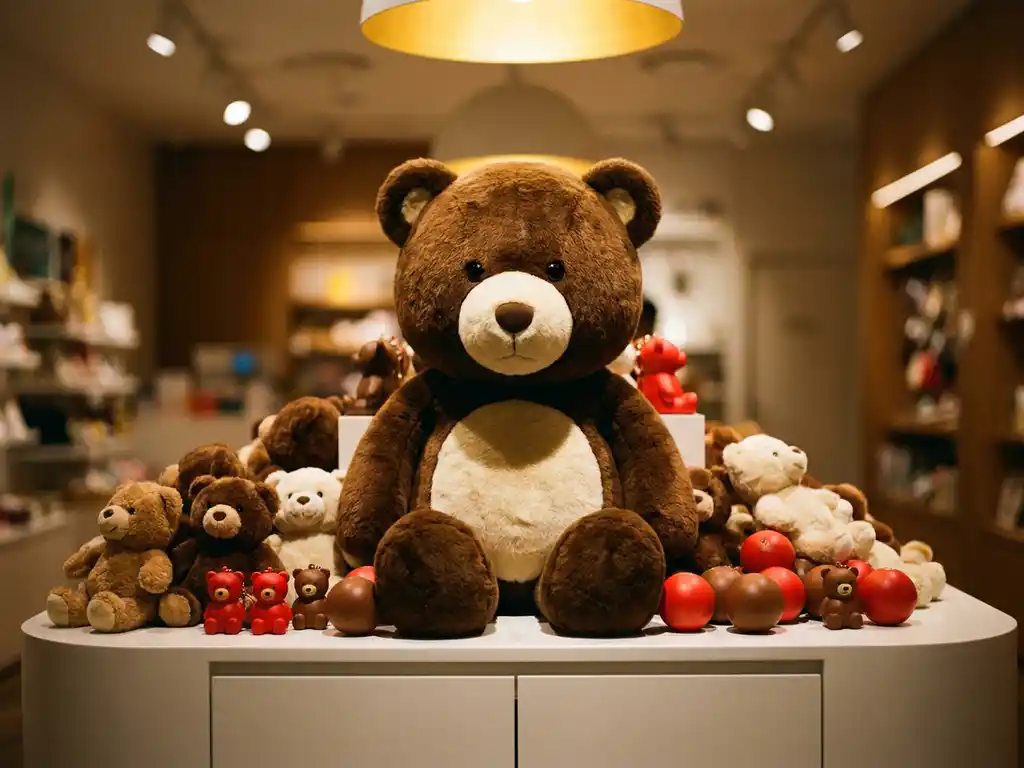
The merchandise categories that sell the most are apparel, drinkware, bags, and small branded accessories like keychains and stress balls. These items consistently outperform others because they are practical, visible, and used repeatedly in everyday life. Whether you are building a brand, running an event, or rewarding loyal customers, the right company swag turns everyday objects into powerful marketing tools. Below, we break down the key questions every brand manager should be asking before investing in merchandise.
Which merchandise categories generate the highest sales volume?
Apparel leads all merchandise categories in sales volume, followed closely by drinkware, bags, and small accessories. These product types dominate because they combine everyday utility with high brand visibility. When someone wears a branded hoodie or carries a logo tote bag, they become a walking advertisement — and that reach is hard to match with any other marketing format.
Beyond apparel, drinkware such as reusable bottles and mugs performs exceptionally well because people use them daily, at home, at work, and on the go. Bags offer similar staying power. Small accessories, including keychains, lanyards, and custom stress balls, round out the top tier because they are affordable to produce in volume and easy to distribute at scale.
The common thread across all high-performing categories is daily utility. Products that solve a small problem or fit naturally into someone’s routine get used, and used products keep your brand in front of people far longer than a digital ad ever could.
What makes certain merch items sell better than others?
The best-selling merchandise items share four qualities: they are useful, they are well-made, they are visually appealing, and they feel relevant to the recipient. When any of these elements is missing, even a heavily distributed product ends up in a drawer or a bin.
Usefulness is the most critical factor. A product that solves a real, everyday need gets picked up and kept. Quality matters just as much — a flimsy item reflects poorly on your brand, while a durable, well-finished product builds trust. Visual appeal drives the initial decision to pick it up, and relevance determines whether it resonates with the specific audience receiving it.
There is also a psychological element at play. People attach meaning to physical objects in a way they simply do not with digital content. A well-designed piece of company swag creates a tangible connection between the recipient and your brand, which is why thoughtful merchandise investments consistently deliver strong returns over time.
What type of merch works best for brand recognition?
For brand recognition, wearables and high-visibility items perform best. Branded apparel, caps, bags, and accessories put your logo in front of new audiences every time the item is used in public. The more visible and portable the item, the more impressions it generates over its lifetime.
Consistency matters here too. Merchandise that uses your exact brand colors, fonts, and logo treatment reinforces recognition far more effectively than generic items with a simple print. Every touchpoint should feel unmistakably like your brand.
Unique, eye-catching formats also punch above their weight. A custom-shaped stress ball molded to look like your product or mascot, for example, is far more memorable than a standard round ball with a logo slapped on it. Distinctiveness is what makes people talk about a product — and word of mouth is still one of the most powerful brand-building forces available.
How does custom merchandise compare to generic promotional products?
Custom merchandise significantly outperforms generic promotional products in brand recall, perceived quality, and long-term retention. Generic items are forgettable by definition — they look the same as what every other brand is handing out. Custom products, built around your specific design, create a distinct impression that sticks.
The difference shows up in how people treat the items. Generic swag often gets discarded after an event. Custom merchandise, especially when it is well-designed and useful, tends to be kept, shared, and talked about. That extended lifespan multiplies the return on every unit produced.
There is also a brand perception dimension. When a company invests in truly custom company swag — items that reflect genuine creative thought and production quality — it signals professionalism and confidence. That impression transfers directly to how prospects and customers perceive the brand behind the product.
What merch sells best at events and trade shows?
At events and trade shows, the best-performing merchandise items are compact, lightweight, and immediately useful. Branded tote bags, pens, notebooks, lanyards, and stress balls consistently rank among the top giveaways because attendees can use them on the spot and carry them home without hassle.
The event context adds an important layer: people are receiving dozens of items in a short period, so your merchandise needs to stand out quickly. Items with a tactile quality — something people want to pick up and interact with — have a natural advantage. A custom stress ball shaped like your product or logo, for example, invites engagement in a way that a flat printed item simply does not.
Portability is non-negotiable. Bulky or heavy items often get left behind. The ideal event giveaway fits in a bag, serves a purpose, and carries your brand clearly. When those three elements align, your merchandise travels home with the attendee and keeps working long after the event is over.
Should you sell merch or give it away for free?
Whether to sell or give away merchandise depends on your goal. If your primary objective is brand exposure and lead generation, giving items away for free at events or as part of a campaign delivers faster, wider reach. If your goal is to build a revenue stream and deepen fan or customer loyalty, selling branded merchandise can generate meaningful income while simultaneously reinforcing brand identity.
Many successful brands do both. They give away smaller, high-volume items like stickers, keychains, or stress balls to maximize reach, while selling premium apparel and accessories to their most engaged customers and fans. This tiered approach balances visibility with revenue.
There is also a perceived value argument. Merchandise that is sold, even at a modest price, tends to be valued and kept more than something handed out for free. If your merchandise is genuinely well-designed and high quality, charging for it can actually reinforce brand prestige rather than limit distribution.
How Promo Bears helps you choose and create the right merch
Finding the right merchandise strategy is one thing — executing it with the quality and consistency your brand demands is another. That is where we come in. At Promo Bears, we help marketing managers and brand teams turn their concepts into fully custom promotional products that people actually want to keep.
Our custom stress balls are a great example of what sets truly custom company swag apart from generic alternatives:
- Fully custom shapes based on your own design, logo, mascot, or product concept
- Precise PMS color matching for brand-accurate results
- Full color print available on round stress ball formats
- Built from durable, high-quality PU foam that captures fine details
- Free concept artwork included, with unlimited revisions before production
- Option to approve a physical prototype before committing to a bulk order
- Production time of 10 to 12 weeks after design approval, with rush options available
- A dedicated project manager guiding every order from concept to delivery
Every project starts with a free concept illustration, so you know exactly what you are getting before a single unit is made. Whether you are preparing for a trade show, a corporate campaign, or a seasonal giveaway, we make sure your merchandise works as hard as your brand does.
Request a free quote today and let us show you what fully custom company swag can do for your brand.
Frequently Asked Questions
How much should we budget per unit for company swag that people will actually keep?
A useful benchmark is to spend between $3 and $10 per unit for everyday giveaway items like stress balls, keychains, and drinkware, and $15 to $40 or more for premium wearables intended for loyal customers or VIP audiences. The key is matching your per-unit investment to the expected lifespan and visibility of the item — a $6 custom stress ball used daily for months delivers far better ROI than a $1 generic pen that gets lost in a week. When in doubt, spend slightly more on fewer, higher-quality pieces rather than distributing large volumes of forgettable items.
What is the minimum order quantity we should expect when ordering fully custom merchandise?
Minimum order quantities (MOQs) vary by product type and customization level, but most fully custom items — including custom-shaped stress balls, molded accessories, and specialty drinkware — typically start at 100 to 250 units. Standard items with logo printing often have lower MOQs, sometimes as few as 25 to 50 units. If you are ordering for a smaller event or a test run, it is worth asking your supplier about sample or prototype options before committing to a full production run, which can save both time and budget if adjustments are needed.
How far in advance should we order custom merchandise before a trade show or event?
For fully custom products — especially those requiring custom molds, shapes, or prototypes — you should plan for a 12 to 16 week lead time from initial brief to delivery, accounting for design approval, production, and shipping. Standard custom-printed items can often be turned around in 3 to 6 weeks, but rushing production typically increases costs and raises the risk of quality issues. As a general rule, start your merchandise planning at least 3 months before your event date to leave room for revisions, prototype approvals, and any unexpected delays.
What are the most common mistakes brands make when ordering promotional merchandise for the first time?
The most frequent mistake is prioritizing low unit cost over quality and relevance — buying the cheapest available item in bulk results in products that recipients discard, which wastes the entire budget. A close second is neglecting brand consistency: using off-brand colors, incorrect logo files, or generic product shapes dilutes the recognition value of every unit distributed. First-time buyers should also avoid skipping the prototype stage; approving a physical sample before full production is one of the most effective ways to avoid costly surprises and ensure the final product truly represents the brand.
Can custom merchandise be used effectively for internal employee engagement, or is it mainly for external marketing?
Custom merchandise is highly effective for internal audiences and is increasingly used as part of employee onboarding kits, team recognition programs, and company culture initiatives. Branded apparel, drinkware, and desk accessories given to employees create a sense of belonging and turn staff into authentic brand ambassadors in their everyday lives. The same principles that make external swag work — quality, relevance, and thoughtful design — apply equally when the audience is your own team, and employees who genuinely like and use their company merch become some of the most credible brand advocates available.
How do we measure the ROI of a custom merchandise campaign?
The most practical metrics for merchandise ROI include impressions per item (estimated uses multiplied by typical audience size per use), lead or conversion lift at events where merchandise was distributed, and brand recall scores measured through post-event surveys. For merchandise tied to a specific campaign or product launch, tracking coupon redemptions or QR code scans printed on the items provides direct attribution data. While merchandise ROI is harder to measure than a digital ad click, the compounding nature of a high-quality item used repeatedly over months or years means the true value is almost always underestimated in initial calculations.
What design tips make branded merchandise more likely to be used and kept by recipients?
The single most effective design principle is restraint — merchandise that feels wearable or usable in everyday life tends to feature clean, subtle branding rather than oversized logos that make the item feel like an obvious advertisement. Prioritize your brand’s color palette and a well-placed logo over busy graphics, and always design with the product’s shape and material in mind rather than simply transferring a flat logo onto a surface. Collaborating with a supplier who offers free concept artwork and unlimited revisions, as with custom-shaped stress balls and similar specialty items, allows you to refine the design until it genuinely looks like something people would choose to own.
Related Articles
- How do you turn customers into brand ambassadors through mascots?
- What event activations are actually driving engagement beyond photo booths and giveaways?
- What is the cost of creating a professional brand mascot in 2026?
- What kind of advertising appeals best to kids?
- How do you see out of a mascot costume?