
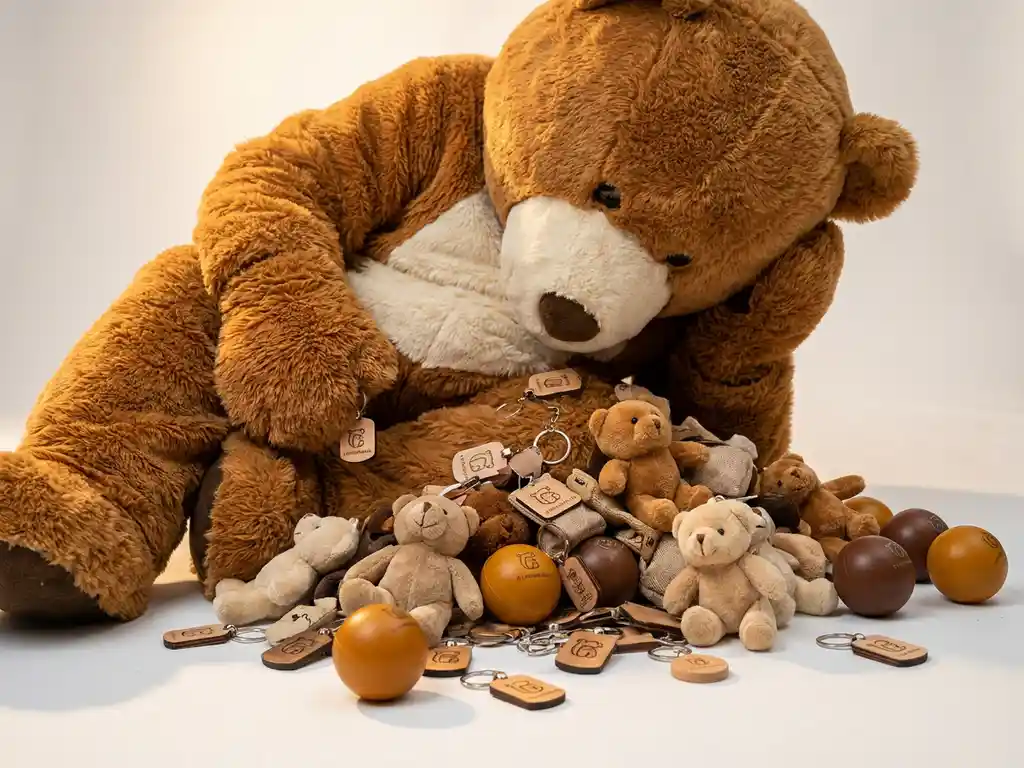
Another name for company swag is promotional merchandise or branded merchandise. The term “swag” is informal shorthand for any branded item a company gives away to promote its identity, build goodwill, or reward loyalty. Depending on the context, you might also hear it called corporate gifts, giveaways, or promo products. Below, we unpack the most common terms, what sets them apart, and how to make the most of branded items for your organization.
Why do companies use so many terms for swag?
Companies use multiple terms for swag because the word covers a wide range of items, purposes, and relationships. “Swag” is casual and energetic, making it popular at events and in startup culture. More formal settings tend to use “promotional products” or “corporate gifts” to signal professionalism. The variety of terms reflects the fact that branded merchandise serves many different goals, from trade show giveaways to employee recognition programs, and different audiences respond to different language.
There is also a practical reason: the industry itself has evolved significantly over the decades. What started as simple printed pens and notepads has grown into a creative space that includes custom plush toys, fully shaped custom stress balls, mascot costumes, and giant inflatables. As the product range expanded, so did the vocabulary used to describe it.
What are the most common alternative names for company swag?
The most common alternative names for company swag include promotional products, branded merchandise, corporate gifts, giveaways, freebies, promo items, and branded swag. Each term carries a slightly different connotation, but they all refer to items branded with a company’s logo, colors, or message that are distributed to build awareness or strengthen relationships.
Here is a quick breakdown of the terms you will encounter most often:
- Promotional products: The industry-standard term, used by suppliers and marketing professionals alike
- Branded merchandise: Emphasizes the branding element; often used in retail and licensing contexts
- Corporate gifts: Implies more intentional, relationship-focused giving, typically directed at clients or partners
- Giveaways: Casual term associated with events, contests, and trade shows
- Freebies: Very informal; highlights the no-cost-to-recipient aspect
- Promo items or promo gear: Shortened versions of “promotional products,” common in marketing teams
- Swag bag items: Refers specifically to items bundled together in a bag, often at conferences or award events
What’s the difference between promotional products and corporate gifts?
The key difference between promotional products and corporate gifts lies in intent and audience. Promotional products are typically mass-distributed branded items designed to increase visibility, often given to large groups at events or as part of a campaign. Corporate gifts are more curated, higher-value items directed at specific individuals, such as clients, partners, or employees, to build or deepen a relationship.
Think of it this way: handing out branded tote bags at a trade show is a promotional product strategy. Sending a personalized gift to a key client at the end of the year is a corporate gifting strategy. Both involve branded items, but the scale, personalization level, and budget per item are usually quite different.
In practice, the line between the two often blurs. A well-crafted promotional item, such as a fully custom-shaped stress ball that mirrors a company’s product or mascot, can carry the same impact as a corporate gift when it is thoughtfully designed and relevant to the recipient.
What types of items count as company swag?
Company swag covers an enormous range of items, from everyday office supplies to large-scale branded experiences. Almost any physical object that carries a company’s logo, colors, or messaging qualifies as swag. The category spans low-cost giveaways all the way up to premium branded merchandise and experiential items.
Common categories include:
- Wearables: T-shirts, hats, hoodies, and branded apparel
- Stationery and office items: Pens, notebooks, mousepads, and desk accessories
- Tech accessories: USB drives, phone stands, wireless chargers, and earbuds
- Drinkware: Branded mugs, water bottles, and tumblers
- Bags and totes: Reusable shopping bags, backpacks, and drawstring bags
- Novelty and fun items: Stress balls, plush toys, keychains, and stickers
- Event-scale items: Custom mascot costumes, giant inflatables, and branded banners
The best swag is always relevant to the audience receiving it. A healthcare brand might choose wellness-themed items, while a sports team might invest in fan merchandise that people genuinely want to keep and use.
How does branded merchandise boost brand recognition?
Branded merchandise boosts brand recognition by turning everyday objects into repeated, physical touchpoints with your audience. Every time someone uses a branded item, they see your logo, recall your company, and potentially introduce your brand to others around them. Unlike digital ads that disappear after a scroll, a well-made branded product stays in someone’s environment for months or even years.
The effect compounds over time. A branded item used at a desk, carried in a bag, or worn in public creates passive impressions with everyone who sees it. This is especially powerful when the item is useful, visually distinctive, or emotionally engaging. A uniquely shaped stress ball that mirrors a company’s mascot, for example, sparks curiosity and conversation in a way that a generic pen simply cannot.
Branded merchandise also reinforces identity internally. When employees use or wear company swag, it builds a sense of belonging and turns them into brand ambassadors in their daily lives. For organizations investing in events, mascot costumes and inflatables take this visibility to an entirely different scale, creating shareable, memorable moments that extend far beyond the event itself.
What should you look for in a promotional products partner?
When choosing a promotional products partner, look for a supplier that offers end-to-end service, transparent pricing from the start, and the creative capability to produce fully custom items, not just stock products with a logo slapped on. The best partners combine design expertise with reliable production and a dedicated point of contact who manages your project from concept to delivery.
Key qualities to evaluate include:
- A free concept illustration or design proof before you commit to any order
- Unlimited revisions until the design matches your vision exactly
- Clear production timelines communicated upfront
- A track record with recognized brands and organizations in your sector
- The ability to handle multiple product types under one roof
- Worldwide shipping capability if your campaigns span multiple markets
Avoid partners who offer only vague estimates or push you toward standard catalog items when you need something custom. The right partner treats your brand with the same seriousness your team does.
How Promo Bears helps with company swag
We are a full-service promotional products company with over 19 years of experience helping brands, schools, sports teams, and organizations create swag that genuinely stands out. Whether you need a single hero product or a full suite of branded merchandise, we manage the entire process from design to delivery.
When it comes to standout swag, our custom stress balls are a client favorite. Here is what makes them different:
- Fully custom shapes based on your own logo, mascot, or product concept
- Precise PMS color matching and full-color print options for round styles
- Made from durable, high-quality PU foam that captures fine details
- Free concept artwork included, with unlimited revisions before production
- Option to approve a physical prototype before placing a bulk order
- Production takes 10 to 12 weeks after design approval, with rush options available
- A dedicated project manager guides your order from start to finish
From trade shows to corporate giveaways and seasonal campaigns, our custom stress balls turn your brand into something people actually want to hold onto. Ready to get started? Request a free quote and let us show you what your brand looks like in 3D.
Frequently Asked Questions
How much should I budget per item for company swag?
Budget per item depends heavily on the purpose and audience. For large-scale event giveaways, most companies spend $2–$10 per item, while corporate gifts for key clients or partners can range from $25 to well over $100. The golden rule is to match the value of the item to the value of the relationship — a thoughtfully designed custom stress ball or branded drinkware can deliver strong impressions at a mid-range price point, making it ideal for both events and targeted campaigns.
What's the minimum order quantity typically required for custom branded merchandise?
Minimum order quantities (MOQs) vary by product type and supplier, but most custom-shaped items like stress balls, plush toys, or inflatables typically start at 100–250 units, while standard catalog items with logo printing can often start as low as 25–50 pieces. It’s always worth asking your promotional products partner about their MOQs upfront, especially if you’re running a targeted campaign with a smaller audience. Some suppliers, including full-service partners, offer prototype or sample runs before you commit to a full bulk order.
How far in advance should I order company swag for an event or campaign?
For standard promotional products with logo printing, a 3–4 week lead time is typically sufficient. However, fully custom-shaped items — such as die-cut stress balls, mascot costumes, or custom plush toys — require significantly more time, often 10–14 weeks from design approval to delivery. As a best practice, start the ordering process at least 3 months before your event or campaign launch date to allow room for design revisions, prototype approval, production, and shipping without the added cost of rush options.
How do I choose the right swag item for my target audience?
Start by thinking about what your audience actually uses in their daily life, not just what looks good with your logo on it. A tech-savvy audience might appreciate wireless chargers or phone stands, while a wellness brand’s customers might connect more with stress balls or fitness accessories. The most effective swag is useful, relevant, and ideally unique enough to spark a conversation — a custom-shaped item that mirrors your product or mascot will almost always outperform a generic pen or keychain in terms of brand recall and retention.
Can company swag be used as part of an employee recognition or onboarding program?
Absolutely — branded merchandise is one of the most effective tools for employee engagement, both for onboarding new hires and recognizing existing team members. A well-curated welcome kit with quality swag (think branded apparel, a custom mug, a notebook, and a fun novelty item) immediately signals that your company invests in its people and takes brand identity seriously. For recognition programs, higher-value or personalized items carry more emotional weight and reinforce a culture of appreciation that goes beyond a simple email or certificate.
What are the most common mistakes companies make when ordering promotional products?
The biggest mistake is prioritizing low cost over relevance and quality — cheap, generic items often end up in the trash rather than on someone’s desk, wasting the entire budget. Other common pitfalls include ordering too late (leaving no room for revisions or delays), not requesting a design proof before production, and choosing items that don’t align with the brand’s identity or the recipient’s lifestyle. Working with a partner who offers free concept artwork, unlimited revisions, and a dedicated project manager helps you avoid most of these issues before they become costly problems.
Is eco-friendly or sustainable swag worth the investment?
Yes, and increasingly so — surveys consistently show that consumers and employees respond more positively to brands that demonstrate environmental awareness, and sustainable swag is a tangible way to signal those values. Options like reusable tote bags, bamboo stationery, recycled material drinkware, and organic cotton apparel are widely available and often comparable in cost to their conventional counterparts. Beyond the brand perception benefit, sustainable items also tend to be higher quality and longer-lasting, meaning your logo stays in circulation longer — which is ultimately the goal of any swag investment.