
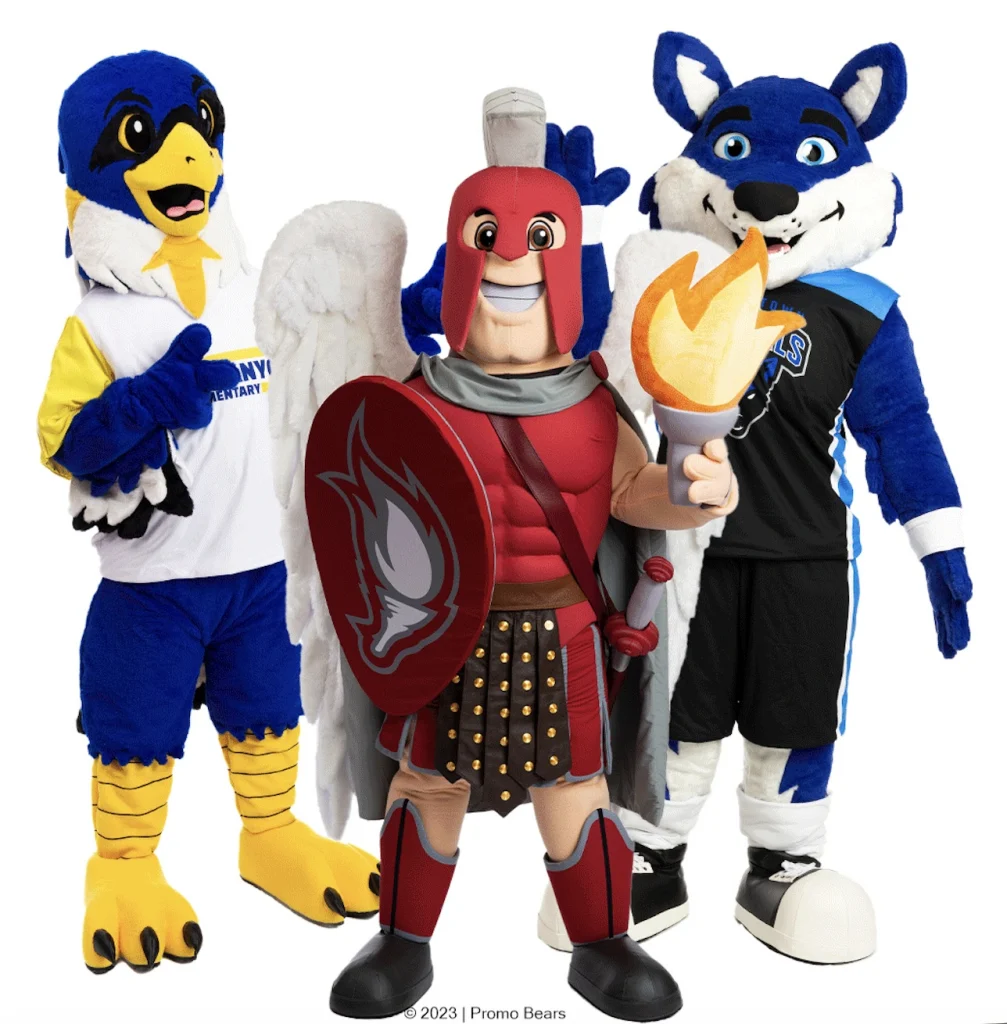
Some of the most unique marketing ideas combine emotional connection, physical presence, and brand storytelling in ways that digital ads simply cannot replicate. Think custom mascot characters, branded experiential activations, interactive promotional merchandise, and immersive event experiences. These approaches work because they turn passive audiences into active participants who remember your brand long after the moment has passed. Below, we unpack the most effective strategies across each of these categories.
What makes a marketing idea truly unique?
A marketing idea is truly unique when it creates a memorable, personal experience that goes beyond simply delivering a message. The most effective ideas tap into emotion, surprise, and physical interaction. They give people something to feel, share, or take home. Uniqueness is not about being unusual for its own sake — it is about creating a moment that sticks.
Generic advertising delivers information. Unique marketing creates stories. When a brand hands someone a custom plush toy, lets them meet a live mascot character, or surprises them with a beautifully branded giveaway, it builds a memory. And memories drive purchasing decisions far more reliably than impressions do.
The brands that consistently stand out share a few common traits. They invest in tangible brand assets rather than relying entirely on digital touchpoints. They design experiences around their audience rather than around their product. And they give people a reason to talk, share, and return.
What are the most effective unique marketing ideas for brand awareness?
The most effective unique marketing ideas for brand awareness are those that create a physical, shareable presence in the real world. Mascot characters, custom branded merchandise, giant inflatables, experiential pop-ups, and interactive giveaways consistently outperform standard advertising in terms of recall and word-of-mouth reach.
Here are some of the most impactful approaches brands are using in 2026:
- Custom mascot characters that appear at events, in retail environments, or on campuses to create a living, breathing brand identity
- Giant branded inflatables that command attention at outdoor events, sports venues, and trade shows
- Branded plush toys and collectibles that fans and customers keep, display, and share on social media
- Custom stress balls and tactile merchandise that stay on desks and in bags long after an event ends
- Temporary tattoos, stickers, and enamel pins that turn attendees into walking brand ambassadors
- Experiential activations that invite audiences to participate rather than simply observe
What these ideas share is physicality. People interact with them, photograph them, and tell others about them. That organic amplification is something no paid media budget can fully replicate.
How do mascots and characters work as a marketing tool?
Mascots and characters work as a marketing tool by giving a brand a face, a personality, and an emotional identity that audiences can connect with instantly. A well-designed mascot communicates brand values without words, creates consistent recognition across every touchpoint, and builds loyalty among children and adults alike.
For children’s marketing ideas specifically, mascots are among the most powerful tools available. Children form emotional attachments to characters quickly and deeply. A mascot that appears across packaging, events, social content, and merchandise becomes a trusted figure in a child’s world, which directly influences the purchasing decisions of their parents.
For B2B and adult audiences, mascots serve a different but equally valuable function. They humanize organizations, make brands more approachable, and create memorable visual anchors that help companies stand out in crowded markets. Sports teams, universities, retailers, and entertainment brands have understood this for decades.
A custom mascot costume takes this a step further by bringing the character to life in the physical world. Live mascot appearances at events, store openings, and community activations generate immediate engagement, social media content, and press coverage that static branding simply cannot match.
What types of promotional products have the highest marketing impact?
Promotional products with the highest marketing impact are those that combine daily utility, strong visual branding, and emotional resonance. Items that people use repeatedly, display proudly, or share with others deliver far more value per dollar than single-use giveaways or generic branded pens.
Across industries, the following product categories consistently deliver strong results:
- Custom plush toys and mascot merchandise — emotionally engaging, highly shareable, and ideal for children’s marketing campaigns and brand character launches
- Custom stress balls — tactile, desk-friendly, and available in fully custom shapes with PMS color matching for precise brand alignment
- Enamel pins and keychains — collectible, wearable, and popular across age groups at events and retail environments
- Branded bags and drawstring packs — high visibility items that travel into new environments every time they are used
- Stickers and temporary tattoos — low cost, fast to produce, and beloved by younger audiences as children’s marketing tools
- Giant inflatables — maximum visual impact at events, sports venues, and outdoor activations
The key is matching the product to the audience and the moment. A custom plush toy handed to a child at a family event creates a very different kind of brand impression than a branded sports bag given to a conference attendee, but both can be deeply effective when the product fits the context.
How can experiential marketing set a brand apart at events?
Experiential marketing sets a brand apart at events by replacing passive exposure with active participation. Instead of displaying a logo on a banner, experiential marketing invites people into an experience they remember, photograph, and talk about. The brand becomes part of a story rather than a backdrop to one.
At trade shows, sports events, retail activations, and community gatherings, the brands that attract the most attention are those that give people something to do, something to feel, or something to take home. A mascot costume character greeting visitors, a giant inflatable arch framing an entrance, or a custom merchandise giveaway creates a moment that generates organic social content and genuine word-of-mouth.
Timing matters too. Knowing production lead times helps brands plan activations properly. Giant mascot inflatables, for example, can be produced in around 3 to 4 weeks, while custom plush toys typically take 12 to 18 weeks from concept to delivery. Planning ahead ensures the right assets arrive in time for the moments that matter most.
Which unique marketing ideas work best for B2B brands?
The unique marketing ideas that work best for B2B brands are those that demonstrate quality, creativity, and strategic thinking. B2B decision-makers respond to brand investments that feel intentional and premium rather than generic. Custom mascots, high-quality branded merchandise, and experiential event activations signal that a company takes its brand identity seriously.
For B2B marketers, children’s marketing ideas can also be relevant in unexpected ways. Brands that serve family-oriented sectors, retail, hospitality, or consumer goods often use mascot characters and plush merchandise to connect with end consumers while building credibility with their business partners simultaneously.
The most effective B2B marketing investments share three qualities. They are distinctive enough to be remembered. They are high-quality enough to reflect well on the brand. And they create touchpoints that extend beyond a single event or campaign. A custom mascot costume, for example, can be used across years of activations, making it one of the highest-return brand assets a company can invest in.
How Promo Bears helps bring unique marketing ideas to life
We specialize in turning brand concepts into tangible, high-impact marketing assets that get noticed and remembered. Whether you are planning a product launch, a trade show activation, a school campaign, or a long-term brand awareness push, we offer a full range of custom promotional products designed to make your brand unforgettable.
Here is what we bring to every project:
- Custom mascot costumes — fully bespoke characters with 3D realistic eyes, built-in ventilation, and a 12 to 16 week production timeline, supported by a free concept illustration and unlimited revisions
- Custom stress balls — fully custom shapes based on your design, with PMS color matching and full-color print options, ready in 10 to 12 weeks
- Giant mascot inflatables — high-visibility event assets produced in just 3 to 4 weeks
- Plush toys, stickers, enamel pins, keychains, and more — a complete range of branded merchandise for every campaign and audience
- A dedicated project manager who guides every order from first concept to final delivery
We have created over 4,000 custom mascots and promotional products for brands including NASA, Amazon, Red Bull, and Walmart, and we bring that same level of expertise and care to every project we take on.
Ready to bring your unique marketing idea to life? Get a free quote and let us show you what is possible.
Frequently Asked Questions
How much budget should I set aside for a custom mascot costume or branded merchandise campaign?
Budget varies widely depending on the product type and quantity, but custom mascot costumes typically represent a higher upfront investment that pays off over years of repeated use across events, activations, and campaigns. Promotional merchandise like custom stress balls, stickers, and enamel pins can be produced at a much lower per-unit cost, especially at scale. The best approach is to think in terms of cost-per-impression over the life of the asset rather than the upfront price tag — a mascot costume used at 20 events per year delivers far more value than a one-time digital ad spend of the same amount.
What if I don't have an existing mascot or brand character — can I still create one from scratch?
Absolutely — many brands develop their mascot character as part of the production process itself. Working with a specialist like Promo Bears, you can start with nothing more than a brand brief, a color palette, and a sense of the personality you want to convey, and the design team will develop concept illustrations for your approval before production begins. Free concept illustrations and unlimited revision rounds mean you don’t need a finalized design ready to go before reaching out. The creative development process is built into the timeline, which is why planning 12 to 16 weeks ahead for mascot costumes is strongly recommended.
How do I measure the ROI of experiential marketing and branded merchandise?
ROI from experiential marketing can be tracked through a combination of direct and indirect metrics, including social media mentions and user-generated content from events, foot traffic increases at activations, lead generation at trade shows, and post-event brand recall surveys. For branded merchandise, track how long items remain in use, how often they appear in customer photos or social posts, and whether they correlate with repeat purchases or referrals. While these metrics are less immediate than a click-through rate, they reflect the deeper brand equity that physical and experiential marketing builds over time — which is what ultimately drives long-term revenue.
What are the most common mistakes brands make with promotional merchandise?
The most common mistake is choosing products based on price alone rather than on audience fit and contextual relevance — a cheap, generic item handed out at a premium event actively undermines brand perception. Another frequent misstep is underestimating production lead times, which results in rushed orders, compromised quality, or assets that simply don’t arrive in time for the event they were designed for. Finally, many brands treat merchandise as an afterthought rather than a strategic brand asset, missing the opportunity to align the product, the moment, and the message for maximum impact.
Can unique marketing ideas like mascots and experiential activations work for small businesses, or are they only practical for large brands?
These strategies are absolutely accessible to small and mid-sized businesses — in fact, a well-executed mascot or experiential activation can level the playing field significantly by generating the kind of organic attention and word-of-mouth that small brands otherwise struggle to compete for. The key is scaling the investment appropriately: a local restaurant or boutique retailer might commission a custom plush toy or a single mascot costume for community events, while a larger brand might deploy multiple inflatables across a national tour. Starting with one high-quality, versatile asset and using it consistently across multiple touchpoints is a smart and cost-effective approach for businesses of any size.
How far in advance should I start planning a branded merchandise or mascot campaign for a major event?
As a general rule, the more complex the asset, the earlier you should begin. Custom mascot costumes require 12 to 16 weeks from concept approval to delivery, custom plush toys take 12 to 18 weeks, and custom stress balls typically need 10 to 12 weeks. Giant inflatables are the fastest option at 3 to 4 weeks. For major events like trade shows, product launches, or seasonal campaigns, working backwards from your event date and adding a buffer of at least two to four weeks for unexpected delays is strongly recommended. Reaching out for a quote as early as possible also gives you more flexibility in the design and revision process.
What makes a branded giveaway memorable enough to actually keep brand awareness alive after an event?
The most memorable giveaways share three qualities: they are useful or emotionally meaningful, they are visually distinctive, and they fit naturally into the recipient’s daily life or environment. A custom plush toy that a child immediately bonds with, a stress ball that lives permanently on someone’s desk, or a beautifully designed enamel pin that gets added to a jacket collection all continue working as brand touchpoints long after the event ends. Avoid items that are immediately discarded — invest in fewer, higher-quality pieces that people genuinely want to keep, display, and show others, because those are the items that keep your brand top of mind for months or even years.