
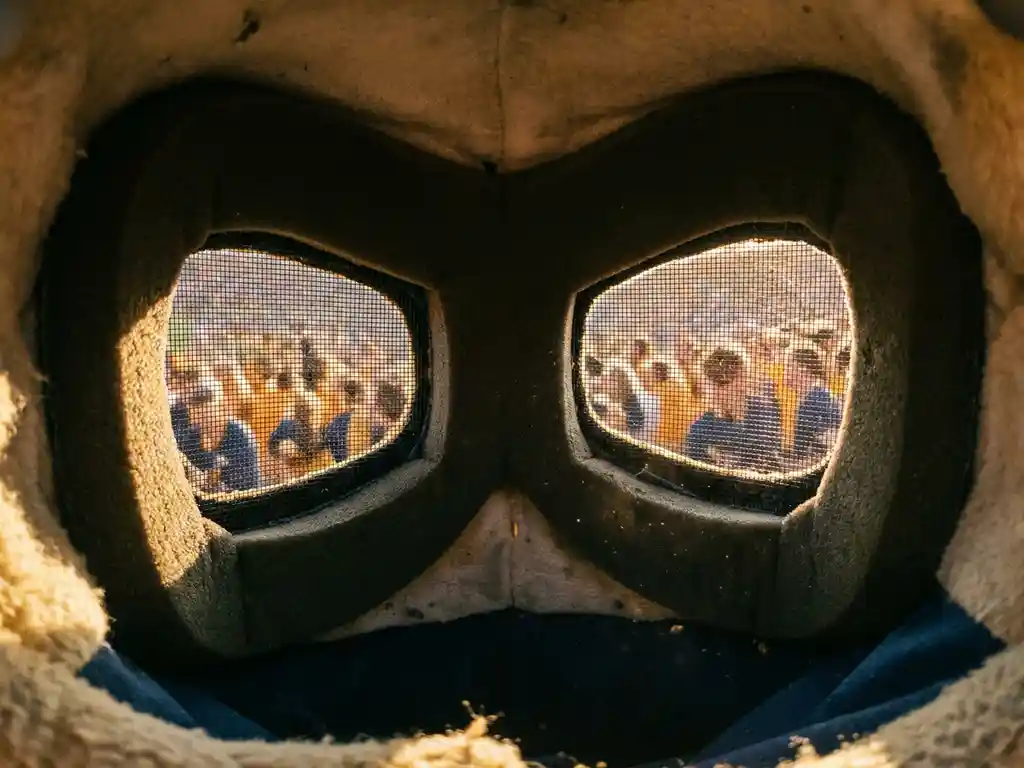
Mascot performers see through a mesh or screen material built into the costume’s eyes or mouth area. The actual line of sight is not where the character’s eyes appear to be; instead, it is typically positioned at the mouth, chin, or inside the eye itself, depending on the costume’s design. Vision is limited but workable, and the quality of the costume plays a major role in how well a performer can see.
Understanding how visibility works inside a mascot costume matters whether you are a performer preparing for your first event or a brand manager evaluating costume quality. The sections below answer the most common questions about mascot vision, from where the eye holes actually sit to what separates a well-built costume from a poorly designed one.
Where are the actual eye holes in a mascot costume?
In most mascot costumes, the performer’s actual eye holes are not located where the character’s eyes appear on the outside. The real viewing area is typically positioned at the mouth, the nostrils, or inside the pupil of the character’s eye, depending on how the head is constructed. This placement keeps the costume’s exterior looking natural while allowing the wearer to see forward.
Costume designers face a creative challenge: the character’s eyes need to look proportionally correct and expressive on the outside, but the performer’s eyes are positioned much lower on the face. To solve this, the viewing mesh is often hidden within a darker area of the design, such as the inside of an open mouth or behind a tinted pupil, so it is invisible to onlookers but functional for the performer.
Some larger mascot heads use multiple viewing points, giving the performer a slightly wider range of sight by combining a mesh panel at the mouth with a small opening near the eye area. The goal is always to balance the character’s visual appearance with the performer’s practical need to navigate safely.
How much can a mascot performer actually see?
A mascot performer typically has a narrow, forward-facing field of vision. Peripheral vision is significantly reduced, and looking up, down, or to either side requires the performer to turn their entire body rather than just their head. Most performers describe their view as looking through a small window rather than seeing normally.
The exact visibility depends on the size of the costume head, the placement of the mesh panel, and the lighting conditions at the event. Bright outdoor environments generally make it easier to see through the mesh, while dark indoor venues or nighttime events can make visibility much more challenging.
Experienced performers adapt quickly. They learn to scan their environment by shifting their whole upper body, rely on peripheral cues at the edges of the mesh, and work closely with a handler who guides them through crowds or onto stages. Over time, navigating in a mascot costume becomes second nature, even with the inherent limitations.
What materials are used to create see-through mascot eyes?
The most common material used for see-through mascot eyes is a fine mesh fabric, often referred to as vision mesh or performer mesh. This material is tightly woven enough to appear opaque or colored from the outside but open enough to allow the performer to see through it clearly from the inside. It is the industry standard for professional mascot construction.
Beyond basic mesh, higher-end costumes may use:
- Tinted acrylic or plastic lenses with a mesh backing, which create a more realistic eye appearance while maintaining visibility
- 3D molded eyes with a recessed mesh panel set inside the pupil or iris, giving depth and realism to the character’s gaze
- Layered mesh in different densities to balance opacity from the outside with clarity from the inside
- Breathable open-weave fabrics positioned at the mouth or chin area as a secondary or primary viewing zone
The choice of material directly affects both the visual quality of the finished costume and the performer’s comfort. Cheaper mesh can restrict airflow and reduce visibility in low light, while premium materials maintain better clarity across different lighting conditions and allow more air to circulate around the performer’s face.
How do mascot performers navigate safely with limited vision?
Mascot performers navigate safely through a combination of training, technique, and support. The single most important safety measure is having a dedicated handler, sometimes called a mascot wrangler, who walks alongside the performer and guides them through crowded or unfamiliar environments. This person acts as the performer’s eyes for anything outside their limited field of view.
Beyond working with a handler, experienced performers use several practical techniques:
- Slow, deliberate movement to give themselves time to process what they can see through the mesh
- Scanning by rotating the entire upper body rather than trying to look sideways
- Memorizing the layout of a venue or event space before putting the costume on
- Using subtle hand signals or pre-arranged cues with their handler to communicate without breaking character
- Staying aware of crowd sounds and physical cues to sense what is happening at the edges of their vision
Proper costume fit also plays a role. A head that sits securely and does not shift during movement ensures the viewing mesh stays aligned with the performer’s eyes, which is critical for maintaining consistent sight lines throughout an appearance.
Does a better-quality mascot costume improve vision for the performer?
Yes, a higher-quality mascot costume directly improves visibility for the performer. Premium costumes are engineered with the performer’s sight lines in mind from the very beginning of the design process. The viewing mesh is positioned more precisely, the head structure is lighter so it sits more stably, and the interior is designed to keep the performer’s face properly aligned with the viewing area at all times.
Cheaper costumes often cut corners on the internal structure, which means the head can shift during movement and cause the mesh panel to drift out of alignment. This is not just uncomfortable; it is a genuine safety concern during public appearances.
A well-built costume also integrates ventilation with the visibility system. When airflow is managed through the same openings used for sight, the mesh stays clearer and the performer can focus on their performance rather than managing discomfort. The result is a more confident, energetic mascot appearance that benefits the brand as much as it benefits the person inside the costume.
What should you look for in a mascot costume to ensure good visibility?
When evaluating a custom mascot costume for performer visibility, the key factors to look for are mesh quality, head structure, interior alignment, and ventilation integration. A costume that scores well across all four areas will give your performer the best possible experience and reduce safety risks during events.
Specifically, look for these features before committing to a costume order:
- A clearly defined and well-positioned viewing area, ideally confirmed during the design phase before production begins
- High-quality vision mesh that maintains clarity in both bright and low-light environments
- A lightweight, stable head structure that does not shift or wobble during movement
- An integrated ventilation system that circulates air through or near the viewing area to reduce fogging and heat buildup
- 3D eyes that allow the mesh to be recessed and hidden naturally within the design rather than applied as a flat panel
- A proper interior fit with padding or adjustment options so the performer’s face stays correctly positioned relative to the mesh
Asking your costume supplier how they handle performer sight lines during the design phase is a smart qualifying question. Any experienced manufacturer should be able to explain exactly where the viewing area will be placed and how it integrates with the overall character design.
How Promo Bears helps with mascot costume visibility
At Promo Bears, we design every custom mascot with the performer’s experience built in from day one. Visibility is not an afterthought; it is part of the design conversation we have with every client before a single stitch is made.
Here is what we bring to every costume project:
- Lifelike 3D eyes with recessed vision mesh that keeps the viewing area hidden from the outside while maintaining clear sight lines for the performer
- An integrated ventilation system that works alongside the visibility setup to keep performers cool and comfortable during long appearances
- A free concept illustration before production starts, so you can review the design and confirm the eye placement before committing
- Unlimited revisions until the design is exactly right, including adjustments to the head structure and viewing area
- A dedicated project manager who oversees every stage from design to delivery, with a 12 to 16 week production timeline and rush options available
We have built over 4,000 mascots for brands, schools, sports teams, and organizations across North America, and performer comfort and visibility are consistently among the top priorities our clients raise. If you are ready to create a mascot that looks incredible and works brilliantly for your performer, get a free quote and let us show you what is possible.
Frequently Asked Questions
Can a mascot performer wear glasses or contacts inside the costume?
Yes, most performers can wear contact lenses inside a mascot costume without issue, and many do. Glasses are trickier — depending on the head size and interior padding, frames may not fit comfortably or may shift the performer’s face out of alignment with the viewing mesh. If a performer relies on corrective lenses, contacts are strongly recommended, and it is worth communicating this to your costume manufacturer during the design phase so the interior fit can be adjusted accordingly.
How long does it typically take to get comfortable performing in a mascot costume?
Most new performers need between two and five practice sessions before they feel genuinely comfortable navigating in a mascot costume. The biggest adjustment is learning to move the entire upper body to scan the environment rather than relying on peripheral vision. Practicing in the actual event environment before a live appearance — walking the space, identifying obstacles, and rehearsing with your handler — dramatically shortens the learning curve and reduces safety risks on the day.
What should a mascot handler actually do during an appearance?
A mascot handler’s primary job is to be the performer’s eyes for everything outside their limited field of view. This means walking close beside the performer, alerting them to steps, curbs, low ceilings, and crowd surges, and using pre-agreed hand signals or light physical cues to guide direction and movement. A good handler also manages crowd interactions — keeping overly enthusiastic guests at a safe distance — and monitors the performer for signs of heat stress or fatigue, signaling when it is time for a break.
Is poor visibility inside a mascot costume a safety or liability concern for event organizers?
It can be, particularly at large public events, children’s events, or venues with uneven terrain, stairs, or tight spaces. A performer who cannot see clearly is at genuine risk of tripping, colliding with guests, or missing hazards entirely. Event organizers should confirm that any mascot appearing at their event has a dedicated handler, that the performer has rehearsed in the space beforehand, and that the costume itself meets basic visibility standards. Documenting these precautions is a reasonable step for any brand or organization managing public mascot appearances.
Can vision mesh be replaced or repaired if it gets damaged over time?
Yes, vision mesh can typically be repaired or replaced by an experienced mascot costume manufacturer or skilled costumer. Mesh can tear, stretch, or accumulate debris over time, especially with frequent use, and a damaged viewing area should be addressed promptly since it directly affects performer safety. When commissioning a costume, it is worth asking your manufacturer whether they offer repair services and whether they can supply replacement mesh material so you have it on hand for future maintenance.
How does low-light or nighttime visibility differ for mascot performers, and how should events plan for it?
Low-light environments are one of the most challenging conditions for mascot performers because vision mesh relies on ambient light to maintain clarity — the darker the environment, the harder it is to see through. For evening events, parades, or dimly lit venues, event planners should ensure the performer’s path is as well-lit as possible, assign an especially attentive handler, and keep the performer’s route simple and pre-walked. Some premium costumes include slightly larger or more open mesh panels specifically designed for low-light performance, which is worth discussing with your costume supplier if nighttime appearances are expected.
What are the most common mistakes first-time mascot performers make related to visibility?
The most frequent mistake is trying to look around by turning the head alone rather than rotating the entire upper body, which results in the mesh drifting out of alignment and losing the already-limited sight line. New performers also commonly skip the pre-event venue walk-through, which means they encounter obstacles — stairs, tight doorways, uneven flooring — without any mental map to rely on. A third common error is neglecting to establish clear communication signals with their handler before the appearance starts, leaving both parties guessing during the event.