
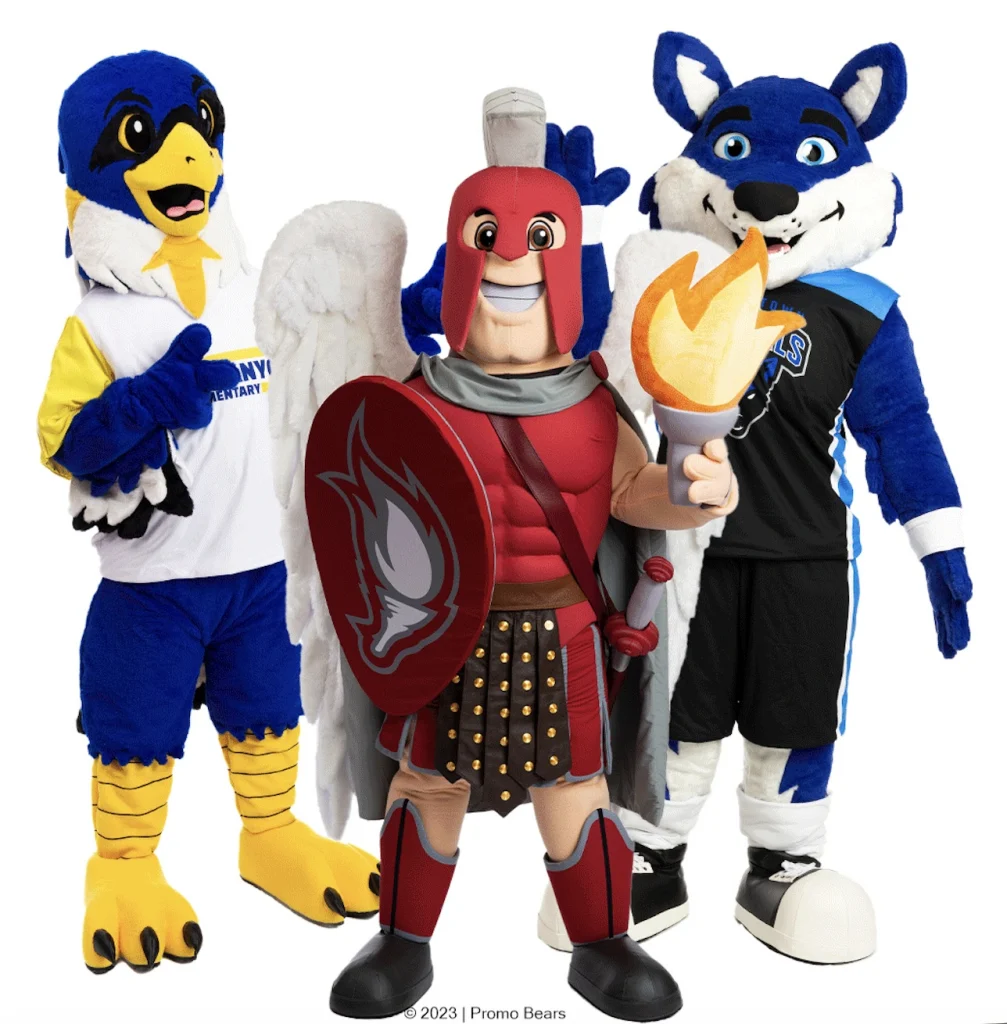
The highest paying mascot jobs in professional sports can bring in anywhere from $60,000 to over $100,000 per year, depending on the team, the market, and the performer’s experience. At the top end, mascots for major league franchises in the NFL, NBA, and MLB earn salaries that rival those of entry-level marketing professionals. The questions below break down exactly who earns the most, what drives those numbers, and how a high-quality costume plays into the equation.
How much do professional mascots actually earn?
Professional mascots in major American and Canadian sports leagues typically earn between $25,000 and $100,000 per year, with top performers at marquee franchises reaching six figures. Entry-level positions at minor league teams or smaller organizations often start closer to $25,000 to $40,000, while experienced performers at high-profile franchises command significantly more.
The wide salary range reflects the fact that mascot work is not a single, uniform job. Some mascots are part-time performers hired only for game days, while others are full-time brand ambassadors who appear at community events, school visits, charity functions, and corporate activations throughout the year. The more an organization relies on its mascot as a genuine marketing asset, the more that role tends to pay.
Beyond base salary, many professional mascots receive benefits, performance bonuses, and appearance fees for external events. These additional income streams can push total annual compensation well above the base figure, especially for mascots tied to nationally recognized franchises.
Which sports mascots are the highest paid in the world?
The highest paid sports mascots in the world are generally found in the NBA, NFL, and MLB, where franchise budgets are largest and mascots serve as year-round brand representatives. Performers in these leagues are widely reported to earn between $60,000 and $100,000 or more annually, making them among the best-compensated mascot professionals anywhere.
In the NBA, mascots like Rocky of the Denver Nuggets and Benny the Bull of the Chicago Bulls are frequently cited as among the highest earners in the profession. The NBA’s long season, combined with the league’s strong emphasis on in-arena entertainment, creates consistent demand for skilled performers. NFL mascots also command strong salaries, particularly in large markets where the franchise brand carries enormous commercial weight.
Canadian sports leagues, including the CHL and CFL, also employ professional mascots, though salaries in these organizations tend to sit at the lower end of the professional range. Still, top performers in these leagues can build strong careers that lead to higher-paying opportunities over time.
What factors determine how much a mascot gets paid?
A mascot’s earning potential is shaped by several key factors, including the size of the organization, the performer’s experience, the scope of the role, and the quality of the mascot costume itself. No single factor determines pay in isolation; instead, these elements combine to set the market rate for any given position.
- League or organization tier: Major league franchises pay significantly more than minor league or amateur organizations.
- Market size: Teams in large metropolitan markets typically have bigger entertainment budgets and higher mascot salaries.
- Performer experience and skill: Trained performers with backgrounds in dance, athletics, or physical comedy command higher rates.
- Scope of appearances: Full-time roles that include community events, school visits, and corporate appearances pay more than game-day-only positions.
- Costume quality: A professional-grade costume signals organizational investment and often correlates with a more serious, better-funded mascot program.
Negotiation also plays a role. Experienced mascot performers who have built a reputation and can demonstrate measurable fan engagement often have leverage to negotiate above the base rate offered for a position.
Do brand and corporate mascots earn more than sports mascots?
In some cases, brand and corporate mascots can earn more than sports mascots, particularly when the role involves licensing, media appearances, or national advertising campaigns. A mascot tied to a major consumer brand that appears in television commercials and national promotions can generate significant income for the performer or the agency managing the character.
However, the comparison is not straightforward. Sports mascots typically receive stable, salaried employment with benefits, while brand mascots are more often managed as intellectual property by the company itself, with performers hired on a contract or per-appearance basis. The character and the costume belong to the brand, not the performer.
For corporate clients, the mascot is primarily a marketing tool rather than an entertainment role. The investment goes into the costume, the branding, and the campaign rather than into a single performer’s salary. This distinction matters for anyone considering a career as a mascot versus a brand considering investing in one.
How does a custom mascot costume affect earning potential?
A high-quality custom mascot costume directly affects earning potential by elevating the perceived professionalism of the role and the organization behind it. Performers wearing well-crafted, visually striking costumes are more likely to be hired for premium positions, media appearances, and corporate activations, all of which come with higher pay.
From the performer’s perspective, a costume that fits properly, ventilates well, and holds up under repeated use makes the job physically manageable over a long season. Comfort and durability are not just quality-of-life issues; they affect how long a performer can sustain a high-energy appearance, which directly impacts their effectiveness and marketability.
From the organization’s perspective, a professionally produced costume signals commitment. Teams and brands that invest in custom mascot costumes tend to build more robust mascot programs, which in turn justifies higher compensation for the performers who bring those characters to life.
What’s the best way to get a high-paying mascot job?
The most reliable path to a high-paying mascot job is to build a combination of performance skills, physical fitness, and professional experience while actively networking within the sports and entertainment industry. Most top-earning mascot performers did not land their roles by accident; they pursued them deliberately over several years.
- Develop physical performance skills: Training in dance, acrobatics, mime, or physical comedy gives you the movement vocabulary that makes a great mascot performer.
- Start with smaller opportunities: Minor league teams, college programs, and local brands are excellent entry points for building a track record.
- Network within the industry: Many mascot positions are filled through referrals and industry connections rather than open job postings.
- Build a performance portfolio: Video documentation of your appearances helps demonstrate your range and energy to potential employers.
- Pursue professional training: Organizations like the Mascot Hall of Fame offer workshops and certification programs that can strengthen your credentials.
Patience and persistence matter. The highest-paying positions are competitive, and most performers spend years developing their craft before landing a major league role. Treating every appearance, regardless of the budget, as a professional opportunity builds the reputation that eventually opens bigger doors.
How Promo Bears helps you build a standout brand mascot
Whether you are launching a new brand mascot or upgrading an existing character, the quality of the costume is the foundation everything else is built on. At Promo Bears, we specialize in custom mascot costume production that brings your brand to life with professional results.
- Every project starts with a free concept illustration based on your logo or design idea, with unlimited revisions until it is exactly right.
- Our costumes feature lifelike 3D eyes, an integrated ventilation system, and exceptional comfort for the performer wearing them.
- A dedicated project manager oversees your project from design through delivery, keeping everything on track.
- Standard production runs 12 to 16 weeks after design approval, with rush options available for tighter timelines.
- We have created over 4,000 mascots for clients including NASA, Walmart, Red Bull, and Amazon, so your project is in experienced hands.
If you are ready to invest in a mascot that genuinely represents your brand and performs at the level your organization demands, we would love to show you what is possible. Get your free quote and let us bring your mascot to life.
Frequently Asked Questions
Can mascot performers negotiate their salary, or are rates typically fixed?
Mascot salaries are often negotiable, especially for experienced performers with a documented track record of fan engagement and media appearances. Coming to the table with a strong performance portfolio, measurable results from past roles, and specialized skills like acrobatics or physical comedy gives you real leverage. Organizations that treat their mascot as a serious brand asset are generally more open to negotiating above their initial offer than those that view the role as a game-day-only position.
Are mascot jobs typically full-time with benefits, or are most positions part-time or contract-based?
It varies significantly by organization. Major league franchises in the NFL, NBA, and MLB are most likely to offer full-time salaried positions with benefits, since those mascots are expected to represent the brand year-round at community events, corporate activations, and media appearances. Minor league teams, smaller brands, and college programs more commonly hire mascots on a part-time or seasonal basis. If full-time employment with benefits is a priority, targeting larger-market franchises and year-round programs is the most direct path.
What are the most common mistakes aspiring mascot performers make when trying to break into the industry?
One of the biggest mistakes is skipping the entry-level phase and holding out for a major league opportunity without first building a professional track record. Minor league teams, local brands, and college programs exist precisely for this reason — they are where skills get developed and reputations get built. Another common error is neglecting to document appearances on video, since a strong performance reel is often the deciding factor in competitive hiring situations. Finally, underestimating the physical demands of the job leads many performers to burn out early; conditioning and endurance training should be treated as seriously as performance skills.
How does a mascot performer's background in sports or performing arts affect their earning potential?
A background in performing arts — particularly dance, gymnastics, mime, or physical comedy — tends to translate most directly into mascot performance quality, and organizations actively look for these credentials when hiring for premium roles. Athletic backgrounds also carry weight, since endurance, body awareness, and physical conditioning are essential for sustaining high-energy appearances in a heavy costume. Performers who combine both athletic and theatrical training are especially competitive for top-tier positions, as they can deliver consistent, expressive performances across long events and full seasons.
How often do professional mascot costumes need to be replaced or refurbished, and who typically covers that cost?
Professional mascot costumes used in major league environments typically require refurbishment every one to two years due to the physical wear of regular appearances, and full replacement is generally considered every three to five years depending on usage frequency and care. The organization — not the performer — is almost always responsible for costume costs, since the character and intellectual property belong to the team or brand. For performers evaluating a new role, it is worth confirming upfront whether the organization has a current, well-maintained costume or whether you would be performing in an outdated one, as costume quality directly affects your effectiveness and professional image.
Is there a professional association or certification for mascot performers that can help advance a career?
Yes — the Mascot Hall of Fame, based in Whiting, Indiana, is the most recognized professional organization in the industry and offers workshops, networking events, and educational resources specifically for mascot performers. Attending their annual Mascot Mania event is one of the best ways to connect with hiring decision-makers, learn from veteran performers, and get visibility within the industry. While there is no single universally required certification, completing recognized training programs and participating in professional events signals seriousness to potential employers and can meaningfully differentiate you from other candidates.
If an organization is investing in a custom mascot costume, what should they look for to ensure it supports a high-performing mascot program?
The most important factors are performer comfort, visibility, and durability — a costume that is too hot, too heavy, or too restrictive will limit what the performer can do and how long they can sustain it, directly undermining the investment. Look for professional-grade features like an integrated ventilation system, lifelike eyes with good sightlines, and materials built to withstand repeated use across a full season. Working with an experienced custom costume manufacturer who offers dedicated project management and iterative design review — rather than an off-the-shelf solution — ensures the final product is built around your specific character, performer, and performance environment.