
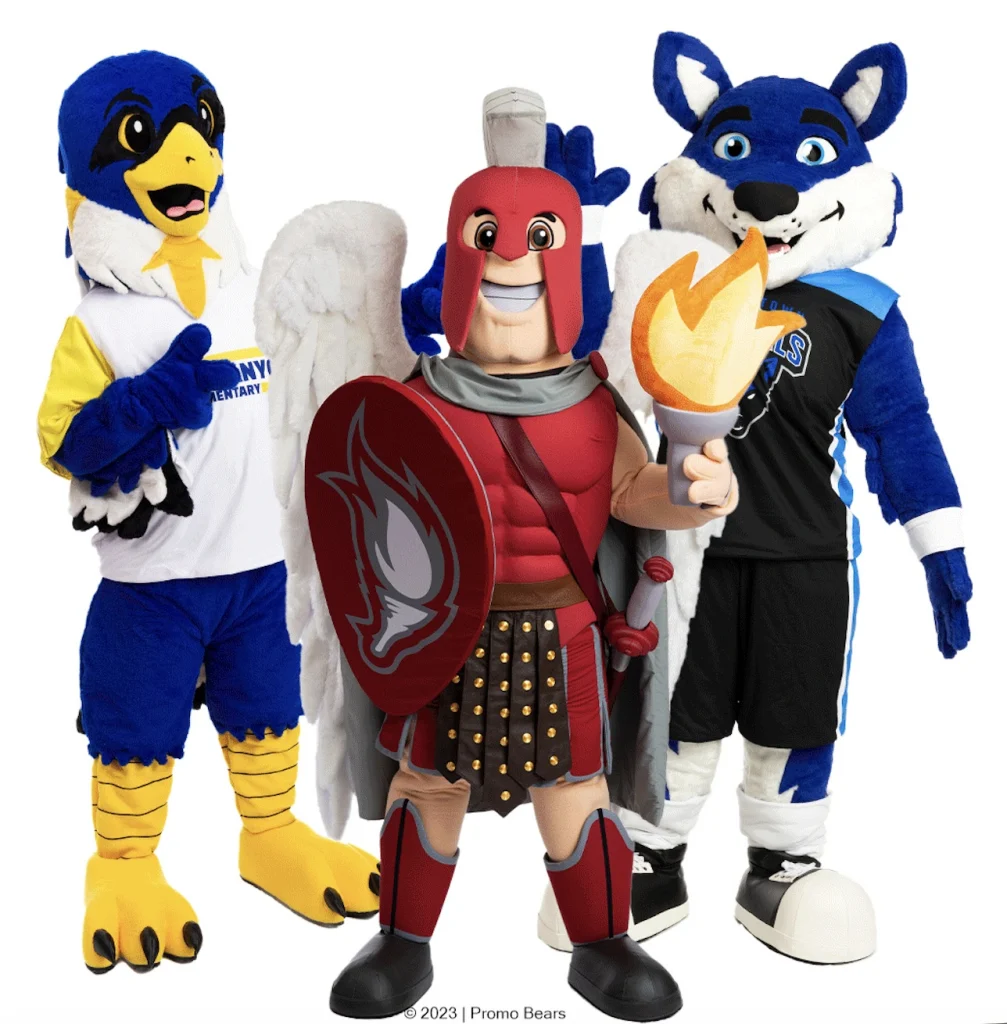
Branded merchandise alternatives are promotional products that go beyond standard branded merchandise like pens and notepads, offering more creative, memorable, and strategically impactful ways to represent your brand. For B2B marketers, these alternatives range from custom mascot costumes and giant inflatables to plush toys, stress balls, enamel pins, and mascot stickers. The sections below walk through the most important questions B2B decision-makers ask when evaluating which option fits their goals.
How do branded merchandise alternatives differ from traditional promotional items?
Traditional promotional items are generic, off-the-shelf products like branded pens, tote bags, or mugs with a logo printed on them. Branded merchandise alternatives are fully custom products built around your brand identity, character, or mascot, creating a much stronger emotional connection with your audience. The core difference is memorability: a custom plush toy or inflatable arch leaves a lasting impression, while a standard pen rarely does.
Standard promo items are easy to produce in bulk and tend to be low cost, but they also tend to be low impact. They get used briefly and forgotten quickly. Custom merchandise alternatives, on the other hand, become collectibles, conversation starters, and brand touchpoints that people actually want to keep.
The other major difference is brand alignment. When you compare promotional tools side by side, custom alternatives reflect your specific brand personality. A mascot keychain, a character-shaped stress ball, or a branded inflatable tunnel does not just carry your logo; it tells your brand story in a way that a generic item simply cannot.
What are the most effective branded merchandise alternatives for B2B events?
For B2B events, the most effective branded merchandise alternatives are products that create visual impact, generate social sharing, and give attendees something worth keeping. Giant mascot inflatables, custom plush toys, enamel pins, and branded stress balls consistently perform well at trade shows, conferences, and branded activations.
Here is a breakdown of high-performing options for events, along with their typical production timelines:
- Giant mascot inflatables: Ready in 3 to 4 weeks, these create an unmissable visual presence at any event and are ideal for outdoor activations and stadium environments.
- Custom stress balls: With a production time of 10 to 12 weeks, these are fully custom shaped and PMS color matched, making them a standout giveaway rather than a forgettable freebie.
- Enamel pins and 2D keychains: Both ready in 3 to 6 weeks, these are compact, collectible, and popular with professional audiences who appreciate quality branded items.
- Mascot stickers: Ready in approximately 4 weeks, stickers are low cost but high visibility when designed around a strong mascot character.
- Plush toys: With a total timeline of 12 to 18 weeks, plush mascots are premium giveaways that work especially well at consumer-facing events or as VIP gifts.
The key is to match the product format to the event context. A high-energy sports sponsorship calls for something bold like an inflatable or a mascot costume. A corporate conference might be better served by a well-crafted enamel pin or a custom stress ball that sits on a decision-maker’s desk long after the event ends.
Which branded merchandise alternatives work best for brand recognition?
Custom mascot costumes, giant inflatables, and plush toys are the branded merchandise alternatives that deliver the strongest brand recognition results. These products create repeated, high-visibility exposure because people interact with them, photograph them, and share them, turning your brand into content rather than just a logo.
Brand recognition depends on two things: frequency of exposure and emotional association. A mascot costume achieves both. Every time your mascot appears at an event, in a photo, or on social media, it reinforces your brand identity in a way that feels human and approachable rather than corporate and distant.
Smaller items like mascot stickers, shoe charms, and enamel pins also contribute to recognition, particularly when they are designed around a distinctive character. When someone wears or displays your branded item in their daily life, your brand travels with them. That kind of organic exposure is difficult to achieve with a standard branded pen.
For a long-term brand recognition strategy, the most effective approach is building a consistent mascot identity and then extending it across multiple product formats, from a custom mascot costume to plush toys, stickers, and keychains. Consistency across touchpoints is what turns a promotional item into a recognizable brand asset.
How do custom mascots compare to standard branded merchandise?
Custom mascots outperform standard branded merchandise on almost every measure of brand impact. Where a standard item carries your logo, a custom mascot embodies your brand personality. The difference is the level of engagement: people interact with mascots, take photos with them, and remember them, while most standard merchandise is used briefly and discarded.
Standard branded merchandise is transactional. It serves a functional purpose, such as a bag to carry things in or a pen to write with, and the brand exposure is secondary. Custom mascots and mascot-based merchandise are experiential. They create moments, and those moments generate word of mouth, social media content, and emotional loyalty that no branded pen can replicate.
From a production standpoint, custom mascot costumes take 12 to 16 weeks to produce, which reflects the level of craftsmanship involved. Features like 3D realistic eyes, built-in ventilation systems, and custom sizing are simply not possible with off-the-shelf merchandise. When you compare promotional tools at this level, the investment in a custom mascot represents a fundamentally different category of brand asset.
That said, custom mascots and standard merchandise are not mutually exclusive. The strongest B2B brand campaigns combine a mascot as the hero asset with supporting merchandise like plush toys, stickers, and keychains that extend the mascot’s reach across different contexts and price points.
What should B2B marketers consider when choosing a merchandise alternative?
B2B marketers should evaluate branded merchandise alternatives based on four factors: brand alignment, audience fit, production timeline, and measurable impact. Choosing the right alternative means matching the product format to your specific campaign goal, whether that is event visibility, long-term brand recognition, or driving engagement at a specific touchpoint.
Here are the most important considerations before committing to a merchandise alternative:
- Brand alignment: Does the product reflect your brand personality? A character-driven brand benefits from mascot-based merchandise. A more corporate brand might prioritize quality enamel pins or premium stress balls with precise PMS color matching.
- Audience fit: What does your target audience actually value? Decision-makers at trade shows respond differently than fans at a sports event. Choose products your audience will genuinely want to keep.
- Production timeline: Plan backwards from your event or campaign date. Giant inflatables take 3 to 4 weeks. Plush toys take 12 to 18 weeks. Mascot costumes take 12 to 16 weeks. Missing a deadline because of a production oversight is an avoidable mistake.
- ROI justification: Consider how the product generates measurable return, whether through social media impressions, event foot traffic, or repeat brand exposure in a customer’s daily environment.
- Vendor reliability: A single trusted partner who can deliver multiple product types consistently is far more valuable than sourcing from multiple vendors with inconsistent quality standards.
One often overlooked factor is the design process. The best merchandise alternatives start with a strong creative concept, not a logo slapped onto a product. Working with a vendor who offers free concept illustrations and unlimited revisions before production begins protects your investment and ensures the final product genuinely represents your brand.
How We Help with Branded Merchandise Alternatives
At Promo Bears, we specialize in exactly the kind of custom merchandise that makes a real difference for B2B brands. Whether you are looking for a show-stopping giant mascot inflatable ready in 3 to 4 weeks, a premium custom stress ball with full PMS color matching and a 10 to 12 week production timeline, or a complete mascot costume built to the highest quality standards in 12 to 16 weeks, we handle everything from first concept to final delivery.
Here is what working with us looks like:
- A free concept illustration based on your logo or brand idea, with unlimited revisions
- A dedicated project manager who oversees your project from design approval through to delivery
- Full custom production across mascot costumes, plush toys, inflatables, stress balls, enamel pins, stickers, and more
- Thorough quality control before shipping, with results photos shared for your approval
- Rush options available when timelines are tight
If you are ready to move beyond generic branded merchandise and invest in something your audience will actually remember, we would love to help you get started. Request your free quote today and let us show you what is possible.
Frequently Asked Questions
How far in advance should I order branded merchandise alternatives for a trade show or event?
The safest approach is to work backwards from your event date and add a buffer of at least two weeks for shipping and any unexpected revisions. Since production timelines vary significantly — enamel pins and inflatables can be ready in 3 to 6 weeks, while plush toys and mascot costumes require 12 to 18 weeks — you should lock in your order as early as possible. For major events like annual trade shows or conferences, placing your order three to four months in advance is strongly recommended. If your timeline is tight, ask your vendor about rush production options before assuming a product is off the table.
What is the minimum order quantity for custom branded merchandise alternatives like plush toys or enamel pins?
Minimum order quantities vary by product type and vendor, but as a general rule, smaller items like enamel pins, stickers, and keychains tend to have lower minimums (often starting around 100 units), while larger or more complex items like custom plush toys or stress balls typically require higher minimums to justify the tooling and production costs. It is always worth discussing your quantity needs upfront with your vendor, as some offer tiered pricing where ordering more units significantly reduces the per-unit cost. For B2B campaigns with a targeted audience, a smaller, higher-quality run often delivers better ROI than a large quantity of lower-impact items.
Can branded merchandise alternatives be used effectively for campaigns beyond live events, such as direct mail or employee gifting?
Absolutely — in fact, some of the highest-impact uses of custom merchandise happen outside of live events entirely. Custom plush toys, enamel pins, and mascot stickers are well-suited for premium direct mail packages, onboarding kits, or VIP client gifts because they create a tangible brand moment in a context where the recipient gives them their full attention. For employee gifting or internal brand-building, mascot-based merchandise reinforces company culture and pride in a way that generic branded items simply cannot. The key is choosing a product that feels intentional and premium rather than like an afterthought giveaway.
What if my brand does not have an existing mascot — can I still benefit from mascot-based merchandise?
Yes, and many brands use a merchandise project as the catalyst for creating a mascot identity for the first time. A good vendor will work with you to develop a character concept based on your brand values, industry, and target audience, often starting with free concept illustrations to explore different directions before any commitment is made. Even a simple, well-designed character can be extended across multiple product formats — from a plush toy to stickers to an inflatable — creating a cohesive visual identity that grows with your brand. Starting with a smaller, lower-cost product like a sticker or keychain is a low-risk way to test a new mascot concept before investing in a full costume or large inflatable.
How do I measure the ROI of branded merchandise alternatives compared to traditional promotional items?
ROI for branded merchandise alternatives is best measured across a combination of metrics: social media impressions and user-generated content generated at events, booth traffic increases attributable to a high-visibility item like an inflatable, post-event brand recall in follow-up surveys, and the longevity of brand exposure when recipients keep and display an item in their workspace or daily life. Unlike a branded pen that gets used and forgotten, a custom plush mascot on a decision-maker’s desk delivers repeated brand impressions over months or years — a metric that is easy to undervalue when comparing upfront costs. Tracking how often your mascot or merchandise appears in attendee photos and social posts is one of the simplest and most telling indicators of real-world impact.
What are the most common mistakes B2B marketers make when ordering custom branded merchandise?
The most common mistakes are underestimating production timelines, prioritizing low unit cost over quality and brand fit, and skipping the design review process. Ordering too late is the single most avoidable error — a beautiful custom plush toy that arrives the week after your trade show has zero value. Choosing the cheapest option often results in poor color accuracy, low-quality materials, or a product that does not reflect your brand standards, which can actually do more harm than good. Finally, approving a design concept too quickly without reviewing samples or detailed mockups can lead to costly surprises; always work with a vendor who offers thorough pre-production review and shares quality control photos before shipping.
Is it possible to order multiple different merchandise alternatives from a single vendor, and why does that matter?
Yes, and working with a single vendor across multiple product types is a significant strategic advantage for B2B marketers. When your mascot costume, plush toys, stickers, and inflatables are all produced by the same partner, you get consistent character design, color matching, and quality standards across every touchpoint — which is essential for building a recognizable brand asset rather than a collection of mismatched items. It also simplifies project management, reduces the risk of communication errors between suppliers, and often gives you more leverage on pricing and priority production. For brands building a long-term mascot strategy, a single trusted vendor who understands your brand vision from the start is far more valuable than sourcing the lowest price on each individual product.